可控释放策略

Search documents
中国突然又对日本稀土出口放行?“可控释放”才是最无解阳谋!
Sou Hu Cai Jing· 2026-02-11 09:56
Core Viewpoint - The recent decision by China to allow controlled exports of rare earth materials, despite earlier restrictions, reflects a strategic move to balance economic interests and maintain market dominance while signaling compliance with international trade norms [3][5][7] Group 1: Export Regulations - China has approved export applications for seven categories of rare earths, which were reportedly submitted before the implementation of stricter controls [3] - The approval is contingent upon ensuring that the exports are for civilian use, indicating a structured approach to regulation rather than a complete policy softening [5] Group 2: Strategic Implications - The controlled release of rare earth exports serves dual purposes: inflicting some economic pain on competitors while ensuring China's dominant position in the rare earth market [7] - China's rare earth reserves account for 33.8% of the global total, with a staggering 90% share of global refining output, highlighting its critical role in the supply chain [7] Group 3: Global Supply Chain Dynamics - The decision to allow compliant exports aims to stabilize the global supply chain and prevent competitors from rapidly reducing their reliance on Chinese rare earths [5][7] - By maintaining a balance between limited exports and administrative restrictions on certain products, China seeks to keep its competitors in a challenging position while reinforcing its strategic interests [7]

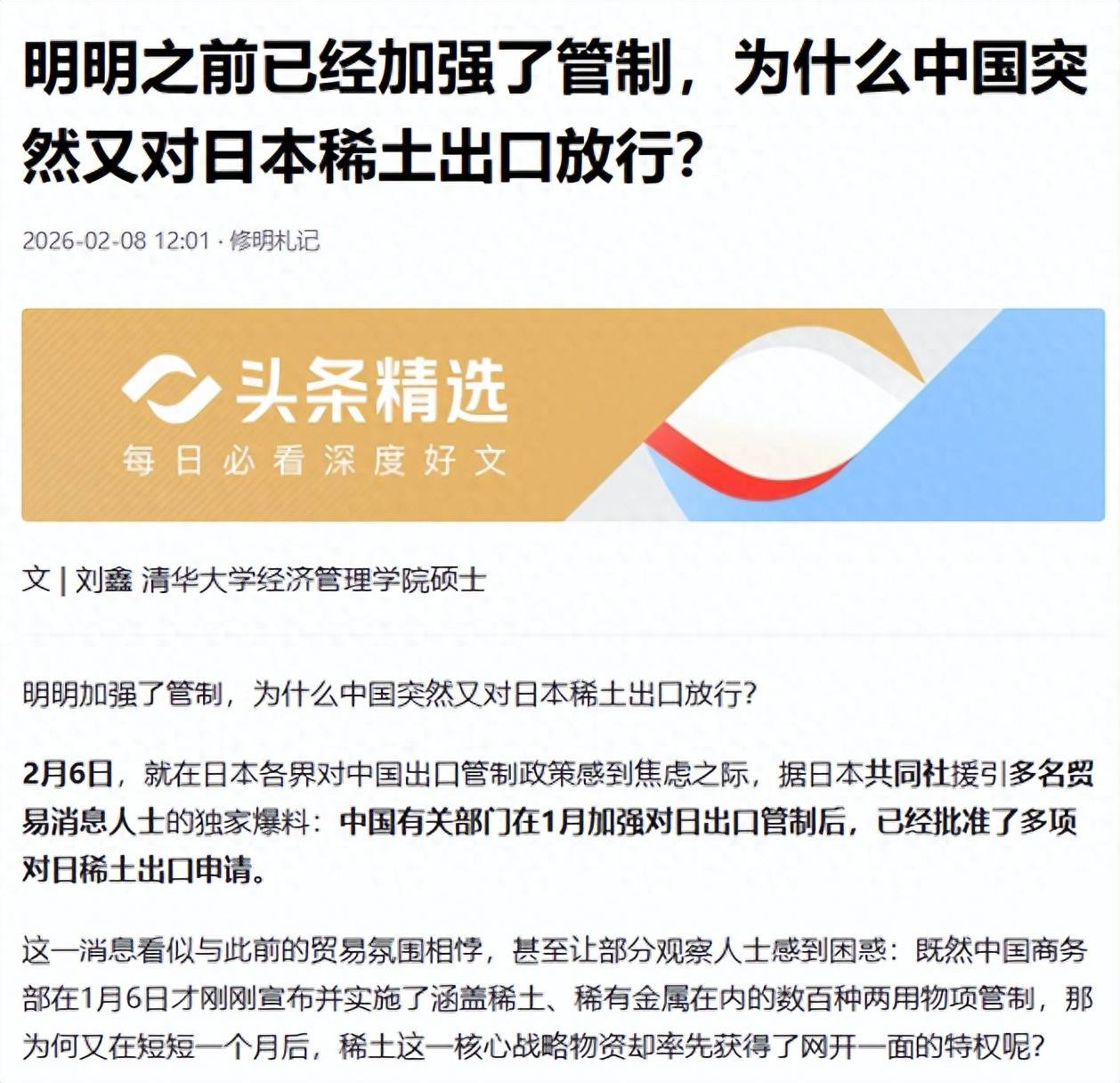
中国突然又对日本稀土出口放行?可控释放才是最无解阳谋!
Sou Hu Cai Jing· 2026-02-11 05:48
Core Viewpoint - China's recent approval of rare earth export applications, despite earlier strict export controls, reflects a strategic decision to balance economic interests and international relations, rather than a softening of its stance [3][5]. Group 1: Export Control Strategy - China has approved rare earth export applications that were submitted before the new regulations, indicating a controlled release rather than a complete ban [3]. - The approved applications include seven categories of rare earth products, emphasizing compliance with civil use conditions [3]. - This approach aims to mitigate the risk of commercial breaches due to sudden policy changes, aligning with international trade practices [3]. Group 2: Economic and Strategic Goals - China's dual objectives are to inflict pain on trade protectionist opponents while maintaining its dominant position in the rare earth market [5]. - The strategy of controlled export release helps China sustain its market leadership and avoid excessive reactions that could encourage other countries to fill supply chain gaps [5]. Group 3: Global Influence and Production Capacity - China holds 33.8% of global rare earth reserves and accounts for 90% of global refined production, showcasing its significant influence in the sector [7]. - Even rare earths mined in the U.S. often require processing in China, highlighting the country's critical role in the supply chain [7]. - China's strategy involves maintaining negotiation space while ensuring compliance in exports, thus preventing Western decoupling and signaling supply chain stability [7].
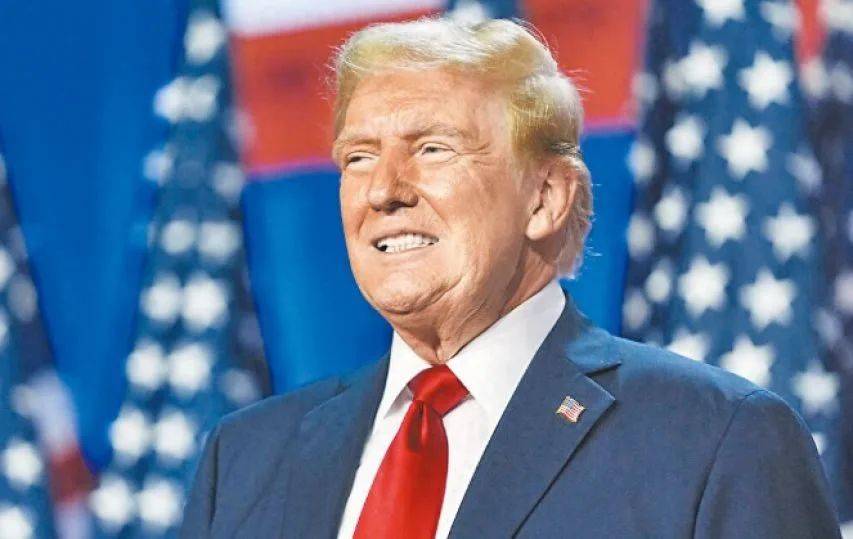
中方同意出口稀土?特朗普态度180度转变:欢迎中国留学生来美国
Sou Hu Cai Jing· 2025-06-10 12:17
Group 1 - China has approved a certain quantity of rare earth product export applications, indicating a shift in policy after previously imposing export restrictions [1][3] - The export restrictions on seven categories of medium and heavy rare earth elements have significant implications for various industries, including automotive, semiconductors, and military hardware [1][3] - The slow progress in issuing export licenses has led to a sharp decline in global rare earth supply, affecting multiple sectors [1][3] Group 2 - The Chinese government emphasizes that the export control of rare earths is a common international practice aimed at safeguarding national security and interests [3][4] - The recent approval of some export applications is seen as a strategic move to balance pressure from the U.S. while maintaining China's dominant position in the rare earth market [3][4] - The U.S. military could face significant production challenges if China were to completely cut off rare earth exports, highlighting the strategic importance of these materials [3][4] Group 3 - Trump's recent welcoming of Chinese students to the U.S. marks a significant shift from previous policies that were more restrictive, reflecting a potential change in U.S.-China relations [6][7] - The U.S. economy may benefit from the presence of Chinese students, who contribute to consumption and talent in various fields, despite concerns over technology transfer [6][7] - The fluctuating U.S. policy on Chinese students indicates a complex interplay between competition and cooperation in the context of U.S.-China economic relations [6][7] Group 4 - The long-term outlook suggests that both countries will continue to experience a mix of cooperation and competition across economic, technological, and educational domains [9] - China is encouraged to enhance resource management and improve domestic education quality to attract talent, while also maintaining a strategic stance in trade negotiations [9] - The evolving U.S.-China relationship will have significant implications for the global political and economic landscape, necessitating ongoing dialogue and cooperation [9]