同城效应

Search documents
高铁带来“同城效应”与“快旅”体验点燃文旅市场 旅游消费链条延伸
Yang Shi Wang· 2026-02-03 03:41
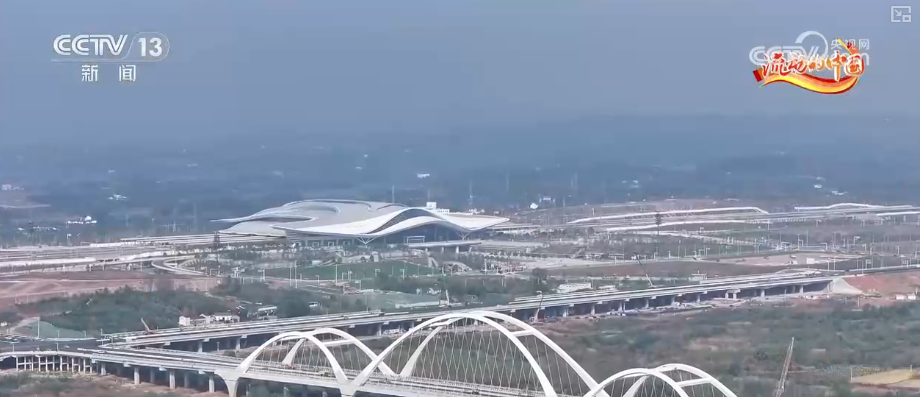
荆门市位于湖北省中部,近期随着高铁新线的开通,所辖的钟祥、京山等城市首次迈入高铁时代。高铁带来的"同城效应"与"快 旅"体验,点燃了当地的文旅市场,景点游客明显增多。游客们不仅探访当地厚重的历史文化,也轻松体验民俗风情与地道美食, 旅游消费链条得到有效延伸。 游客王彭华表示,高铁开通以后,他们从当阳过来也就用了半个小时,时间也比较短。到钟祥以后感觉相当不错,推荐给朋友们, 都可以到明显陵来玩一玩、看一看。 现在,荆门西站单日最高开行列车达到111列。从荆门出发,1小时内可到武汉、宜昌、襄阳等地,实现直达北京、上海、深圳等全 国重点城市。 央视网消息:2025年年底,沪渝蓉沿江高铁武宜段正式通车,湖北荆门也因此成为高铁"十字枢纽"。便捷的交通让很多人把荆门添 加到了自己的"旅行列表"里。 ...

地铁“夺冠”、机场年客流达1.8亿人次,广东交通流量汹涌
Nan Fang Du Shi Bao· 2026-01-07 05:11
Summary of Key Points Core Viewpoint - The Guangdong public transportation system experienced a significant surge in passenger flow during the 2026 New Year holiday, with record-breaking numbers in metro, rail, and airport traffic, indicating strong demand for holiday travel and the effectiveness of integrated transport networks in the Greater Bay Area [1][4][11]. Metro System - Guangzhou Metro set a new single-day passenger record of 14.093 million on January 1, 2026, with a total of 31.26 million passengers over the holiday period, marking a 7.5% increase year-on-year [2][3]. - The highest passenger volume on a single line was 5.36 million on Line 3, with major transfer stations like Sports West Road and Jiahe Wanggang seeing significant traffic [2][3]. Railway System - The Guangzhou Railway Bureau reported sending 7.378 million passengers from January 1 to 3, 2026, a 59.1% increase compared to the previous year, with a peak of 2.942 million on January 1 [4][5]. - High-speed rail accounted for 84.9% of the total passenger volume, with major stations like Guangzhou South and Shenzhen North leading in traffic [5]. Airport System - In 2025, Guangzhou Baiyun Airport achieved a record passenger throughput of 83.59 million, with a daily average of 22.9 million, and is projected to exceed 180 million passengers by 2025 [7][8]. - The airport's new T3 terminal has become a popular landmark, enhancing passenger experience and operational efficiency [9][11]. Regional Connectivity - The integration of transport services in the Greater Bay Area, particularly the "one network, one ticket" system between Guangzhou and Foshan, has facilitated cross-city travel, contributing to the surge in passenger numbers [3][11]. - New high-speed rail lines like the Guangzhang and Shantou lines have improved access to the coastal regions, boosting tourism and regional development [6][10].

从“末梢”到“枢纽”:广湛高铁引领粤西迈入湾区同城时代
Nan Fang Du Shi Bao· 2025-12-17 06:41
Core Viewpoint - The opening of the Guangzhan High-Speed Railway is set to transform Zhanjiang into a key development hub within the Guangdong-Hong Kong-Macao Greater Bay Area, significantly enhancing its economic dynamics and regional role [1][2][3]. Group 1: Economic Impact - The Guangzhan High-Speed Railway will connect Zhanjiang to the Greater Bay Area in just 90 minutes, facilitating the flow of capital, technology, talent, and information [1][3]. - Zhanjiang's economic development is expected to accelerate, with a projected GDP growth rate of approximately 10% in the first three quarters of this year, driven by significant industrial projects [4]. - The high-speed railway is anticipated to catalyze the growth of a "billion-level industrial forest," enhancing Zhanjiang's position as a modern coastal economic hub [1][4]. Group 2: Infrastructure Development - The Guangzhan High-Speed Railway spans 401 kilometers and is a crucial part of the national high-speed rail network, linking the Greater Bay Area with Hainan Free Trade Port and the Beibu Gulf city cluster [2][3]. - Zhanjiang North Station, with a total area of 105,000 square meters, is designed to become a new urban center, integrating green and intelligent design concepts [5]. - The ongoing construction of additional railways, such as the He-Zhan High-Speed Railway, is expected to further enhance Zhanjiang's transportation capabilities [5][6]. Group 3: Talent and Industry Transformation - The high-speed railway is expected to create a "same-city effect," allowing Zhanjiang to attract high-level talent and facilitate the return of local professionals, thereby enhancing its labor market [3][4]. - Zhanjiang aims to evolve from a traditional industrial base to a modern industrial community, focusing on advanced service industries such as industrial design and supply chain services [3][4]. - The railway's impact on supply chains is significant, as it will improve the stability and efficiency of logistics for high-value-added enterprises [5]. Group 4: Regional Integration - The Guangzhan High-Speed Railway will integrate Zhanjiang into the Greater Bay Area's "90-minute living circle," enhancing regional connectivity and economic collaboration [8][9]. - The development of Zhanjiang's green industries, including green petrochemicals and steel, is expected to be supported by the railway, contributing to a robust industrial ecosystem [8][9]. - The opening of international routes from Zhanjiang Wuchuan International Airport will further enhance its global connectivity, particularly with ASEAN countries [7][9].
高铁织网,释放区域经济新活力
Zhong Guo Xin Wen Wang· 2025-05-27 10:09
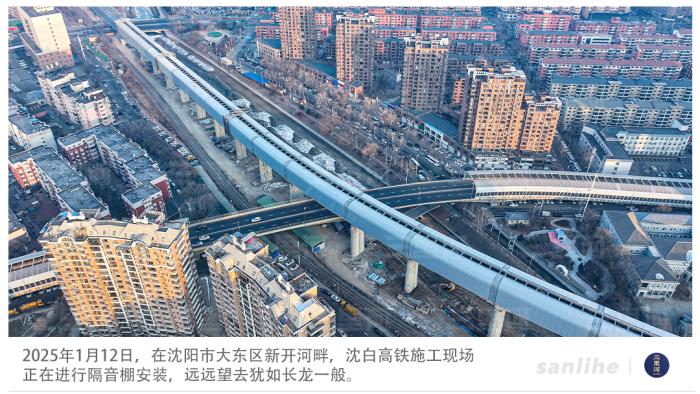
Core Viewpoint - The recent advancements in high-speed rail projects in Guizhou and Liaoning are pivotal for regional economic restructuring and connectivity, enhancing the flow of economic factors and fostering development in previously underserved areas [3][4][5]. Group 1: High-Speed Rail Developments - The Panxing High-Speed Railway in Guizhou has completed all sleeper pre-fabrication tasks, laying a solid foundation for its expected operation in November 2025 [1]. - The Shenyang to Changbai Mountain (Shenbai) High-Speed Railway has also completed its track laying, with an anticipated completion by the end of September [1]. Group 2: Economic Impact - The full connectivity of the high-speed rail network is expected to significantly enhance the efficient movement of people, goods, and information within the "hour economy circle" [5][6]. - The Panxing High-Speed Railway will connect Guiyang to eight central cities in the province within 1 to 2 hours, while the Shenbai Railway will create a 1-hour urban circle centered around Shenyang [4][8]. Group 3: Regional Development Challenges - Guizhou's unique karst topography presents significant construction challenges for the Panxing Railway, which has the highest proportion of bridges and tunnels among Guizhou's high-speed lines [6][8]. - The economic output of the connected regions, such as the combined GDP of Guizhou's Qianxinan and Liupanshui, is currently only 14% of the province's total, indicating a need for accelerated development through high-speed rail [8]. Group 4: Urbanization and Industrial Synergy - High-speed rail is expected to facilitate urbanization by reducing commuting times between major cities to 1-2 hours, thus promoting regional integration and collaboration [9][10]. - The Shenbai Railway will enhance the industrial synergy between Shenyang and Fushun, with the potential for closer collaboration in manufacturing and processing industries [10].