品牌价值稀释

Search documents
花花公子卖了中国业务50%股权
21世纪经济报道· 2026-02-13 01:17
Core Viewpoint - Playboy, Inc. has signed a final agreement to sell 50% of its business in China to United Trademark Group (UTG) for a total cash amount of $122 million, aiming to address brand dilution issues and enhance operational management in the region [1][2]. Group 1: Transaction Details - The transaction consists of three parts: $45 million paid over two years for the acquisition of the 50% stake, $67 million as a minimum guaranteed dividend over eight years, and an additional $10 million for brand support over the next three years [1]. - After the transaction, UTG will take over product development, channel expansion, and brand operations in China, while Playboy retains a 50% stake and benefits from guaranteed dividends and additional revenue sharing [1]. Group 2: Background on UTG - UTG, headquartered in Shanghai, manages over 10 international brands, including Jeep and several Italian brands, and has been the exclusive agent for Playboy in mainland China [2]. - This acquisition marks a shift for UTG from being a brand agent to a co-owner of the Playboy brand in China [2]. Group 3: Brand Management Challenges - Playboy's aggressive brand licensing strategy in China has led to brand value dilution, with the company relying heavily on licensing for revenue, which constitutes nearly half of its total income [2][3]. - As of 2023, the brand's revenue share from China has significantly decreased to 9.51%, down from approximately 27% in 2021, indicating a decline in market presence [4].



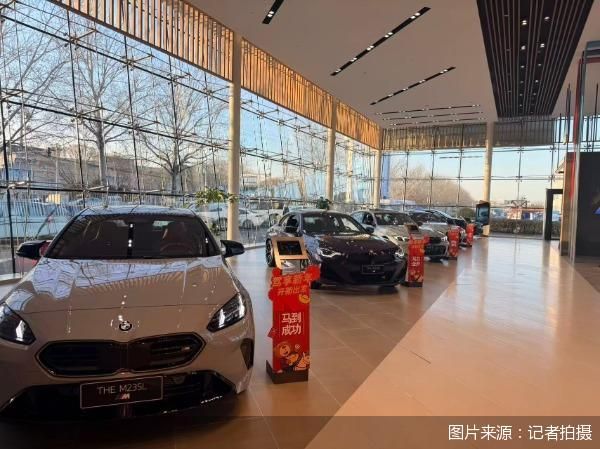
宝马大幅降价的阳谋:解困经销商
Bei Jing Shang Bao· 2026-01-04 14:58
Core Viewpoint - BMW has adjusted the official guide prices of several models, with some reductions reaching up to 300,000 yuan, in response to market dynamics and competitive pressures from domestic high-end electric vehicle brands [1][5][7]. Group 1: Price Adjustments - The flagship electric model i7 M70L has seen a price drop of 301,000 yuan, while the 7 Series and other fuel models have been reduced by approximately 12%, with the lowest starting price now at 208,000 yuan [3]. - Despite the official price reductions, the actual transaction prices at dealerships have not significantly decreased, with some models seeing only minor adjustments of around 10,000 yuan [1][3][4]. - The price adjustments aim to alleviate the "price inversion" issue faced by dealers, where the actual selling price is lower than the manufacturer's suggested retail price, thereby improving dealer profitability [4][8]. Group 2: Market Dynamics - BMW's market share in China is being increasingly challenged by domestic high-end electric vehicle brands, which have captured nearly 70% of the passenger car market and over 80% of the high-end electric vehicle segment priced above 300,000 yuan [5]. - The sales of BMW's traditional models, such as the X5 and 5 Series, have declined, with the X5 dropping to 12th place in the mid-to-large SUV segment in October 2025 [5][6]. - The overall revenue for BMW Group has decreased by 5.6% year-on-year, with the automotive business segment seeing a 4.1% decline [3]. Group 3: Strategic Responses - BMW is focusing on technological transformation, showcasing new generation technologies at the 2025 Guangzhou Auto Show, including the sixth-generation eDrive system and a long-wheelbase version of the BMW iX3, which is expected to be a key player in its electric transformation [6]. - The company is adopting a long-term strategy rather than seeking short-term profits, aiming to enhance its market competitiveness through product strategy optimization [4][8]. - Analysts suggest that BMW should accelerate the implementation of its electric platform and enhance its brand narrative to avoid a detrimental cycle of "price for volume" [7][8].