品牌顶层设计

Search documents
企业个十百千万亿业绩持续增长品牌顶层设计
3 6 Ke· 2026-02-12 03:30
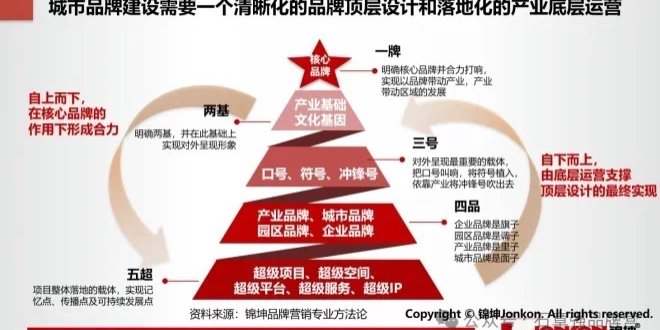
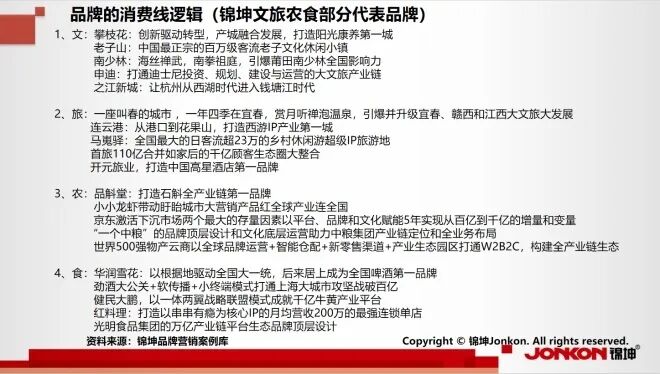
Group 1 - The core idea is that Chongqing's government aims to leverage the local noodle brand as a key driver for industrial development, with significant partnerships established to create a billion-dollar brand and trillion-dollar industry platform [1] - The case of Li Chuan illustrates the importance of having a sustainable industry; despite initial popularity, the lack of a solid industrial base led to a decline, prompting a shift to promoting "Li Chuan Tea" as a key product [1] - The success of the small lobster brand in Luyuan, despite weaker regional advantages, highlights how branding can elevate a local product to national recognition, becoming a significant industry hub [1] Group 2 - The article discusses the importance of integrating brand consumption with cultural, agricultural, and food sectors to create a comprehensive growth strategy from top-level design to bottom-level operations [5] - The brand's industrial logic emphasizes the need to connect production, urban development, and enterprise to create a cohesive support system [8] - The growth logic of enterprises varies significantly; some achieve rapid growth while others stagnate, indicating the necessity of understanding the underlying development routes and growth logic [9] Group 3 - The "Four ONE" product strategy is introduced, emphasizing the need for businesses to identify market gaps and establish themselves as leaders in niche markets [32] - The article outlines a structured approach to brand design and marketing operations, focusing on clarity in product offerings, brand messaging, and sales strategies [26][30] - The "Six Forces" operational framework is proposed to enhance marketing effectiveness, emphasizing planning, product development, brand image, service quality, promotional strategies, and management capabilities [45][49] Group 4 - The article emphasizes the importance of customer lifecycle management, categorizing it into four stages: attracting, converting, retaining, and referring customers [38] - Effective management across various operational stages is crucial for achieving sustained growth and profitability, requiring a comprehensive approach to internal and external relationships [42] - The article concludes with a roadmap for businesses to transition through different growth stages, from individual products to a comprehensive ecosystem, highlighting the need for strategic planning and execution [56]

锦坤石章强:从“流量”到“留量”的品牌进化之路
Sou Hu Cai Jing· 2025-12-15 09:17
Core Insights - The essence of branding in the changing technological landscape is to establish sustainable connections rather than merely chasing fleeting traffic [2][3] - Brands must evolve from short-term traffic gains to long-term value creation, focusing on building brand assets that endure beyond initial consumer excitement [2][3] Group 1: Brand Development Strategies - Stone Zhangqiang emphasizes a systematic approach to brand growth, outlining a path from individual million-level breakthroughs to trillion-level ecosystem cultivation [3] - Each stage of brand development requires tailored connection strategies, from channel breakthroughs to product positioning and platform building [3] Group 2: Marketing Methodology - The "Five Connections" sticky marketing solution addresses the common issue of traffic anxiety, advocating for differentiated connection strategies at various development stages [6] - The four-step model of "Four Trusts" involves conveying brand image, establishing product trust, shaping service confidence, and forming brand belief [6] Group 3: Case Studies and Examples - Successful brand building requires clear top-level design and effective bottom-level marketing operations, as demonstrated by various transformation case studies [6][7] - Examples include Hongqiao Source's brand repositioning, Dongfang Meigu's growth into a trillion-level industry cluster, and Xuyi Lobster's establishment as a national geographic brand [6][7] Group 4: Brand as Industry Representative - The highest level of brand building is to become a representative of the industry, where a brand's success is linked to the health and potential of its industry [7] - Brands should focus on creating trust with users rather than merely pursuing traffic, as the core of business remains value creation [7] Group 5: Strategic Recommendations - Brands are advised to maintain strategic focus amidst market competition, emphasizing the importance of differentiated value creation [8] - Long-term strategic patience is essential, as brand building is likened to a marathon rather than a sprint, requiring consistent direction and timing [8]
金山上海湾区,闵行大零号湾,奉贤东方美谷,宝山该出啥牌?
Jing Ji Guan Cha Wang· 2025-07-01 09:36
Core Insights - The article discusses the need for different districts in Shanghai to develop their unique brand identities to compete effectively in a globalized environment, highlighting the examples of Jinshan, Minhang, and Fengxian, while questioning what Baoshan should do to establish its own brand [2][32]. Group 1: Jinshan's Journey - Jinshan has faced challenges in its brand development due to its historical reliance on traditional industries like petrochemicals, which have negatively impacted its image [5][6]. - The district's geographical distance from the city center has limited its access to resources and attention, making it harder to build a competitive brand [7][9]. - Jinshan's frequent changes in strategic planning have led to confusion and a lack of focus, hindering its brand establishment [10]. Group 2: Minhang's Development - Minhang has struggled with a lack of a core brand identity, despite having economically successful districts like Qibao and Xinzhuang [16][18]. - The emergence of the "D Zero Bay" has provided an opportunity for Minhang to enhance its technological innovation and brand recognition [20][22]. - The collaboration between local universities and tech companies in D Zero Bay has fostered a robust innovation ecosystem, attracting investment and enhancing the district's reputation [23][25]. Group 3: Fengxian's Transformation - Fengxian was previously seen as a "three-no" district, lacking advantages in location, industry, and culture, until the establishment of the "Oriental Beauty Valley" [27][28]. - The Oriental Beauty Valley has positioned Fengxian as a global hub for the beauty industry, achieving significant brand value and revenue growth [30][31]. - The district's strategy focuses on brand building, capital investment, and internationalization, which has led to rapid development and recognition [31]. Group 4: Baoshan's Brand Strategy - Baoshan currently lacks a clear urban brand and needs to identify its core brand to enhance its competitiveness [35][42]. - The district has a rich cultural heritage and a strong industrial base, which can be leveraged to create a unique brand identity [45][47]. - A systematic approach to brand design and operational execution is essential for Baoshan to establish a recognizable and impactful urban brand [42][59].