商业航天成本控制

Search documents
朱雀三号入轨成功回收失败!航天探索没有坦途,失败也是宝贵财富
Mei Ri Jing Ji Xin Wen· 2025-12-03 13:05
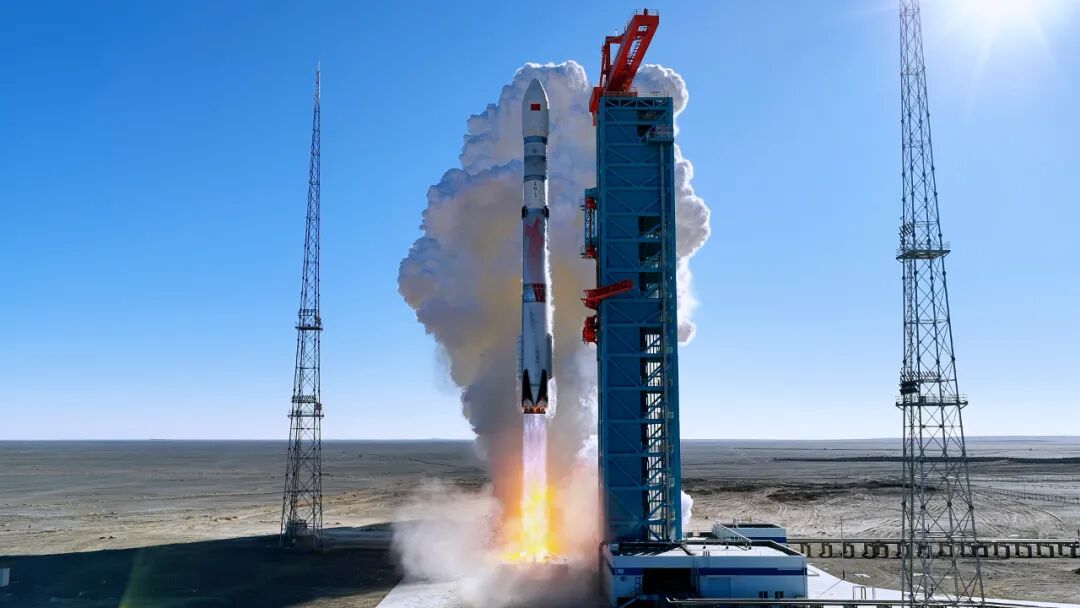
Core Viewpoint - The successful launch of the Zhuque-3 rocket by Blue Arrow Aerospace marks a significant step in China's commercial space industry, despite the failure of the recovery test, highlighting the importance of patience and perseverance in developing reusable rocket technology [1][6]. Group 1: Rocket Development and Technology - Zhuque-3 is designed as a large payload, low-cost, reusable rocket using liquid oxygen and methane, featuring the domestically developed Tianque engine and a nine-engine parallel power system [1][3]. - The rocket's stainless steel structure significantly reduces manufacturing costs and production time, showcasing innovative engineering in the commercial space sector [1][3]. - The development timeline of Zhuque-3, from its introduction to the recent test flight, is only two years, indicating a rapid pace of innovation in a highly competitive market [3][4]. Group 2: Market Dynamics and Competition - The global commercial space market reached several hundred billion dollars by 2025, characterized by a "winner-takes-all" dynamic, where lower launch costs and safety are critical for securing contracts [4]. - SpaceX has established a significant lead in the market, making it essential for competitors like Blue Arrow Aerospace to quickly catch up to gain market share [4][6]. - The Zhuque-3 team must engage in rigorous analysis and technical improvements following the test flight to prepare for future launches, emphasizing the need for continuous development in the industry [4][6]. Group 3: Learning from Failures - The journey of space exploration is fraught with challenges, and the failure to recover Zhuque-3 is part of the iterative process of testing and improvement, similar to the early struggles of SpaceX [6]. - The mission provided valuable data on the rocket's performance, which is crucial for future development and the goal of achieving reliable recovery and reuse [6]. - The experiences of Blue Arrow Aerospace, SpaceX, and Blue Origin underline the importance of resilience, hard work, and the willingness to learn from failures in advancing space technology [6].

国内商业航天液体火箭天龙三号一级动力系统海上试车成功
Huan Qiu Wang Zi Xun· 2025-09-16 05:04
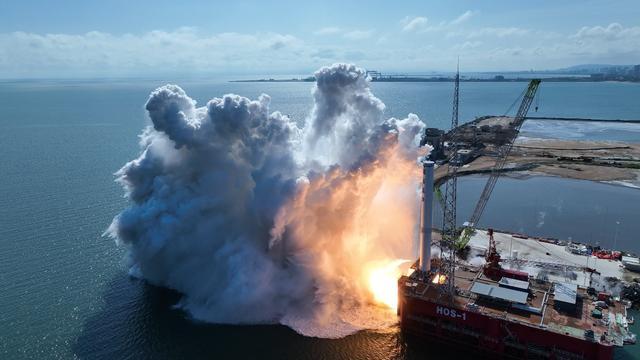
Core Insights - Tianbing Technology successfully conducted a test of the Tianlong-3 large liquid launch vehicle's first-stage propulsion system, setting a new domestic record for thrust in commercial aerospace liquid rocket engines [1][3] - The Tianlong-3 rocket is expected to complete its maiden flight by the end of this year and aims for over 30 launches annually, marking a significant step towards regular commercial launches [3][8] Group 1: Technical Achievements - The Tianlong-3 is China's first commercial rocket capable of carrying over 20 tons to low Earth orbit, with a total length of 72 meters and a launch weight of approximately 600 tons [4][8] - The rocket's first stage features nine Tianhuo-12 engines, with a payload capacity of 17-22 tons for low Earth orbit and 10-17 tons for sun-synchronous orbit, comparable to SpaceX's Falcon 9 [4][8] - The recent test covered the entire launch process, validating multiple new technologies, including a liquid nitrogen heating and pressurization system that reduces system weight by over 50% and costs to one-tenth of previous designs [6][9] Group 2: Industry Impact - The successful test reinforces the effectiveness of China's aerospace zeroing mechanism, leading to 127 reliability improvements and a more rigorous ground verification system [7] - The Tianlong-3's capabilities are expected to transform the competitive landscape of China's commercial aerospace industry, shifting from small-scale, customized satellite launches to large-scale, standardized constellation deployments [8][9] - The rocket's design emphasizes high reliability and low cost, utilizing 3D printing for 90% of engine components, significantly reducing production time and costs [9][10] Group 3: Future Developments - Tianbing Technology is establishing dedicated launch facilities to support high-frequency launches, with plans for a second specialized launch site [3][10] - The company has developed a comprehensive aerospace manufacturing system, capable of producing 30 Tianlong-3 rockets and 20 Tianlong-2 rockets annually, enhancing its competitive advantage in the market [10]