
天龙三号大型液体运载火箭

Search documents
电力设备及新能源周报20260208:预计“十五五”全球光伏市场保持高增,首个重大电网项目获核准-20260208
Guolian Minsheng Securities· 2026-02-08 13:55
Investment Rating - The report maintains a "Recommended" rating for key companies in the electric power equipment and new energy sectors, including Ningde Times, Keda Li, and others [6][7]. Core Insights - The global photovoltaic market is expected to maintain high growth during the "14th Five-Year Plan" period, with annual new installations projected to reach 725-870 GW globally and 238-287 GW domestically [3][39]. - The electric power equipment sector is witnessing significant developments, including the approval of major grid projects and the awarding of contracts for high-voltage equipment [4][39]. - The new energy vehicle market continues to show strong momentum, with major manufacturers reporting significant year-on-year delivery increases [2][14]. Summary by Sections New Energy Vehicles - In January 2026, several new energy vehicle manufacturers reported substantial delivery growth, with NIO delivering 27,182 units (+96.1% YoY) and BYD maintaining a leading position with 210,051 units delivered [2][14][24]. - The third China All-Solid-State Battery Innovation Development Summit was held, focusing on key materials and technological advancements [2][27]. New Energy Generation - The photovoltaic industry is transitioning from scale expansion to high-quality development, with a focus on technological integration and new application scenarios [39][40]. - The cancellation of export tax rebates for photovoltaic products starting April 1, 2026, marks a shift to full market competition, pushing companies towards innovation and sustainable competitiveness [45][48]. Electric Power Equipment and Automation - The State Grid's recent tender for ultra-high voltage equipment involved 119 packages, with 115 awarded, indicating robust demand in the sector [4][39]. - The approval of the first major grid project by the National Development and Reform Commission signifies a positive outlook for infrastructure development in the electric power sector [4][39]. Commercial Aerospace - The domestic first "one rocket, 36 satellites" satellite launch technology facility has been accepted, indicating advancements in commercial aerospace capabilities [5]. Market Performance - The electric power equipment and new energy sector saw a weekly increase of 2.20%, outperforming the Shanghai Composite Index, with lithium battery and solar indices showing significant gains [1].



天兵科技与北航共筑“产学研生态圈”
Xin Lang Cai Jing· 2026-02-01 17:15
Core Viewpoint - The strategic cooperation between Tianbing Technology and Beihang University focuses on the engineering and industrialization of reusable rockets, aiming to enhance China's commercial aerospace capabilities from "single-point breakthroughs" to "systematic construction" [1][2]. Group 1: Strategic Cooperation - Tianbing Technology and Beihang University signed a strategic cooperation agreement on January 31, 2026, to collaborate on key areas such as technology breakthroughs, talent cultivation, and integration of industry and academia [1]. - The partnership aims to create a model of collaborative innovation between universities and enterprises, leveraging Tianbing's systematic capabilities in engineering practice and Beihang's strengths in fundamental research and talent training [1]. Group 2: Technological Development - The cooperation will establish a joint laboratory focusing on core technologies for reusable rockets, including precise recovery and engine reuse [2]. - Tianbing's independently developed Tianlong-3 large liquid launch vehicle, capable of carrying 22 tons to low Earth orbit, is undergoing recovery tests, with the collaboration expected to support its engineering validation and industrialization [2]. Group 3: Talent Development - The partnership will facilitate mutual hiring of experts, establishment of internship and practical training bases, and project-based education to promote talent flow and collaborative training [2]. - Tianbing Technology will provide internship and employment opportunities for Beihang students, while Beihang will offer technical training and support for Tianbing's research staff, addressing the shortage of high-end engineering talent in the industry [2]. Group 4: Industry Context - As low Earth orbit satellite internet networks accelerate, the role of large reusable rockets as "aerospace infrastructure" becomes increasingly significant [2]. - The strategic collaboration is seen as a proactive response to national commercial aerospace development strategies and a critical move for companies to prepare for future industrialization and competitive scaling [2].
瞄准可复用火箭产业化:江苏这家企业与北航共筑“产学研生态圈”
Xin Lang Cai Jing· 2026-02-01 12:05
Core Viewpoint - The strategic cooperation between Tianbing Technology and Beihang University aims to enhance China's commercial aerospace capabilities through joint research and development of reusable rocket technologies and talent cultivation [1][4][6]. Group 1: Strategic Cooperation - Tianbing Technology and Beihang University signed a strategic cooperation agreement to establish a joint laboratory focusing on technologies such as rocket precision recovery and engine reuse [1][4]. - The collaboration is expected to leverage Tianbing's engineering practices and Beihang's research strengths to create a model of industry-academia collaboration, promoting the transition from "single-point breakthroughs" to "systematic construction" in China's commercial aerospace sector [1][3][5]. Group 2: Technological Development - The partnership will support the engineering validation and industrialization of Tianbing's self-developed Tianlong-3 large liquid launch vehicle, which has a near-Earth orbit capacity of 22 tons and integrates numerous new technologies [4][5]. - The cooperation will also enhance the manufacturing system that aims for an annual production of 50 Tianlong-3 rockets and 500 engines, improving production stability and launch economics [4][5]. Group 3: Talent Development - The collaboration will facilitate a dual flow of talent through mechanisms such as expert mutual hiring and the establishment of internship and practical training bases, addressing the industry's urgent need for high-end engineering talent [5]. - This "talent co-cultivation and industry-academia integration" model is expected to alleviate the shortage of high-end engineering talent and prepare a strong workforce for the industry's scale-up [5]. Group 4: Industry Context - The partnership is seen as a response to the accelerating phase of low-orbit satellite internet deployment, highlighting the increasing significance of large reusable rockets as "aerospace infrastructure" [6]. - The strategic collaboration serves as a key initiative for both parties to position themselves for future industrialization and competitive scale, providing a collaborative example for the industry that encompasses research, manufacturing, launching, and talent support [6].

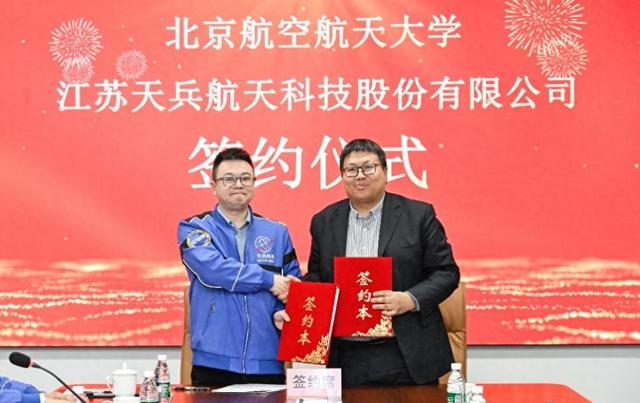
天兵科技与北航签署战略协议 共推可复用火箭产学研深度融合
Yang Zi Wan Bao Wang· 2026-02-01 05:58
Core Viewpoint - The strategic cooperation between Jiangsu Tianbing Aerospace Technology Co., Ltd. and Beihang University focuses on the engineering and industrialization of reusable rocket technology, aiming to enhance China's commercial aerospace capabilities from "single-point breakthroughs" to "systematic construction" [1][4]. Group 1: Joint Research and Development - The partnership aims to build a joint research and development system to accelerate the industrialization of core technologies, supporting high-frequency launch tasks through a comprehensive "R&D-manufacturing-launch" closed-loop capability [3][7]. - The collaboration will establish a joint laboratory to tackle core technologies such as rocket precision recovery and engine reuse, leveraging Tianbing's advanced testing conditions and Beihang's strong academic foundation [4][6]. Group 2: Talent Development - The cooperation includes a talent cultivation mechanism to address the industry's urgent need for high-end engineering talent, integrating research innovation capabilities with engineering practice resources [6][7]. - Both parties will implement mechanisms for mutual hiring of experts, co-establishing internship and practical training bases, and conducting project-based education to facilitate talent flow and collaborative training [6][7]. Group 3: Industry Ecosystem Integration - This partnership signifies a shift from mere technical collaboration to building a sustainable industry-academia-research ecosystem, enhancing the efficiency of the "technology breakthrough-engineering transformation-industry application" cycle [7]. - The collaboration is a proactive response to national commercial aerospace development strategies and is crucial for the future industrialization and competitive landscape of the industry [7].

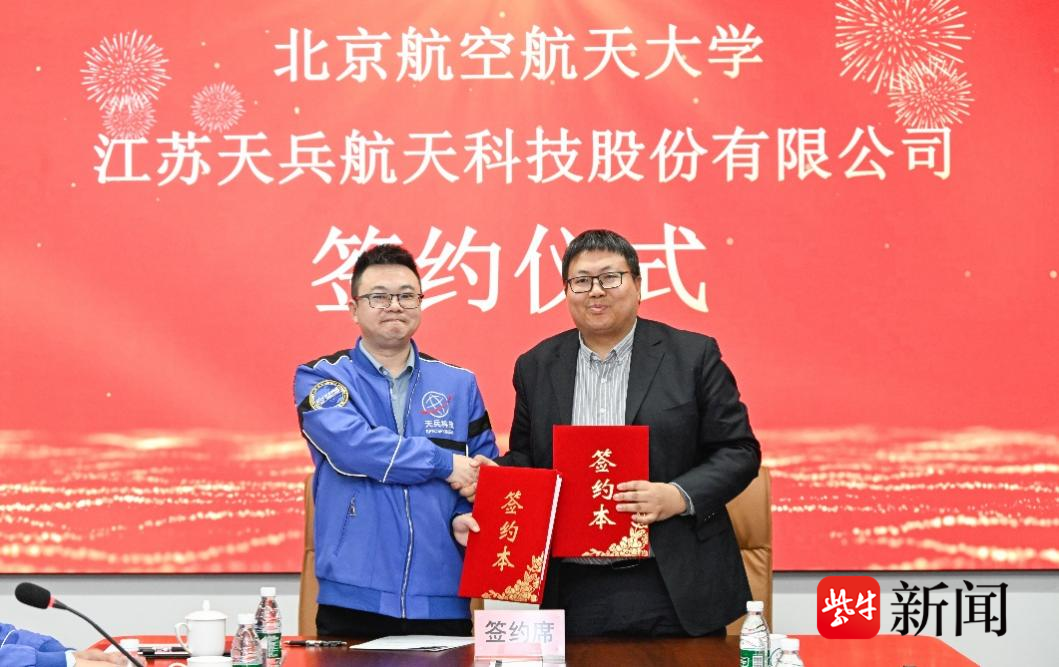
天兵科技联手北航攻克可重复使用火箭关键技术
Feng Huang Wang· 2026-01-31 16:12
Core Viewpoint - The strategic cooperation between Tianbing Technology and Beihang University focuses on the engineering and industrialization of reusable rockets, addressing key challenges in the commercial aerospace sector through joint efforts in research and development [1][2]. Group 1: Collaboration Details - The partnership includes the establishment of a joint laboratory to tackle core issues such as rocket precision recovery, engine reuse, and full-flow staged combustion engines [1]. - Tianbing Technology's self-developed Tianlong-3 large liquid launch vehicle, which has a payload capacity of 22 tons to low Earth orbit, is a focal point of this collaboration [1]. Group 2: Talent Development - An innovative talent cultivation mechanism has been established, involving expert mutual hiring and the creation of internship and practical training bases [2]. - This model aims to address the shortage of high-end engineering talent in the industry, providing employment opportunities for Beihang students while offering technical training support for Tianbing's research personnel [2]. Group 3: Industry Context - China's commercial aerospace sector is transitioning from technological breakthroughs to large-scale applications, marking a critical window for development [1]. - The integration of research, manufacturing, and launch processes through this collaboration is expected to enhance the competitiveness of China's commercial aerospace ecosystem [2].

从技术攻坚到产业化落地 天兵科技携手北航助推商业航天体系化发展
Huan Qiu Wang· 2026-01-31 14:20
Core Viewpoint - The strategic cooperation between Tianbing Technology and Beihang University focuses on the engineering and industrialization of reusable rocket technology, aiming to enhance China's commercial aerospace capabilities from "single-point breakthroughs" to "systematic construction" [1][4]. Group 1: Joint R&D System - The partnership aims to accelerate the industrialization of core technologies in China's commercial aerospace sector, which is entering a critical phase of scale and commercialization [3]. - Tianbing Technology has initiated a systematic layout from R&D centers to manufacturing bases and dedicated launch sites, enhancing its "R&D-manufacturing-launch" closed-loop capability to support high-frequency launch tasks [3]. Group 2: Talent Development Mechanism - The collaboration will establish a talent cultivation mechanism to address the increasing demand for high-end engineering talent in the commercial aerospace industry [6]. - Both parties will implement measures such as expert mutual hiring, co-establishing internship bases, and project-based education to facilitate talent flow and collaborative training [6]. Group 3: Industry-Academia Integration - This cooperation signifies a shift from mere technical collaboration to building a sustainable industry-academia-research ecosystem, enhancing the efficiency of technology breakthroughs and industrial applications [7]. - The strategic partnership is a proactive response to national commercial aerospace development strategies and is crucial for future industrialization and competitive positioning in the market [7].
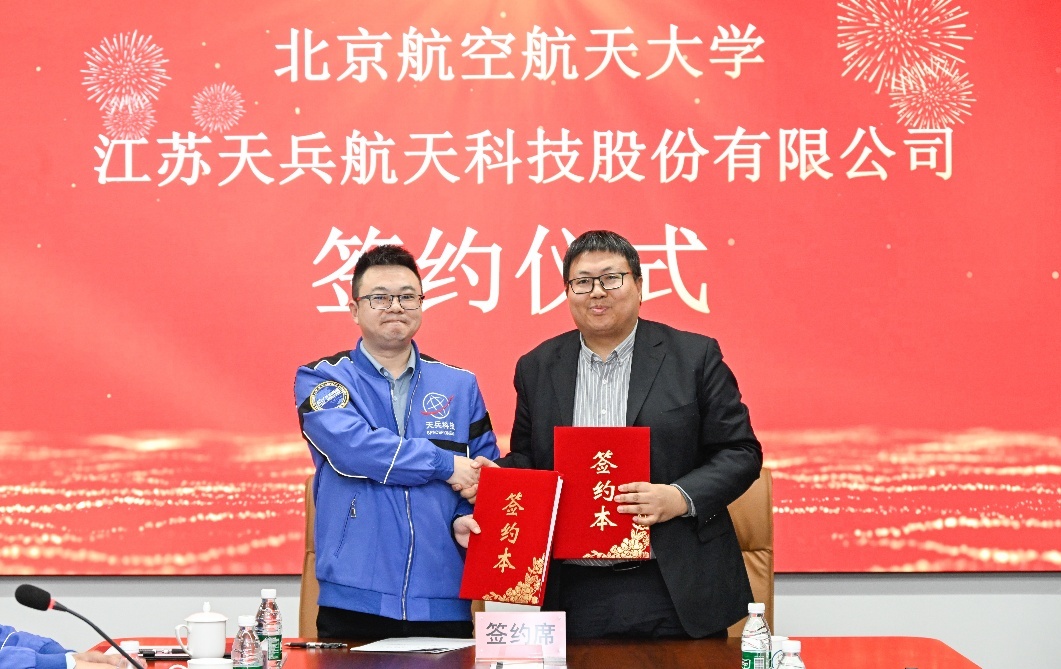
中国商业航天低成本时代渐行渐近
Zheng Quan Ri Bao Zhi Sheng· 2025-12-23 16:10
Core Viewpoint - The successful launch of the Long March 12甲 rocket marks a significant step towards the development of reusable rocket technology in China, despite the failure to recover the first stage, which provides critical data for future missions [1][2]. Group 1: Rocket Development and Technology - The Long March 12甲 is a medium-sized rocket utilizing liquid oxygen and methane as propellants, designed for "first-stage reuse" [1]. - The rocket's total length is approximately 70.4 meters, with a takeoff weight of about 437 tons [1]. - The development of reusable rockets is seen as a key technology to reshape the global space competition and reduce commercial spaceflight costs [1][2]. - Multiple technical paths are being explored in China's reusable rocket development, including land vertical recovery and sea recovery methods [3][4]. Group 2: Industry Trends and Market Potential - The maturity of reusable rocket technology is viewed as a core engine for ushering in a low-cost era in commercial spaceflight, enabling cost optimization and expanding application scenarios [5]. - The commercial space industry is expected to reach a market size of trillions, with satellite manufacturing and rocket manufacturing being the first beneficiaries [7]. - The development of satellite communication services is accelerating, with major telecom operators preparing to enhance satellite communication capabilities [6][7]. - The industry is transitioning from isolated network operations to integrated "space-ground" communication systems, enhancing overall service offerings [6].
北京丰台集中签约一批商业航天项目 含央地合作与产业链协同
Zhong Guo Jing Ying Bao· 2025-12-16 07:04
Core Insights - The conference "Fengyunhui·Xiaoyue Wentian" focused on promoting high-quality and safe development of commercial aerospace through collaboration between central and local governments, industry, academia, and finance [1][2]. Group 1: Industry Development - Fengtai District has established a complete industrial chain covering rocket manufacturing, satellite applications, ground equipment, and data services, with an industry scale exceeding 130 billion yuan [2]. - The district aims to enhance its industrial ecosystem and become a globally influential hub for commercial aerospace innovation and industry aggregation [2][4]. Group 2: Collaborative Initiatives - A series of cooperation agreements were signed between Fengtai and 11 national aerospace institutions to focus on technology breakthroughs, results transformation, and industrial collaboration [2][3]. - The establishment of the "Commercial Aerospace Innovation Consortium" aims to facilitate the entire chain from basic research to technology development and testing [3]. Group 3: Financial and Service Support - Fengtai District launched a commercial aerospace industry fund and various financial products to create a diversified financial support network for enterprises [3]. - The "One-on-One Aerospace Steward" service was introduced to provide comprehensive support for businesses, enhancing government service efficiency [3]. Group 4: Technological Achievements - The conference showcased advanced aerospace technologies and products, including unmanned aerial vehicles, space hydrogen power systems, and high-precision inertial measurement units [6][7]. - Tianbing Technology, recognized as a leading company in the commercial aerospace sector, presented multiple rocket models and plans for future commercial launches [6]. Group 5: Future Plans - Fengtai District plans to continue its focus on key areas of commercial aerospace during the 14th Five-Year Plan, promoting collaboration across the industry chain and establishing a virtuous cycle of research, technology, and financial support [4][7].
火箭发射高度活跃 产业链上市公司订单放量
Zheng Quan Ri Bao Wang· 2025-12-15 13:09
Core Insights - The frequency of rocket launches in China has significantly increased, with a diverse range of participants, indicating a maturing commercial space ecosystem [1] - The demand for low Earth orbit satellite networks is rapidly growing, prompting private rocket companies to accelerate their entry into the market, which is expected to provide more launch options and enhance cost efficiency across the industry [1] Group 1: Recent Developments in Private Rocket Companies - Several private rocket companies have made notable advancements, including the successful launch of the Zhuque-3 rocket by Blue Arrow Aerospace, which completed its mission and reached the designated orbit [1] - Beijing Tianbing Technology's Tianlong-3 rocket has successfully completed critical tests, indicating readiness for its first flight, which will enable the launch of multiple satellites in a single mission [1] Group 2: Policy Support and Future Prospects - The successful recovery and reuse of rockets could significantly lower launch costs, enhancing the capacity for large-scale commercial launches in China [2] - The National Space Administration has released a plan outlining 22 key initiatives to promote high-quality development in commercial space, including support for new technologies and the establishment of a national commercial space development fund [2] Group 3: Growth in Orders from Listed Companies - Several listed companies are experiencing an increase in orders related to rocket and satellite manufacturing, indicating a positive trend in the commercial space sector [3] - Companies like Yuyuan Powder Materials and Xi'an Triangle Defense are actively engaging with commercial space firms, reflecting the growing demand for components and services in the industry [3] - The development of commercial space is expected to create new growth opportunities for companies with technological advantages and mature production capacities [3]
宇航科技城等都安排上了!丰台推动商业航天高质量发展
Bei Jing Ri Bao Ke Hu Duan· 2025-12-15 09:47
Core Insights - Beijing Fengtai District is actively promoting the development of commercial aerospace by establishing various projects and partnerships aimed at enhancing the industry’s quality and safety [2][4][7]. Group 1: Event Overview - The "Fengyunhui·Xiaoyue Wentian - 2025 Central-Local Cooperation to Promote High-Quality and Safe Development of Commercial Aerospace Conference" was held on December 15 in Beijing [2]. - Numerous cutting-edge commercial aerospace products were showcased at the event, including hybrid electric propulsion systems, chip atomic clocks, inertial navigation devices, and infrared protection systems [2]. Group 2: Industry Development - Fengtai District has gathered over 40 national aerospace institutions, including the Aerospace Science and Technology Institute and the Aerospace Science and Industry Corporation, along with more than 200 key enterprises in the industry chain, forming a complete industrial chain covering rockets, satellite applications, aerospace testing, ground equipment, and data services [4]. - The total scale of the aerospace industry in Fengtai has surpassed 130 billion yuan [4]. Group 3: Strategic Partnerships - Fengtai District has signed cooperation agreements with national aerospace forces to jointly promote the high-quality and safe development of commercial aerospace [4]. - A commercial aerospace innovation consortium has been established in collaboration with Tsinghua University, Beihang University, and key enterprises in the industry chain to foster deep integration of production, education, research, and application [5]. Group 4: Future Projects - Fengtai District plans to build the "Aerospace Technology City" and other projects such as the Satellite Internet High-Quality Park and the Two-Seven Aerospace Intelligent Manufacturing Base to provide collaborative innovation platforms for national aerospace forces and commercial aerospace enterprises [7].
