商业落地

Search documents
2026年,机器人要少跳舞,多干活
Xin Lang Cai Jing· 2026-01-29 08:36
Core Viewpoint - The robotics industry is experiencing a shift from showcasing technical capabilities to demonstrating practical applications and commercial viability, as investors and customers demand tangible results rather than mere performances [2][3][25]. Group 1: Industry Trends - The robotics market is witnessing a significant change in evaluation criteria, moving from "showcase capabilities" to "practical utility," with a focus on reliability, predictability, and total cost of ownership [4][5]. - The report indicates that the number of companies in the humanoid robotics sector has surged, but actual shipment growth is lagging behind, leading to concerns about a potential bubble in valuations [3][4]. - A pivotal moment occurred in Q3 2025 when Agility Robotics' Digit became the first humanoid robot to receive OSHA certification, highlighting the importance of real-world application over flashy demonstrations [4][5]. Group 2: Investment Dynamics - Investment logic is shifting, with a concentration of capital towards a few companies that demonstrate commercial validation, as evidenced by the fact that 88% of funding in 2024-2025 went to large financing rounds [5][6]. - The report predicts that only 3-4 companies will emerge as clear winners in the humanoid robotics space, while others may face acquisition or closure due to the inability to balance high technical uncertainty with limited commercial validation [6][14]. - The focus is now on metrics such as return on investment (ROI) within 16 months, task-switching capabilities, and operational data, rather than just technological prowess [6][10]. Group 3: Market Opportunities - The report highlights a growing opportunity for Chinese companies in the global supply chain, as they possess a complete robotics industry chain despite facing policy barriers in overseas markets [15][16]. - The trend of "robotics as a service" (RaaS) is gaining traction, with over 50% of companies leaning towards leasing models, which allows for lower upfront costs and reduced risk [17][20]. - The demand for automation in data centers and semiconductor manufacturing is expected to surge, driven by the need for reliability and stability in high-stakes environments [18][19]. Group 4: Regulatory Landscape - The establishment of safety standards is becoming critical, with the U.S. National Institute of Standards and Technology initiating competitions to create evaluation systems for humanoid robots, which will significantly impact market dynamics [19][20]. - Companies that achieve certification will have a competitive edge in negotiations, as safety compliance becomes a key factor for clients and investors [19][20]. Group 5: Commercialization and Performance - The report emphasizes that 2025 marked a significant year for the mass production of humanoid robots in China, with substantial shipment figures indicating a shift towards commercial viability [21][25]. - The focus is on delivering measurable value, with companies needing to demonstrate clear task lists and performance metrics to justify investments [11][12]. - The evolving landscape requires companies to adapt their business models to meet customer expectations for growth and reliability, moving beyond initial performance to long-term operational success [12][17].


李沐:Voice Agent商业落地的教训、经验与实践|硅谷101年度线下大会演讲(全英)
硅谷101· 2025-10-27 22:37
李沐,AI领域备受瞩目的实践者与布道者,在硅谷101举办的年度科技大会中深度揭秘语音智能体从技术突破到商业落地的全过程。他系统拆解了两个场景的实战案例:如何在开放世界游戏中,让智能体同时扮演“游戏设计师+游戏NPC”的双重角色,为玩家带来独一无二的体验;又如何通过严苛的行业认证,让AI成为能卖出保险的智能电话销售员。 目前市场普遍认为语音智能体技术已经可以投入使用,到了“落地”的阶段,但李沐却坦言,这仅仅是商业化的开始,要规模化依然有诸多需要探索的地方,——而正是这样的挑战,让前路更值得期待。同时,沐神团队在招人哦,感兴趣的小伙伴可以联系他!https://jobs.lever.co/bosonai 硅谷101于2025年10月5日在硅谷线下举办的Alignment 2025年度科技大会上,不少演讲嘉宾分享了极具价值的观点,我们将会把一些重要观点逐渐整理上线。我们的线下大会是全英文,嘉宾的分享将用中文字幕的方式呈现。 演讲嘉宾:李沐,Boson AI联合创始人、前亚马逊高级首席科学家 你会看到: 00:00 - 01:39 语音智能体的关键:实时性+任务导向 01:39 - 07:13 AI扮演游戏中的NPC ...


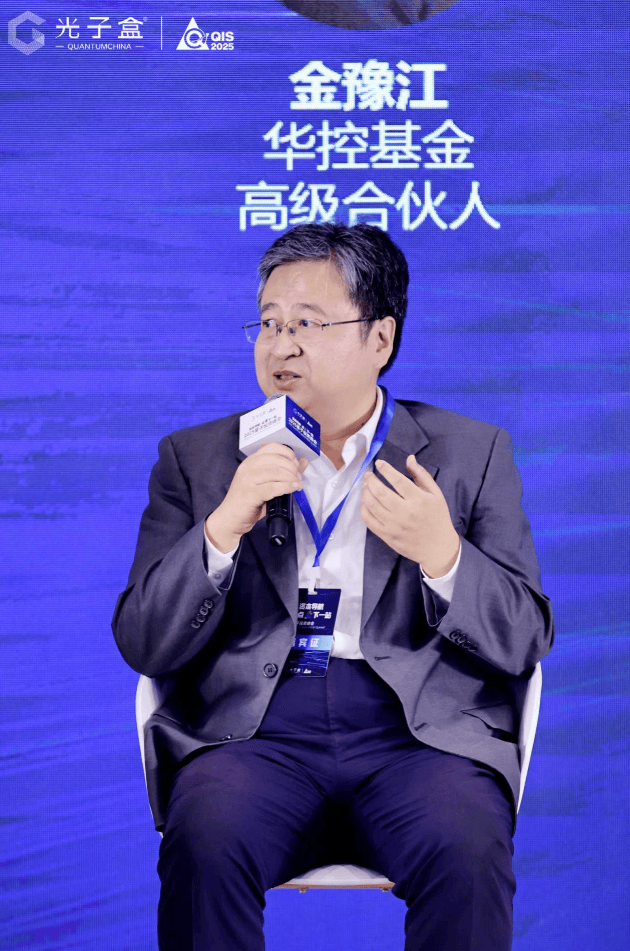
量子投资:从战略布局到长期价值研判
Sou Hu Cai Jing· 2025-09-26 10:15
Core Insights - Quantum investment is positioned as a long-term strategic value rather than a short-term speculation, especially in the context of global technological competition [1] - The roundtable discussion focused on evaluating the long-term value of quantum technology and how to accurately grasp investment timing [1] Group 1: Investment Dynamics - The core of quantum investment lies in the "change" and "unchange," with a consistent belief in the long-term prospects of the quantum industry [2] - Investment logic has shifted from pure technology innovation to a focus on commercial pathways and application scenarios as companies mature [5][6] - The investment community is increasingly prioritizing commercial viability alongside technological advancement, indicating a transition from "technology faith" to "technology + commercial landing" [5][6] Group 2: Sino-US Investment Differences - The disparity in quantum investment between China and the US is narrowing, with China expected to see significant capital influx in the coming year [8][10] - China's unique industrial structure leads to a perception of a larger gap, but the total hard technology investment is comparable [8] - The Chinese market benefits from a centralized system that allows for rapid commercialization and application of quantum technologies [14][15] Group 3: Investment Strategies and Team Evaluation - Investment strategies are evolving towards multi-track layouts, with a focus on high-growth potential projects [15] - The emphasis on team capabilities and their alignment with application scenarios is critical for investment decisions [15][16] - Investors are advised to adopt a long-term perspective and maintain curiosity about emerging opportunities [16][17] Group 4: Recommendations for Investors and Entrepreneurs - Investors should adopt a mindset of "starting with the end in mind," focusing on long-term goals while remaining flexible in their strategies [16] - Entrepreneurs are encouraged to consider the threefold value of technology, team capability, and commercial viability when developing their ventures [20] - The rapid commercialization of quantum technologies in China is highlighted as a significant advantage for both investors and entrepreneurs [20] Conclusion - The roundtable discussion outlines a clear vision for quantum investment, emphasizing long-term value as a cornerstone, with technology iteration as a variable and commercial landing as an accelerator [21] - Despite differences in capital market structures, China's advantages in policy support and rapid application development position it favorably in the quantum investment landscape [21]