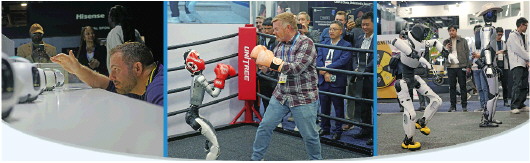
启元Q1

Search documents
融资、新品、订单……产业链上连环落子,智元的“华为式”赌局
Hua Xia Shi Bao· 2026-02-15 00:56
Core Insights - The article highlights the strategic moves of Zhiyuan, which is not only focused on manufacturing robots but is also building a comprehensive ecosystem around embodied intelligence, similar to Huawei's approach [1][4]. Investment and Financing - On February 13, Zhiyuan's subsidiary Mifeng Technology announced the completion of several hundred million yuan in seed and angel round financing, led by Sequoia China and supported by top-tier investors [2]. - Another subsidiary, AGILINK, also secured several hundred million yuan in a new financing round, indicating strong investor interest in Zhiyuan's ecosystem [2][6]. - Zhiyuan has completed 11 rounds of financing, attracting major investors like JD, Tencent, and BYD, which reflects its robust financial backing [6][7]. Industry Position and Market Strategy - Zhiyuan has invested in 48 companies, with over 50% ownership in 10 of them, indicating a strong foothold in the industry [1][3]. - The company aims to address the data supply gap in the embodied intelligence sector, which is projected to exceed 5 million hours by 2026, highlighting a critical bottleneck in industry development [3][6]. - Zhiyuan's robot sales have positioned it as a leader in the global market, with a reported shipment of 5,168 units, and a sales target of 20,000 to 30,000 units by 2026 [7][8]. Product Development and Innovation - Zhiyuan has launched the new generation of full-size humanoid robots, showcasing significant advancements in motion control algorithms and physical capabilities [7]. - The company is also expanding into the robot rental market through its platform Qingtian Rent, which has quickly gained traction with over 200 daily rental orders and a user base exceeding 200,000 within three weeks [8]. Challenges and Risks - Despite its ambitious plans, Zhiyuan faces challenges such as competition and reliability concerns from other robot manufacturers regarding its role as a parts supplier [8]. - The potential for conflicts in interests and technical integration risks among its independently financed subsidiaries could hinder the overall synergy and effectiveness of its operations [8].

「机器人+」融资、新品、订单……产业链上连环落子,智元的“华为式”赌局
Hua Xia Shi Bao· 2026-02-14 10:37
Core Insights - The article highlights the strategic moves of Zhiyuan, which is not only focusing on robot manufacturing but also on creating a comprehensive ecosystem in the embodied intelligence sector, similar to Huawei's approach [2][5][7]. Investment and Financing - On February 13, Zhiyuan's subsidiary Mifeng Technology announced the completion of several hundred million yuan in seed and angel round financing, led by Sequoia China and supported by top-tier capital [3]. - Another subsidiary, AGILINK, also secured hundreds of millions in financing shortly after its establishment, indicating strong investor confidence [3][5]. - Zhiyuan has completed 11 rounds of financing, attracting investments from major firms like JD, Tencent, and BYD, showcasing a robust financial backing [7]. Industry Position and Market Strategy - Zhiyuan has invested in 48 companies, with 10 holding over 50% stakes, indicating a strong foothold in the industry [2][5]. - The company aims to address the critical data supply gap in the embodied intelligence sector, which is projected to exceed 5 million hours by 2026 [4]. - Zhiyuan's robot sales have positioned it as a market leader, with a reported shipment of 5,168 units, and a sales target of 20,000 to 30,000 units by 2026 [8][9]. Product Development and Innovation - Zhiyuan has launched the new full-size humanoid robot, Expedition A3, showcasing significant advancements in motion control algorithms and physical capabilities [8]. - The company is also expanding into the robot rental market through its platform Qingtian Rent, which has seen rapid user growth and high order volumes [9]. Challenges and Risks - Despite its ambitious plans, Zhiyuan faces challenges such as competition and reliability concerns as both a robot manufacturer and a component supplier [9]. - The potential for conflicts in interests and technology integration risks among its subsidiaries could hinder the overall synergy and effectiveness of its operations [9].


智元机器人:不参加春晚,研发优先
证券时报· 2026-02-03 04:23
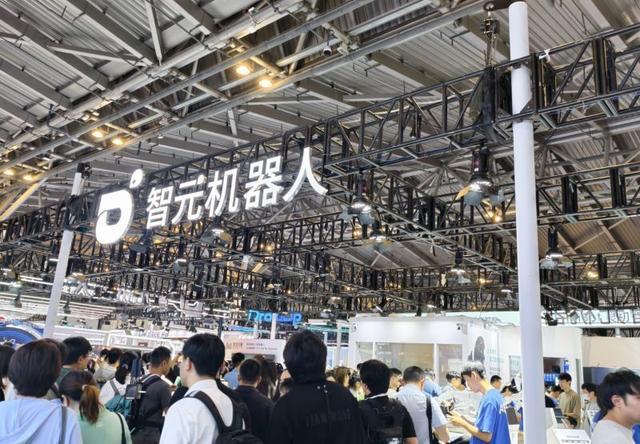
Core Insights - Zhiyuan Robotics will not participate in the 2026 Spring Festival Gala due to budget constraints, prioritizing funding for embodied intelligence technology and product development [1] - Several humanoid robot companies, including Magic Atom, Galaxy General, Yushu Technology, and Songyan Power, will showcase their capabilities at the Spring Festival Gala, with a starting price of 100 million yuan for participation [2] - Yushu Technology and Zhiyuan Robotics, both in the first tier of the industry, recently surpassed 1 billion yuan in revenue for 2025, with Yushu's founder stating their annual revenue has exceeded this figure [2] - Following Yushu Technology's performance at the 2025 Spring Festival Gala, the company gained significant market attention, completing IPO counseling by November 2025 [2] - Zhiyuan Robotics is preparing for a global premiere of a large-scale robot gala titled "Robot Wonderful Night," featuring hundreds of robots in various performances, which will be live-streamed soon [2] - On December 31, 2025, Zhiyuan Robotics launched the world's first full-body force-controlled small humanoid robot "Qiyuan Q1," achieving breakthroughs in joint systems, overall size, and application scenarios [3]

春晚机器人凉了?2026年,机器人要少跳舞,多干活
3 6 Ke· 2026-01-29 08:53
Core Insights - The Chinese robotics industry is experiencing a shift from showcasing technical capabilities to focusing on practical applications and commercial viability, as investors and customers demand tangible results rather than mere demonstrations [1][2][3] Group 1: Industry Trends - The 2026 outlook report emphasizes that the industry no longer wants to see robots performing tricks but rather engaging in useful tasks, indicating a paradigm shift towards commercial deployment [2][3] - The report highlights a significant disparity between soaring valuations and actual sales, with humanoid robot shipments only increasing by 17% despite a 300% rise in valuations, signaling a potential bubble [2][3] - As the number of robots deployed increases, companies are becoming less tolerant of flashy capabilities and more focused on reliability, predictability, and total cost of ownership [3][4] Group 2: Investment Dynamics - Investment logic is shifting, with a concentration of capital towards a few companies deemed to have commercial validation capabilities, as evidenced by the fact that 88% of funding in 2024-2025 went to large deals [4][5] - The report predicts that only 3-4 companies will emerge as clear winners in the humanoid robot sector, while others may face acquisition or closure due to an inability to balance high technical uncertainty with limited commercial validation [4][5] Group 3: Evaluation Metrics - The evaluation criteria for robots are evolving, with a focus on investment payback periods, task-switching capabilities, and operational data rather than just technical prowess [5][6] - Companies are now required to demonstrate clear task lists, performance metrics, and verifiable operational times before procurement, moving away from vague future potential descriptions [9][10] Group 4: Market Dynamics - The report notes a significant trend towards leasing and Robot-as-a-Service (RaaS) models, with 50% of companies preferring leasing to mitigate upfront costs and risks associated with technology [11][15] - The shift in decision-making power from technical teams to financial and operational departments reflects a growing demand for comprehensive total cost of ownership analyses [11][12] Group 5: Future Predictions - The report forecasts a major reshuffling in the investment landscape, with a predicted doubling of IPOs in the robotics sector in 2026, indicating a rush to lock in valuations before a potential downturn [12][24] - The report identifies a critical opportunity for Chinese companies in the global supply chain, as they possess a complete robotics industry chain despite facing policy barriers in overseas markets [14][15] Group 6: Safety and Standards - The establishment of safety standards is anticipated to be a crucial factor in the industry, with the potential to significantly impact market dynamics and competitive advantages [17][18] - Companies that participate in the development of these standards are likely to gain a first-mover advantage, while those that wait may find their technologies non-compliant [18][24]
2026年,机器人要少跳舞,多干活
Xin Lang Cai Jing· 2026-01-29 08:36
Core Viewpoint - The robotics industry is experiencing a shift from showcasing technical capabilities to demonstrating practical applications and commercial viability, as investors and customers demand tangible results rather than mere performances [2][3][25]. Group 1: Industry Trends - The robotics market is witnessing a significant change in evaluation criteria, moving from "showcase capabilities" to "practical utility," with a focus on reliability, predictability, and total cost of ownership [4][5]. - The report indicates that the number of companies in the humanoid robotics sector has surged, but actual shipment growth is lagging behind, leading to concerns about a potential bubble in valuations [3][4]. - A pivotal moment occurred in Q3 2025 when Agility Robotics' Digit became the first humanoid robot to receive OSHA certification, highlighting the importance of real-world application over flashy demonstrations [4][5]. Group 2: Investment Dynamics - Investment logic is shifting, with a concentration of capital towards a few companies that demonstrate commercial validation, as evidenced by the fact that 88% of funding in 2024-2025 went to large financing rounds [5][6]. - The report predicts that only 3-4 companies will emerge as clear winners in the humanoid robotics space, while others may face acquisition or closure due to the inability to balance high technical uncertainty with limited commercial validation [6][14]. - The focus is now on metrics such as return on investment (ROI) within 16 months, task-switching capabilities, and operational data, rather than just technological prowess [6][10]. Group 3: Market Opportunities - The report highlights a growing opportunity for Chinese companies in the global supply chain, as they possess a complete robotics industry chain despite facing policy barriers in overseas markets [15][16]. - The trend of "robotics as a service" (RaaS) is gaining traction, with over 50% of companies leaning towards leasing models, which allows for lower upfront costs and reduced risk [17][20]. - The demand for automation in data centers and semiconductor manufacturing is expected to surge, driven by the need for reliability and stability in high-stakes environments [18][19]. Group 4: Regulatory Landscape - The establishment of safety standards is becoming critical, with the U.S. National Institute of Standards and Technology initiating competitions to create evaluation systems for humanoid robots, which will significantly impact market dynamics [19][20]. - Companies that achieve certification will have a competitive edge in negotiations, as safety compliance becomes a key factor for clients and investors [19][20]. Group 5: Commercialization and Performance - The report emphasizes that 2025 marked a significant year for the mass production of humanoid robots in China, with substantial shipment figures indicating a shift towards commercial viability [21][25]. - The focus is on delivering measurable value, with companies needing to demonstrate clear task lists and performance metrics to justify investments [11][12]. - The evolving landscape requires companies to adapt their business models to meet customer expectations for growth and reliability, moving beyond initial performance to long-term operational success [12][17].
智元投资【今日宜休】背后:生态布局,还是求生之道?
机器人大讲堂· 2026-01-21 09:05
Core Viewpoint - The article discusses the strategic moves of Zhiyuan Robotics, highlighting its investment in the sleep technology company "Today Yixiu" as part of a broader strategy to transition from a robotics product company to an ecosystem platform company [4][22]. Group 1: Investment and Strategic Moves - Zhiyuan Robotics has invested in "Today Yixiu," a smart sleep company founded by former Xiaomi executive Wang Teng, which recently completed a seed round financing of several tens of millions [1][3]. - The investment reflects Zhiyuan's recognition of Wang Teng's team's product capabilities and a deeper need for cash flow, technology validation, and data assets amid challenges in robot sales [3][4]. - This move is seen as a potential commercialization pathway for Zhiyuan, aiming to leverage AI and sensor capabilities in the sleep and health sectors, which are closer to monetization compared to humanoid robots [20][21]. Group 2: Current Challenges and Market Dynamics - Despite achieving significant milestones, such as becoming the top global humanoid robot supplier and securing large contracts, the industry faces challenges, including high costs that limit consumer adoption [6][8]. - The average price of mainstream humanoid robots ranges from 100,000 to 500,000 RMB, making them unaffordable for average households [9]. - The industry is currently struggling with a lack of generalized capabilities, which restricts manufacturers to a B2B model, hindering entry into consumer markets [9][10]. Group 3: Ecosystem Development and Future Plans - Zhiyuan is shifting its focus from solely selling complete robots to building an ecosystem, similar to Google's approach with Android [10][11]. - The company has launched the "Zhiyuan A Plan" to incubate over 50 high-potential early-stage projects and aims to create a trillion-level industry ecosystem within three years [12][14]. - The establishment of "Qing Tian Rent," a robot leasing platform, addresses affordability issues, with a goal of serving over 400,000 rental customers by 2026 [16][21]. Group 4: Long-term Vision and Market Positioning - Zhiyuan's strategy includes diversifying its offerings to ensure survival and growth, even if humanoid robot sales take time to ramp up [22][24]. - The company is not solely relying on a sudden surge in robot sales but is also focusing on components, platform revenue sharing, and AI applications in various sectors [24]. - The success of Zhiyuan's transformation will not only impact its future but also serve as a reference for the entire humanoid robotics industry [24].
启元Q1个人机器人亮相CES 2026,斩获“TWICE Picks”奖
Huan Qiu Wang· 2026-01-12 06:25
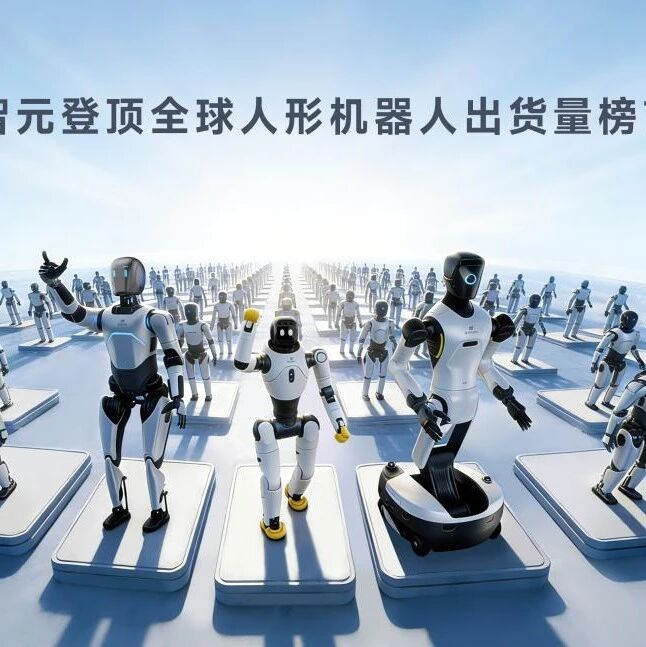
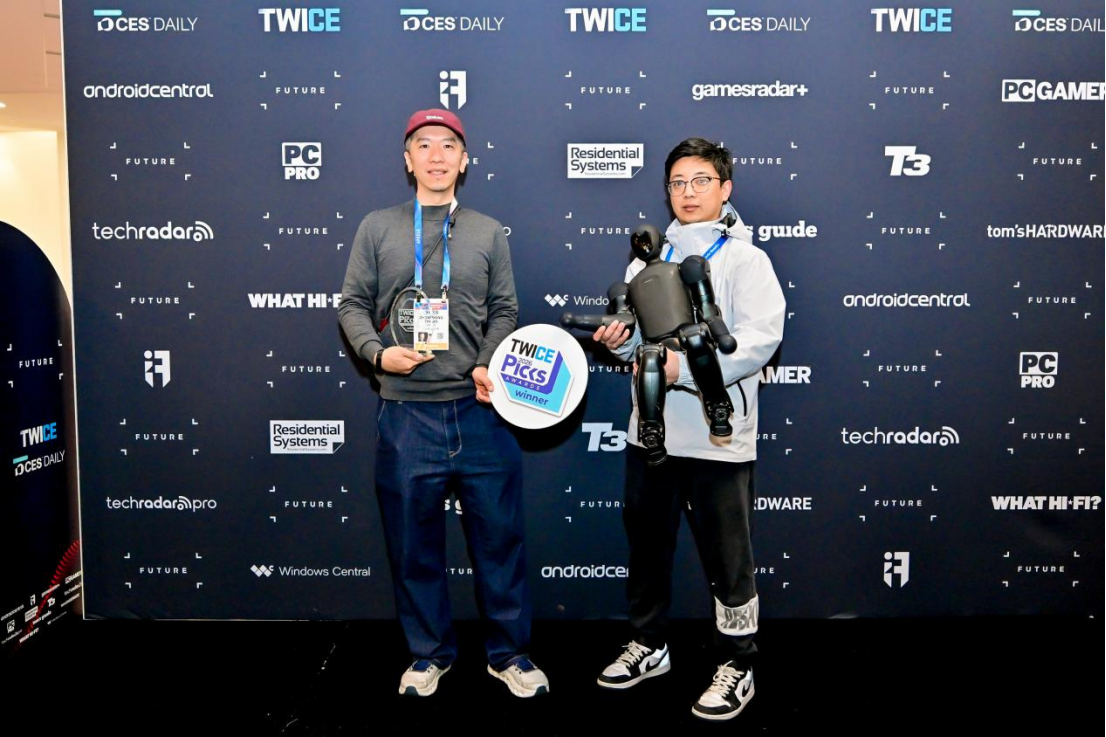
Core Insights - The personal robot "Qiyuan Q1" launched by Chinese tech company Upwind Qiyuan at CES 2026 has received the "TWICE Picks" award from the authoritative U.S. consumer electronics media, TWICE [1] Group 1: Product Features - Qiyuan Q1 is the world's first full-body force-controlled small humanoid robot aimed at personal users, featuring micro high-torque joints, centimeter-level high-precision force control systems, and a highly portable design [3] - The robot is capable of humanoid movements and can interact with users in a natural and safe manner, effectively bringing embodied intelligence into daily life scenarios [3] Group 2: Industry Recognition - The "TWICE Picks" award emphasizes technological breakthroughs, market foresight, and superior user experience, particularly favoring innovative products with industrialization potential and practical value [3] - The award signifies China's dual leadership in original technology and category definition within the embodied intelligence sector [3] Group 3: Company Vision - Upwind Qiyuan's co-founder and CTO, Zhou Bin, stated that receiving the "TWICE Picks" award is a significant recognition for the team, with a vision to enable every individual and family to own a personal robot [4] - The company aims to continue deepening its focus on AI and consumer-grade robotics, pushing smart hardware into a new phase [4]
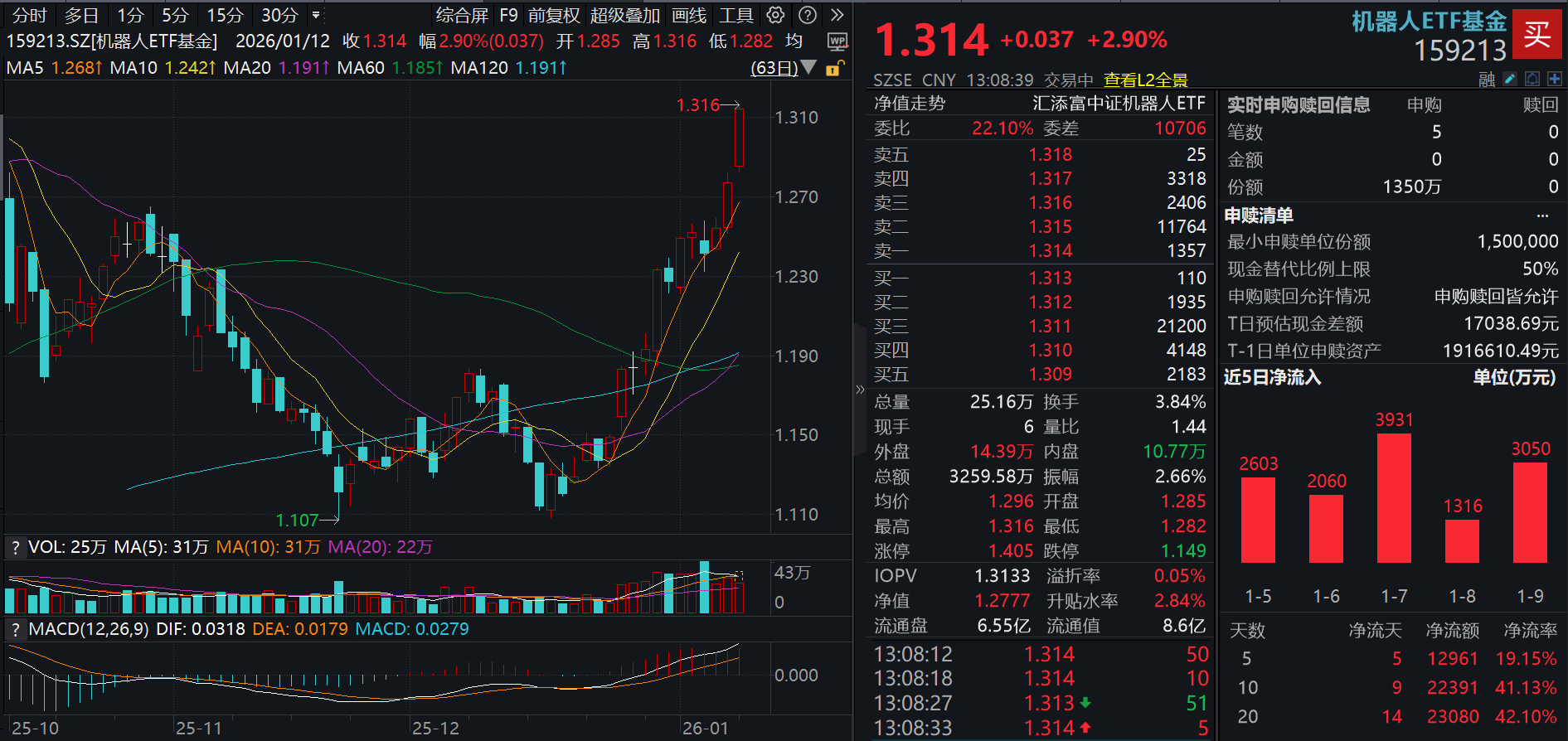
机器人超脑平台重磅突破,科大讯飞涨超8%,机器人ETF基金(159213)大涨3%,连续10日"吸金"2.4亿元,人形机器人赛道百家争鸣,CES成中国科技秀
Sou Hu Cai Jing· 2026-01-12 05:47
Core Viewpoint - The A-share market is experiencing a strong upward trend, particularly in the hard technology sector, with the Robot ETF fund (159213) showing significant inflows and performance [1][3]. Group 1: Market Performance - The A-share market is on a rising trend, with the Shanghai Composite Index aiming for a 17-day consecutive increase [1]. - The Robot ETF fund (159213) has seen a 2.9% increase, marking its third consecutive day of gains, with over 17 million yuan in inflows today alone [1]. - Cumulatively, the Robot ETF fund has attracted over 240 million yuan in net inflows over the past 10 days [1]. Group 2: Component Stocks Performance - Most component stocks of the Robot ETF fund have risen, with notable increases such as iFlytek up over 8%, Zhongkong Technology up 6.9%, and Dahua Technology up 3.66% [3][4]. - The performance of key stocks includes: - iFlytek: +8.35% [4] - Zhongkong Technology: +6.90% [4] - Dahua Technology: +3.66% [4] - Robot: +2.53% [4] Group 3: Industry Insights - The humanoid robot sector is in its early production phase, with significant advancements in technology and commercialization expected [6]. - By 2025, the cumulative order volume for domestic humanoid robots is projected to exceed 20,000 units, with total order values surpassing 3 billion yuan [6]. - The market for humanoid robots in China is expected to reach 238.3 billion yuan by 2030, representing over 40 times growth from 2025 [7]. Group 4: Technological Development - The key challenges for humanoid robots include the development of a highly capable AI brain, which is crucial for practical applications and mass production [11]. - The hardware aspect of humanoid robots is nearing convergence, while the AI brain remains a significant hurdle for the industry [11]. - Tesla is actively working on advancing the AI capabilities of its humanoid robots, which is expected to accelerate production opportunities in 2026 [12].

国泰海通:本届CES凸显具身智能规模化落地趋势 人形机器人核心供应链率先受益
智通财经网· 2026-01-11 22:53
Core Insights - The CES 2023 highlighted the trend of embodied intelligence scaling, showcasing the strength of Chinese companies in this domain [1] - The focus is shifting from "digital intelligence" to "embodied intelligence," emphasizing AI's practical applications in hardware [2] - Chinese enterprises are becoming significant players in the tech ecosystem, demonstrating robust capabilities through structural upgrades [3] Industry Trends - The theme of CES 2023 was "AI Inside Every Hardware," indicating a shift towards physical AI and the commercialization of AI technologies [2] - Major semiconductor companies like NVIDIA, AMD, and Intel are releasing new products, focusing on edge AI and large-scale AI infrastructure [2] - The competition is evolving from mere computational power to the successful implementation of AI in real-world applications [2] Chinese Companies' Performance - Over 4,100 exhibitors participated in CES, with 1,141 from China, showcasing the growing influence of Chinese tech firms [3] - Leading companies such as Lenovo, TCL, and Ninebot are transitioning from technology users to co-creators of ecosystem rules [3] - In the humanoid robot sector, Chinese exhibitors accounted for over 55%, with companies focusing on core component development and commercialization [3] Hardware Development and Supply Chain - The path for embodied intelligence hardware is becoming clearer, with key supply chain segments poised to benefit [4] - The market is closely monitoring the production progress and cost control of humanoid robots like Tesla's Optimus [4] - Companies with core component technology advantages and involvement in leading customer product development will be the first to reap the benefits of industry trends [4]

能干活、接地气,中国机器人领跑全球
Xin Lang Cai Jing· 2026-01-11 17:16
Core Insights - The CES 2026 showcased a significant "Chinese moment" in the robotics sector, highlighting the transition of humanoid robots from experimental stages to market-ready products, emphasizing their practicality and readiness for household integration [2][5] Industry Overview - Among the 598 exhibitors in the robotics sector, 149 were Chinese companies, accounting for nearly a quarter of the total. In the humanoid robot segment, 21 out of 38 exhibitors were from China, representing over half [3] - The event featured a diverse range of products from industrial to consumer-grade robots, with notable participation from both established companies and new entrants [3][4] Product Innovations - Zhiyuan Robotics, leading in humanoid robot shipments, showcased a full range of products, including the portable Q1 robot, which redefines humanoid robot design [3][4] - The introduction of the fully autonomous humanoid nanny robot by "Chinese Figure" Wan'an targets the vast household service market, capable of performing laundry tasks autonomously [5] - The Jupiter robot, equipped with a specialized training environment, can navigate complex home settings, while the W1 robot integrates emotional interaction capabilities [6] Market Trends - The trend towards consumer-grade humanoid robots is accelerating, with significant price reductions making them more accessible. The price of humanoid robots is expected to drop by over 25% compared to 2024 due to increased domestic production of key components [6][7] - Companies like Yushutech and Songyan Power are breaking the traditional high-price barrier, with products priced below 30,000 yuan and even under 10,000 yuan [6][7] Sales and Delivery Projections - The humanoid robot shipment volume in China is projected to reach 18,000 units in 2025, a more than 650% increase from 2024, with expectations of further growth to 62,500 units in 2026 [7][8] - Leading companies are already achieving significant delivery volumes, with estimates of over 5,100 units for Zhiyuan Robotics in 2025 and plans to increase to tens of thousands in 2026 [8] Global Competitive Landscape - The competition in the global humanoid robot market is shifting towards engineering, commercialization, and ecosystem development, with Chinese companies gaining more influence in this trillion-dollar sector [8]