商务服务

Search documents
《北京城市副中心条例》表决通过,看点在这里
Xin Lang Cai Jing· 2026-01-29 16:41
Group 1 - The core focus of the newly passed "Beijing Urban Sub-center Regulations" is to promote the development of six key industries: digital economy, modern finance, advanced manufacturing, business services, cultural tourism, and modern seed industry, with an aim to cultivate future industries and encourage technological innovation policies [3][4] - The digital economy sector will include the establishment of a national cybersecurity industry park, a data infrastructure pilot area, and an innovation center for smart Beijing, aimed at promoting data technology innovation and industrial development [3] - The modern finance sector will support the establishment of various financial institutions, innovative financial products, and the construction of a global wealth management center, as well as a center for green and sustainable finance [3] Group 2 - The regulations emphasize the need for a synchronized planning and construction mechanism for digital and municipal infrastructure, aiming to create a new model of smart city characterized by "one network, one brain, one platform" [4][5] - The urban sub-center is tasked with promoting the integration of data resources, fostering a data factor market, and enhancing the innovation of open scenarios, thereby advancing the development of the digital economy [5] - The regulations also highlight the importance of establishing a collaborative mechanism with the North Three Counties to build a demonstration area for coordinated development in the Beijing-Tianjin-Hebei region, focusing on infrastructure connectivity and improved commuting efficiency [6][8]

城市副中心将培育壮大未来产业
Xin Lang Cai Jing· 2026-01-27 16:55
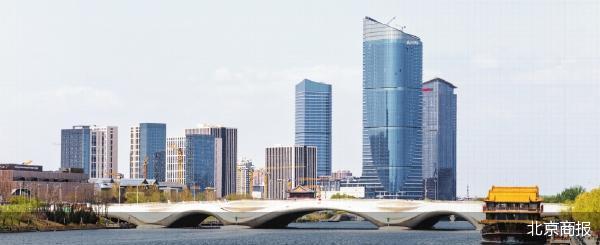
Core Viewpoint - The draft regulation for the Beijing Urban Sub-center emphasizes the optimization of industrial layout, focusing on the development of six key industries: digital economy, modern finance, advanced manufacturing, business services, cultural tourism, and modern seed industry, to foster future industries [3][4] Group 1: Industrial Layout Optimization - The regulation specifies that the urban sub-center should prioritize administrative offices, business services, cultural tourism, and technological innovation as leading functions [3] - It aims to cultivate new productive forces and establish a high-precision industrial structure [3] - The six key industries identified for development include digital economy, modern finance, advanced manufacturing, business services, cultural tourism, and modern seed industry [3][4] Group 2: Urban Planning and Construction - The draft outlines that the urban sub-center must align with Beijing's overall urban planning and detailed control planning as the basis for land use planning and management [3] - It proposes a spatial structure of "one belt, one axis, multiple clusters" and a green space system of "one belt, one axis, two rings, one center" [3] - The regulation emphasizes the establishment of a unified and coordinated land space planning system to support innovative planning management [3] Group 3: Green Development - The urban sub-center is tasked with integrating green production, living, and ecology, focusing on key areas such as industry, construction, and transportation [4] - It aims to strengthen support in energy, ecology, and culture, with the goal of high-level construction of a national green development demonstration zone [4] Group 4: Public Service System - The regulation highlights the need for organic integration of public service groups and community planning, adjusting administrative boundaries as necessary [4] - It aims to enhance the quality and balance of public services in education, healthcare, childcare, elderly care, housing, and culture [4] - The regulation supports the establishment of service functions tailored to local needs to meet residents' work and life demands [4] Group 5: Collaborative Development - The draft emphasizes the integration of planning areas and expansion zones to achieve unified urban planning, resource allocation, infrastructure, industry, public services, and social governance [4] - It outlines collaboration with surrounding regions, including the construction of a coordinated development demonstration area in the Beijing-Tianjin-Hebei region [4] - The regulation also mentions the need for a work coordination mechanism with Xiong'an New Area to jointly enhance the capital's functional optimization [4]
青海省贸促会:护航“青海好物”扬帆出海
Sou Hu Cai Jing· 2026-01-14 21:18
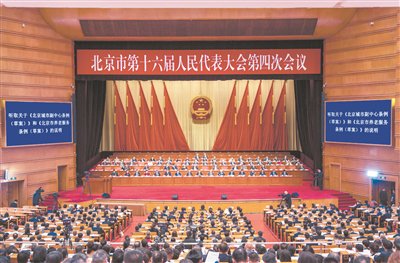
Core Insights - The Qinghai Provincial Committee of the China Council for the Promotion of International Trade has established a 24-hour uninterrupted certification mechanism to facilitate the issuance of certificates of origin for products, enhancing the export capabilities of "Qinghai good products" [1][3] - In the past year, the number of certificates of origin processed by the Qinghai Provincial Committee has significantly exceeded the total from the previous four years, with a total certification value of 250 million yuan, indicating a dual increase in both business volume and certification value [1][3] Group 1 - The Qinghai Provincial Committee's business scope includes four key sectors: salt lake chemicals, new energy, new materials, and specialty agricultural products, with some enterprises successfully exporting to markets in Hungary, Uzbekistan, and India [3] - A "one-on-one" precise contact mechanism has been established for key enterprises to reduce burdens and increase efficiency, allowing foreign trade companies to operate more smoothly [3] - The committee has implemented a streamlined certification process for time-sensitive export products, promoting an "online appointment and offline expedited" model to enhance efficiency [3] Group 2 - The Qinghai Provincial Committee plans to continue deepening its business service capabilities to further improve certification efficiency and support enterprises in achieving efficient customs clearance, contributing to the high-quality development of the province's foreign trade [3]