
现代种业

Search documents
云南“楚雄种子”产值破50亿 高原种业“芯”力量崛起
Zhong Guo Xin Wen Wang· 2026-02-12 07:54
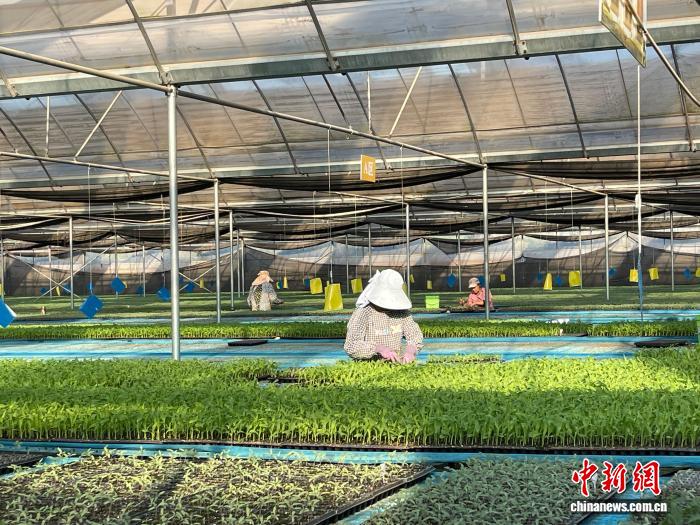
Core Viewpoint - The seed industry in Chuxiong, Yunnan Province, is projected to exceed a production value of 5 billion yuan by 2025, contributing significantly to food security and rural revitalization efforts [1]. Group 1: Industry Development - Chuxiong has established a modern seed industry framework that includes diverse crops such as rice, barley, vegetables, and flowers, promoting coordinated development [1]. - The region has preserved 12,000 varieties of crop germplasm, making it a vital seed breeding hub in the highlands [3]. - The local government has prioritized modern seed industry development as a key initiative for food security, implementing measures such as forming specialized work teams and enhancing technological support [3]. Group 2: Innovation and Collaboration - Chuxiong has created a "Five Grabs" working mechanism and developed action plans for seed industry revitalization, collaborating with over 20 research institutions, including China Agricultural University and the Chinese Academy of Agricultural Sciences [3]. - The region has established 21 innovation platforms and 13 expert workstations, along with 1 academic workstation since the 14th Five-Year Plan began [3]. - A total of 244 crop varieties have been approved and registered, with 22 new varieties protected by intellectual property rights and 46 patents granted [3]. Group 3: Market and Economic Impact - The local government has implemented actions to cultivate market entities in the seed industry, partnering with leading seed companies to build a commercial breeding system and innovation alliance [3]. - Currently, there are 483 new types of operating entities in the seed industry, including 13 large-scale medicinal herb seedling breeding companies and 36 edible fungus companies [3]. - The region has developed 40,000 acres of contract seed farming, leading to an average income increase of 15,000 yuan per household [4]. Group 4: Recognition and Reach - Chuxiong County has been recognized as one of the first regional seed breeding bases in China and is one of five national counties for winter and summer seed production [5]. - The region has established eight provincial seed industry bases for rice, medicinal herbs, flowers, and vegetables [5]. - Annually, 4.3 million acres of wheat and 13 million acres of vegetables across the country utilize "Chuxiong seeds" [5].

《北京城市副中心条例》表决通过,看点在这里
Xin Lang Cai Jing· 2026-01-29 16:41
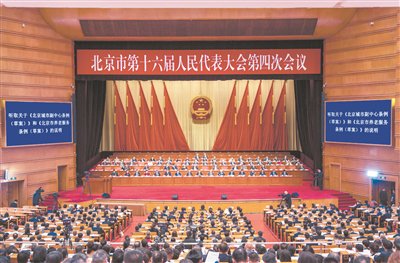
Group 1 - The core focus of the newly passed "Beijing Urban Sub-center Regulations" is to promote the development of six key industries: digital economy, modern finance, advanced manufacturing, business services, cultural tourism, and modern seed industry, with an aim to cultivate future industries and encourage technological innovation policies [3][4] - The digital economy sector will include the establishment of a national cybersecurity industry park, a data infrastructure pilot area, and an innovation center for smart Beijing, aimed at promoting data technology innovation and industrial development [3] - The modern finance sector will support the establishment of various financial institutions, innovative financial products, and the construction of a global wealth management center, as well as a center for green and sustainable finance [3] Group 2 - The regulations emphasize the need for a synchronized planning and construction mechanism for digital and municipal infrastructure, aiming to create a new model of smart city characterized by "one network, one brain, one platform" [4][5] - The urban sub-center is tasked with promoting the integration of data resources, fostering a data factor market, and enhancing the innovation of open scenarios, thereby advancing the development of the digital economy [5] - The regulations also highlight the importance of establishing a collaborative mechanism with the North Three Counties to build a demonstration area for coordinated development in the Beijing-Tianjin-Hebei region, focusing on infrastructure connectivity and improved commuting efficiency [6][8]
城市副中心将培育壮大未来产业
Xin Lang Cai Jing· 2026-01-27 16:55
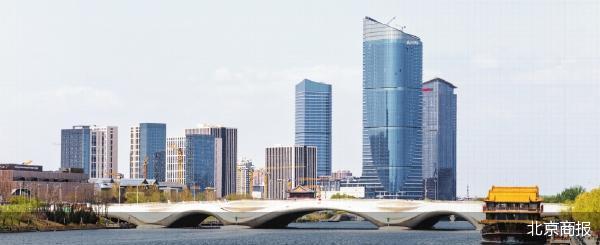
Core Viewpoint - The draft regulation for the Beijing Urban Sub-center emphasizes the optimization of industrial layout, focusing on the development of six key industries: digital economy, modern finance, advanced manufacturing, business services, cultural tourism, and modern seed industry, to foster future industries [3][4] Group 1: Industrial Layout Optimization - The regulation specifies that the urban sub-center should prioritize administrative offices, business services, cultural tourism, and technological innovation as leading functions [3] - It aims to cultivate new productive forces and establish a high-precision industrial structure [3] - The six key industries identified for development include digital economy, modern finance, advanced manufacturing, business services, cultural tourism, and modern seed industry [3][4] Group 2: Urban Planning and Construction - The draft outlines that the urban sub-center must align with Beijing's overall urban planning and detailed control planning as the basis for land use planning and management [3] - It proposes a spatial structure of "one belt, one axis, multiple clusters" and a green space system of "one belt, one axis, two rings, one center" [3] - The regulation emphasizes the establishment of a unified and coordinated land space planning system to support innovative planning management [3] Group 3: Green Development - The urban sub-center is tasked with integrating green production, living, and ecology, focusing on key areas such as industry, construction, and transportation [4] - It aims to strengthen support in energy, ecology, and culture, with the goal of high-level construction of a national green development demonstration zone [4] Group 4: Public Service System - The regulation highlights the need for organic integration of public service groups and community planning, adjusting administrative boundaries as necessary [4] - It aims to enhance the quality and balance of public services in education, healthcare, childcare, elderly care, housing, and culture [4] - The regulation supports the establishment of service functions tailored to local needs to meet residents' work and life demands [4] Group 5: Collaborative Development - The draft emphasizes the integration of planning areas and expansion zones to achieve unified urban planning, resource allocation, infrastructure, industry, public services, and social governance [4] - It outlines collaboration with surrounding regions, including the construction of a coordinated development demonstration area in the Beijing-Tianjin-Hebei region [4] - The regulation also mentions the need for a work coordination mechanism with Xiong'an New Area to jointly enhance the capital's functional optimization [4]
农发行黑龙江省分行以政策性金融之力推动智慧农业做大做强
Zheng Quan Ri Bao· 2025-11-16 14:39
Core Insights - Heilongjiang Province, as China's largest grain-producing province, emphasizes the importance of smart agriculture for ensuring food security and enhancing production capacity [1] - The Agricultural Development Bank of China (ADBC) in Heilongjiang has significantly increased its credit support for modern agriculture, focusing on key areas such as smart agriculture, digital agriculture, and agricultural technology innovation [1] Group 1: Financial Support for Agricultural Development - ADBC Heilongjiang has provided a total of 13.178 billion yuan in agricultural technology loans since the 14th Five-Year Plan, facilitating the transformation and high-quality development of smart agriculture [1] - The bank has issued loans totaling 250 million yuan for the infrastructure construction of the Jiamusi National Agricultural High-tech Industry Demonstration Zone, marking a significant step in supporting the agricultural technology innovation ecosystem [2] - ADBC has also provided 80 million yuan in loans to a rice processing enterprise within the demonstration zone, reinforcing the financial services for the entire grain industry chain [2] Group 2: Empowering Agricultural Machinery Manufacturing - Heilongjiang Chongxing Machinery Equipment Co., Ltd. has received 47 million yuan in loans from ADBC, enabling the supply of advanced agricultural machinery to local farmers [3] - The company has successfully provided 185 satellite leveling machines and 335 sets of agricultural tracks, enhancing the quality of agricultural production [3] - Investments in advanced production equipment have allowed the company to maintain a competitive edge in the agricultural machinery sector [3] Group 3: Promoting High-Standard Farmland Construction - The city of Shuangyashan is actively advancing high-standard farmland renovation, transforming small plots into large, efficient agricultural fields equipped with smart agricultural facilities [4] - ADBC Shuangyashan has issued 1.263 billion yuan in loans for the "storing grain in the ground" initiative, aimed at improving agricultural production conditions [4] - The bank is committed to enhancing the efficiency of loan processing and fund disbursement to support high-standard farmland projects [4] Group 4: Future Directions - ADBC Heilongjiang plans to continue fostering new agricultural productivity and strengthen the technology-driven agricultural cooperation platform to promote the growth of smart agriculture [5]
