
四个农业

Search documents
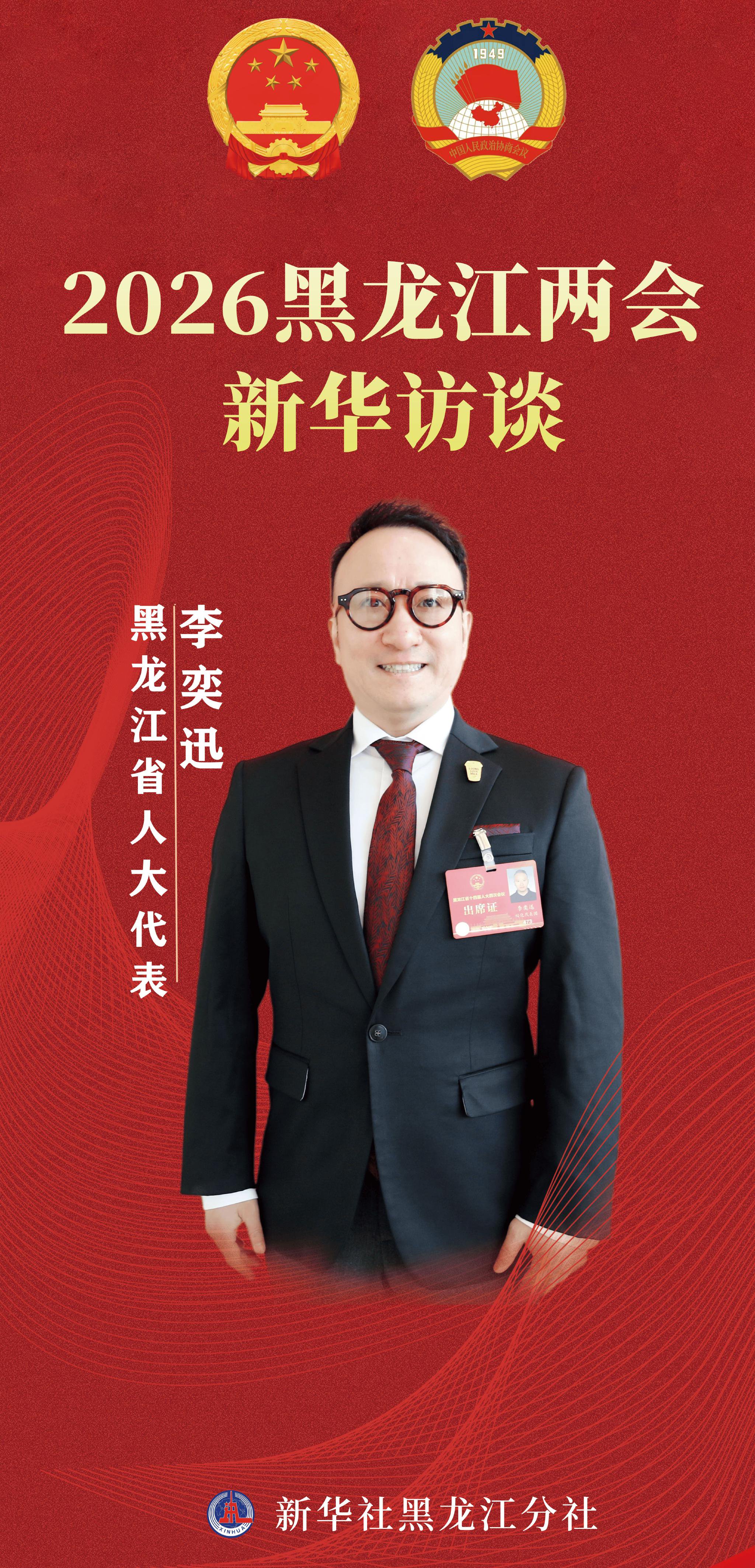
新华访谈|李奕迅代表:三链融合 促农增收 助力龙江大豆产业高质量发展
Xin Lang Cai Jing· 2026-02-01 10:01
Core Viewpoint - Heilongjiang Province is a major soybean production area in China, and Longwang Food has developed a "three-chain integration" model to enhance the soybean industry and support farmers' income growth [1] Group 1: Industry Development - Longwang Food is leveraging Heilongjiang's high-quality soybean resources to upgrade the soybean beverage industry, focusing on quality innovation and brand building [5] - The company has established a full-chain quality traceability system, collaborating with local partners to create a 100,000-acre dedicated planting base, ensuring every soybean is traceable and meets higher than national standards [5] - Longwang Food aims to transform from raw material output to brand output, enhancing its market presence in various supermarkets across the country [5] Group 2: Farmer Support and Income Growth - The company has implemented a "three-chain integration" model to support farmers, which includes stable order agriculture, technological services, and profit-sharing mechanisms [7] - In collaboration with cooperatives and large growers, Longwang Food has signed contracts covering 100,000 acres, benefiting 12,000 farming households, with an average increase of 3,000 yuan per household in 2024 [7] - The company has established a 15-member agricultural technology service team to provide unified services, resulting in an average yield increase of over 50 kg per acre [7] Group 3: Technological Advancements - Longwang Food is focusing on modern agricultural technology to enhance the competitiveness of soybean beverages, including digital planting, intelligent processing, and data-driven management [8] - The company has achieved a 20% reduction in water usage and a 10% reduction in fertilizer usage through technology applications, while maintaining soybean protein content above 40% [8] - The establishment of an intelligent soybean powder production line has significantly improved production efficiency, increasing product quality from 98% to 99.8% [8]

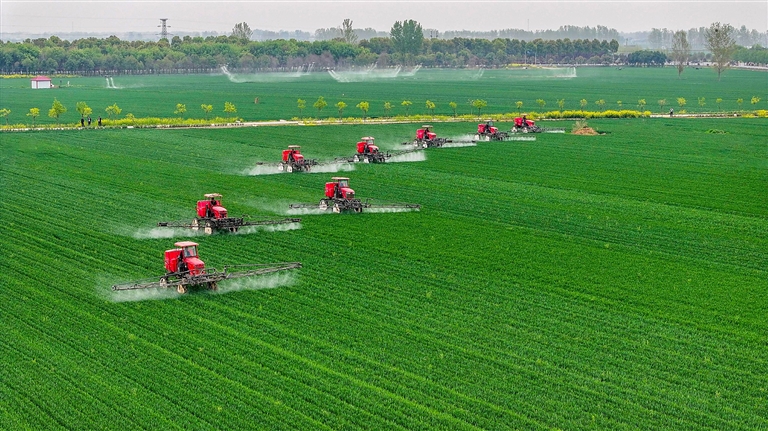
学习贯彻党的二十届四中全会精神·五年路上你我他——四中全会精神大家谈丨一头“智牛”耕出田野丰收景
He Nan Ri Bao· 2025-12-07 23:45
Core Viewpoint - The modernization of agriculture is fundamentally driven by technological advancement and innovation, with a focus on addressing the "three rural issues" as a priority for the party's work [2][10]. Group 1: Agricultural Modernization Efforts - The provincial government emphasizes the importance of agricultural modernization as a major industry, leveraging agricultural technology as a core support [2][10]. - Advanced technologies such as precision irrigation and intelligent monitoring are widely applied, enhancing agricultural productivity and efficiency [2][6]. Group 2: Technological Innovations - The city of Nanyang is focusing on agricultural technology as a key engine for ensuring stable food supply, with continuous improvements in agricultural technology innovation [5][6]. - The city has selected 55 new crop varieties during the 14th Five-Year Plan, maintaining a good seed coverage rate of over 98% [6]. Group 3: Smart Agriculture Development - The Denzhou Smart Agriculture Center is implementing a digital transformation from experience-based to data-driven farming, establishing a comprehensive monitoring system [7]. - Plans are in place to cover high-standard farmland with agricultural health monitoring devices within three years, aiming for a 60% coverage of intelligent operations for staple crops [7]. Group 4: New Farmers and Modern Techniques - New farmers, characterized by their knowledge and vitality, are increasingly utilizing modern technology to enhance agricultural practices, leading to reduced labor costs and increased yields [8]. - The integration of technology allows for more precise management of resources, resulting in higher net income per acre [8]. Group 5: Addressing Climate Challenges - The need for modern technology applications is emphasized to enhance agricultural resilience against extreme weather conditions, focusing on technological breakthroughs and industry integration [9]. Group 6: Future Agricultural Planning - The city plans to develop a modern agricultural industry by integrating technology, green practices, quality control, and branding, with a focus on high-quality rural industry development [10][11]. - Key initiatives include establishing green organic agricultural zones and promoting the development of six major industries and 19 industrial chains [11].
2025企业家博鳌论坛|明水县委副书记、县长邓吉喆:以生态为基打造农业产业新标杆
Xin Hua Cai Jing· 2025-12-04 08:43
Core Insights - The article highlights the integration of ecological advantages and industrial development in Ming Shui, Heilongjiang Province, showcasing its commitment to high-quality development and ambitious plans for a 5 billion-level black bean protein food industry cluster [1][6]. Ecological Advantages - Ming Shui boasts over 2 million acres of selenium-rich black soil, recognized as a key agricultural area in the Northern Hemisphere, with high organic matter content and suitable conditions for high-quality agricultural products [1][2]. - The region features a diverse ecosystem, including 650,000 acres of grassland and 450,000 acres of national wetland, supporting rare bird species and contributing to its ecological network [2]. - The county has implemented a long-term green and organic farming model, with 550,000 acres certified for organic food production, resulting in an annual grain output exceeding 1.6 billion pounds and over 100,000 tons of corn [2]. Agricultural Achievements - Ming Shui is recognized as the "Hometown of Black Beans" in China, with notable geographical indication products like Ming Shui millet and dried vegetables, reflecting its commitment to quality agriculture [2][3]. - The local government emphasizes technological advancements in agriculture, focusing on improving efficiency and reducing chemical usage through meticulous management practices [3]. Cultural Heritage - Ming Shui's cultural foundation is characterized by its "sincerity and kindness" ethos, represented by notable figures such as the first female tractor driver in New China and a world champion figure skater, embodying the spirit of perseverance [3]. - The region is also known as the "Hometown of Chinese Poetry," highlighting its deep appreciation for cultural heritage and national identity [3]. Business Environment - The "1+1+1" service mechanism aims to provide comprehensive support for investors, ensuring efficient communication, dedicated project management, and direct involvement from county leadership [4]. - This initiative is designed to foster a cooperative relationship between investors and the government, enhancing the overall investment climate in Ming Shui [4]. Industry Development Goals - Ming Shui aims to establish a 5 billion-level black bean protein food industry cluster, addressing the challenges of low processing rates and short industrial chains in Heilongjiang's agricultural sector [5]. - The implementation plan includes seven key strategies: brand development, industrial park construction, technological collaboration, academic partnerships, expansion of black bean cultivation, investment attraction, and AI integration for sales enhancement [5]. Timeline for Implementation - The development plan is structured in three phases: the foundational phase (next two years) focusing on park upgrades and initial project launches, the growth phase (2-3 years) aimed at extending the industrial chain and increasing brand value, and the expansion phase (3-5 years) targeting the establishment of a nationally influential industry cluster [5][6].
“四个农业”铺就农业强国路
Jing Ji Ri Bao· 2025-12-01 22:26
Core Viewpoint - The concept of "Four Agronomies" serves as a key to address various challenges in building an agricultural powerhouse, emphasizing the interconnectedness of technological, green, quality, and brand agriculture [1][4]. Group 1: Technological Agriculture - Technological strength is essential for high yield, quality, and profitability; during the 14th Five-Year Plan, China's agricultural technology innovation has reached a world-leading level, particularly in seed industry advancements [2]. - Despite progress, issues such as low-level repetition and low conversion efficiency in agricultural technology remain prominent, necessitating coordinated efforts from over 800 agricultural research institutions and more than 120,000 researchers [2]. Group 2: Green Agriculture - Agricultural land is viewed not only as a production resource but also as an ecological asset; the development of green agriculture represents a revolutionary shift in agricultural development concepts [3]. - Although improvements have been made in reducing environmental pollution and ecological degradation, the supply of green ecological products is still insufficient, with ongoing efforts to reduce chemical fertilizer and pesticide usage [3]. Group 3: Quality Agriculture - The focus on quality agriculture emphasizes the importance of nutrition, appearance, and taste, alongside standards and risk management as internal supports for quality [3]. - Transitioning from scale expansion to quality enhancement requires a shift in production methods and business philosophies, prioritizing quality over quantity [3]. Group 4: Brand Agriculture - Branding is crucial as it represents trust and amplifies the value of agricultural products; understanding consumer habits and cultural aesthetics is essential for creating successful brands [4]. - The agricultural sector is moving towards enhancing post-production processes and developing regional public brands, aiming to cultivate both large and niche product brands [4]. Group 5: Interconnectedness of the Four Agronomies - The "Four Agronomies" are not isolated but work together like the four wheels of a car; the success of one is dependent on the others, highlighting the need for systematic thinking and prioritization in their implementation [4].