固态激光雷达

Search documents
扛不住!又一家割草机器人开始破产清算,行业洗牌加剧,突围之路在何方?
机器人大讲堂· 2026-01-28 10:24
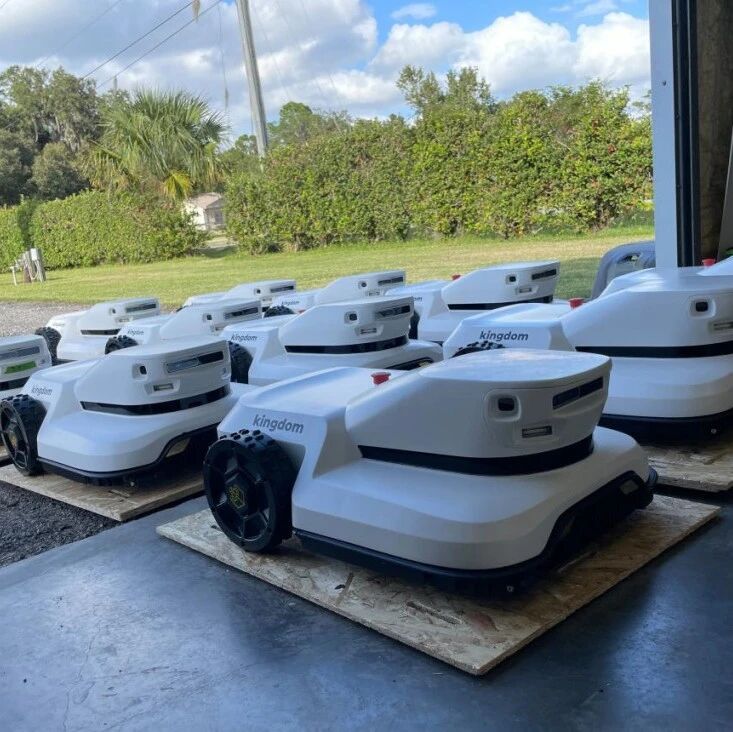
Core Viewpoint - The lawn mowing robot industry, once seen as a promising market following the success of robotic vacuum cleaners, is now facing significant challenges as several companies exit the market, highlighting a stark contrast between growth potential and survival difficulties [1][6]. Market Dynamics - Kingdom Technologies, a UK-based commercial lawn mowing robot manufacturer, has entered liquidation due to mismatches between technology maturity cycles, market conditions, and funding environments, compounded by intense competition [3][4]. - iRobot, a global leader in home robotics, announced the shutdown of its lawn mowing robot business in Q4 2025, signaling a major industry shift [4]. - Chinese company Senhe Innovation has also faced operational challenges due to team restructuring, manufacturing issues, and funding constraints, leading to its inability to sustain operations [4][6]. Market Growth Potential - Despite the challenges, the global lawn mowing robot market is projected to grow at a compound annual growth rate (CAGR) of 14.8%, potentially reaching $4 billion by 2030, driven by increasing demand for automated yard maintenance in Western households [7]. - Data from cross-border e-commerce platforms indicates a significant surge in China's smart lawn mower exports, which rose by 58.92% year-on-year in Q1 2025, reaching $1.01 billion, with platforms like Amazon and TikTok Shop contributing significantly to sales [7]. Survival Challenges - The survival crisis in the lawn mowing robot sector is attributed to a combination of technological, financial, market, and supply chain challenges [8]. Technological Challenges - The core technology competition has evolved from basic mobility and cutting to high-precision navigation, intelligent obstacle avoidance, and path planning, with outdated technologies being rapidly phased out [9][10]. - iRobot's decline exemplifies the risks of technological stagnation, as it failed to adopt advanced laser radar technology while competitors advanced in precision control [12]. Financial Pressures - The robotics industry is characterized by high research and capital intensity, requiring substantial funding for development, production, and market entry [13]. - The challenging financing environment has made it difficult for many small and medium-sized tech companies to secure necessary funding, especially when they lack clear profitability paths or technological barriers [13]. - Companies like Supoman have fallen into a vicious cycle of declining sales leading to reduced R&D investment and further product quality deterioration, ultimately resulting in financial collapse [15]. Competitive Landscape - The lawn mowing robot market has seen an influx of diverse competitors, including established consumer electronics brands and agile startups, intensifying competition [16]. - Major players like Anker Innovations and Ecovacs leverage their existing brand and supply chain capabilities to penetrate the market, while startups focus on niche areas to achieve rapid growth [16]. - Traditional power tool giants like Husqvarna maintain a significant market share, emphasizing the need for comprehensive capabilities in technology, product definition, supply chain management, and global marketing [16][18]. Future Outlook - The ongoing reshuffling and consolidation in the lawn mowing robot industry is expected to continue, driven by advancements in AI, high-performance sensors, and precision navigation technologies [19]. - The European and North American markets remain key growth engines, but competition is anticipated to become increasingly fierce [19]. - Companies must embed continuous technological innovation and deep user insights into their operations while adopting a global perspective to build competitive advantages in this rapidly evolving landscape [19].

激光雷达,在唱衰声中偷偷卖爆!
电动车公社· 2025-10-16 15:59
Core Viewpoint - The laser radar industry is experiencing significant growth despite initial skepticism, with companies like Hesai Technology achieving over one million units in annual production, indicating a strong market demand for laser radar technology [6][82]. Group 1: Market Performance - Hesai Technology has become the first company globally to produce over one million laser radars annually, with expectations to triple last year's output of 500,000 units [6][7]. - Another notable company, Suteng Juchuang, reported a total shipment of 266,800 units in the first half of 2025, marking a year-on-year increase of 9.6% [9]. - The domestic shipment of vehicle-mounted laser radars in the first half of this year saw a substantial increase of 71% compared to 2024 [10]. Group 2: Price Reduction and Accessibility - The cost of laser radars has decreased significantly, with prices dropping over 90% from previous years, making them more accessible for various vehicle models [24][28]. - The price of laser radars has reached as low as 1,400 yuan for certain models, allowing for integration into vehicles priced around 100,000 yuan [26][27]. - The introduction of lower-priced models, such as the Aion RT at 165,800 yuan and the Leapmotor B10 at 129,800 yuan, has further lowered the entry barrier for consumers [19][20]. Group 3: Technological Advancements - The transition from mechanical to semi-solid-state laser radars has been a key factor in reducing costs and improving performance, with semi-solid-state models being more compact and reliable [45][54]. - The development of MEMS micro-mirrors has enabled domestic manufacturers to reduce reliance on foreign suppliers, contributing to the rapid advancement of laser radar technology [70][73]. - The industry is moving towards fully solid-state laser radars, which promise even lower noise levels and longer lifespans, although challenges remain in terms of range and precision [75][81]. Group 4: Industry Landscape - The global laser radar market has shifted dramatically in the past five years, with domestic companies like Huawei, Hesai Technology, and Suteng Juchuang rising to prominence as foreign competitors like Velodyne and Bosch have retreated [82][84]. - A complete and mature industrial chain for laser radar has been established in China, supporting large-scale production and significant cost reductions [86]. - Beyond passenger vehicles, laser radars are finding applications in emerging fields such as smart robotics and logistics, indicating a broadening market potential [87][88].