
国家“十五五”规划

Search documents
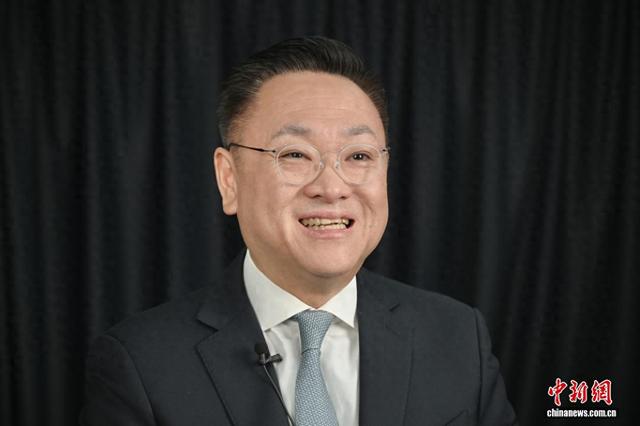
同心会客厅丨孙中山后人孙伟勇:“革命尚未成功”,我们仍须努力
Xin Lang Cai Jing· 2026-02-26 14:31
Core Viewpoint - The descendant of Sun Yat-sen, Sun Weiyong, emphasizes the importance of the "Sun Yat-sen spirit" in promoting national rejuvenation and modern development, especially in the context of the Greater Bay Area [1][2]. Group 1: Sun Yat-sen Spirit - Sun Yat-sen's spirit is described as a valuable asset of the Chinese nation, embodying patriotism and a steadfast belief in the pursuit of national strength, ethnic revival, and people's happiness [2][4]. - The phrase "愈挫愈奋" (persevering through setbacks) is highlighted as a significant influence, encouraging resilience among youth in their studies and careers [4]. Group 2: Legislative Duties and Research - As a representative of the Hong Kong National People's Congress, Sun Weiyong conducts annual research focusing on collaboration between Hong Kong and various provinces, aiming to explore long-term partnerships [6]. - A recent visit to Xinjiang revealed notable aspects such as the thriving night market economy and ethnic integration, which could serve as models for Hong Kong [6]. Group 3: Cultural and Economic Collaboration - The spirit of Sun Yat-sen aligns with the goals of building a cultural Greater Bay Area, particularly in promoting national unity and social progress [7]. - There is a call for enhanced collaboration in cultural heritage and tourism among the three regions of the Greater Bay Area to promote integration and development [7]. Group 4: "One Country, Two Systems" and International Relations - Hong Kong is encouraged to uphold and promote patriotism while showcasing the successful practice of "One Country, Two Systems" to the international community [8]. - Strengthening legal frameworks and cultural exchanges with the mainland is seen as essential for enhancing international understanding of China's unification efforts [8]. Group 5: National Development Plans - Sun Weiyong identifies multiple entry points for Hong Kong to align with the national "14th Five-Year Plan," including deepening financial cooperation, promoting technological innovation, and enhancing talent exchange [8]. - The importance of leveraging Hong Kong's status as an international financial center to support national green finance initiatives is emphasized [8]. Group 6: Future Plans - In light of the 160th anniversary of Sun Yat-sen's birth, there are plans to organize activities that honor his legacy and promote engagement with Taiwanese students [11].

陈刚会见香港特区行政长官李家超
Guang Xi Ri Bao· 2026-02-26 01:40
Core Viewpoint - The meeting between Chen Gang, the Secretary of the Autonomous Region Party Committee, and Hong Kong Chief Executive John Lee emphasizes the importance of collaboration between Guangxi and Hong Kong, particularly in key sectors such as artificial intelligence, finance, trade, technology, and cultural tourism, to enhance regional development and connectivity within the Greater Bay Area [1][2]. Group 1: Collaboration and Strategic Goals - Guangxi and Hong Kong share geographical proximity and cultural ties, presenting significant cooperation potential across various fields [1]. - The Guangxi delegation's visit aims to implement Xi Jinping's important discourses on Hong Kong and Guangxi, focusing on high-quality development during the "14th Five-Year Plan" period [1]. - Both regions are committed to strengthening strategic alignment and jointly developing the Western Land-Sea New Corridor and the China-ASEAN Artificial Intelligence Application Cooperation Center [1][2]. Group 2: Economic and Market Opportunities - Hong Kong is positioned as a core city in the Greater Bay Area, actively engaging in the national "14th Five-Year Plan" and enhancing regional cooperation [2]. - The Hong Kong government aims to leverage its "One Country, Two Systems" advantage to facilitate connections between mainland enterprises and overseas markets, particularly in ASEAN [2]. - There is a strong emphasis on deepening cooperation in innovation technology and youth exchanges, as well as practical collaboration in shipping and logistics to seize opportunities from national development strategies [2].
21社论丨积极财政政策靠前发力,推动实现经济“开门红”
2 1 Shi Ji Jing Ji Bao Dao· 2026-01-29 23:07
Core Viewpoint - The issuance of local government bonds in China has reached 584.7 billion yuan since the beginning of the year, with a significant focus on special bonds to support key projects and economic growth in 2026 [1] Group 1: Bond Issuance Overview - As of January 27, 2023, 5,847 billion yuan of local bonds have been issued, with new special bonds accounting for 1,962 billion yuan, representing 33.6% of the total [1] - The planned issuance of local bonds for the first quarter exceeds 25,000 billion yuan, marking the highest level for the same period in three years [1] Group 2: Bond Structure and Mechanism - The first quarter's planned issuance includes 7,644 billion yuan in new special bonds and 12,106 billion yuan in refinancing special bonds, together making up over 75% of the total issuance plan [2] - The "self-examination and self-issuance" pilot program is expected to expand, enhancing issuance efficiency and local autonomy [2] Group 3: Management and Performance Evaluation - The use of local special bonds will be subject to stricter regulatory oversight, with a negative list management model to exclude non-revenue-generating projects [3] - Performance evaluation results will be linked to the allocation of local debt quotas, incentivizing local governments to improve project quality [3] Group 4: Funding Direction and Strategic Focus - New special bonds will focus on major projects outlined in the national "14th Five-Year Plan," including infrastructure related to food security, energy security, and emerging industries [3] - The mechanism for using special bonds as project capital will be optimized, increasing the capital usage ratio to attract more social capital for major strategic projects [4]