
国家级都市圈

Search documents
国家级都市圈扩容至19个 全域协调体系基本成型
Xin Lang Cai Jing· 2026-01-02 19:31
Core Insights - The expansion of national urban agglomerations is crucial for regional coordinated development and economic growth, with significant implications for the optimization of the national economic structure and urban-rural integration [2][5] - By the end of 2025, the total number of national urban agglomerations will reach 19, with new additions including Shijiazhuang, Changchun, and Ningbo, enhancing the spatial layout of urban agglomerations across the country [3][4] Urban Agglomeration Expansion - In early 2025, Shijiazhuang urban agglomeration was approved, focusing on industries such as equipment manufacturing, biomedicine, and modern logistics [3] - The Changchun urban agglomeration received approval in mid-2025, marking a significant step in revitalizing the Northeast industrial base, with a focus on automotive, rail transportation, and modern agriculture [3][5] - By the end of 2025, the Ningbo urban agglomeration will be established, further densifying the layout of urban agglomerations in the eastern coastal region [4][5] Potential for Further Expansion - Experts believe there is still potential for the expansion of national urban agglomerations, particularly in central and western regions, as urbanization progresses and regional coordination needs grow [6][7] - Areas such as Taiyuan, Nanchang, Kunming, and Urumqi are identified as potential candidates for becoming national urban agglomerations due to their economic strength and collaborative development mechanisms [7][8] Challenges and Development Imbalances - The "siphon effect" of core cities in urban agglomerations has led to significant economic disparities between core and peripheral cities, with issues such as resource concentration and population loss in smaller cities [10][11] - Experts suggest that systemic policy designs and frameworks for cross-regional collaboration are essential to address these imbalances and promote equitable development [11][12]

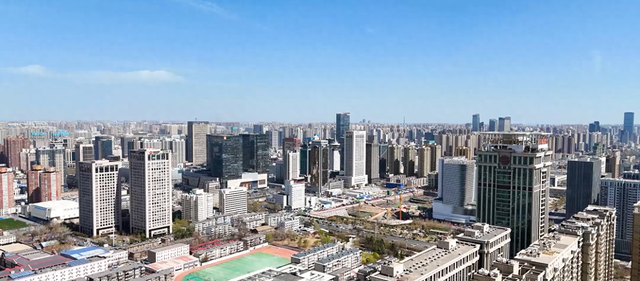
国家级都市圈综合实力排名出炉,谁是第一?
Di Yi Cai Jing· 2025-12-19 12:53
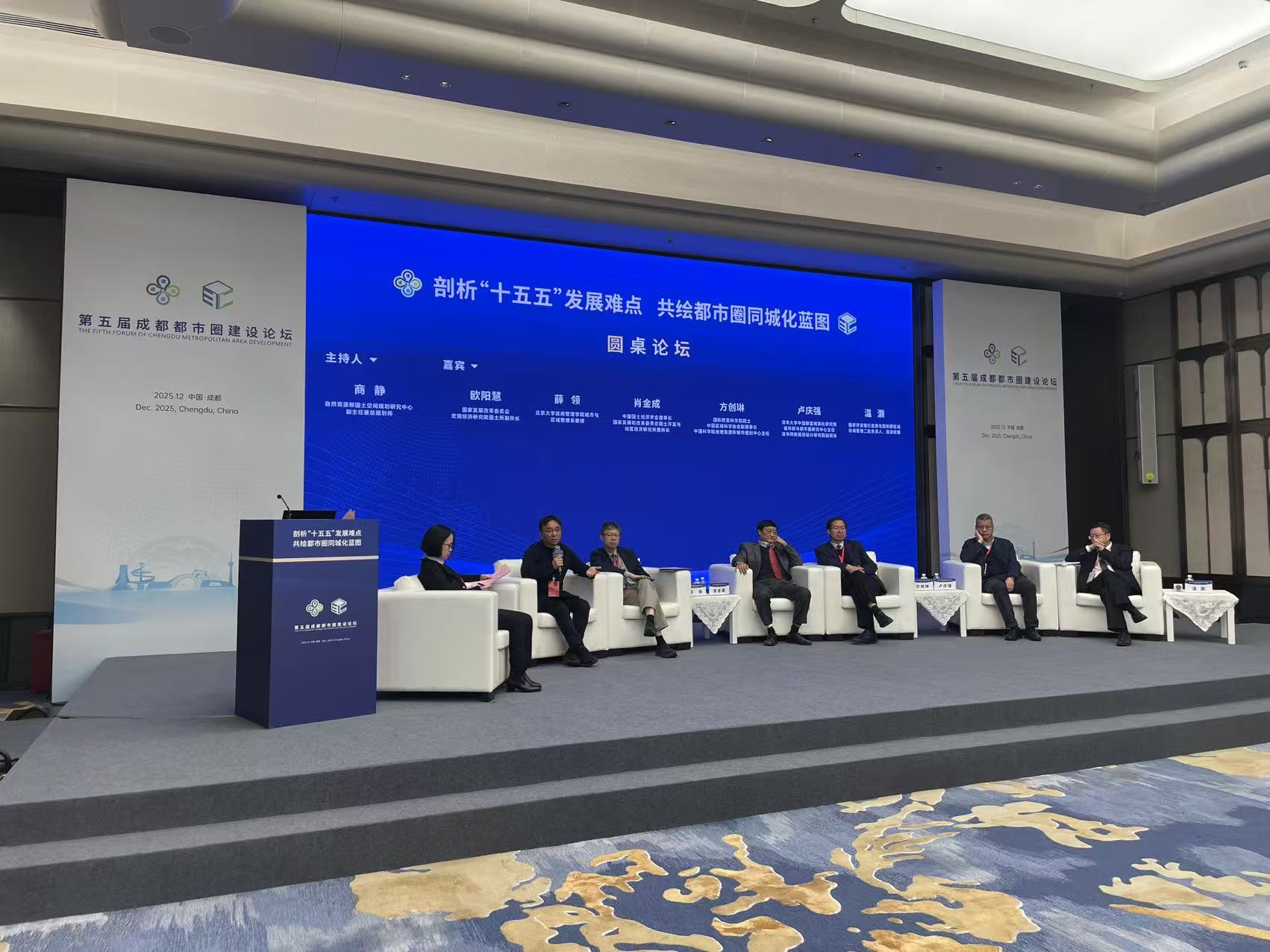
Core Insights - The number of national-level urban agglomerations in China has increased to 19, with the Shenzhen urban agglomeration ranking first in overall strength nationwide, while the Chengdu urban agglomeration leads in the central and western regions [3][6]. Group 1: Urban Agglomeration Rankings - Shenzhen urban agglomeration is recognized for its comprehensive strength, achieving the highest score in urbanization foundation and ranking second in development quality and same-city level [5][10]. - Chengdu urban agglomeration ranks fourth overall with a score of 79.2, maintaining its position as the top urban agglomeration in the central and western regions [7][10]. Group 2: Development Types - Urban agglomerations are categorized into three types: 1. Comprehensive urban agglomerations (Shenzhen, Guangzhou, Hangzhou) with solid foundations and high efficiency 2. Characteristic development urban agglomerations (Chengdu, Nanjing, Chang-Zhu-Tan) with competitive advantages in key areas 3. Potential development urban agglomerations (Wuhan, Xi'an, etc.) that require optimization in various aspects [5][10]. Group 3: Chengdu Urban Agglomeration Insights - Chengdu urban agglomeration has shown significant improvement in urbanization foundation, ranking fourth and surpassing Chongqing, while maintaining a leading position in the central and western regions [10]. - The urban agglomeration is expected to complete its development goals by the end of 2025, aiming to become a modern urban agglomeration with national influence [10][11]. Group 4: Future Development Needs - Experts emphasize the need for Chengdu urban agglomeration to enhance its functional capabilities, focusing on technology innovation, becoming a comprehensive international hub, and developing advanced manufacturing bases [11]. - The transition towards a highly integrated urban agglomeration requires a shift from individual city efforts to a unified approach, enhancing quality over quantity and fostering a collaborative environment [11].
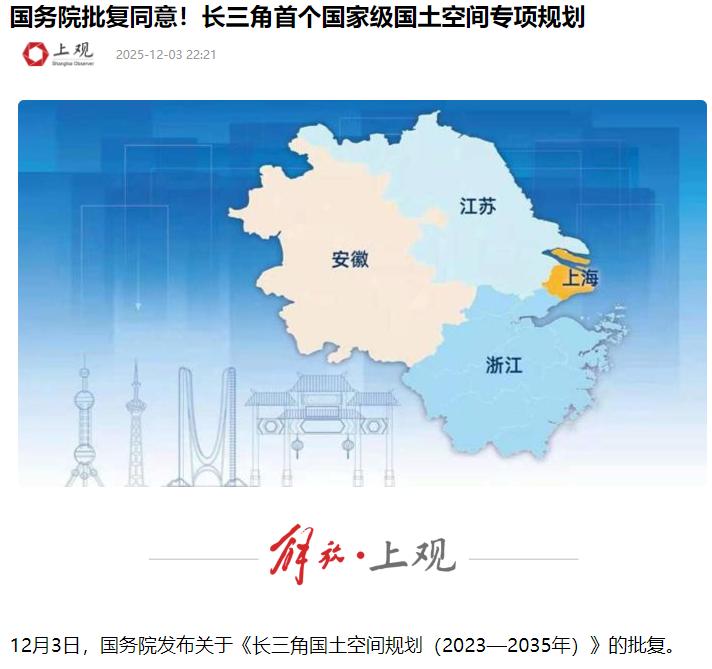
剧透!这3个国家级都市圈,要来了!
3 6 Ke· 2025-12-08 22:51
Core Viewpoint - The State Council approved the "Yangtze River Delta Land Spatial Planning (2023-2035)", marking it as the first land spatial planning for the Yangtze River Delta and the third national-level urban agglomeration plan approved in China [1][4]. Group 1: Overview of the Planning - This planning consolidates previous separate documents into a unified land spatial planning framework, enhancing efficiency and coherence in urban development [4]. - The Yangtze River Delta is positioned as a world-class urban agglomeration, supporting China's modernization efforts and serving as a model for development [6]. Group 2: Urban Circles Development - The planning indicates the upcoming establishment of three urban circles: Shanghai Metropolitan Area, Ningbo Urban Circle, and Su-Xi-Chang Urban Circle, with a focus on optimizing spatial structures [7][8]. - The document emphasizes the need for Shanghai to lead the development of these urban circles, enhancing integration with surrounding areas [7]. Group 3: Economic and Demographic Insights - The Yangtze River Delta urban agglomeration includes 41 cities, with nine cities having a GDP exceeding 1 trillion yuan, showcasing its economic significance [6][24]. - The Su-Xi-Chang Urban Circle, comprising Suzhou, Wuxi, and Changzhou, has a combined GDP of approximately 5.38 trillion yuan, ranking it third among approved urban circles [25]. Group 4: Future Urban Circle Approvals - The approval process for urban circles has shown a pattern where prior announcements hint at upcoming approvals, suggesting that the Shanghai, Su-Xi-Chang, and Ningbo urban circles are likely to be approved soon [16][31]. - The criteria for future urban circle approvals will focus on economic development advantages and the capacity for inter-city collaboration [33][34].
国家级都市圈增至18个,后备军还有这些→
第一财经· 2025-10-20 14:30
Core Viewpoint - The article discusses the recent upgrade of the Changchun urban agglomeration to a national-level urban circle, highlighting the significance of urban circles in driving regional economic development and the potential for other cities to achieve similar status in the future [3][4]. Summary by Sections Changchun Urban Circle Upgrade - The Changchun urban circle has been officially recognized as a national-level urban circle, following the approval of its development plan by the National Development and Reform Commission (NDRC) [4]. - The urban circle encompasses an area of approximately 29,700 square kilometers and has a permanent population of about 12.1 million [4]. Economic Goals and Impact - The development plan sets ambitious economic targets, aiming for a total economic output of around 1.35 trillion yuan by 2030, with a focus on enhancing regional integration and urban functionality [4][5]. - Changchun's GDP for 2024 is projected to be 763.2 billion yuan, accounting for 53.1% of Jilin province's GDP, while the urban circle's total economic output will represent 67% of the province's economy [5]. Future Urban Circles - As of now, there are 18 national-level urban circles in China, with notable cities like Nanjing, Chengdu, and Wuhan included [7]. - Cities such as Kunming and Harbin are still in the process of planning their urban circles, with Kunming being highlighted for its potential due to its population and economic size [8][9]. Government Initiatives - The Chinese government emphasizes the development of modern urban circles as a key focus for enhancing urban governance and promoting coordinated development among cities [9][10]. - Recent policies aim to establish a framework for urban integration and improve public services across urban circles, facilitating efficient commuting and industrial collaboration [10].
国家级都市圈增至18个,后备军还有哪些?
Di Yi Cai Jing· 2025-10-20 12:45
Core Insights - The Long Spring Urban Circle in Jilin Province has been officially recognized as a national-level urban circle, increasing the total number of such urban circles in China to 18 [1][2] - The Long Spring Urban Circle aims to achieve an economic total of approximately 1.35 trillion yuan by 2030, with significant improvements in regional integration and urban functionality [2][3] - The development of urban circles is a key focus for the Chinese government, with ongoing efforts to enhance urban governance and promote coordinated development among cities [6][7] Summary by Sections Long Spring Urban Circle Development - The Long Spring Urban Circle, centered around Changchun, includes Jilin City, Siping, and Liao Yuan, covering an area of approximately 29,700 square kilometers with a resident population of about 12.1 million [1] - The development plan for the Long Spring Urban Circle was approved by the National Development and Reform Commission and aims to enhance the economic and social integration of the region [2] Economic Goals and Impact - By 2030, the Long Spring Urban Circle is expected to reach an economic output of around 1.35 trillion yuan, significantly contributing to the overall economic growth of Jilin Province [2] - Changchun City alone is projected to account for 53.1% of Jilin's GDP in 2024, highlighting the urban circle's critical role in the province's economic landscape [2] Future Urban Circles - As of now, 15 out of 22 major cities in China have been designated as national-level urban circles, with notable cities like Kunming and Harbin still awaiting recognition [3][4] - The government is actively promoting the development of urban circles, with plans for Kunming's urban circle already underway [4][5] Broader Urban Development Strategy - The Chinese government emphasizes the importance of urban circles in enhancing urban governance and promoting coordinated development among cities, as outlined in various national policies [6][7] - The Long Triangle region is also focusing on urban circle development as a priority for the next five years, aiming for integrated urban growth [7]
明确了!免保育教育费政策覆盖所有幼儿园大班儿童;中国佛教协会:释永信破坏了出家人的社会形象;石破茂:强烈要求美方立即修改行政令|早报
Di Yi Cai Jing· 2025-08-08 00:19
Group 1 - The Chinese government has implemented a policy to waive childcare education fees for all kindergarten senior class children, expected to benefit approximately 12 million children this autumn semester, with an increase in national fiscal expenditure of about 20 billion yuan [2] - The Chinese Buddhist Association has expressed concerns over the actions of Shi Yongxin, indicating that his alleged criminal activities have severely damaged the social image of monks and negatively impacted the healthy transmission of Buddhism [3] - The Ministry of Finance expressed satisfaction with S&P's decision to maintain China's sovereign credit rating at "A+" with a stable outlook, highlighting recognition of China's economic resilience and debt management effectiveness [5] Group 2 - The Ministry of Industry and Information Technology and other departments have released implementation opinions to promote innovation in the brain-computer interface industry, including the development of high-precision surgical robots for implanting brain-computer interfaces [6] - The People's Bank of China announced a 700 billion yuan reverse repurchase operation to maintain liquidity in the banking system, with a term of three months [7] - China's foreign exchange reserves decreased by 25.2 billion USD to 3.2922 trillion USD by the end of July, influenced by various macroeconomic factors, while gold reserves increased by 60,000 ounces [8] Group 3 - China's total goods trade value for the first seven months of the year reached 25.7 trillion yuan, a year-on-year increase of 3.5%, with exports growing by 8% and imports by 4.8% in July [9] - Hema Fresh plans to open nearly 100 new stores within the fiscal year, aiming to exceed 500 stores, reflecting confidence in the domestic consumption market [24] - The Australian Tourism Board anticipates over 1 million Chinese tourists will visit Australia from July this year to June next year, indicating a strong recovery in tourism demand [23]
长春、昆明都市圈争取入围,“国家级都市圈”有望扩容
Di Yi Cai Jing· 2025-08-07 07:49
Core Insights - The article discusses the ongoing efforts to develop modern urban agglomerations in China, highlighting the push for Longcheng and Kunming to join the national-level urban agglomeration club [1][4][5] Group 1: Urban Agglomeration Development - As of now, 17 urban agglomerations have been approved by the National Development and Reform Commission (NDRC), including major cities like Nanjing, Chengdu, and Shenzhen [2][3] - The development of urban agglomerations began in 2019, aimed at enhancing regional competitiveness and supporting high-quality urban growth [2][3] - Urban agglomeration construction is seen as a new growth driver for regional economies, facilitating infrastructure and public service development, which in turn boosts investment and consumption [2][3] Group 2: Longcheng and Kunming's Efforts - Longcheng and Kunming are actively seeking approval for their urban agglomerations, with significant emphasis on high-quality development and regional collaboration [1][4][5] - Longcheng's GDP is projected to be 7632.19 billion yuan in 2024, accounting for 53.1% of Jilin province's total GDP, indicating its dominant economic position [5][6] - Kunming's GDP is expected to reach 8275.22 billion yuan in 2024, representing 26.2% of Yunnan province's GDP, showcasing its leading role in the region [6]