
国防开支增加

Search documents
Why RTX Stock Is Surging in 2026—and Why It Might Not Be Done Yet
Yahoo Finance· 2026-01-28 22:52
Core Viewpoint - RTX stock is experiencing significant growth in early 2026, driven by strong performance and capital returns, with a positive outlook for the defense and aerospace sectors [2] Group 1: Financial Performance - RTX reported net revenue of $24.24 billion for the quarter ending January 27, 2026, reflecting a 12.1% year-over-year increase and exceeding expectations by over 670 basis points [3] - The company achieved an adjusted earnings per share (EPS) that outperformed by 540 basis points, with free cash flow improving to $3.2 billion, indicating strong capital return potential [4] Group 2: Market Position and Backlog - RTX's backlog has surged to over $260 billion, which represents nearly three years of revenue based on 2026 guidance, highlighting the company's strong order visibility [2][6] - The defense sector's strength has remained robust through 2025 and into early 2026, supporting the expectation that RTX could outperform in upcoming quarters [2] Group 3: Guidance and Market Sentiment - While guidance was positive, revenue and earnings forecasts aligned with analyst consensus, providing limited immediate market momentum post-release [5] - RTX remains in an uptrend but may experience consolidation or a correction before reaching new highs, with potential support levels between $170 and $180 [5][6]

穆迪称特朗普1.5万亿美元的国防预算将使美国赤字恶化
Xin Lang Cai Jing· 2026-01-09 00:20
Core Viewpoint - The proposed increase in U.S. defense spending by President Trump for 2027 is unlikely to be offset by savings or revenue, which will negatively impact the already large U.S. fiscal deficit [1][2] Group 1: Proposed Defense Budget - President Trump stated that the U.S. military budget should reach $1.5 trillion by 2027, significantly higher than the $901 billion budget approved by Congress for 2026 [1][2] - Any increase in military budget requires authorization from Congress [2] Group 2: Financial Implications - The Committee for a Responsible Federal Budget estimates that the proposal will cost $5 trillion by 2035 and increase U.S. debt (including interest) by $5.8 trillion [1][2] - David Rogovic from Moody's indicated that the proposed 50% increase in defense spending is unlikely to be offset by savings due to political and policy challenges [1][2] Group 3: Economic Impact - Rogovic noted that while increased defense spending could promote GDP growth, the additional government revenue will not be sufficient to offset the increase in spending [1][2] - Continuous borrowing to fund increased spending will expand the already significant U.S. fiscal deficit, increasing interest burdens over time and further limiting fiscal flexibility [1][2]
Materion (MTRN) - 2025 Q3 - Earnings Call Transcript
2025-10-29 15:02
Financial Data and Key Metrics Changes - The company achieved all-time high EBITDA margins of 27% in electronic materials, reflecting improved cost structure and operational performance [5][6] - Sales increased by approximately 1% year-over-year, with adjusted earnings per share at $1.41, flat compared to the prior year and up 3% sequentially [5][13] - Adjusted EBITDA was $55.5 million, down 2% year-over-year, primarily due to lower volume from equipment downtime in Performance Materials [14] Business Line Data and Key Metrics Changes - **Performance Materials**: Value-added sales were $157.1 million, down 4% year-over-year due to equipment downtime, with adjusted EBITDA at $38 million, or 24.2% of value-added sales, down 18% compared to the prior year [12][14] - **Electronic Materials**: Value-added sales were $79.7 million, up 2% from the prior year and up 7% organically, with EBITDA margins reaching a record 27.1%, up 38% from the prior year [15][16] - **Precision Optics**: Value-added sales were $27.1 million, up 21% year-over-year, with adjusted EBITDA at $3.2 million, or 11.8% of value-added sales, marking a significant margin expansion [16][17] Market Data and Key Metrics Changes - The semiconductor market is recovering, with sales into high-performance memory applications increasing more than 30% year-to-date, excluding China [7] - Defense bookings increased by approximately 40% year-to-date, with the company working on about $150 million of RFQs [10][42] - The commercial space sector has seen sales increase fivefold in three years, driven by macro trends in AI and connectivity [10][11] Company Strategy and Development Direction - The company is focusing on high-growth markets such as semiconductor, defense, space, and energy, with a strong order book and improved operational performance expected to drive growth [6][11] - Strategic partnerships, such as with Kairos Power and Commonwealth Fusion Systems, are aimed at expanding the company's footprint in new energy applications [9][28] - The company aims to achieve midterm target margins of 23% and is actively addressing operational reliability issues in Performance Materials [6][17] Management's Comments on Operating Environment and Future Outlook - Management expressed confidence in finishing 2025 positively, driven by strong order rates and operational improvements [11][18] - There is uncertainty regarding the impact of geopolitical tensions, particularly concerning the China market, which is down about 20% year-over-year [70][86] - The company anticipates continued growth in defense spending and energy markets, with a focus on maintaining strong relationships with customers [10][94] Other Important Information - The company ended the quarter with a net debt position of approximately $441 million and $214 million of available capacity on its credit facility [17] - A new $50 million stock repurchase program was authorized by the Board of Directors, although organic growth remains the top priority for capital allocation [17][60] Q&A Session Summary Question: Why did the company not narrow the full-year outlook range? - Management cited uncertainty around China and potential impacts from the government shutdown as reasons for maintaining the range [25] Question: What financial impact is expected from the new agreement with Commonwealth Fusion? - Initial shipments are expected to contribute a few million this year, with a more significant annualized run rate anticipated next year [26][28] Question: What is the nature of the equipment downtime in Performance Materials? - The downtime was primarily due to issues in the largest plant, but it has been resolved, and the company expects to catch up on sales in Q4 [35][36] Question: What are the expectations for 2026 growth? - Management expressed optimism about growth in key markets, despite challenges in the auto market and geopolitical pressures [40][42] Question: How is the company addressing operational reliability? - The company is focused on capital improvements and maintenance to minimize future disruptions in Performance Materials [38][39] Question: What is the expected impact of tariffs on financial results? - The China business is down about 20% year-over-year, with some impacts from tariffs on raw materials, but the focus remains on stabilizing the supply chain [69][70] Question: Will beryllium be stockpiled by the government? - Increased U.S. defense spending is expected to drive demand for beryllium, with active discussions ongoing to ensure supply [94][95]

德国计划到2029年将国防开支增加一倍
news flash· 2025-07-28 12:07
Core Points - Germany plans to double its defense spending by 2029, reaching €162 billion [1] Group 1 - The increase in defense spending reflects Germany's commitment to enhancing its military capabilities [1] - The planned budget increase is part of a broader strategy to meet NATO defense spending guidelines [1] - This significant investment may lead to increased opportunities for defense contractors and related industries [1]
加拿大财政部长已指示内阁成员确定数百亿美元的预算削减,以帮助资助新的政府优先事项,包括增加国防开支。
news flash· 2025-07-07 21:06
Core Points - The Canadian Finance Minister has instructed cabinet members to identify budget cuts amounting to hundreds of billions of dollars to fund new government priorities, including increased defense spending [1] Group 1 - The directive aims to reallocate funds to support new government initiatives [1] - The focus on increasing defense spending indicates a shift in government priorities [1] - The scale of budget cuts suggests significant financial adjustments within the government [1]
满足特朗普要求,难掩成员国分歧,北约峰会通过“5%军费目标”
Huan Qiu Shi Bao· 2025-06-25 22:21
Group 1 - NATO leaders agreed to increase defense spending to 5% of GDP by 2035, with a review set for 2029 [3][4] - The commitment to collective defense under Article 5 of the North Atlantic Treaty was reaffirmed, stating that an attack on one is an attack on all [3][4] - The increase in defense spending is expected to result in additional expenditures amounting to hundreds of billions annually, significantly higher than the current 2% target [4][7] Group 2 - NATO Secretary General Jens Stoltenberg emphasized strong ongoing support for Ukraine, while member states agreed to label Russia as a long-term threat rather than the greatest threat [4][5] - There are concerns among European allies regarding the unpredictability of U.S. President Trump's commitment to NATO, particularly regarding Article 5 [6][8] - Disagreements among NATO members regarding the increase in defense spending were noted, with countries like Spain expressing opposition and seeking flexibility in their military spending plans [7][8]

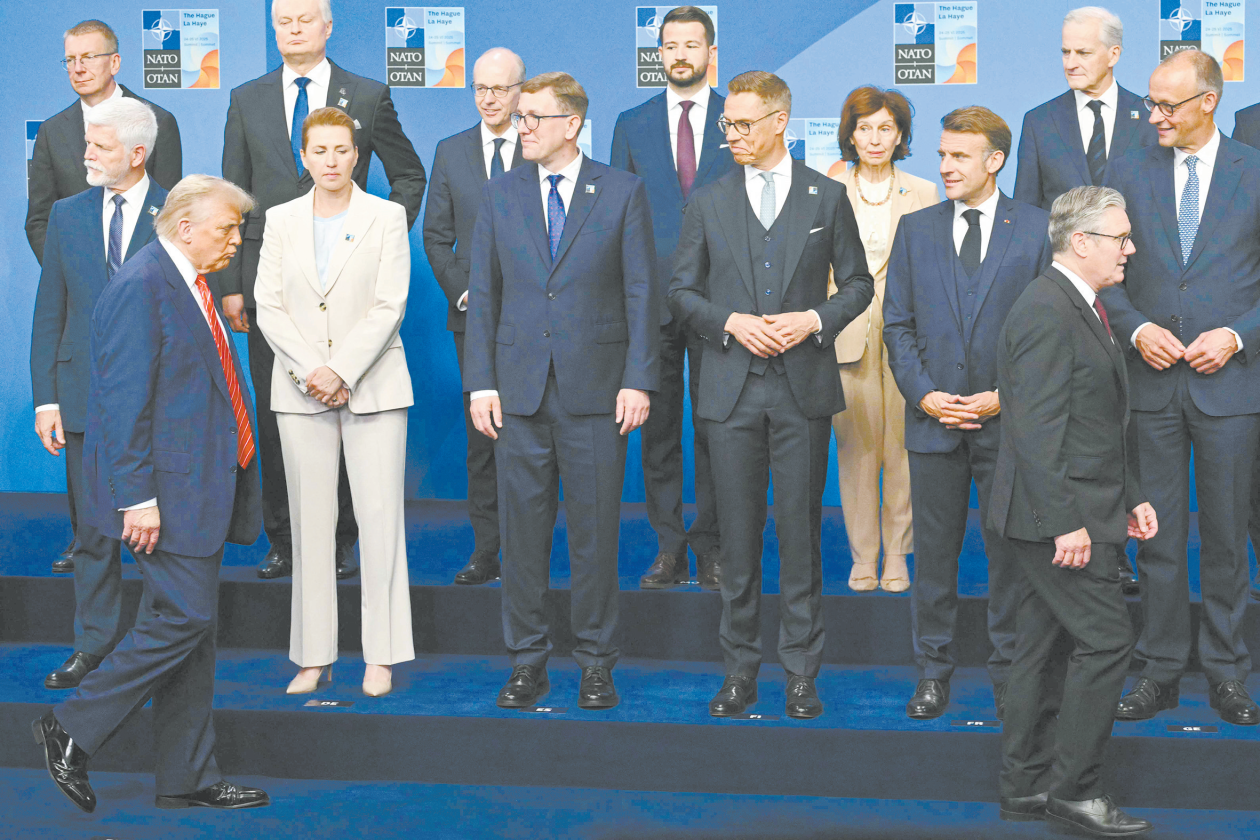
美国总统特朗普:我们的盟友已将国防开支增加了7000亿美元。
news flash· 2025-06-25 14:06
Core Viewpoint - The U.S. allies have increased their defense spending by $700 billion, indicating a significant shift in military investment and commitment to collective security [1] Group 1 - The increase in defense spending reflects a growing recognition among allies of the need to enhance military capabilities [1] - This financial commitment may lead to improved defense readiness and capabilities among allied nations [1] - The $700 billion increase signifies a substantial investment in national security and defense infrastructure [1]
德国计划到2029年把核心国防开支增加到占GDP的3.5%
news flash· 2025-06-23 13:25
Core Points - Germany plans to increase its core defense spending to 3.5% of GDP over the next five years as part of a significant military investment initiative [1] - The increase in defense spending will help Germany meet NATO's new target of at least 3.5% of GDP, up from the current 2% [1] - The German government faces challenges in significantly enhancing domestic and alliance capabilities while taking on European security responsibilities [1]
欧洲国防股上涨 美国推动北约加大国防开支
news flash· 2025-06-05 15:17
Core Viewpoint - European defense stocks are rising as the U.S. pushes NATO allies towards a consensus on increasing defense spending to 5% [1] Group 1: Market Reactions - European defense companies' stock prices have seen significant increases, with Rheinmetall up by 3.6%, Hensoldt by 6.6%, Saab by 4.8%, Leonardo by 3%, BAE Systems by 1.3%, and Kongsberg by 4.5% [1][1][1] Group 2: Government Statements - U.S. Defense Secretary Lloyd Austin indicated that NATO allies are close to reaching a consensus on the 5% defense spending target [1] - German Defense Minister Boris Pistorius stated that Germany needs to increase its military spending by approximately one-third [1]
荷兰国防部长:相信荷兰议会将支持增加国防开支。
news flash· 2025-06-04 12:50
Core Viewpoint - The Dutch Minister of Defense expresses confidence that the Dutch Parliament will support an increase in defense spending [1] Group 1 - The Dutch government is likely to prioritize defense budget enhancements in response to evolving security challenges [1] - Increased defense spending is expected to align with broader NATO commitments and regional security needs [1]