
国防现代化建设

Search documents
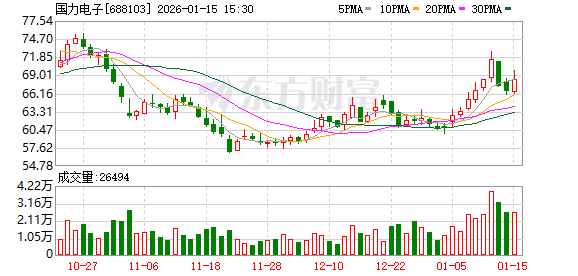
国力电子:公司会持续依托自身在电真空领域的技术积累,积极服务国防现代化建设
Zheng Quan Ri Bao· 2026-01-15 12:42
Core Viewpoint - Guokui Electronics has stated that it cannot disclose the total amount of military orders due to national secrets and commercial confidentiality, while emphasizing its commitment to supporting national defense modernization through its expertise in the vacuum electronics field [2]. Group 1 - The company has received inquiries from investors regarding its military orders [2]. - The company relies on its technological accumulation in the vacuum electronics sector to contribute to national defense modernization [2]. - The disclosure of specific military order amounts is restricted due to confidentiality concerns [2].


研判2025!中国吸波材料行业产业链上下游、发展现状、竞争格局和未来趋势分析:多场景需求驱动,行业市场规模持续上涨[图]
Chan Ye Xin Xi Wang· 2026-01-06 01:17
Core Viewpoint - The wave-absorbing materials industry in China is experiencing unprecedented growth opportunities driven by the proliferation of 5G/6G communication technologies, explosive growth in the electric vehicle industry, and accelerated modernization of national defense. The market size is projected to grow from 9.2 billion yuan in 2019 to 15.2 billion yuan by 2024, with a compound annual growth rate (CAGR) of 10.6% [1][6]. Industry Overview - Wave-absorbing materials are designed to absorb or significantly reduce electromagnetic wave energy, thereby minimizing interference. They are required to have high absorption rates across a wide frequency range, as well as lightweight, temperature resistance, moisture resistance, and corrosion resistance [2][3]. - The classification of wave-absorbing materials includes absorption-type, interference-type, and various loss mechanisms such as resistive, dielectric, and magnetic loss types [2]. Industry Value Chain - The upstream raw materials for wave-absorbing materials include non-ferrous metals such as iron, copper, nickel, chromium, silicon, titanium, and aluminum. The midstream involves the production and manufacturing of wave-absorbing materials, while the downstream applications span electric vehicles, 5G communication, consumer electronics, and photovoltaic energy storage [3][4]. Current Industry Status - The global market for wave-absorbing materials is on an upward trend, expected to reach 6.138 billion USD by 2024, reflecting a year-on-year increase of 6.8%. This growth is primarily driven by demand in military, aerospace, communication, and electronic information sectors [5][6]. Competitive Landscape - Historically, the wave-absorbing materials market has been dominated by foreign manufacturers such as ARC, 3M, DuPont, Henkel, TDK, and NEC. However, domestic companies in China are advancing technologically, with firms like Shenzhen Feirongda Technology Co., Ltd., Beikong Technology Co., Ltd., and others achieving competitive product standards [7][8]. Industry Development Trends 1. **Performance Improvement**: Future developments will focus on enhancing performance in high-frequency absorption, wide frequency coverage, and multifunctional integration. The rise of 5G/6G communication and millimeter-wave radar technologies necessitates materials that maintain excellent absorption performance at high frequencies [9]. 2. **Application Expansion**: Initially used in military applications, wave-absorbing materials are now extending into civilian sectors, including smart vehicles and IoT, where they help mitigate electromagnetic interference and enhance system reliability [10][11]. 3. **Green and Intelligent Transformation**: The industry is moving towards smart manufacturing and green production practices, emphasizing the use of eco-friendly raw materials and low-emission processes, such as water-based coating technologies [12].




中航成飞2025年三季报展现强劲增长动能,主业盈利质量显著提升
Zheng Quan Shi Bao Wang· 2025-10-29 05:01
Core Insights - The company, AVIC Chengfei, reported explosive growth in its Q3 2025 performance, showcasing strong operational resilience and high-quality development potential in the aerospace manufacturing sector [2][3]. Financial Performance - In Q3 2025, AVIC Chengfei achieved revenue of approximately 27.584 billion yuan, a significant increase of 139.04% compared to the same period last year [2]. - For the first nine months of 2025, the company recorded cumulative revenue of about 48.286 billion yuan, reflecting a year-on-year growth of 6.19% [2]. - The net profit attributable to shareholders for Q3 reached approximately 1.256 billion yuan, marking a substantial increase of 169.53% year-on-year, with basic earnings per share rising by 176.47% to 0.47 yuan [2]. Profitability Indicators - The company's core profitability indicator, the net profit excluding non-recurring gains and losses, showed remarkable growth, reaching about 1.255 billion yuan in Q3, a staggering increase of 7482.52% year-on-year [3]. - Year-to-date, the net profit excluding non-recurring items was approximately 2.11 billion yuan, up 2432.10% compared to the previous year [3]. Cash Flow and Operational Efficiency - Although the net cash flow from operating activities remained negative, it improved significantly by 78.13% compared to the same period last year, primarily due to an increase in customer contract prepayments [3]. - This positive change indicates good progress in order acquisition and project execution, providing ample funding for future R&D and production expansion [3]. Balance Sheet and Strategic Positioning - The company's total assets grew by 9.12% compared to the end of the previous year, with significant increases in prepayments, contract assets, and other non-current assets, indicating proactive preparations for future product deliveries and production tasks [4]. - The growth in construction in progress reflects ongoing capacity building and upgrades for long-term development [4]. - The company's capital structure has strengthened through asset restructuring and new share issuance, enhancing its financial stability [4]. Shareholder Structure and Market Position - The shareholder structure remains stable, with the top three shareholders, including China Aviation Industry Corporation and its concerted parties, holding a significant proportion of shares, providing solid support for the company's strategic continuity and business stability [4]. - AVIC Chengfei's strong performance in revenue and profit growth, along with improved cash flow, underscores its intrinsic value and positive development trend, positioning it well to capitalize on the ongoing modernization of national defense and sustained demand for aerospace equipment [4].
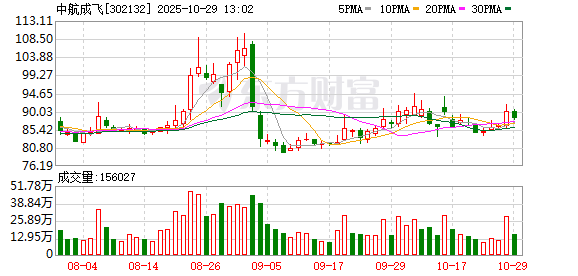
2025年国防支出预算点评:国防支出预算增长7.2%,国防建设有望稳步推进
Guotai Junan Securities· 2025-03-14 11:34
Investment Rating - The report assigns an "Overweight" rating for the defense industry, consistent with the previous rating [8]. Core Insights - The national defense budget for 2025 is set at 1,784.7 billion yuan, reflecting a year-on-year increase of 7.2%, which is higher than the expected GDP growth target of 5% [3][8]. - The defense budget growth rate has remained stable over the past nine years, with the proportion of defense spending to GDP still having room for improvement compared to countries like the US and Japan [3][8]. - The report emphasizes the importance of the defense budget as a foundation for modernization and equipment development, with a consistent growth trend observed from 2016 to 2024 [3][8]. Summary by Sections National Defense Budget Overview - The 2025 defense budget is 1,784.7 billion yuan, marking a 7.2% increase, which aligns with the stable growth trend observed in previous years [3][8]. - The defense budget growth has been consistent, with annual increases of 7.6%, 7%, 8.1%, 7.5%, 6.6%, 6.8%, 7.1%, and 7.2% from 2016 to 2024 [8]. Comparison with Other Countries - Japan's defense budget for 2025 is projected at 8.7 trillion yen, a 9.4% increase, while the US defense budget for the fiscal year 2024 is approximately 886 billion USD, accounting for 3% of its GDP [8]. - China's defense spending as a percentage of GDP has remained below 1.5%, indicating significant potential for growth compared to global averages and specific countries [8]. Strategic Implications - The report highlights the ongoing modernization of the military and defense capabilities as a priority, with a focus on implementing Xi Jinping's military strategies and enhancing combat readiness [8]. - The year 2025 is seen as a pivotal year for transitioning from the 14th Five-Year Plan to the 15th, with expectations for steady growth in defense spending to support modernization goals [8]. Recommended Investment Targets - The report suggests focusing on companies within the aerospace and aviation supply chain, recommending specific stocks such as AVIC Optoelectronics, Aerospace Electric, AVIC Shenyang Aircraft, and others [8].