
5G/6G通信技术

Search documents
独家|刚刚,开年最大商业航天融资来了
投中网· 2026-02-06 02:38
Core Viewpoint - The article highlights the rapid financing activity in the commercial aerospace sector, particularly focusing on Shanghai Xingsi Semiconductor, which has secured nearly 1.5 billion yuan in strategic financing, marking it as the largest financing in the commercial aerospace field for 2026 so far [4][5]. Group 1: Financing Details - Shanghai Xingsi Semiconductor completed multiple rounds of strategic financing, totaling nearly 1.5 billion yuan, with participation from various state-owned and market-oriented funds [4][5]. - The financing process was notably swift, with some state-owned investors completing the entire process from project initiation to funding in just one month, described as the fastest in history [5][6]. - The enthusiasm from state-owned capital is attributed to the long-term relationships established with the company over the past few years, as well as the certainty surrounding the commercial aerospace sector [6][7]. Group 2: Company Background and Market Position - Founded in October 2020, Shanghai Xingsi Semiconductor focuses on the research and development of 5G/6G communication technology and has achieved significant milestones, including the successful development of its first 5G eMBB baseband chip [10][11]. - The company has faced challenges in the past, including a down round in its B financing, where the pre-financing valuation dropped to approximately 3 billion yuan from 5 billion yuan, reflecting the tough market conditions for chip companies [11][12]. - Despite these challenges, the company has pivoted towards low-orbit satellite internet communication, positioning itself to benefit from the upcoming commercial aerospace boom [13][15]. Group 3: Technological Advancements and Future Prospects - Shanghai Xingsi Semiconductor is well-positioned in the 5G/6G NTN satellite communication chip market, which is expected to be a significant beneficiary of the commercial aerospace trend [15][16]. - The company has made substantial progress in technology, achieving a global first with a smartphone capable of satellite video calls based on the 5G NTN standard [16]. - Collaborations with major smartphone manufacturers and automotive companies indicate a strong commercial outlook, with the potential for significant market growth in consumer electronics and automotive sectors [17][18].


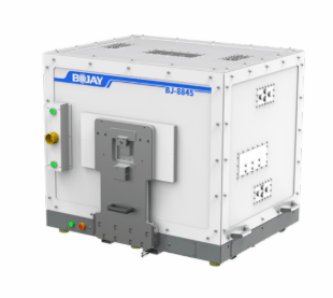
毫米波射频屏蔽箱全球市场报告:主要企业、排名及2026-2032年增长预测
Sou Hu Cai Jing· 2026-01-06 14:44
Core Insights - The global millimeter-wave RF shielding box market is projected to grow from approximately $220 million in 2024 to $226 million in 2025, with a compound annual growth rate (CAGR) of 3.3%, reaching an estimated $274 million by 2031 [3]. Market Overview - Millimeter-wave RF shielding boxes are designed to block electromagnetic waves in the millimeter-wave frequency range (30 GHz to 300 GHz), protecting internal devices from external electromagnetic interference (EMI) and preventing internal signal leakage [1]. Key Drivers - Acceleration of 5G and Beyond 5G communication technology development, with Japan's government prioritizing 5G/6G as a national strategy, increasing demand for RF shielding boxes in testing [7]. - Growth of the automotive radar and autonomous driving industry, particularly in Japan, necessitating the use of RF shielding boxes for precise testing of advanced driver-assistance systems (ADAS) [7]. - Strict national electromagnetic compatibility (EMC) regulations in Japan require high-performance RF shielding boxes for compliance testing of devices containing millimeter-wave circuits [8]. - Advancements in semiconductor and packaging technologies towards high frequencies increase the demand for RF shielding boxes capable of providing high shielding effectiveness (SE) [8]. - Ongoing research in frontier fields like terahertz (THz) imaging and communication by Japanese universities and research institutions drives the need for RF shielding boxes in controlled experimental environments [8]. Market Opportunities - Deployment of Open RAN creates testing scenarios that increase demand for standardized RF shielding boxes in independent testing laboratories [9]. - The ground equipment market for low Earth orbit (LEO) satellite internet constellations, such as SpaceX's Starlink, presents significant opportunities for RF shielding box manufacturers [9]. - The trend towards wireless and high-frequency medical devices necessitates high-reliability RF shielding boxes for testing, creating a high-value niche market [9]. - Factory automation and industrial IoT (IIoT) require robust RF shielding boxes for testing high-frequency wireless communication modules in smart factories [10]. - Transitioning to a "shielding box as a service (SaaS)" business model can lower initial investment barriers for small and startup companies, expanding the customer base [10]. Constraints on Expansion - Market demand is highly dependent on a few capital-intensive downstream industries, leading to significant volatility and uncertainty in demand for RF shielding boxes [11]. - The conflict between standardization and customization poses challenges for manufacturers, as Japanese clients often require tailored solutions, increasing costs and delivery times [12]. - Difficulty in validating the performance of RF shielding boxes at specific frequencies complicates the sales process, requiring substantial customer education and resource investment [12].
研判2025!中国吸波材料行业产业链上下游、发展现状、竞争格局和未来趋势分析:多场景需求驱动,行业市场规模持续上涨[图]
Chan Ye Xin Xi Wang· 2026-01-06 01:17
Core Viewpoint - The wave-absorbing materials industry in China is experiencing unprecedented growth opportunities driven by the proliferation of 5G/6G communication technologies, explosive growth in the electric vehicle industry, and accelerated modernization of national defense. The market size is projected to grow from 9.2 billion yuan in 2019 to 15.2 billion yuan by 2024, with a compound annual growth rate (CAGR) of 10.6% [1][6]. Industry Overview - Wave-absorbing materials are designed to absorb or significantly reduce electromagnetic wave energy, thereby minimizing interference. They are required to have high absorption rates across a wide frequency range, as well as lightweight, temperature resistance, moisture resistance, and corrosion resistance [2][3]. - The classification of wave-absorbing materials includes absorption-type, interference-type, and various loss mechanisms such as resistive, dielectric, and magnetic loss types [2]. Industry Value Chain - The upstream raw materials for wave-absorbing materials include non-ferrous metals such as iron, copper, nickel, chromium, silicon, titanium, and aluminum. The midstream involves the production and manufacturing of wave-absorbing materials, while the downstream applications span electric vehicles, 5G communication, consumer electronics, and photovoltaic energy storage [3][4]. Current Industry Status - The global market for wave-absorbing materials is on an upward trend, expected to reach 6.138 billion USD by 2024, reflecting a year-on-year increase of 6.8%. This growth is primarily driven by demand in military, aerospace, communication, and electronic information sectors [5][6]. Competitive Landscape - Historically, the wave-absorbing materials market has been dominated by foreign manufacturers such as ARC, 3M, DuPont, Henkel, TDK, and NEC. However, domestic companies in China are advancing technologically, with firms like Shenzhen Feirongda Technology Co., Ltd., Beikong Technology Co., Ltd., and others achieving competitive product standards [7][8]. Industry Development Trends 1. **Performance Improvement**: Future developments will focus on enhancing performance in high-frequency absorption, wide frequency coverage, and multifunctional integration. The rise of 5G/6G communication and millimeter-wave radar technologies necessitates materials that maintain excellent absorption performance at high frequencies [9]. 2. **Application Expansion**: Initially used in military applications, wave-absorbing materials are now extending into civilian sectors, including smart vehicles and IoT, where they help mitigate electromagnetic interference and enhance system reliability [10][11]. 3. **Green and Intelligent Transformation**: The industry is moving towards smart manufacturing and green production practices, emphasizing the use of eco-friendly raw materials and low-emission processes, such as water-based coating technologies [12].




又一家企业终止并购
Xin Lang Cai Jing· 2025-12-15 01:21
Core Viewpoint - The company, 蓝盾光电, has decided to terminate the transaction to acquire a 3.4783% stake in 星思半导体 for 80 million yuan, citing the need to protect shareholder interests and manage investment risks [1][4][7] Group 1: Transaction Details - The transaction was originally based on a letter of intent signed on July 26, 2024, and a formal agreement signed on September 13, 2024 [1][4] - The stake corresponds to a registered capital of 782,800 yuan [1][4] Group 2: Current Holdings and Market Position - Despite the termination, the company retains a 4.95% stake in 星思半导体, making it the sixth-largest shareholder [3][6] - 星思半导体, established in 2020, focuses on 5G/6G communication technology and has raised over 1.7 billion yuan across six funding rounds, with notable investors including 高瓴 and 鼎晖 [3][6] Group 3: Strategic Implications - The decision to terminate the transaction is aimed at reducing financial risks and external investment pressures while maintaining asset quality and shareholder stability [3][6] - The company remains optimistic about the prospects of domestic baseband chips in 5G FWA and satellite internet applications, indicating potential for future collaboration with 星思半导体 [3][6][7]

思瑞浦微电子科技(苏州)股份有限公司2024年年度报告摘要
Shang Hai Zheng Quan Bao· 2025-04-29 07:30
Company Overview - The company, Si Rui Pu, is engaged in the research and sales of integrated circuit design, focusing on high-performance, high-quality, and high-reliability products [4][18] - The main business includes the development and sales of analog and mixed-signal integrated circuits, covering various applications such as new energy, automotive, communication, industrial, and healthcare [4][18] Financial Performance - In the first quarter of 2025, the company achieved operating revenue of 421.79 million yuan, a year-on-year increase of 110.88% and a quarter-on-quarter increase of 13.59% [34] - The net profit attributable to shareholders was 15.56 million yuan, marking a turnaround from losses [34] - The gross profit margin for the first quarter was 46.43%, showing a slight year-on-year decline but a quarter-on-quarter improvement [34] Industry Context - The global semiconductor market is projected to reach a size of 627.6 billion USD in 2024, reflecting a growth of 19.1% compared to 2023 [14] - The domestic integrated circuit industry in China is expected to see double-digit growth in both production and export volumes in 2024, with significant contributions from sectors like AI and smart vehicles [15][16] - The analog chip market is anticipated to grow to 79.43 billion USD in 2024, driven by demand from consumer electronics, automotive electronics, and industrial control [16][17] Technological Trends - The company is focusing on high-performance and low-power designs, as well as high integration and multi-functionality in its analog chip offerings [20][21] - Innovations in manufacturing processes and packaging technologies are being pursued to enhance product performance and reliability [22] Market Applications - The company’s products are widely used in various sectors, including communication, automotive, and industrial automation, with a growing demand for analog chips in 5G technology and electric vehicles [23][25][28] - The renewable energy sector, particularly solar and energy storage, is expected to drive further demand for analog chips due to the increasing installation of solar power systems and energy storage solutions [26][27]
