国际分工

Search documents
李俊:构建贸易投资一体化发展新格局
Jing Ji Ri Bao· 2026-01-28 00:04
Core Viewpoint - The article emphasizes the need for China to promote the integration of trade and investment to adapt to the changing international economic landscape and enhance its competitive advantage in the global market [1][4]. Group 1: Evolution of Trade and Investment Relations - The understanding of the relationship between trade and investment has evolved from being seen as substitutes to being complementary and symbiotic [2]. - Multinational corporations are the main driving force behind the integration of trade and investment, with investment-driven intermediate product trade becoming a significant growth engine for international trade [2][3]. Group 2: Current Status and Trends in China - China is no longer a passive participant in globalization but is actively shaping a new pattern of trade and investment integration [3]. - Chinese companies are increasingly engaging in technological innovation and internationalization, enhancing their position in the global value chain [3][5]. Group 3: Strategic Considerations for Economic Transformation - The rise of protectionism and geopolitical tensions necessitates a proactive approach to trade and investment integration to build international competitive advantages [4]. - The integration of trade and investment is essential for breaking down trade barriers and expanding bilateral trade opportunities [4][7]. Group 4: Enhancing Global Value Chain Position - Despite being the world's largest goods trader, China needs to improve the quality and efficiency of its trade and investment [5][6]. - The integration of trade and investment can help Chinese companies enhance their roles in the global value chain, particularly in high-end segments [6]. Group 5: Key Tasks and Practical Measures - Building globally competitive trade and investment entities is crucial, focusing on nurturing world-class multinational companies and enhancing their international operational capabilities [8][9]. - Promoting mutual reinforcement between trade and investment is necessary to create a new model where overseas investment drives export growth [9][10]. - Deepening institutional openness and establishing a robust regulatory framework for trade and investment integration is vital for sustainable development [10].
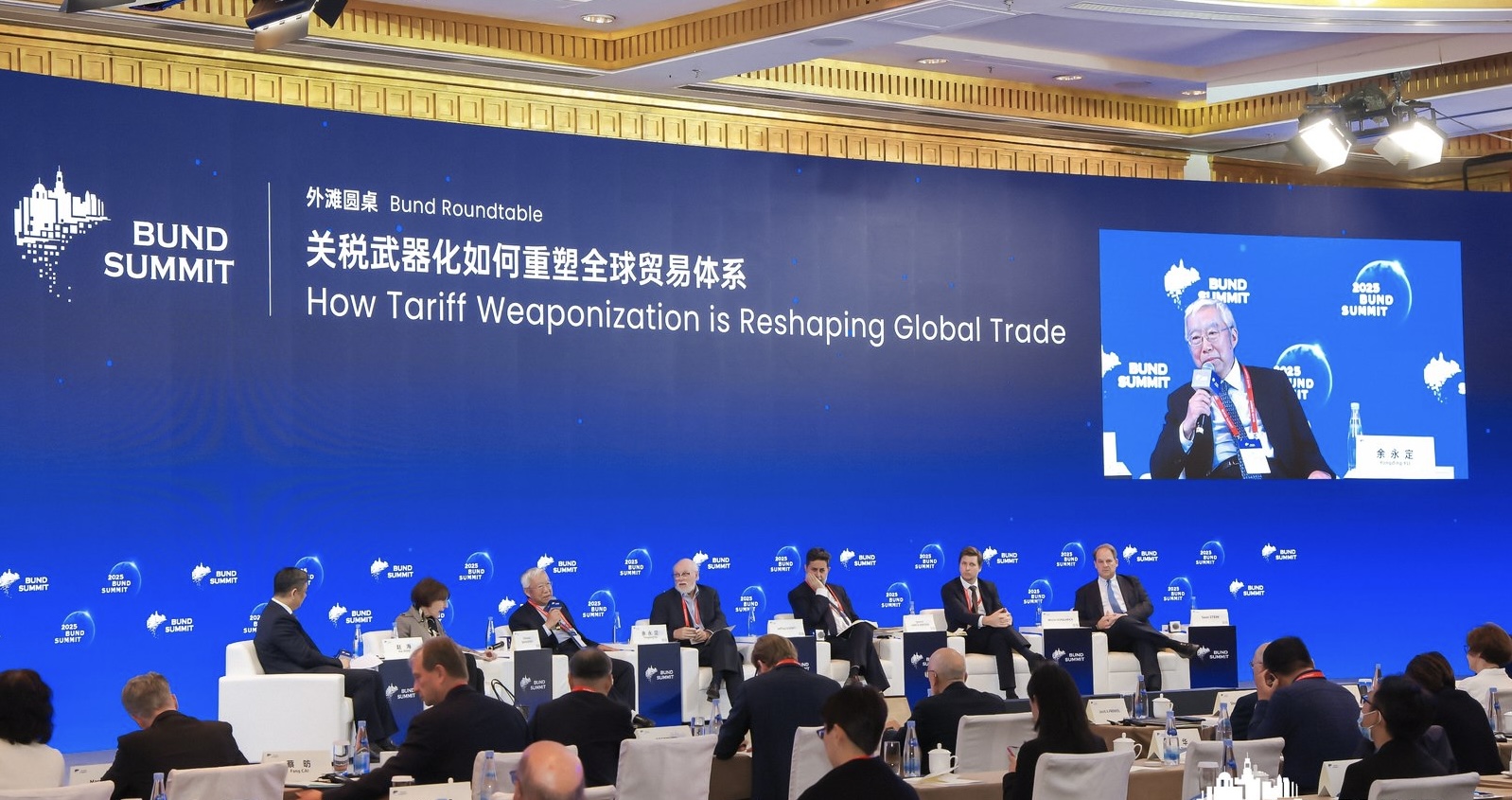
余永定:全球化关键是如何实现更公平的收益分配
Di Yi Cai Jing· 2025-10-28 04:16
Group 1 - The core principle of international division of labor benefits all countries, enhancing productivity through global supply chains [1] - The main issue lies in the equitable distribution of the benefits brought by globalization, both between countries and within domestic groups [3] - The U.S. should focus on upgrading infrastructure and improving benefit distribution to ensure that ordinary workers and blue-collar groups gain more from global supply chains [3] Group 2 - China has maintained a long-term surplus in its current and trade accounts, which was necessary in the past for foreign exchange reserves, but should now aim for balance by relying more on domestic demand [3] - The trade surplus as a percentage of China's GDP has decreased from over 10%-11% in 2006-2007 to around 2%-3% currently, indicating significant progress [3] - Progress has been made in promoting the use of the renminbi for cross-border settlements, but achieving its status as an international reserve currency remains a long-term goal with limited advancements [4]