
双循环战略

Search documents
“双向奔赴”:桂港构建命运共同体
Guang Xi Ri Bao· 2026-02-26 02:06
Core Viewpoint - The cooperation between Guangxi and Hong Kong is transitioning from a traditional "front shop, back factory" model to a new phase of deep collaboration characterized by strategic integration and mutual support in key economic factors [1]. Group 1: Economic Factors - The five core economic factors driving growth—land, labor, capital, technology, and institutions—are highly complementary between Guangxi and Hong Kong, enabling a dual flow of resources and collaborative configuration [1][2]. - Guangxi has advantages in land, labor, and geographical location, while Hong Kong excels in capital allocation, institutional environment, and international regulatory alignment, creating a synergistic relationship [2][3]. Group 2: Structural Changes in Cooperation - The traditional cooperation model has room for structural improvement, as Guangxi has primarily been a supplier of basic products, relying on land and labor, which limits added value [3]. - The recent visit of the Guangxi delegation to Hong Kong aims to open new cooperation avenues in high-tech fields like artificial intelligence, marking a shift from "factor complementarity" to "capability co-construction" [3]. Group 3: Land and Infrastructure - Land is being redefined in the context of modern economic corridors, where it serves as a vehicle for institutional embedding and market connectivity [4]. - Guangxi's land and infrastructure are positioned to facilitate Hong Kong's access to the ASEAN market, transforming Guangxi into a strategic hub [4][5]. Group 4: Financial Cooperation - Hong Kong, as a major global financial center, provides a platform for Guangxi enterprises to overcome financing challenges and achieve asset securitization [6]. - The dual flow of capital between Hong Kong and Guangxi is creating a positive cycle, with Hong Kong capital seeking investment opportunities in Guangxi's infrastructure and industry upgrades [6]. Group 5: Talent and AI Collaboration - Cooperation is shifting from low-end labor to high-end talent sharing and professional service collaboration, particularly in fields like artificial intelligence and digital economy [7]. - The collaboration aims to establish a cross-border AI cooperation platform, integrating Hong Kong's international innovation resources with Guangxi's market access capabilities [8]. Group 6: Strategic Outlook - The essence of Guangxi-Hong Kong cooperation is a reorganization of comparative advantages and functional upgrades, with both regions contributing unique strengths to expand strategic opportunities [9]. - Continuous efforts to break down barriers to resource flow and deepen collaboration in areas like AI, cross-border finance, and tourism will drive the partnership towards a more integrated framework [9][10].
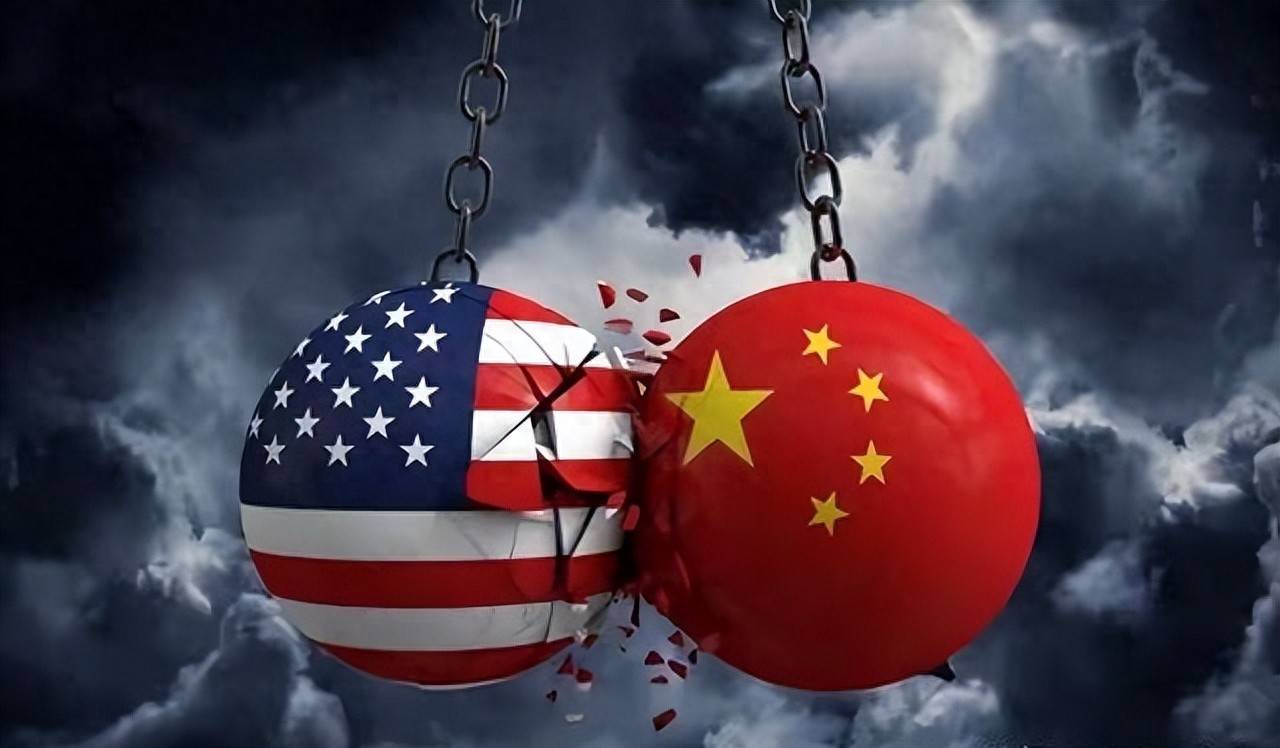
美国三届政府打了8年才发现:为何中国反而越打越强?
Sou Hu Cai Jing· 2026-02-16 05:53
Group 1 - The US has imposed tariffs on Chinese goods since 2018, starting with steel and aluminum, expanding to $340 billion worth of products at a 25% rate [1] - In response to US tariffs, China implemented retaliatory measures, matching the scale of the tariffs [1] - The US-China trade tensions escalated with the US imposing additional tariffs on $200 billion of Chinese goods, raising the rate from 10% to 25% [1] - The US government has continued to enforce strict export controls on semiconductor technology to China, including the addition of companies to the entity list [1][3] - By 2026, the US shifted focus to requiring allies to pay more military expenses to reduce economic ties with China [3] Group 2 - China's semiconductor self-sufficiency reached 35% by January 2026, indicating progress in domestic production capabilities [3] - Despite US efforts to suppress China's economy, trade deficits have increased, from $375 billion in 2018 to $650 billion in 2020 [3] - Chinese companies have adapted by relocating supply chains to countries like Vietnam and India, and have increased domestic R&D efforts [5] - By 2026, China's manufacturing value added accounted for 35% of the global total, showcasing enhanced resilience in its industrial chain [5] - China's export structure has shifted significantly towards high-tech products, with electric vehicle exports increasing several times [5] Group 3 - The US's strategy has not achieved its intended effects, as China's technological development and export stability have continued to grow [7] - The US faces internal challenges such as manufacturing hollowing out, financialization, political polarization, and increasing wealth disparity [7] - The key issue lies in the US finding a new strategic direction to maintain its global dominance, while China continues to rise through global cooperation and innovation [9]

滕琛:港研发+珠转化,给湾区产业合作“踩油门”
Nan Fang Du Shi Bao· 2026-02-11 03:06
Core Viewpoint - The collaboration between Zhuhai and Hong Kong in technology innovation and industrial linkage is a focal point of discussion during the "Two Sessions" in Zhuhai, aiming to create new advantages for the development of the Guangdong-Hong Kong-Macao Greater Bay Area [1] Group 1: Advantages of Zhuhai - Zhuhai is strategically located at the intersection of three major metropolitan areas, making it the first stop for technology resources connecting to Hong Kong [2] - The city has a gradually improving industrial ecosystem in integrated circuits, biomedicine, and marine economy [2] - Lower land and labor costs compared to Shenzhen and Hong Kong make Zhuhai suitable for project trials and large-scale production [2] - Innovative policies such as "Hong Kong vehicles entering the mainland" and "Zhuhai-Hong Kong talent card" facilitate cross-border collaboration [2] Group 2: Advantages of Hong Kong - Hong Kong boasts a concentration of world-class universities and research institutions, providing rich innovation resources [3] - The city has diverse financing channels and international financial service capabilities [3] - Institutional advantages such as cross-border use of research funds and expedited customs for experimental equipment enhance cross-border scientific collaboration [3] Group 3: Recommendations for Collaboration - Establish a regular collaboration mechanism by setting up a Zhuhai-Hong Kong industrial linkage task force to hold joint meetings and approve major cooperation projects [4] - Support Hong Kong enterprises in utilizing Zhuhai's land and facilities for R&D centers, pilot bases, and manufacturing parks to overcome spatial limitations [5] - Enhance cross-border trade convenience by deepening the effects of "Hong Kong vehicles entering the mainland" and exploring integrated cross-border supply chain supervision [6] - Facilitate the flow of innovative elements by encouraging joint laboratories between institutions and enterprises from both regions [7] - Co-build a regional innovation community by collaborating with Hong Kong to establish the Zhuhai-Western Science City and promote the integration of industry, technology, and scenarios [8] - Improve personnel exchanges and transportation by implementing a "one visa for multiple entries" policy for travel from Zhuhai to Hong Kong and accelerating the construction of maritime routes [9]
破“内卷”通壁垒 广东政协委员多维度支招民企高质量出海
Zhong Guo Xin Wen Wang· 2026-01-28 06:15
Group 1 - The core discussion during the Guangdong Two Sessions focused on the high-quality overseas expansion of enterprises and the development of the private economy, with proposals aimed at transforming Guangdong into a global hub for new productive forces [1] - According to Ernst & Young, China's total foreign direct investment exceeded $160 billion in the previous year, marking a 10% year-on-year increase, indicating robust growth in overseas investments by Chinese enterprises [1] Group 2 - Medium-sized enterprises face challenges such as insufficient internationalization capabilities, high compliance risks, and fragmented service systems, necessitating the establishment of a "new productive force output base" to support their overseas expansion [2] - Suggestions include creating a collaborative platform for overseas expansion based on the Belt and Road Initiative, forming an "overseas alliance" for key industries, and standardizing overseas business practices to enhance brand recognition [2] Group 3 - Leveraging the unique advantages of Macau in design, quality control, and international certification can add high value to products from Guangdong's county-level industries, promoting a "cross-border e-commerce + industrial belt" model [3] - The proposal includes establishing a policy coordination list for cross-border e-commerce and extending logistics subsidies and rent reductions to rural areas in Guangdong [3] Group 4 - The integration of over 8,000 professionals from Hong Kong and Macau in the Greater Bay Area is crucial for enhancing overseas expansion efficiency, but challenges such as qualification recognition and public service gaps remain [3] - Recommendations include creating a dynamic recognition list for professionals from Hong Kong and Macau and optimizing tax policies to facilitate talent mobility [3] Group 5 - The various proposals from committee members complement each other, emphasizing the need for institutional innovation to address development challenges and strengthen the foundation for overseas expansion [4]
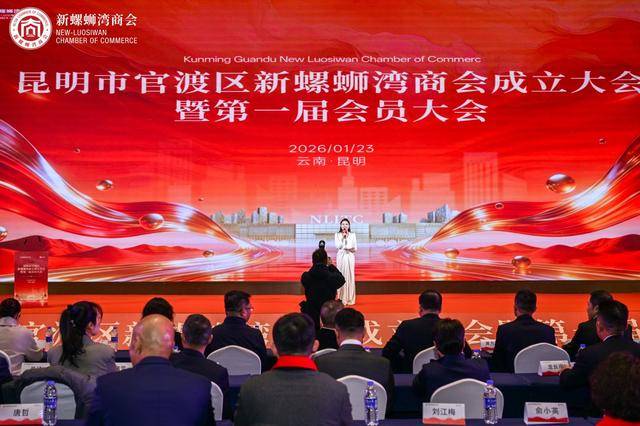
昆明市官渡区新螺蛳湾商会正式成立,国际化营商环境服务能级再提升
Sou Hu Cai Jing· 2026-01-24 17:39
Core Viewpoint - The establishment of the Xinsuoshu Wan Chamber of Commerce marks a significant step for Kunming's trade enterprises in enhancing international cooperation and promoting high-quality development, serving as a platform for connecting domestic and international markets [1][5]. Group 1: Background and Significance - The chamber's formation aligns with national and local development strategies, responding to the collective call of market entities, and represents a historic shift from individual efforts to organized and alliance-based approaches in international expansion [5][11]. - The Xinsuoshu Wan International Trade City is positioned as a key node in the dual circulation strategy, facilitating connections between domestic and international markets [3][5]. Group 2: Inauguration and Governance - The inaugural meeting saw the election of Huang Fangmin as the president, establishing a modern governance structure for the chamber [6][10]. - Various representatives from government, business, and academia attended the event, expressing support and outlining collaborative visions for future development [8][10]. Group 3: Strategic Focus and Future Plans - The chamber aims to leverage policies from the Belt and Road Initiative and RCEP to enhance cross-border trade and reduce costs for member enterprises [11]. - Plans include building a cross-border trade corridor and a one-stop trade service platform, as well as promoting brand development and integration of industries [11][13]. Group 4: Economic Impact and Role - The chamber is expected to optimize the business environment and drive regional economic development, enhancing Kunming's position as a core hub for South Asia and Southeast Asia [13]. - It will serve as a core engine for improving the international business environment and a strong pulse for regional economic growth [13].
广东省政协委员陈凯:建设出海基地,服务粤企“走出去”
Nan Fang Du Shi Bao· 2026-01-24 14:34
Core Viewpoint - Under the "dual circulation" strategy, many Chinese companies are enhancing their international development while solidifying their domestic market presence, aiming for a "second growth curve" and improving global competitiveness, with a projected foreign direct investment exceeding $160 billion by 2025, reflecting a 10% year-on-year growth [2] Group 1 - The Guangdong-Hong Kong-Macao Greater Bay Area, with an economic total of 14 trillion yuan and a world-class port cluster, is becoming a hub for innovative core engines and diverse trade networks, expected to be a center for the output of new productivity for Chinese enterprises [2] - During the 2026 Guangdong Two Sessions, the internationalization of Guangdong enterprises has become a focal point, with challenges identified for medium-sized enterprises that require effective support due to insufficient internationalization capabilities and high compliance risks [2][3] - Chen Kai, Chairman of Ernst & Young China, highlighted that without timely solutions to these challenges, the global development of Guangdong's new productivity will be constrained [2] Group 2 - To address the needs and pain points of enterprises, Chen Kai suggested that Guangdong should integrate resources and professional service capabilities within the Greater Bay Area to upgrade the existing outbound service platform into a "new productivity output base" [3] - This base should focus on medium-sized enterprises with high growth potential, providing one-stop support from market research, outbound strategy, overseas compliance, to local ecosystem integration, leveraging a global resource network to facilitate rapid international expansion [3] - The base is expected to offer comprehensive services, including trend analysis, destination and path analysis, overseas merger facilitation, and local ecosystem connections, while also addressing localization and compliance challenges through partnerships with consulting firms, law firms, and capital providers [3]

中国人民大学教授翟东升简介|翟东升研究领域|翟东升核心演讲主题
Sou Hu Cai Jing· 2026-01-24 08:07
Group 1: Core Insights - Zhai Dongsheng is a prominent figure in international relations and political economy, holding multiple academic and research positions, including Vice Dean of the School of International Relations at Renmin University of China [2] - His research focuses on the international political economy of currency and finance, emphasizing the vulnerabilities of the US dollar hegemony and advocating for the internationalization of the digital RMB [3] - Zhai has accurately predicted trends such as "de-Americanization" and has provided strategic recommendations for China to reduce reliance on single markets through initiatives like the "Belt and Road" [4] Group 2: Economic Relations and Strategies - Zhai analyzes US economic policies, including tariffs and technology restrictions, and suggests that China should pursue industrial upgrades and market diversification to counter these economic warfare tactics [5] - His recent speeches address the need for China to develop resilience through endogenous growth and strategic partnerships in response to geopolitical tensions [6][8] Group 3: Digital Economy and Geopolitical Competition - Zhai predicts that by 2030, the digital economy will contribute 45% to China's GDP, positioning it as a key player in global governance [10] - He emphasizes the importance of establishing international standards in emerging technologies like 5G and AI, leveraging China's advantages in these fields [11] Group 4: Policy Recommendations and Innovations - Zhai proposes a "three-line defense system" that includes industrial upgrades, market diversification, and financial defenses through the internationalization of the digital RMB [12] - His insights have been integrated into national policy discussions, influencing China's approach to economic strategy and international cooperation [15] Group 5: Academic Influence and Public Engagement - Zhai's interdisciplinary research has reshaped the paradigm of international political economy, with his policy suggestions impacting China's foreign economic strategy [15] - His public engagement through platforms like Bilibili has garnered over 200 million views, highlighting his influence in shaping public understanding of China's rise [15][16]

世盟股份:客户涵盖奔驰、马士基、利乐包装、安姆科、发那科、北京现代等全球知名客户
Quan Jing Wang· 2026-01-22 11:06
Core Viewpoint - The company, Shimon Supply Chain Management Co., Ltd., is poised for growth in the third-party logistics sector, driven by high-quality service offerings and a strong client base, including global manufacturing leaders [1][2][4]. Group 1: Industry Trends - The third-party logistics industry is experiencing a shift towards high-quality development, with increasing market space and a trend of extending logistics services to both ends of the supply chain [1]. - The logistics sector is undergoing a digital and intelligent transformation, which is essential for enhancing core competitiveness [3]. - The Chinese third-party logistics market is projected to reach 2.41 trillion yuan by 2024, reflecting over a threefold increase since 2012 [5]. Group 2: Company Overview - Shimon Supply Chain specializes in providing customized, integrated, and embedded supply chain logistics solutions for multinational manufacturing enterprises [2]. - The company has established a strong competitive advantage through years of experience and has built a solid reputation among leading global manufacturers [2][4]. - Shimon has received multiple industry recognitions, including AAAA-level comprehensive service logistics enterprise and top 100 logistics brand value awards, which bolster its market position [4]. Group 3: Financial Performance - The company has demonstrated steady revenue growth, with projected revenues of 807.88 million yuan in 2022, increasing to 1.03 billion yuan by 2024, representing a compound annual growth rate of 12.81% [6]. - Net profits are expected to rise from 112.49 million yuan in 2022 to 170.06 million yuan in 2024 [6]. - The company plans to raise approximately 646.03 million yuan through its IPO, with funds allocated to key projects aimed at enhancing operational capabilities and market reach [6]. Group 4: Future Plans - The company aims to leverage its IPO as a new starting point to enhance service quality, build a professional talent team, and deepen customer cooperation [7]. - Plans include the establishment of operational centers in key regions and the optimization of existing information systems to improve efficiency and reduce costs [6][7].

美国人意识到:贸易战之后,不会再有中国外的大规模工业化国家了
Sou Hu Cai Jing· 2026-01-18 02:49
Core Insights - The trade war initiated by the US in 2018 aimed to reshape global supply chains by imposing tariffs to limit China's manufacturing expansion and encourage production relocation to other regions [2] - The actual process of relocating manufacturing has faced multiple obstacles, with countries like Vietnam and India receiving some orders but overall scale falling short of expectations [4][5] - The US decision-making circles have reached a consensus that no other country will replicate China's large-scale industrialization post-trade war, reflecting on historical industrialization patterns [9] Group 1: Manufacturing Challenges - Vietnam's manufacturing growth relies heavily on foreign investment but lacks a complete supply chain ecosystem [4] - India's push for localized production is hindered by infrastructure and policy stability issues, leading to inefficiencies [5] - The US manufacturing revival plan is progressing slowly, with a capacity utilization rate of only 78% in 2025, significantly lower than China's 95% [7] Group 2: Global Industrialization Landscape - Countries like Germany have strong industrial foundations but face limitations due to aging populations and energy transition pressures [13] - Japan and South Korea have completed their industrialization but are unable to achieve high growth rates due to market saturation [13] - Emerging markets in Africa and Latin America have potential but are impeded by political instability and investment environment challenges [13] Group 3: China's Industrial Resilience - Despite initial expectations of a significant decline in exports, China's total goods trade reached $6.3 trillion in 2025, maintaining its position as the world's largest exporter [15] - China's investment in high-tech sectors, such as semiconductors and renewable energy, exceeded 1 trillion yuan, facilitating a shift towards internal circulation and regional cooperation [17] - The dual circulation strategy allows China to balance internal and external markets, contrasting with traditional industrialization paths reliant on external demand [17] Group 4: Digital Infrastructure and Industrialization - China's data factor market reached 8 trillion yuan, supporting production efficiency through algorithm optimization, while India's data infrastructure coverage is only 60% [24] - Vietnam's digital transformation is heavily dependent on foreign investment, with low participation from local enterprises [24] - Latin American countries are lagging in digitalization, with internet penetration rates below 70%, making it difficult for them to catch up in industrialization [26] Group 5: Global Investment Trends - The trade war has increased geopolitical risks, leading to a further dispersion of investment focus, with global FDI flows expected to grow only 2% by 2025 [27] - The trade war has exacerbated global inequality, with developed countries consolidating technological advantages while emerging markets struggle at foundational stages [29] - The UNCTAD report in 2025 indicated that China scored 90 points on the industrialization index, while India and Vietnam scored 60 and 50 points, respectively, supporting the conclusion of the article [31]
为“企业出海”搭好高能级开放平台
Hai Nan Ri Bao· 2026-01-16 01:36
Group 1 - The core viewpoint highlights the significant increase in foreign trade entities in Hainan, with 4,709 new registrations from December 18, 2025, to January 10, 2026, equivalent to the total registrations for a quarter in 2024, and a total of over 31,000 new entities in 2025, marking a 41.7% year-on-year increase [1][2] - The establishment of Hainan Free Trade Port is facilitating domestic enterprises to expand internationally, serving as a crucial platform for businesses to "go global" [1][2] - Regional cooperation parks, such as Xiangqiong and Yueqiong, are integrating Hainan's policy advantages with local industry strengths, becoming significant drivers for enterprises to venture abroad [2] Group 2 - The construction of a high-level open platform in Hainan is essential for enhancing its influence and leading role, which is also a requirement for promoting broader national openness [2][3] - To build this high-level open platform, it is necessary to effectively utilize open policies, ensuring zero tariff benefits, relaxed trade management, and efficient regulatory models to facilitate smoother international exchanges [3] - Hainan's strategic position as a crossroads for domestic and international dual circulation is emphasized, with plans to leverage its geographical advantages to enhance cooperation with major economic regions and support the "Belt and Road" initiative [3][4]