国际法规则

Search documents
美以联手打击伊朗后,欧洲多国表态不一
第一财经· 2026-03-03 11:39
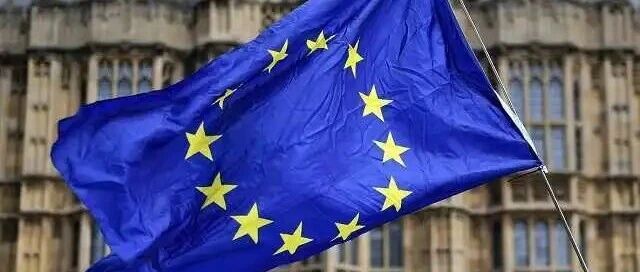
Core Viewpoint - The article discusses the differing responses of European countries to the military actions taken by the US and Israel against Iran, highlighting a cautious and restrained approach from Europe amidst ongoing geopolitical tensions in the Middle East [3][4]. Group 1: European Responses - The UK, under Prime Minister Starmer, has stated it will not participate in offensive military actions against Iran, emphasizing the need for legal justification for any military involvement [3][10]. - France is prepared to assist Gulf nations and Jordan in defense against Iranian attacks, but stresses that military escalation must cease without clear objectives [5][7]. - Germany has ruled out participation in military actions against Iran, citing a lack of military resources in the Gulf region [7][8]. - Spain has explicitly refused to support US military actions against Iran, withdrawing military assets previously stationed there [7][8]. Group 2: Implications for US-UK Relations - The UK’s reluctance to engage in offensive actions against Iran has revealed cracks in the historically strong US-UK alliance, with former President Trump expressing disappointment over the UK's stance [10]. - Starmer's government has shifted to allow US forces to use UK military bases for defensive purposes, but maintains a defensive rather than offensive posture, marking a significant change from previous UK policies [10]. Group 3: Broader Geopolitical Context - The ongoing conflict in the Middle East, particularly the Iranian threat, poses direct risks to European interests, prompting a need for a unified response despite initial hesitance [4][6]. - The article notes that the situation remains fluid, with potential for further developments that could influence European military involvement [6].

联合国秘书长:美国对委内瑞拉军事行动未尊重国际法规则,他对此深表关切
Xin Lang Cai Jing· 2026-01-06 16:25
Core Viewpoint - The United Nations Security Council held an emergency meeting regarding the situation in Venezuela, emphasizing the importance of adhering to the principles of the UN Charter to maintain international peace and security [2] Group 1 - The UN Secretary-General, António Guterres, stated that the UN Charter prohibits the use or threat of force against the territorial integrity or political independence of any state [2] - The commitment of all member states to uphold all provisions of the UN Charter is crucial for maintaining international peace and security [2]
联合国安理会举行紧急会议 多方谴责美国侵犯委内瑞拉主权
Yang Shi Wang· 2026-01-06 14:13
Group 1 - The United Nations Security Council held an emergency meeting regarding the situation in Venezuela, where the UN Secretary-General expressed concern over the U.S. military actions that allegedly violated international law [1] - The Venezuelan representative condemned the U.S. actions as a blatant violation of the UN Charter and demanded the immediate release of President Maduro and his wife, who are under U.S. control [1] - The Chinese representative criticized the U.S. for disregarding international concerns and violating principles of sovereignty, non-interference, and peaceful resolution of disputes, urging dialogue instead [1] - The Russian representative strongly condemned the U.S. armed aggression, claiming the true aim is to control Venezuela's natural resources [1] - The French representative stated that U.S. military actions undermine the principles of peaceful dispute resolution and non-use of force, threatening international peace and security [1] Group 2 - The Brazilian representative warned that the U.S. actions set a dangerous precedent for the international community, calling for strong condemnation of armed intervention in other countries' sovereignty [2] - Representatives from Cuba, Colombia, Chile, Pakistan, Denmark, and South Africa also expressed opposition or condemnation of U.S. interference [2] Group 3 - President Maduro and his wife rejected U.S. criminal charges in a New York court, while protests against U.S. interference occurred outside the courthouse [3] - Delsy Rodríguez was sworn in as acting president of Venezuela, and the government issued a decree for police to search for individuals involved in supporting U.S. armed attacks, implementing military management of the oil industry and other critical sectors [3] Group 4 - Gunfire was reported near the presidential palace in Venezuela due to a drone entering a no-fly zone, with police firing warning shots; the situation was described as calm overall [4]
美国对委军事行动未尊重国际法规则
Xin Lang Cai Jing· 2026-01-05 21:47
Core Viewpoint - The UN Secretary-General expressed deep concern over the US military action against Venezuela on January 3, stating it did not respect international law [2] Group 1: International Law and Military Action - The UN Secretary-General emphasized that the use or threat of force against the territorial integrity or political independence of any state is prohibited by the UN Charter [2] - The maintenance of international peace and security relies on all member states' commitment to adhere to all provisions of the UN Charter [2] Group 2: UN Security Council Response - An emergency meeting of the UN Security Council was held to discuss the situation in Venezuela following the US military action [2]
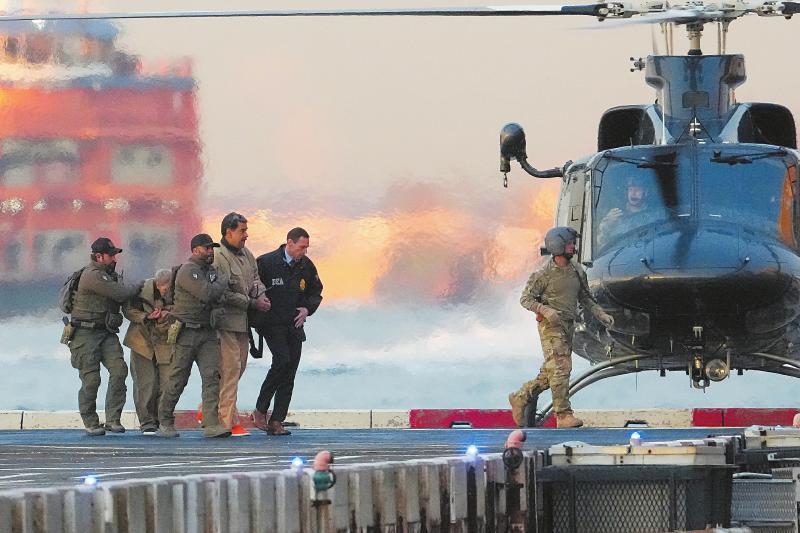
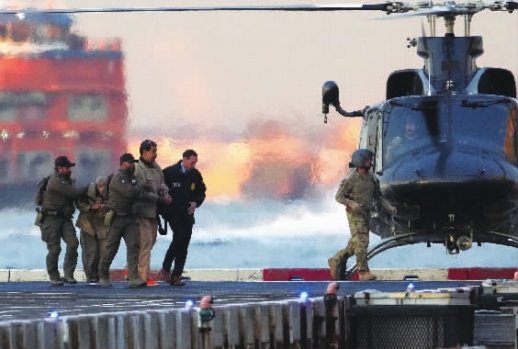
一场马杜罗“庭审” 一场安理会会议 同日同城进行
Xin Lang Cai Jing· 2026-01-05 20:49
Group 1 - Venezuelan President Maduro appeared in a U.S. court for the first time, facing charges including "drug trafficking conspiracy" and "terrorism conspiracy" [2] - The U.S. Attorney General announced the charges against Maduro, which include possession of firearms and conspiracy related to weapons [2] - Protests occurred outside the courthouse, with demonstrators calling for Maduro's release and opposing U.S. intervention in Venezuela [2] Group 2 - The United Nations Security Council held an emergency meeting regarding the situation in Venezuela, with Secretary-General Guterres expressing concern over U.S. military actions [3] - Guterres emphasized that the use of force against any country's territorial integrity is prohibited under the UN Charter [3] - A committee was established by Venezuela's acting president to handle matters related to Maduro's release, led by Jorge Rodriguez [4]
联合国批美对委军事行动未尊重国际法
Xin Lang Cai Jing· 2026-01-05 17:41
Core Viewpoint - The United Nations Secretary-General Antonio Guterres expressed deep concern over the U.S. military action against Venezuela on January 3, stating it did not respect international law [1] Group 1: International Law and Military Action - Guterres emphasized that the use or threat of force against the territorial integrity or political independence of any state is prohibited by the United Nations Charter [1] - The maintenance of international peace and security relies on all member states' commitment to adhere to all provisions of the United Nations Charter [1] Group 2: United Nations Response - The United Nations Security Council held an emergency meeting on the situation in Venezuela on the same day [1] - The remarks were delivered by the UN Under-Secretary-General for Political Affairs, Rosemary DiCarlo, on behalf of Guterres [1]
同日同城 双重对决
Xin Lang Cai Jing· 2026-01-05 17:41
Core Viewpoint - The article discusses the recent military actions taken by the United States against Venezuela, highlighting the international legal concerns raised by the United Nations Secretary-General and the implications for Venezuela's political stability and sovereignty [4][9]. Group 1: U.S. Military Actions and International Response - The United Nations Security Council held an emergency meeting regarding the U.S. military actions against Venezuela, with Secretary-General Guterres expressing concern over the violation of international law [4][9]. - Guterres emphasized that the use of force against any nation's territorial integrity or political independence is prohibited under the UN Charter, urging all member states to adhere to its principles [4][9]. - The U.S. military operation on January 3 has been criticized as a dangerous precedent, with various international leaders condemning the actions as a form of state terrorism [9]. Group 2: Situation in Venezuela - Following the U.S. military actions, many shops in Caracas were closed, and there was a noticeable decrease in traffic, indicating a state of unrest and fear among the populace [5]. - The Venezuelan government, led by acting President Rodriguez, convened a ministerial council to strategize responses to the U.S. actions, promoting peace and national unity [5][6]. - The Venezuelan Defense Ministry announced a state of full military readiness to counter perceived imperialist aggression, asserting the country's commitment to its sovereignty [6]. Group 3: Maduro's Legal Situation - Venezuelan President Maduro was taken to a federal court in New York, where he faces charges related to drug trafficking, which the U.S. has labeled as a terrorist organization [8]. - Despite the serious allegations, experts have pointed out the lack of direct evidence linking Maduro to specific drug trafficking activities, raising questions about the motivations behind the U.S. actions [8]. - The focus of U.S. rhetoric has shifted from drug-related issues to oil interests, suggesting that economic motivations may underlie the military actions against Venezuela [8].