地段价值

Search documents
有专家说出实话:为什么有钱人正在收购“步梯房”?原因很简单
Sou Hu Cai Jing· 2026-02-01 19:57
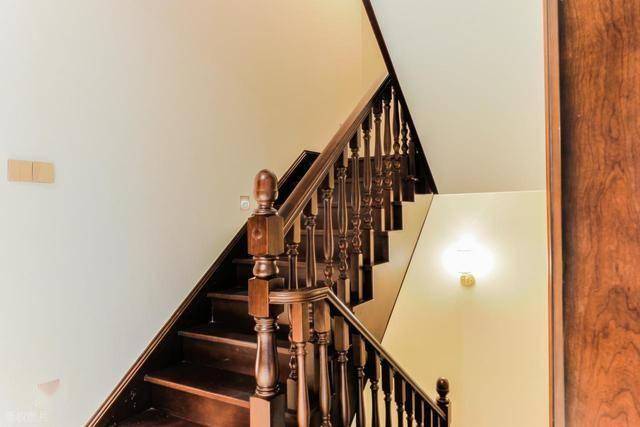
Core Viewpoint - The perception of desirable housing among wealthy individuals is shifting, with a growing interest in older walk-up apartments over modern elevator buildings, driven by factors such as cost efficiency and location advantages [3][5][46]. Group 1: Price and Value - Walk-up apartments are generally 15%–30% cheaper per square meter compared to elevator apartments, allowing buyers to purchase more units for the same investment [7][10]. - For instance, in Guangzhou's Tianhe District, the average price for elevator apartments is 60,000 yuan per square meter, while walk-up apartments are priced at 42,000 yuan per square meter, resulting in a potential savings of 1.8 million yuan for a 100 square meter unit [7][9]. Group 2: Hidden Costs - Walk-up apartments typically have lower shared area percentages (10%–15%) compared to elevator apartments (25%–30%), resulting in more usable space for the buyer [14][16]. - A 100 square meter walk-up apartment may provide 85–90 square meters of usable space, while an elevator apartment may only offer 70–75 square meters, leading to significant cost differences [16][18]. Group 3: Holding Costs - The monthly property management fees for walk-up apartments range from 0.5 to 1.8 yuan per square meter, while elevator apartments can cost between 2.5 to 4 yuan per square meter, leading to substantial savings over time [20][22]. - Additionally, elevator maintenance and replacement costs can be significant, with many elevators requiring replacement after 15–20 years, which adds to the financial burden for owners of elevator apartments [22][24]. Group 4: Location Advantage - Many walk-up apartments are located in prime urban areas, built during periods of city expansion, making them highly desirable despite their age [26][30]. - For example, 90% of walk-up apartment complexes in Shanghai's inner ring are within 500 meters of subway stations, providing significant commuting advantages compared to newer developments in suburban areas [28][30]. Group 5: Rental Returns - Walk-up apartments tend to offer higher rental yields compared to elevator apartments, making them more attractive investments [32][34]. - In Shanghai's Jing'an District, a 60 square meter walk-up apartment priced at 3 million yuan can generate a monthly rent of 6,000 yuan, yielding a return of approximately 2.4%, while a similarly located 80 square meter elevator apartment priced at 6 million yuan yields only 1.4% [32][34]. Group 6: Future Value Enhancement - The ongoing renovation of old neighborhoods and the installation of elevators in walk-up buildings are expected to increase their value significantly, with government subsidies available for such improvements [40][44]. - For instance, after an elevator was added to a building in Beijing's Chaoyang District, the price per square meter increased from 28,000 yuan to 32,000 yuan, a rise of about 14% [44].

房子越靠近这3处,未来10年越值钱,内行:李嘉诚早就提到过
Sou Hu Cai Jing· 2025-10-22 07:58
Core Insights - The article emphasizes the importance of location in real estate investment, highlighting that properties in prime locations, especially near medical facilities, educational institutions, and transportation hubs, tend to retain value and appreciate over time [1][3][4]. Group 1: Medical Resources - Proximity to quality medical institutions is a significant factor for families when choosing residential areas, with over 67% of families considering it a top priority in their housing decisions [3]. - Properties within a 3-kilometer radius of top-tier hospitals have shown an average price increase of 15.5% compared to other areas, demonstrating strong resilience during market downturns [3]. - The establishment of "medical cities" or "health industry parks" is expected to further enhance property values in surrounding areas, as evidenced by a nearly 20% price increase within two years near a new medical center in Shanghai [3]. Group 2: Educational Resources - Quality educational resources remain a critical determinant of property value, with properties in desirable school districts commanding prices that are 20% higher than non-district properties [4][6]. - The trend is shifting towards comprehensive educational facilities that cover all stages from kindergarten to high school, which are increasingly sought after by families [4][6]. Group 3: Transportation and Commercial Development - Properties near new transportation hubs, such as subway stations, have seen an average appreciation of 12.8% following the opening of new lines [6]. - The presence of high-quality commercial centers enhances residential property values, with homes within a kilometer of large shopping complexes experiencing a 10.5% premium [6]. - The revitalization of areas due to new commercial developments can significantly increase property values, as illustrated by a friend's experience with a mall opening nearby [7]. Group 4: Value Trends and Recommendations - The article identifies a "composite value effect," where properties benefiting from multiple factors (medical, educational, transportation) exhibit superior resilience and appreciation potential [8]. - Urban structural changes are leading to the emergence of new city centers, which may present significant appreciation opportunities for properties in well-planned areas [8]. - Different demographic groups have varying priorities, with younger families focusing on education and transportation, while older individuals prioritize medical access [8]. Group 5: Practical Buying Advice - First-time buyers are encouraged to look for emerging areas with planned transportation and educational resources, as these are likely to appreciate in value [10]. - Buyers looking to upgrade should balance medical, educational, and transportation factors to find properties with strong living value and appreciation potential [10]. - Investors should focus on areas with clear development plans for medical, educational, and transportation facilities, as these are likely to see significant value increases [10].
上海有些地段需要拉响警报了
3 6 Ke· 2025-10-17 02:15
Core Insights - The article highlights the emerging risks in certain suburban areas, particularly due to a lack of demand and oversupply of new housing projects, which can lead to price instability [1][4][10] Group 1: Market Dynamics - There is a significant concern regarding the diminishing cross-district purchasing power, indicating that stable demand must come from within the same district [2] - The emergence of multiple new housing projects in a short time frame can lead to market saturation, making it difficult for new demand to materialize [4][6] - Areas with concentrated land sales and strict size requirements for new developments may face increased competition and pressure on pricing [5][6] Group 2: Demand and Supply Analysis - A consistent supply of new housing units (e.g., three projects of 500 units each) can signal potential risks for the market, as the demand for quality improvement clients is limited [4] - The lack of improvement demand in traditionally affordable housing areas suggests that young professionals are leaving these regions, indicating underlying dissatisfaction with the area [8] - Areas with only planned developments but no actual progress may reflect weak execution capabilities, leading to stagnant property values [9][10] Group 3: Unique Market Phenomena - The emergence of previously unmarketed properties, often seen as "stock assets," can indicate a lack of confidence in the market, as sellers may be eager to offload these assets [11] - The risk associated with these properties includes outdated planning concepts that may not meet current market demands, potentially leading to difficulties in resale [12]
买房,不看地段了?
Sou Hu Cai Jing· 2025-05-26 02:52
Core Insights - The traditional real estate value determinant, "location, location, location," is evolving as consumer focus shifts towards property quality and diverse living experiences [1][9] - Buyers are increasingly valuing external factors such as transportation, educational resources, and commercial amenities over mere physical distance [3][5] - The rise of urban multi-center development is leading to a more distributed value of locations, reflecting a change in living concepts and buyer preferences [9] Group 1: Changing Buyer Preferences - Buyers now prioritize transportation accessibility and residential quality over the physical distance to amenities [5][9] - The convenience of online shopping and delivery services has diminished the importance of proximity to daily necessities [5] - High-quality properties located in less central areas are gaining popularity, indicating a shift in market dynamics [5] Group 2: Educational Resources - The significance of school districts in property value is declining, influenced by policy changes and the push for educational resource equity [7] - Many properties no longer emphasize school district advantages due to a lack of high-quality options and changing family priorities [7] - However, properties in well-performing school districts still attract interest, particularly those with a strong reputation [7] Group 3: Urban Development Trends - The trend of urban multi-center development is leading to a more diverse distribution of commercial, industrial, medical, and educational resources [9] - This shift indicates that while location remains important, the criteria for evaluating it have become more complex and multifaceted [9]