地缘政治关系

Search documents
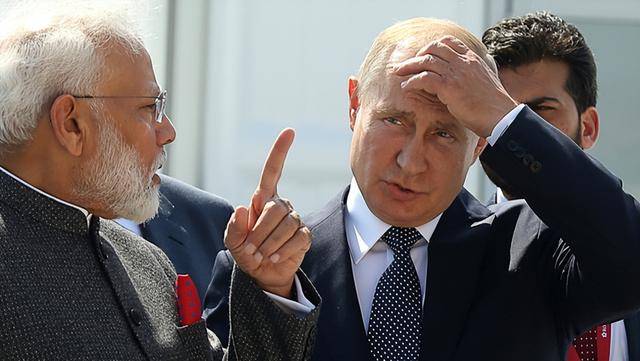
特朗普:印度不会再买俄油了,俄罗斯:不,印度没说过
Xin Lang Cai Jing· 2026-02-05 06:42
Core Viewpoint - The announcement of a trade agreement between the U.S. and India has led to conflicting interpretations between Washington and Moscow regarding India's commitment to cease purchasing Russian oil [1][6]. Group 1: Agreement Details - President Trump claimed that India agreed to stop buying Russian oil and instead purchase more oil from the U.S. and possibly Venezuela [1][6]. - In exchange, the U.S. will reduce tariffs on Indian goods from 25% to 18% and remove an additional 25% punitive tariff imposed last summer due to India's oil purchases from Russia [1][6]. Group 2: Russian Response - The Kremlin has stated that it has not received any information from India regarding a halt in oil purchases [1][3]. - Russian officials, including Deputy Prime Minister Alexander Novak, have downplayed potential losses, indicating that they will monitor the situation [1][3]. Group 3: Indian Position - Indian Prime Minister Modi confirmed the agreement regarding tariff reductions but did not address the issue of Russian oil purchases [3][8]. - Analysts express skepticism about India's willingness to fully stop buying Russian oil, citing the importance of maintaining diplomatic autonomy and the symbolic choice to purchase Russian oil [2][4][8]. Group 4: Economic Implications - Moody's has indicated that India is unlikely to completely stop purchasing Russian oil due to the potential economic impact, which could disrupt economic growth [4][9]. - A complete shift to non-Russian oil could tighten supply in other regions, raise prices, and lead to higher inflation, as India is one of the largest oil importers globally [4][9]. - Analysts suggest that India's need for affordable oil, along with geopolitical and defense considerations, makes a complete cessation of Russian oil purchases improbable [4][9].
普京三周后访印度见莫迪?要谈能源合作,特朗普“压不动”新德里
Sou Hu Cai Jing· 2025-11-15 00:21
Core Viewpoint - The upcoming meeting between Russian President Putin and Indian Prime Minister Modi is set to reshape global energy dynamics and geopolitical relations, focusing on energy cooperation as a key agenda item [2][4]. Group 1: Energy Cooperation - Energy cooperation is the central theme of the upcoming talks, with discussions on nuclear localization, technology transfer, and small nuclear power projects expected to yield multiple agreements during Putin's visit [4]. - India's import of Russian oil aligns with its energy security needs and plays a positive role in stabilizing international oil prices, becoming a crucial pillar of the bilateral relationship despite external pressures [5]. Group 2: Geopolitical Context - The U.S. has imposed heavy tariffs on Indian goods, reaching a total tax rate of 50%, in response to India's oil imports from Russia, which has led to significant challenges for Indian exporters [7]. - The Modi government has shown resilience against U.S. pressure, emphasizing the protection of farmers and small businesses while implementing measures like fiscal support and tax reforms [7][10]. Group 3: Long-term Relations - The longstanding Russia-India relationship transcends mere trade, encompassing comprehensive cooperation in energy, military, and cultural sectors, which is expected to be reinforced during the upcoming visit [10]. - The meeting is anticipated to not only enhance energy collaboration but also establish mechanisms for Indian labor in various sectors in Russia, further solidifying bilateral ties [10]. Group 4: International Implications - India's Foreign Minister has criticized U.S. actions as unreasonable and unjust, asserting that India's energy import decisions are based solely on national interests, unaffected by external pressures [12]. - The deepening Russia-India cooperation is likely to influence global energy market dynamics and geopolitical balance, warranting ongoing observation from various stakeholders [12].

麦格理:目前偏好H股多于A股 建议留意比亚迪股份(01211)、安踏体育(02020)及海底捞(06862)等
智通财经网· 2025-10-17 08:41
Core Viewpoint - The report from Macquarie suggests that unless trade negotiations or geopolitical relations deteriorate, emerging market inflows and improved liquidity in H-shares will provide support for the A-share market in the next six months [1] Group 1: Market Outlook - The A-share market is expected to receive support due to a 20% year-on-year increase in industrial profits in August, driven by anti-involution policies in upstream industries [1] - The upcoming "14th Five-Year Plan" is anticipated to focus on enhancing social welfare, potentially leading to structural inflows into the stock market [1] - Reforms in household savings, insurance, and private pensions could add approximately 43 trillion RMB in potential investments to the stock market over the next decade, equivalent to 41% of the total market capitalization of A-shares in Q3 this year [1] Group 2: Investment Preferences - The company currently prefers H-shares over A-shares due to quality rotation and IPOs attracting more investor attention to the Hong Kong stock market [1] - Despite this preference, the company remains optimistic about A-share performance in the medium term, as national policy reforms are expected to drive capital inflows [1] Group 3: Sector Preferences - The company favors sectors such as internet and consumer services while avoiding the energy sector and low-beta, high-dividend stocks [1] - Selected high-beta, high-quality stocks that are currently undervalued include BYD Company Limited (01211), Wuliangye Yibin Co., Ltd. (000858.SZ), Anta Sports Products Limited (02020), and Haidilao International Holding Ltd. (06862) [1]