
城乡建设和房地产发展新模式

Search documents
专家:城市更新需精准回应人的需求
2 1 Shi Ji Jing Ji Bao Dao· 2026-02-01 10:04
Core Viewpoint - The Chinese urban development is undergoing a fundamental shift from scale expansion to enhancement of connotation, with urban renewal becoming a crucial strategy for high-quality development and modernization in China [1] Group 1: Urban Development Trends - The urbanization rate has entered a stable phase, making the previous reliance on land finance and new city construction unsustainable [1] - Urban renewal is not merely about physical transformation but involves responding to human needs and stimulating new economic activities and social interactions through spatial restructuring [1] Group 2: Challenges and Key Directions - Urban renewal faces deep-seated challenges, primarily institutional and mechanism barriers, as existing policies and standards are not suited for the complex demands of stock updates [2] - Five key directions for urban renewal include: 1. Reforming implementation mechanisms and establishing strong coordination among local governments [2] 2. Innovating policy tools focusing on land, planning, property rights, and fiscal policies [2] 3. Restructuring financing models to provide long-term, low-interest funding [2] 4. Exploring new opportunities for "self-renewal" [2] 5. Strengthening departmental collaboration and regulatory support [2] Group 3: Investment and Market Insights - There is a need to release and expand investment demand by focusing on new models for urban construction and real estate development, as well as boosting private and foreign investment [5] - The real estate sector is experiencing significant structural differentiation, with commercial real estate and new real estate financial models based on public REITs seen as key to industry transformation [5] - Systematic tracking and authoritative interpretation of market expectations and core indicators are essential for macro policy formulation and micro decision-making [5]

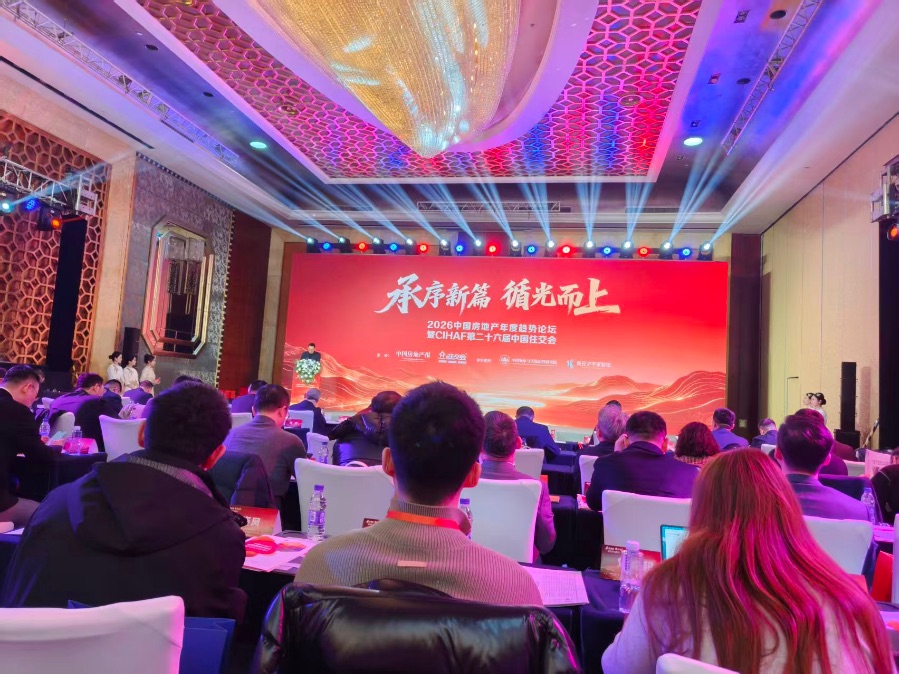
张军扩:以提升城乡环境和住房品质为主的投资和消费需求依然很大
Zheng Quan Shi Bao Wang· 2025-12-27 02:47
Core Viewpoint - The key focus for effectively releasing and expanding investment during the 14th Five-Year Plan period includes developing a new model for urban and rural construction and real estate, as well as significantly boosting private and foreign investment [1] Group 1: Investment Strategy - The first key point is to accelerate the formation of a new model for urban and rural construction and real estate development that aligns with the new stage of development [1] - The second key point emphasizes the importance of significantly boosting private and foreign investment [1] Group 2: Investment Demand - There remains a substantial demand for investment and consumption aimed at improving urban environments and housing quality, particularly as development stages evolve [1] - In urban areas, this includes urban renewal and environmental optimization, as well as residents' demand for higher quality housing and the upgrading of old buildings and neighborhoods [1]
张军扩:加快形成与新阶段相适应的城乡建设和房地产发展新模式
Xin Lang Cai Jing· 2025-12-27 02:38
Core Viewpoint - The current market faces insufficient demand, characterized by strong supply and weak demand, leading to price weakness. Effective release of consumer demand potential requires both short-term and long-term strategies to address structural issues [1][6]. Group 1: Demand and Consumption - Structural reasons for insufficient demand include a long-term low consumption rate, estimated to be 10% to 20% below potential. This presents both a challenge and an opportunity for expanding domestic demand [2][7]. - The transition in consumer behavior from goods-oriented consumption to a balance of goods and services requires adjustments in economic structure and development methods, necessitating both government and market involvement [1][6]. Group 2: Policy Recommendations - To stimulate consumption, policies should focus on counter-cyclical measures that optimize the support structure for goods consumption while enhancing support for service consumption. This includes increasing subsidies for education, healthcare, and other essential services to boost consumer willingness and capacity [3][8]. - Implementing a plan to increase residents' income and improving social security for low-income groups are crucial for enhancing consumer confidence and security [3][8]. Group 3: Investment Opportunities - There remains significant potential for investment, which should be supported by systemic and policy innovations. While consumer demand is essential for economic growth, investment should not be neglected [4][9]. - Key areas for investment during the "14th Five-Year Plan" include developing new urban and real estate models and boosting private and foreign investment through improved business environments and regulatory reforms [4][9].