
城市智慧治理

Search documents
以智慧城市建设推动加快形成新质生产力
Jin Rong Shi Bao· 2026-01-12 03:57
Core Viewpoint - The development of new quality productivity is an intrinsic requirement and important focus for promoting high-quality development in China, with smart city construction serving as a strategic pivot for this transformation [1]. Group 1: Smart City Construction as a Strategic Choice - Smart city construction is a practical carrier that adapts to the transformation of production methods, fundamentally reshaping urban governance through the integration of digital technologies [2]. - The Chinese government has been promoting smart city construction since 2016, emphasizing data-driven and people-centered approaches to optimize governance and resource integration [2]. - Smart cities enhance the efficiency of production factor allocation and are essential for optimizing urban functions and driving productivity growth [3]. Group 2: Goals of Smart City Construction - Smart cities represent a direct integration of advanced productivity, providing an environment for the reconfiguration of key production factors such as technology, capital, talent, and data [3]. - The urbanization rate in China has increased from 17.9% in 1978 to 66.2% in 2023, highlighting the need for smart city initiatives to address challenges like resource efficiency and environmental pressures [3]. - Empirical studies indicate that doubling urban scale can increase total factor productivity by 3.5% to 8%, with smart city initiatives potentially amplifying this effect [3]. Group 3: Government's Role in Smart City Development - Smart city construction is recognized globally as a core pathway for urban modernization, with various international initiatives emphasizing the importance of technology and management innovation [4][5]. - China has over 500 smart city pilot projects covering more than 95% of prefecture-level cities, indicating a strong governmental commitment to enhancing urban governance through digital platforms [5]. - The government plays a crucial role in guiding multi-stakeholder participation, ensuring effective alignment between technological innovation and urban needs [5]. Group 4: Value Orientation of Smart Cities - The concept of a "people's city" aligns with the people-centered philosophy of new quality productivity, emphasizing the active role of citizens in urban governance [6]. - Smart city initiatives have shifted from traditional monitoring models to collaborative governance, involving government, enterprises, and citizens in decision-making processes [6]. - The focus on human-centered values in smart city construction reflects the broader goal of meeting the growing needs of the population for a better quality of life [6]. Group 5: Key Focus Areas for Developing New Quality Productivity - Strengthening technological innovation is essential for enhancing the foundational capabilities of smart cities and fostering strategic emerging industries [7]. - Establishing a comprehensive digital transformation framework is necessary to support the development of smart cities, including investments in new infrastructure and optimizing regulatory arrangements [8]. - Improving urban governance through data-driven models and enhancing public service accessibility are critical for expanding the market for new quality productivity [9]. Group 6: Sustainable Development and Ecological Civilization - Promoting smart environmental practices and green industries is vital for effective resource management and environmental risk mitigation [10]. - Efficient utilization of resources and energy through smart technologies is essential for sustainable urban development [10]. - Encouraging eco-friendly lifestyles through smart city initiatives can enhance public engagement in sustainability efforts [10]. Group 7: Coordinating Development and Integration - Deepening the reform of smart city systems in alignment with national strategies is crucial for balancing new quality productivity and production relationships [11]. - Promoting regional integration and urban-rural development through smart city platforms can facilitate efficient resource allocation and governance [11]. - Establishing a long-term mechanism for public services and social security is necessary to address challenges such as population aging and economic restructuring [11].
“AI城管”让城市治理更高效
Xin Lang Cai Jing· 2026-01-04 23:12
Core Insights - The implementation of "AI City Management" significantly enhances urban governance efficiency by utilizing advanced technology for real-time monitoring and problem identification [1][2] - The shift from manual inspections to AI-driven assessments allows for proactive issue detection and systematic management, reducing administrative costs and improving resource allocation [2] Group 1: Technology and Urban Governance - The AI smart collection vehicle equipped with panoramic high-definition cameras autonomously identifies urban issues, increasing efficiency over manual inspections by more than ten times [1] - The integration of AI technology transforms urban governance from reactive to proactive, enabling better data analysis and intelligent judgment [2] Group 2: Impact on Quality of Life - The application of AI in city management aims to enhance the quality of life for residents by addressing various urban issues such as street obstructions and waste accumulation more effectively [2] - The swift response to identified problems, such as the removal of a problematic advertisement within an hour, demonstrates the potential for improved urban living conditions through smart governance [2]
奋进的河南 决胜“十四五”·郑州篇丨 高效能治理,大城何以善治
He Nan Ri Bao· 2025-10-10 02:10
Core Viewpoint - Zhengzhou is implementing a modern governance model that integrates party leadership with digital technology to enhance urban management and service delivery [7][9][13] Group 1: Urban Governance and Development - Zhengzhou aims to build a modern people-oriented city, focusing on high-quality and connotative development [7] - The city has established a governance framework that combines party organization advantages with digital technology, creating a comprehensive governance model [8][9] - The "one core" governance model integrates multiple forces, enhancing efficiency in urban management and addressing complex governance challenges [8][9] Group 2: Digital Integration and Smart City Initiatives - Zhengzhou is advancing a smart city initiative by integrating various digital platforms, including urban operation, emergency response, and economic management [13][14] - The city has developed a real-time monitoring system with over 415 smart sensors to manage urban flooding and other emergencies effectively [12][13] - A comprehensive digital platform connects various data sources, enabling efficient urban management and service delivery [13][14] Group 3: Community Engagement and Multi-Party Collaboration - The city has established nearly 39,400 grid party organizations to connect with social organizations and enhance community governance [9][11] - Zhengzhou promotes community participation by involving various stakeholders, including new employment groups, in governance [11][12] - The "one line" mechanism facilitates rapid communication between citizens and government, ensuring timely responses to community needs [17][18]

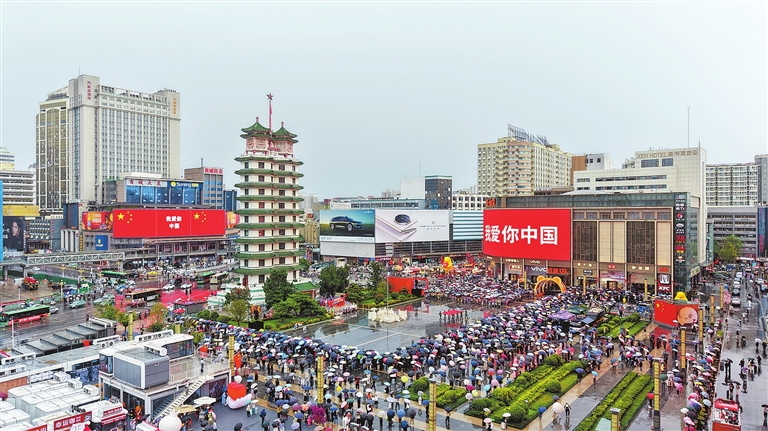
【省住房城乡建设厅】陕西以推进城市更新为抓手全面提升城市品质
Shan Xi Ri Bao· 2025-09-21 23:00
Group 1 - The core viewpoint is that Shaanxi is focusing on urban renewal as a key strategy for optimizing urban structure, enhancing quality, and promoting green transformation while ensuring urban safety [1] - During the 14th Five-Year Plan period, Shaanxi has renovated 11,330 old urban residential communities and updated 8,589.54 kilometers of various old pipelines, including water, electricity, gas, and heating [1] - More than 2,000 elevators have been installed, and 70,900 parking spaces have been added as part of the urban renewal efforts [1] Group 2 - Shaanxi is leveraging technological innovation to drive refined governance, creating a new model for smart urban management [1] - Xi'an has integrated data from multiple departments through a "one network management" platform, processing tens of thousands of information daily for real-time monitoring and intelligent scheduling in sanitation and gas sectors [1] - Hanzhong City is exploring a "station+" multi-empowerment model, extending services to include dispute mediation, legal aid, and cultural activities [1] Group 3 - Shaanxi has conducted a comprehensive inspection of 90,000 kilometers of urban gas pipelines, updating 9,789.6 kilometers of aging gas pipelines [1] - The province is accelerating the construction of an urban drainage and flood prevention system, having inspected over 19,000 kilometers of drainage networks and rectified more than 9,900 hidden dangers [1] Group 4 - Shaanxi has 22 national and provincial historical and cultural cities, 51 towns, 58 villages, and 68 historical cultural districts, with 1,224 historical buildings [2] - The province has implemented key projects such as the protection of the Han Chang'an City National Heritage Site and the application for the Stone Mound Site to be listed as a World Heritage Site [2] - A digital management platform for the Xi'an City Wall has been established, integrating functions for cultural relic protection, tourism operation, and emergency management [2]
汉嘉设计预计半年报净利润同比激增超300%,环卫机器人业务2027年收入达10亿元
Zheng Quan Shi Bao Wang· 2025-08-14 11:51
Group 1 - The company expects a significant increase in net profit for the first half of 2025, projecting a range of 15 million to 16.5 million yuan, representing a year-on-year growth of 303.20% to 343.52% [1] - The transformation strategy has been successful, with the inclusion of subsidiary Futai Technology leading to the introduction of two core business segments: urban governance digital solutions and urban governance robotics solutions [1] - The robust performance of these new business segments has provided strong momentum for revenue and profit growth, facilitating the company's transition from a traditional design firm to a smart urban governance service provider [1] Group 2 - Futai Technology's sanitation robot business has shown potential to lead the industry, with its autonomous sanitation robots recognized as industry-leading in China [2] - The company has developed a comprehensive product system for autonomous driving, validated by three authoritative tests, including reliability testing by insurance and financial companies [2] - Futai Technology aims to achieve sales of 1 billion yuan in sanitation robot products by 2027, targeting approximately 10% market share [2] Group 3 - Futai Technology has made significant strides in the artificial intelligence sector, participating in the formulation of standards for AI capabilities, which highlights its strength in AI and contributes to innovation in smart urban governance [3] - The company's path of transformation is becoming clearer, with explosive profit growth, industry-leading status in sanitation robots, and deep involvement in AI standard-setting [3] - The synergy of "robotics + AI" technology is expected to position the company more prominently in the wave of urban smart upgrades [3]


苏州低空政务“综合飞一次” 城市治理“云端”飞跃
Su Zhou Ri Bao· 2025-07-29 22:46
Core Insights - The implementation of drone technology in Suzhou High-tech Zone significantly enhances urban management efficiency, allowing for comprehensive inspections and monitoring across various sectors [1][3][4] Group 1: Drone Applications in Urban Management - Drones are utilized for a range of tasks including identifying illegal constructions, monitoring traffic flow, and overseeing construction site progress, with a total of 336 flight routes established for these purposes [1] - The efficiency of inspections has improved dramatically, with drone capabilities allowing for area coverage in 5 minutes compared to the previous half-month timeframe for ground inspections, achieving over a 7-fold increase in efficiency [1] - The integration of AI algorithms with drone technology enables real-time data processing and problem identification, facilitating quicker responses to issues such as fire incidents [2] Group 2: Environmental Monitoring and Data Integration - The Wujiang District has established a dedicated system for monitoring the Tai Pu River, utilizing drones equipped with high-definition and infrared cameras to conduct continuous surveillance and data collection [3] - The new system has replaced traditional manual sampling methods, resulting in a reduction of over 26,000 manual water quality tests annually and enhancing the precision and timeliness of environmental monitoring [3] - The platform aggregates data from over 110,000 ecological monitoring points across provincial boundaries, showcasing the extensive data integration capabilities of the system [3] Group 3: Digital Economy and Urban Governance - Suzhou is focusing on digital economy as a key driver for transformation, exploring new low-altitude governance models that highlight the effectiveness of digital management [4] - The city is actively innovating in low-altitude economic scenarios and smart governance applications, aiming to reshape urban management through digital and intelligent methods [4]