环卫机器人

Search documents
固废综合治理能力再提升(锐财经)
Ren Min Ri Bao Hai Wai Ban· 2026-01-13 22:49
Group 1 - The core idea of the news is the release of the "Solid Waste Comprehensive Management Action Plan" by the State Council, aimed at promoting comprehensive governance of solid waste in China, focusing on reduction, resource utilization, and harmless treatment [2][3] - The plan outlines a systematic approach to solid waste management, emphasizing the transition from end-of-pipe treatment to full-process prevention and control [3][4] - By 2030, the plan aims for significant achievements in solid waste management, including controlling historical stockpiles and increasing the annual comprehensive utilization of major solid waste to 4.5 billion tons [3][4] Group 2 - The plan specifies tasks for various sectors, including agriculture, urban areas, and industry, to enhance waste management practices [5][6] - In agriculture, the comprehensive utilization rates for livestock manure, straw, and agricultural film are reported at 80.1%, over 88%, and over 85% respectively, indicating progress in waste management [5][6] - Urban areas are expected to improve construction waste management through green construction practices and enhanced recycling facilities [6][7] Group 3 - The industrial sector generates significant amounts of solid waste, and the plan aims to reduce both the generation and historical stockpiles of industrial waste [7][8] - The plan encourages the exploration of new channels for the large-scale disposal and utilization of industrial solid waste, aiming for a dual reduction in new and accumulated waste [7][8] - The plan promotes the development of a circular economy by enhancing resource utilization and encouraging the recycling of various materials, including metals and plastics [8][9]

全岛封关:海南开放启新程
Zhong Guo Zheng Quan Bao· 2025-12-17 20:17
Core Insights - The official launch of the Hainan Free Trade Port's full island closure operation marks a new phase in its development, indicating China's commitment to expanding openness and creating a more favorable investment environment [1][2][3] Policy Implementation - The full island closure operation is characterized by a "special regulatory system" that allows for a "one line" open and "two lines" controlled approach, facilitating a liberalized and convenient policy environment [1][2] - The number of goods eligible for the "zero tariff" policy will increase from over 1,900 to 6,637 items, covering approximately 74% of all goods, representing a 53% increase from before the closure [2][3] Industry Development - The implementation of "zero tariff" and "low tax rate" policies is expected to significantly boost Hainan's industrial upgrade and trade development, attracting various industries to the region [3][4] - The establishment of a tax system characterized by "zero tariffs to facilitate trade" and "low tax rates to drive growth" is anticipated to promote the rapid development of strategic emerging industries such as biomedicine and digital content processing [3][4] Business Attraction - The closure operation has attracted various enterprises to invest in Hainan, such as the establishment of a green intelligent production base by Swire Coca-Cola, which plans to invest 300 million yuan and implement data-driven production models [4][5] - Companies are viewing Hainan as a strategic "outbound window" for international resource integration and logistics cost reduction, with plans to establish project companies in the region [5]
扫垃圾也得上高科技,机器人怎么算成本账
Di Yi Cai Jing· 2025-12-03 10:37
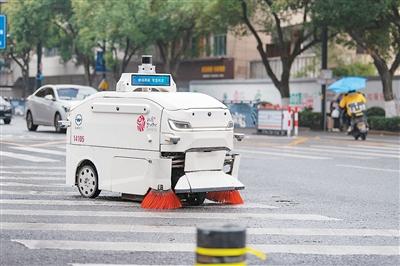
Core Insights - The article discusses the implementation and challenges of sanitation robots in urban environments, particularly in Shenzhen, highlighting their transition from technology demonstrations to practical applications in city management [1][5][8]. Group 1: Technology and Operations - Sanitation robots are now actively cleaning sidewalks and urban areas, with 36 units covering an area of 2.7 million square meters in Shenzhen [5]. - The complexity of identifying various types of waste, such as cigarette butts and plastic bags, poses significant challenges for the robots, requiring advanced algorithms and real-time adjustments based on environmental conditions [5][6][7]. - The operational efficiency of these robots is enhanced through human-robot collaboration, where human workers transition from repetitive tasks to oversight and inspection roles [12][13]. Group 2: Economic Viability - The economic model for deploying sanitation robots hinges on reducing human labor costs, with each robot expected to replace 3-5 workers, thereby justifying the investment [8][12]. - The cost structure of sanitation projects is shifting from a labor-intensive model (50% labor costs) to a more equipment-centric approach (40% mechanical costs) as robots are integrated [12][13]. - The financial feasibility of these projects is validated as long as the total costs of equipment depreciation, energy, and maintenance remain below the cost of human labor [12]. Group 3: Regulatory and Market Expansion - The regulatory framework is evolving, with real-time data monitoring replacing traditional manual inspections, enhancing accountability and performance assessment [14][15]. - Companies are exploring international markets, with successful implementations in regions like Singapore and plans for expansion into Abu Dhabi, driven by favorable conditions for automation [15][16]. - The competitive landscape is shifting, focusing on operational scalability, experience, and the ability to deliver consistent results rather than just technological advancements [16].

蝉联国际AI环卫大赛冠军 酷哇科技以Physical AI重塑城市服务
Zheng Quan Ri Bao Wang· 2025-12-02 13:46
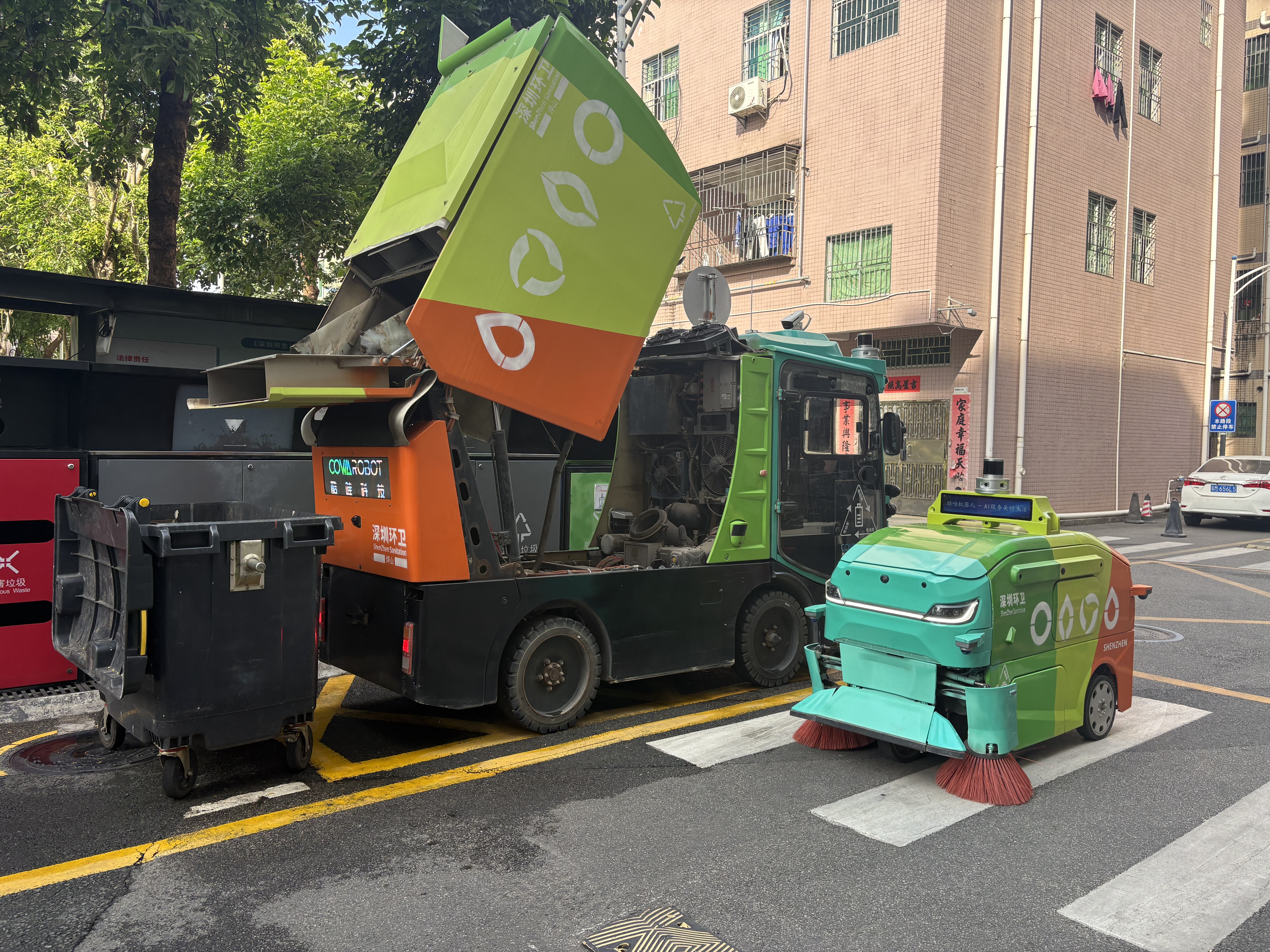
Core Insights - The article highlights the integration of robotics in urban management, particularly in Shenzhen's Longgang District, showcasing the advancements in AI and robotics within the sanitation sector [1][5]. Company Highlights - Coolwa Technology emerged as the champion in the International AI Sanitation Robot Competition, demonstrating its leadership in the Physical AI domain and achieving a "Grand Slam" by winning all categories [2][3]. - The company has developed a unique capability in "unmapped deployment," allowing robots to operate without pre-collected high-precision maps, significantly enhancing operational efficiency [3]. - Coolwa Technology operates an AI robot factory exceeding 10,000 square meters, enabling full-stack R&D and delivery capabilities, which enhances product performance stability and cost structure [3][4]. Industry Trends - The sanitation robot market is experiencing unprecedented growth due to the industry's long-standing challenges, such as high labor costs and low operational efficiency, which robots can effectively address [5]. - The competition within the sanitation robot sector is intensifying, prompting companies to offer comprehensive service models, such as MaaS (Model as a Service), to meet customer demands for efficient and intelligent sanitation solutions [6][7]. - The sanitation robot industry is viewed as being in a golden development period, with opportunities arising from policy support, labor shortages, and technological advancements, despite facing challenges like technical bottlenecks and market competition [7].
深圳发布33项AI城管机会清单 环卫机器人签约1600台
Nan Fang Du Shi Bao· 2025-11-30 11:57
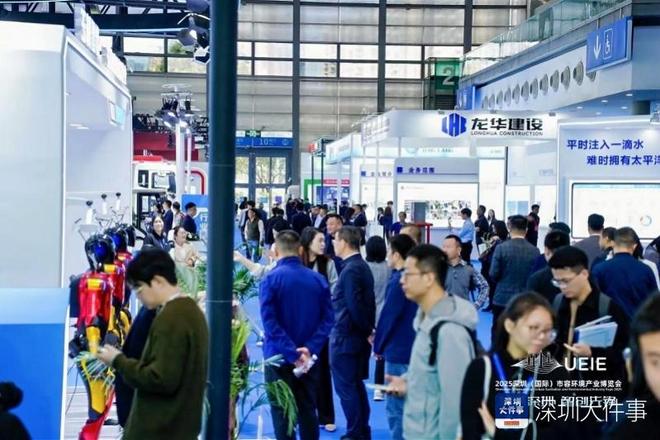
Core Insights - The 2025 Shenzhen (International) Urban Environment Industry Expo and the AI Sanitation Robot Competition successfully concluded, achieving $46 million in international cooperation agreements and 1,600 intended orders for sanitation robots, totaling over 300 million yuan [1][3][5] Group 1: Event Overview - The expo attracted over 150 outstanding enterprises from home and abroad, covering a total exhibition area of 50,000 square meters and drawing more than 30,000 visitors [3] - The event facilitated significant international economic exchanges, connecting resources from countries involved in the Belt and Road Initiative, with eight cooperation agreements signed on-site, amounting to approximately $46 million [3][5] Group 2: Technological Innovations - The expo featured innovative products such as the Deep City AI service robot and the Yuhua Tian Kandelas S300 cleaning robot, showcasing trends in the industry [3] - The event included practical demonstrations of smart city governance, allowing citizens to experience the transition from traditional manual operations to technology-enabled management [8] Group 3: Competition Outcomes - The competition included 88 assessment points, testing the practical capabilities of smart sanitation technologies across various scenarios, with Coolwa Technology winning first place [10][12] - The event highlighted the integration of technology with urban management systems, with multiple awards given for innovative applications and replicable experiences [12] Group 4: Collaborative Opportunities - A list of 33 AI application scenarios in urban management was released, providing enterprises with rich opportunities for technical validation and implementation [7] - The event established a bridge for collaboration between urban service enterprises and sanitation robot companies, facilitating the settlement of four leading sanitation robot companies in Longgang [5][12] Group 5: Experience Sharing and Promotion - Three thematic inspection routes were set up to promote smart governance experiences across regions, allowing participants to observe practical applications in urban management [13] - The event created a complete closed loop of "industry display - practical verification - technology traceability," demonstrating significant collaborative efforts among government, industry, academia, and research [13]
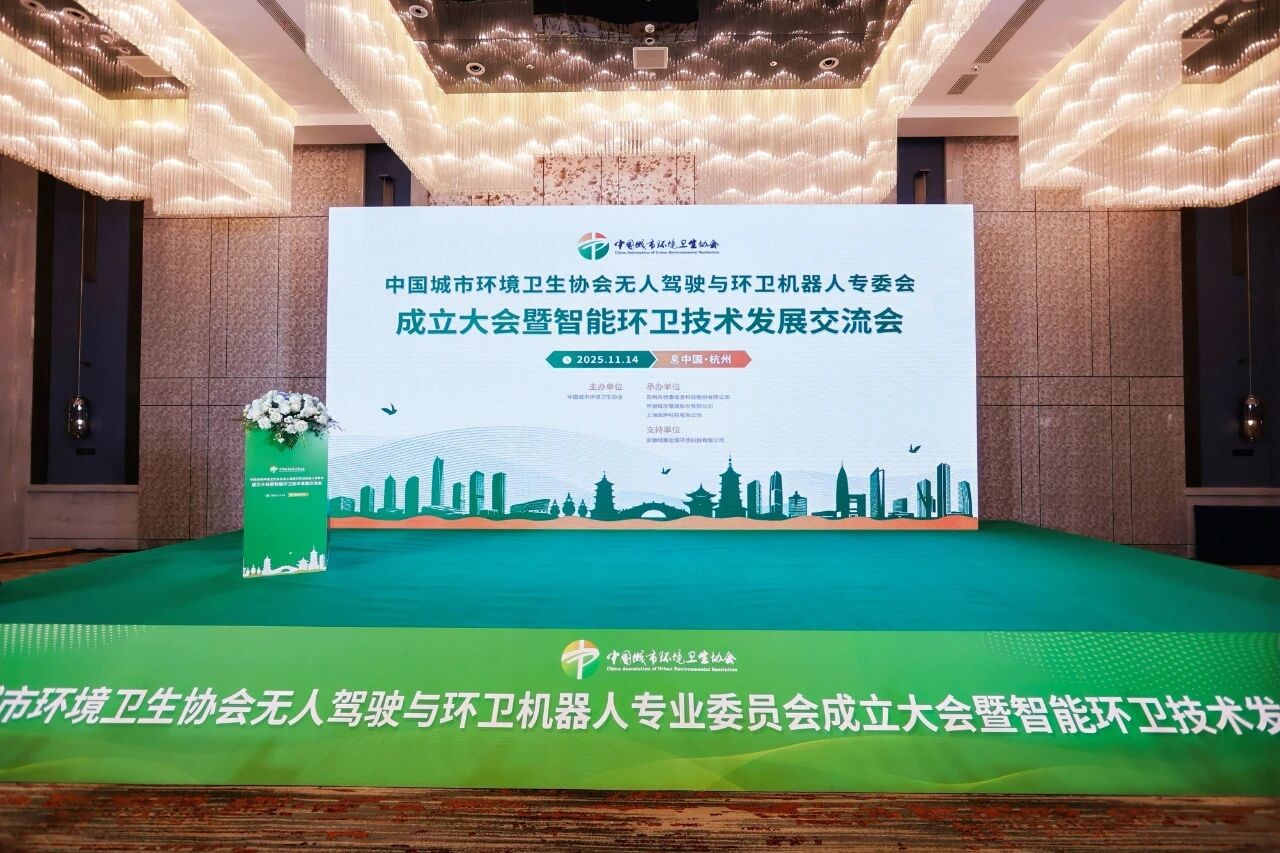
行业首个无人驾驶与环卫机器人专业委员会正式成立!伏泰科技当选主任委员单位
Zhong Guo Fa Zhan Wang· 2025-11-17 11:30
Core Viewpoint - The establishment of the "Unmanned Driving and Sanitation Robot Professional Committee" marks a significant step towards the intelligent transformation of urban services, driven by advancements in artificial intelligence and autonomous driving technologies [1][23]. Group 1: Committee Formation - The committee was officially launched during a conference held in Hangzhou, organized by the China Urban Environmental Hygiene Association, with participation from various stakeholders including government officials and representatives from sanitation service companies and research institutions [3][7]. - The committee aims to leverage the advantages of digital economy and innovation platforms to create a leading smart sanitation industry in China [7][10]. Group 2: Leadership and Structure - The committee's first organizational structure was announced, with Futai Technology designated as the chair unit, and several other companies appointed as deputy chair units [10]. - The committee's leadership includes key figures from the sanitation industry, emphasizing collaboration and resource sharing to promote the development of unmanned sanitation technologies [12][23]. Group 3: Industry Insights and Future Directions - The conference featured discussions on the integration of technology, standards, and practical applications in building a smart sanitation system, highlighting the need for a collaborative industry ecosystem [8][18]. - Experts shared insights on the trends in robotics and autonomous driving, outlining a clear roadmap for technological breakthroughs and commercial applications in the sanitation sector [15][21]. Group 4: Strategic Goals - Futai Technology expressed its commitment to supporting the committee's initiatives by acting as a "service provider," "connector," and "practitioner," aiming to transition from pilot applications to large-scale implementations of unmanned sanitation solutions [12][18]. - The company plans to develop standardized and modular solutions by extracting reusable operational models from multiple city trials, facilitating rapid expansion across diverse scenarios [18][23].
汉嘉设计(300746) - 300746汉嘉设计投资者关系管理信息20251027
2025-10-27 10:14
Group 1: Industry Barriers and Challenges - The core barriers in the unmanned cleaning vehicle industry include the need for effective cleaning and stable unmanned operation, as well as understanding traditional operational models and dynamic scheduling capabilities [2] - Technical challenges in achieving effective cleaning with unmanned sanitation equipment involve adapting to different road conditions, handling complex environments, and transforming traditional sanitation experience into machine-understandable algorithms [3] Group 2: Revenue Goals and Market Dynamics - The company aims for revenue targets of 150-200 million in 2025, 400-500 million in 2026, and 1 billion by 2027, driven by macro policies, increased local government willingness, and successful pilot projects [3] - The revenue targets encompass not only equipment sales but also comprehensive solutions including scheduling systems and software [3] Group 3: Project Selection and Financial Health - The company prioritizes high-quality projects to ensure cash flow, especially considering regional differences in local government finances [3] - The project size varies significantly by region, with the Chengdu Wuhou project covering 161,000 square meters compared to the Xiamen project, highlighting the impact of service area on project scale [3][4] Group 4: Technological Integration and Software Development - The company's system utilizes operations research models and includes features like route planning and collaboration between robots and human workers, supported by a dedicated software platform [5] - The existing sanitation management platform has accumulated substantial local data, allowing for the reuse of mature models in operational projects [5] Group 5: International Business Development - The company's overseas business is in the exploratory phase, with positive feedback from pilot projects in Singapore, although actual order volumes are expected to take time to materialize [6] - In Hong Kong, projects related to waste classification are underway, while progress in Australia is slower, focusing on digital platform collaborations [7] Group 6: Future Business Model - The company aims to maintain a technology-driven approach, providing comprehensive services rather than merely selling equipment, and plans to collaborate with leading operators in the market [8][9]

国资直投渗透率达超三成,资本超给力,今年机器人融资再添一把火
3 6 Ke· 2025-10-21 11:19
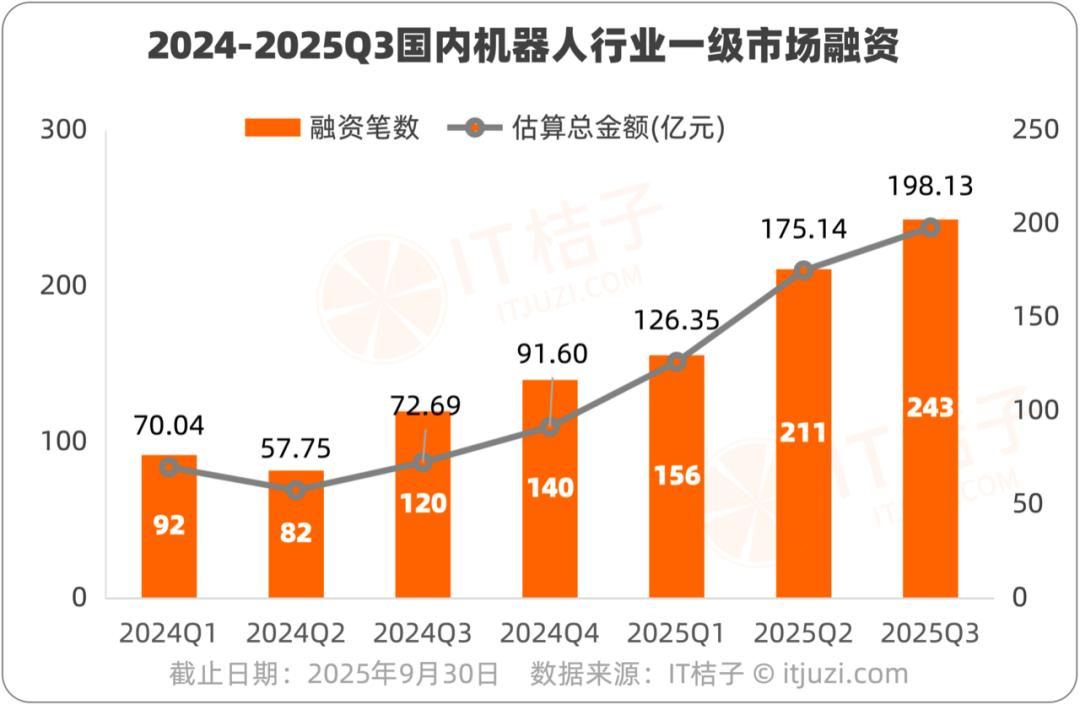
Core Insights - The domestic robotics industry in China has seen a significant increase in financing events, with 610 new financing incidents recorded in the first three quarters of 2025, doubling from 294 incidents in the same period last year [2] - The total financing amount for robotics startups reached approximately 500 billion yuan, which is 2.5 times that of the previous year, with Q3 alone accounting for 198.13 billion yuan, a year-on-year increase of 172% [3] - Early and mid-stage investments have become the mainstream financing method in the robotics sector, indicating a shift from early exploration to scaled development [5] Financing Trends - The number of early-stage (pre-A round and earlier) and mid-stage (A round to B+ round) investments has shown remarkable growth, together accounting for over 80% of total financing [5] - A complete policy support system from national to local levels is driving the current enthusiasm in the robotics investment market, including financial incentives and targeted industrial fund investments [5] - In the first three quarters of this year, 190 financing events involved direct investment from local state-owned assets, representing 31.15% of total investment events [5] Active Investors - Among the top 20 active investment institutions in the robotics sector, five have state-owned backgrounds, with Beijing State-owned Capital Operation Management Co. and Shenzhen Capital Group being the most active [7] - Market-oriented investment institutions dominate the landscape, with 11 firms leading the charge, including Qiji Chuangtan, which has made 20 investments [7] - Notable industry capital players include Lenovo Capital, Zhiyuan Robotics, and Baidu Ventures, which are actively investing in robotics startups [7] City Distribution - The financing activities are primarily concentrated in Beijing, Shenzhen, and Shanghai, with these cities benefiting from comprehensive advantages in policy, talent, and industrial chains [9] - In Q3 2025, Beijing led the robotics financing scene with 50 events totaling 48.39 billion yuan, showing a 72.41% increase year-on-year [9] - Shenzhen ranked second with 48 financing events, doubling compared to the previous year, while Shanghai's financing was mainly concentrated in the Pudong and Minhang districts [11] Growth Potential - Cities like Suzhou and Chengdu have shown remarkable growth, with Suzhou's financing events increasing by 566.67% and Chengdu experiencing explosive growth from zero to 11 events [12] - The overall trend indicates a transition from technological exploration to commercial implementation in the robotics sector, with mid-stage investments exceeding 40% of total financing [12] - The participation of state-owned capital in robotics investments has surpassed 30%, highlighting the collaborative effort between industry capital and VC/PE to boost the sector's momentum [12]
玉禾田(300815) - 公司2025年9月15日投资者关系活动记录表
2025-09-16 07:58
Group 1: Company Expansion and Financial Management - The company has established project companies to efficiently implement bidding projects, ensuring compliance and risk management through a robust internal control system [2] - In the first half of 2025, the company signed new contracts in urban operations amounting to 10.367 billion CNY, representing a year-on-year increase of 93.08% [4] - The company emphasizes the importance of accounts receivable management, with recent national policies aiding in the recovery of debts from local governments [6] Group 2: Robotics and Technological Development - The company has launched Shenzhen Yushui Intelligent Robot Co., focusing on the development of intelligent equipment and the transition of traditional sanitation equipment to smart solutions [3] - The company completed the acquisition of Candela (Shenzhen) Intelligent Technology Co., enhancing its capabilities in sanitation robotics [3] - The humanoid robot project is currently in the demonstration phase, with no specific timeline for mass production yet established [5] Group 3: Investor Relations and Market Confidence - The company is committed to maintaining open communication with investors through various channels, including performance briefings and interactive platforms [5] - The stock price fluctuations are influenced by macroeconomic factors, industry cycles, and market sentiment, with the company focusing on enhancing operational quality to boost investor confidence [5] - The company is considering stock repurchase plans to support market confidence, contingent on financial arrangements [5]

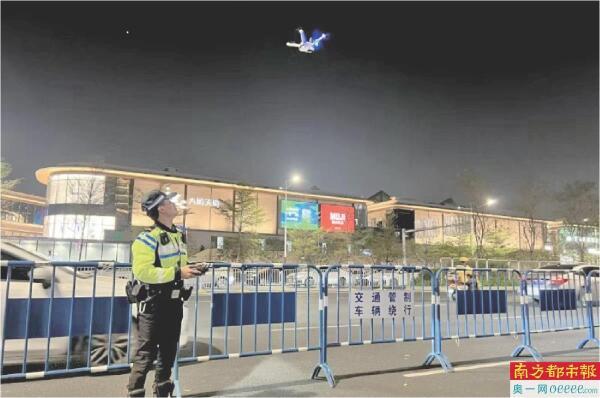
AI赋能基层治理 龙城交通治理更精准,工程监管更安心
Nan Fang Du Shi Bao· 2025-08-25 23:10
Group 1: AI Empowering Grassroots Governance - The core idea is that Longcheng Street in Longgang District utilizes AI technology as a "core engine" for grassroots governance, addressing key issues such as sanitation, traffic, and safety [2] - The implementation of AI in governance has led to the establishment of a comprehensive and intelligent governance system [2] Group 2: Traffic Regulation Enhancement - Longcheng Street employs a combination of RFID electronic capture, drone patrols, and "Iron Eye" enforcement to enhance traffic law enforcement, ensuring that violations are effectively addressed [3] - The RFID electronic capture system, which began operation in December last year, identifies violations such as riding electric bicycles on motor vehicle lanes and not wearing helmets, creating a closed-loop mechanism for enforcement [3] - Drone patrols are used during large events to monitor and manage traffic, significantly improving emergency response efficiency [3] Group 3: Construction Safety Management - Longcheng Street has introduced a "two terminals and one platform" smart supervision system to address safety issues in small construction projects [4] - The smart safety helmets, equipped with GPS and AI hazard identification, have increased the identification rate of major hazards by 80% [5] - The intelligent control box for temporary electricity management has effectively prevented 65 instances of illegal electricity use, enhancing safety on construction sites [5] - The smart supervision platform allows for comprehensive monitoring and management of construction projects, creating a full-chain regulatory model [5]