堆量模式

Search documents
光纤双龙
猛兽派选股· 2026-03-02 03:59
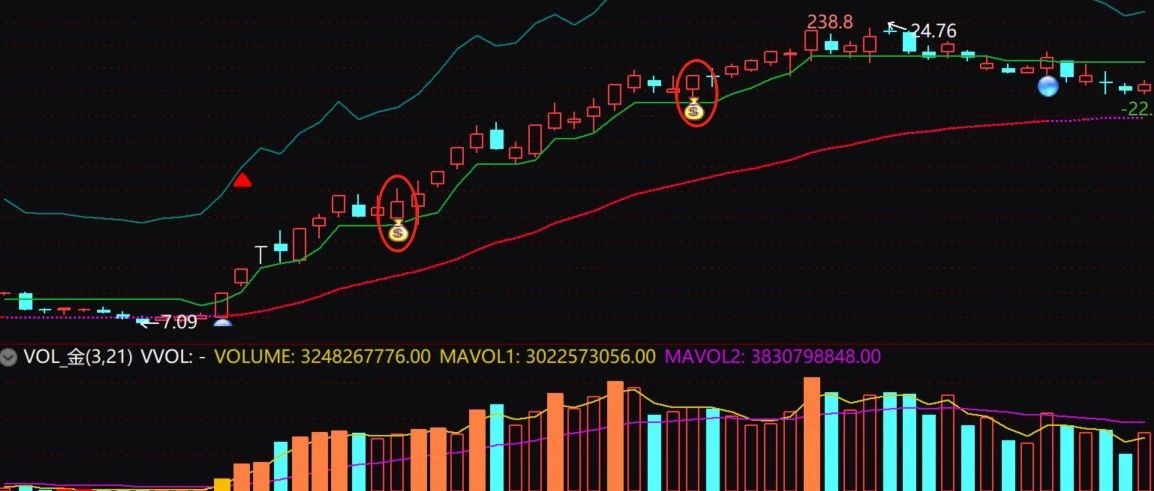
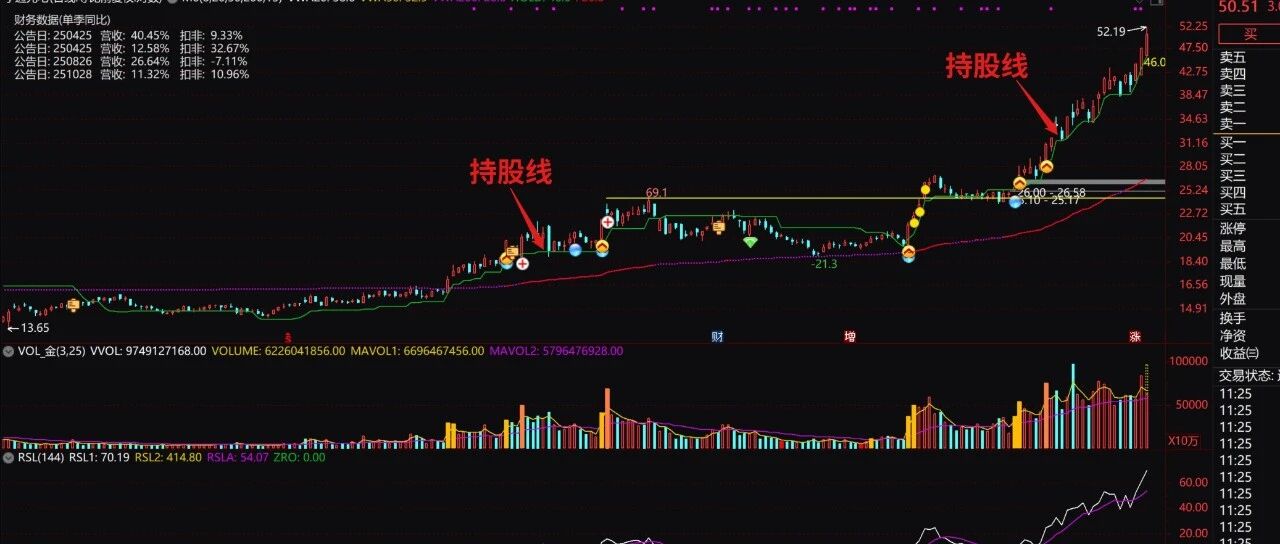
Group 1 - The concept of "leading stocks" is characterized by early initiation, leading price increases, and clear timing positions, with a focus on the smoothness of price movements [1] - The "Double Dragon Verification" technique suggests that when an industry sector takes off, there are typically two or more leading stocks, which can serve as evidence of sustained upward potential [1] - Leading stocks tend to be less affected by external negative factors, demonstrating rapid price increases and resilience during downturns, exemplified by the current performance of optical fiber stocks [1][3] Group 2 - Historical bull stocks serve as the best teaching material, as current bull stocks are following similar patterns due to unchanging human behavior, characterized by clear main lines, compact price structures, and repeated breakthroughs of resistance levels [6] - The technical aspects of price movements, such as the relationship between volume and price during pullbacks, are crucial for identifying potential upward trends, as seen in the optical fiber and PCB industry leading stocks [3][5]

主图添加堆量初始信号
猛兽派选股· 2026-01-14 04:00
Group 1 - The article introduces a paid code to establish a sub-chart indicator named "Stacking" [2] - The formula for the "Stacking" indicator is detailed, including parameters and output conditions [3] - The output of the sub-chart indicator is called into the main chart formula, allowing for visual representation [3]
巧用动量指标选股:总纲
猛兽派选股· 2026-01-13 03:49
Core Viewpoint - The article aims to enhance understanding of the Beast Momentum System, providing a structured and targeted approach to stock selection [1]. Group 1: Basic Work - The article emphasizes the importance of setting up indicators such as SSV, RSL, RSR, and RSV before proceeding with stock selection [1]. - It provides formulas for calculating VWAP and STDD, which are essential for deriving SSV indicators [2]. Group 2: Stock Selection Process - The article outlines a method for selecting stocks that are currently strong, using specific criteria for RSR and RSV indicators [3][4][5]. - It mentions that the stock selection results may vary based on market fluctuations, with mobile users experiencing a higher number of selections due to fewer constraints [6]. Group 3: Short-term Momentum Conditions - Two strategies for short-term momentum selection are discussed: one focusing on breakouts and the other on reversals, indicating that both approaches can be valid [7]. - The article introduces short-term momentum indicators like OVS and RS_D, which can help identify stocks suitable for low-risk buying opportunities [7]. Group 4: Breakout and Pivot Point Stock Pools - The article provides specific formulas for creating stock pools based on breakout strategies, emphasizing the importance of momentum indicators [8][9]. - It also discusses the creation of a pivot point stock pool, suggesting that separating this part can improve selection speed [10]. Group 5: Volume-based Stock Selection - The article highlights the significance of volume-based selection methods, noting the development of tools for this purpose within the Beast System [10][11]. - It mentions the importance of understanding long-term and short-term strength differences in stock selection, which simplifies the process [11].

最好的安排,以及年高代码调整
猛兽派选股· 2026-01-09 04:56
Group 1 - The article discusses the characteristics of stocks that exhibit a "stacking volume" pattern, which includes breaking through annual highs and then accumulating volume before potentially reaching a critical point [7] - It highlights that historical bull stocks serve as the best reference for current bull stocks, as human nature remains unchanged [7] - The article emphasizes the importance of understanding the initial features of the stacking volume model and its transition from weak to strong [8] Group 2 - The article provides specific code adjustments for identifying stocks that have broken through annual highs, suggesting a systematic approach to stock selection [9][10] - It mentions the significance of volume indicators in confirming stock movements and trends [10] - The content encourages readers to follow the associated public account for more insights and stock selection strategies [11]

猛兽体系进入双模式,以及边界调节
猛兽派选股· 2026-01-06 03:40
Group 1 - The core viewpoint of the article emphasizes two stock selection modes: the "Stacking Volume Mode" based on emotional overflow and liquidity, and the "Ouma Mode" anchored in industry and performance growth [1][2] - The Stacking Volume Mode typically involves smaller market capitalization stocks, while the Ouma Mode often starts with stocks having a market cap of around 30 to 40 billion, although there can be overlaps depending on the indicators [2] - Examples of stocks fitting the Ouma Mode include smaller cap stocks, while larger cap stocks like China Satellite and China Satcom exemplify the Stacking Volume Mode [3][4] Group 2 - To expand the search range for Stacking Volume stocks, adjustments can be made to the OVS indicator parameters, which can increase adaptability to different market caps [6] - Increasing the parameter allows for a broader selection, such as including stocks like China Satellite, China Satcom, Aerospace Electronics, and Beidou Star [7] - It is suggested to lower the threshold for OV3 output to a minimum of 25, while also adjusting the G-point formula accordingly to maintain accuracy in stock selection [8]
继续解密堆量模式间隙弱转强的G点特征(附源码)
猛兽派选股· 2026-01-04 13:55
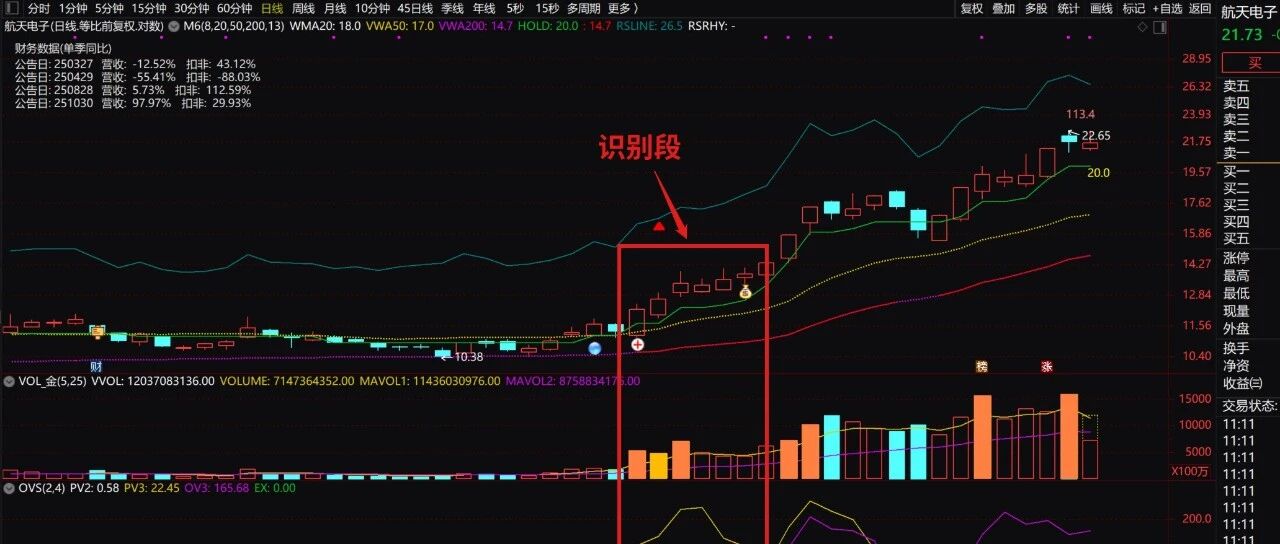
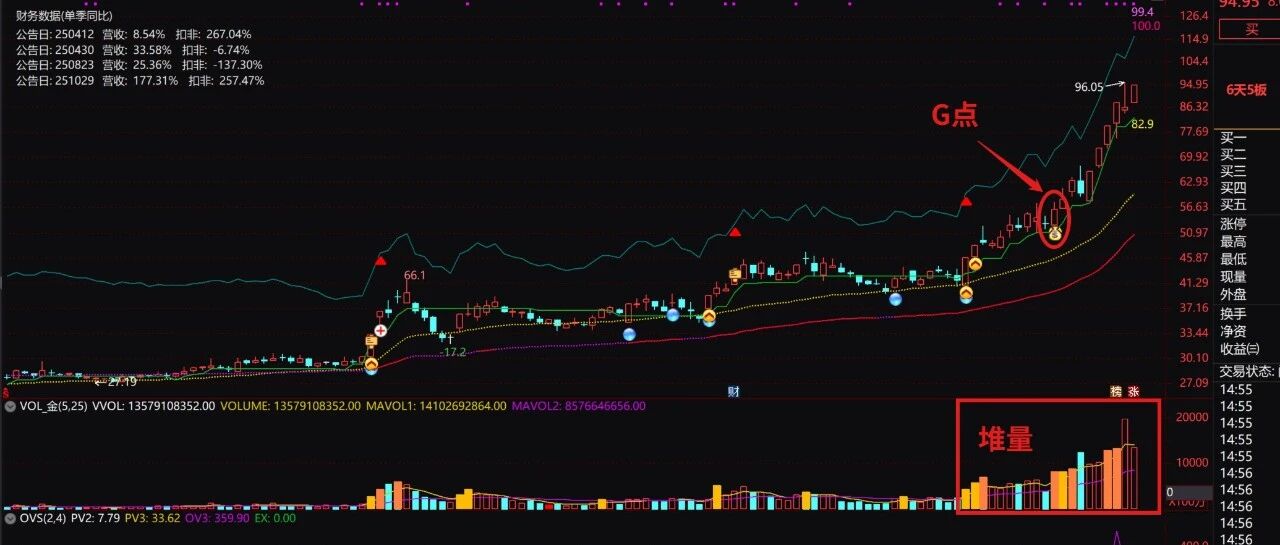
Group 1 - The article discusses the transition from the initial phase of the volume accumulation model to a high-level narrow consolidation, emphasizing the importance of recognizing weak-to-strong transitions for investment opportunities [1] - A significant observation is that stocks with a market capitalization around 30 billion are a dividing line between traditional trend models and volume accumulation trend models, with larger market caps facing more challenges in maintaining active trading [1] - The article highlights that the essence of volume accumulation is sustained active trading, which is more difficult for larger stocks, and mentions specific examples of stocks with varying market caps and their performance during the accumulation phase [1] Group 2 - The article introduces the concept of the "G point," which can identify weak-to-strong transitions in large-cap stocks, suggesting that the previous conditions of PV3 > OV3 are not necessary for this identification [2] - Visual aids are provided to illustrate the G point, which is described as a critical signal in the volume accumulation process [4] - The article notes that the identification of the G point has been refined over a six-month research period, resulting in a significant reduction in the number of stocks to monitor, although the success rate remains low due to the scarcity of quality volume accumulation stocks [6]
解密堆量模式的起始特征(附源码)
猛兽派选股· 2026-01-03 09:28
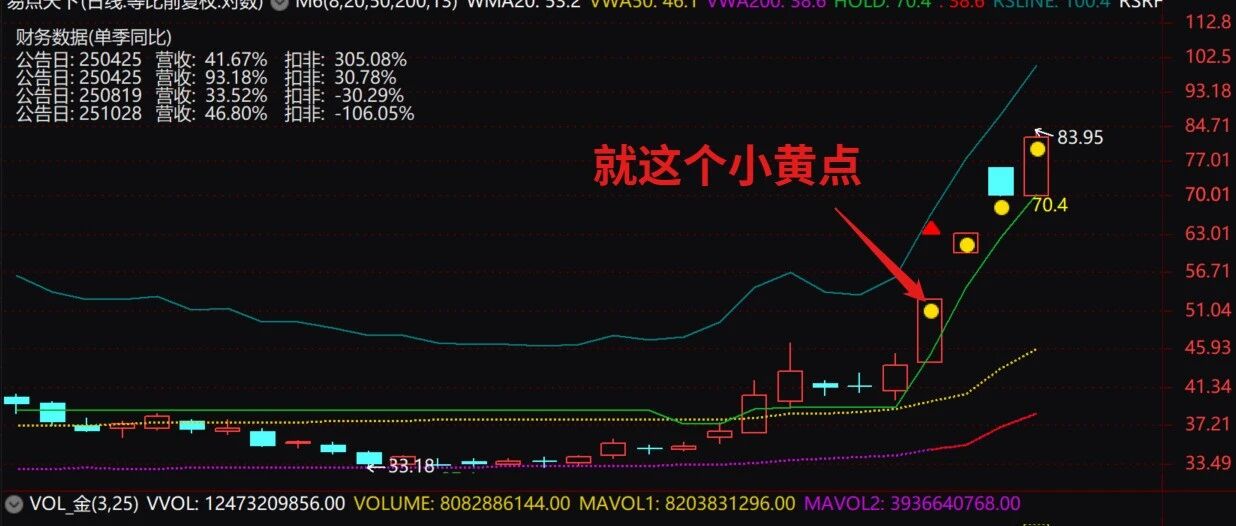
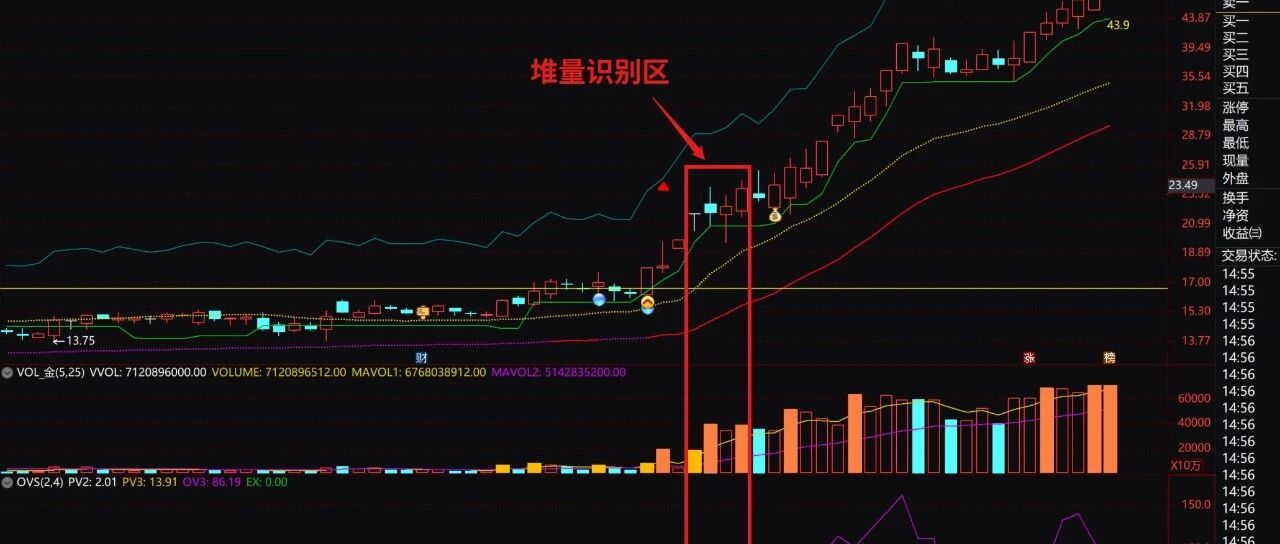
Core Viewpoint - The article emphasizes the importance of the OVS indicator in identifying leading stocks during accumulation phases, highlighting the characteristics of volume ratio, cumulative amount, and continuous price increases as key factors for early detection [1]. Group 1: Characteristics of Accumulation - The accumulation phase is marked by an initial spike in volume ratio, often exceeding any single volume bar from the past year, followed by a series of high volume bars and a breakout of the yearly price high [4]. - The OVS indicator's PV3 output rises sharply, indicating a significant volume ratio, while the OV3 output increases more gradually, reflecting the absolute amount of transactions [4]. - In the early stages, PV3 is typically greater than OV3, but as the accumulation progresses, OV3 may surpass PV3, indicating a shift in trading dynamics [4]. Group 2: Selection Criteria for Stocks - To identify accumulation stocks, PV3 must first exceed 40, followed by OV3 exceeding 30, with the condition that PV3 is greater than OV3 [5]. - The selection process yields only a handful of stocks daily, varying with market conditions, indicating a selective and potentially lucrative investment opportunity [5]. Group 3: Key Indicators - The three main characteristics of accumulation stocks include: 1) extremely high volume ratio, 2) extremely high trading amount, and 3) continuous price increases from the bottom, breaking through yearly highs [6].
2025年度猛兽股轻盘点
猛兽派选股· 2026-01-01 04:35
Core Viewpoint - The article discusses the performance of stocks categorized as "猛兽股" (beast stocks), focusing on those with a price increase of over 4 times within a year, and highlights the emergence of two distinct trading patterns: the traditional trend model and the volume accumulation model [1][2]. Group 1: Stock Selection Criteria - The selection formula for identifying beast stocks is based on a specific calculation involving the highest high and lowest low over a defined period [1]. - A total of 99 stocks were identified in the market, with 40 stocks filtered through an earnings pre-selection pool, although the specific list is not provided [2]. Group 2: Market Trends and Patterns - The current bull market has seen a significant increase in the volume accumulation model, with a ratio of approximately 6:4 compared to the traditional model [2]. - The volume accumulation model results in steeper price increase slopes and shorter time frames for achieving similar gains, with some stocks completing significant price movements in just days or weeks [2]. - The rise of quantitative trading is closely linked to the volume accumulation model, which emphasizes high-frequency trading and rapid turnover, previously dominated by speculative funds [2]. Group 3: Differences Between Trading Models - The traditional trend model is closely tied to earnings growth, while the volume accumulation model shows little correlation with earnings performance [2][5]. - Stocks selected under the traditional model are fundamentally different from those in the volume accumulation model, reflecting divergent views on the importance of fundamentals versus short-term market sentiment [4][5]. Group 4: Commonalities and Market Implications - Both trading models exhibit a common principle of minimal drawdowns during trends, with only a small fraction of the selected stocks experiencing significant pullbacks [5]. - The average drawdown for potential bull stocks in 2025 is lower than in previous years, theoretically making it easier to hold positions [5]. - The emergence of the volume accumulation model presents both challenges and opportunities for investors, suggesting a need for diversification in investment strategies [5].

堆量骑牛今天的调试结果
猛兽派选股· 2025-08-24 07:44
Core Viewpoint - The article highlights the significant stock selection based on two key market nodes, indicating a strong influx of capital into the market since June 24, 2023, with a total of 52 stocks identified from April 8 and 43 from June 24, showcasing a bullish trend in the market [1]. Summary by Sections Stock Performance Analysis - From the 52 stocks identified after April 8, there were 79 signal points generated, with a success rate of approximately 59%, indicating a favorable investment environment [1]. - The performance of selected stocks includes notable gains, with some stocks showing significant price increases, such as: - Giant Network (002558) with a 20-day increase of 26.88% and a market cap of 35.66 billion [2]. - Guidance (300803) with a 20-day increase of 53.09% and a market cap of 49.55 billion [2]. - Longxin Group (300682) with a 20-day increase of 11.77% and a market cap of 12.79 billion [2]. Sector Breakdown - The stocks are categorized into various sectors, with significant representation in technology and communication: - Communication sector stocks like New Easy Win (300502) showed a remarkable 20-day increase of 58.30% with a market cap of 232.49 billion [2]. - Semiconductor sector stocks such as Cambricon (688256) demonstrated a substantial increase of 84.64% with a market cap of 2517.53 billion [2]. Additional Insights - The article provides detailed performance metrics for individual stocks, including volume and moving averages, which can be useful for further analysis and investment decisions [4][5][6]. - The overall market sentiment appears positive, with many stocks showing strong upward momentum, suggesting potential investment opportunities in the current market environment [1].