复杂经济学

Search documents
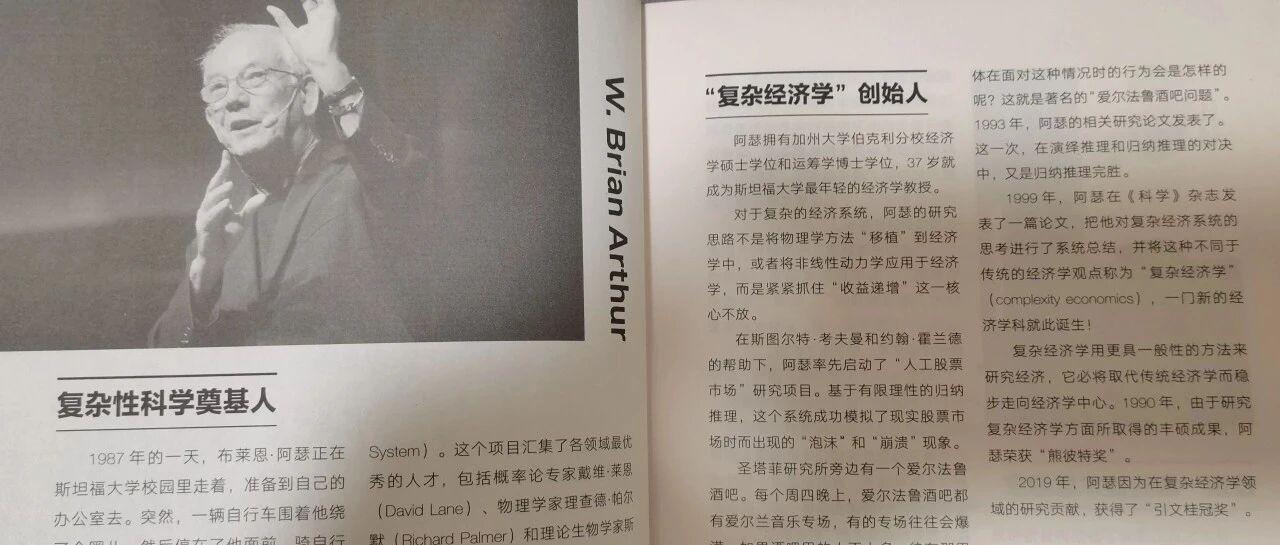
圣塔菲人工股票市场
猛兽派选股· 2026-03-28 05:03
Core Insights - The article discusses the Santa Fe Artificial Stock Market project led by Arthur Brian, which aims to simulate real stock market dynamics using simple rules and computer programs called agents. These agents adapt their strategies based on market data and trading outcomes, mimicking real trader behavior [1] Group 1: Market Dynamics - In slow exploration, the market reaches a stable rational expectations equilibrium, resembling an efficient market, where trading behavior becomes homogeneous [2] - In moderate-speed exploration, market behavior deviates from rational expectations, exhibiting characteristics of bubbles and crashes seen in real financial markets [2] - In medium to high-speed exploration, initially homogeneous traders spontaneously differentiate into various trading styles, leading to wealth concentration and income inequality, with a few consistently profiting while most incur losses [2] Group 2: Implications of Market Behavior - The findings suggest that the efficient market hypothesis is a subset of complex economic realities, as most economic systems operate in a state of medium to high-speed exploration, continuously evolving like biological systems [2] - The Santa Fe model replicates the phenomenon of wealth disparity in financial markets, indicating that this is a natural outcome of complex systems rather than a result of human malice or conspiracy [2] Group 3: Strategy Evolution - Strategies that are widely copied will automatically become ineffective, prompting the emergence of new strategies [4] - Long-term winners do not rely on a fixed strategy but possess the ability to evolve their strategies over time [4] - The long-term winners in the Santa Fe model are agents that maintain a stable ecological niche while adapting to details [4] Group 4: Ecological Niche Concept - An ecological niche is defined as a high-dimensional principle that remains constant, while specific strategies may change. This leads to a persistent supply shortage of niches, resulting in sustained excess returns [4] - For example, Warren Buffett's value investing approach maintains core principles like margin of safety and long-term perspective while adapting specific stock selection and valuation methods [4] - The trend-following ecological niche is characterized by the inherent nature of trends in the market, which are influenced by industry iterations, technological innovations, and economic cycles [5] Group 5: Psychological Costs and Market Phenomena - The Santa Fe Artificial Stock Market serves as a milestone model in behavioral finance and complex systems science, highlighting psychological costs such as frequent false breakouts, severe fluctuations during major trends, and significant drawdowns during reversals [6] - The model unifies two market views, demonstrating that efficient and complex markets are different parameter states of the same model rather than mutually exclusive theories [7] - It provides reproducible empirical evidence for phenomena like bubbles, crashes, and volatility clustering, which are difficult to explain by the efficient market hypothesis [7]

追求信仰还是听从概率
猛兽派选股· 2026-03-21 03:57
Group 1 - The core idea of the article emphasizes the significance of complex economics and its relevance to understanding market dynamics, particularly through the concepts of increasing returns and asset pricing [2] - Complex economics, as pioneered by Brian Arthur, utilizes computational simulations to replicate stock market behaviors, demonstrating patterns of low and high volatility, as well as phenomena like bubbles and crashes [2] - The article discusses the dual nature of market participants' beliefs, where some believe in the momentum of rising prices while others anticipate declines after peaks, reflecting the interplay of positive and negative feedback in pricing [3] Group 2 - The article suggests that the current pricing in the market is a result of the combined effects of these two opposing beliefs, which evolve over time and can lead to significant shifts in market behavior [3] - It highlights the importance of individual strategies in trading, noting that what works for one trader may not work for another, emphasizing the personal nature of investment strategies [3][4] - The concept of faith as a starting point for positive feedback is introduced, suggesting that belief drives effort and adjustments in strategies, which in turn reinforces that belief through rewards [4]

如何看待高成长与经典价值?柏基投资与“价值投资3.0”︱重阳Talk Vol.22
重阳投资· 2025-12-29 07:33
Group 1 - Baillie Gifford has a unique investment philosophy that emphasizes long-term growth and a deep understanding of technological and economic paradigm shifts, which has allowed it to thrive through various market cycles [2][4] - The firm was founded in Edinburgh, a city known for its academic heritage and Enlightenment thinkers, which has influenced its investment culture and approach [4][5] - James Anderson, a key figure at Baillie Gifford, integrates multi-disciplinary thinking into the investment process, focusing on scenario-based valuation rather than traditional metrics like P/E ratios [2][4][5] Group 2 - Anderson's investment philosophy centers on understanding change, particularly the shift from capital-intensive to knowledge-intensive economic growth, which is crucial for identifying "explosive winners" in the market [8][9] - The firm launched its long-term global growth strategy around 2003, capitalizing on the market bottom following the dot-com bubble, which was a strategic decision based on their understanding of market dynamics [10][12] - Baillie Gifford's investment strategy is characterized by a focus on a small percentage of companies that contribute the majority of market returns, aligning with the concept of asymmetric returns [15][16] Group 3 - The firm employs a unique valuation method that incorporates scenario analysis and probability assessments to account for the uncertainties inherent in high-growth companies [27][28] - Baillie Gifford's approach to risk management emphasizes the importance of not missing out on significant growth opportunities, which they consider a primary risk [36][37] - The firm maintains a disciplined sell strategy based on specific criteria, including exceeding single holding limits and fundamental changes in investment assumptions [41][42] Group 4 - Baillie Gifford's funding structure primarily consists of institutional investors, allowing it to maintain its investment strategy without being affected by redemption pressures typical in publicly traded funds [46]




柏基投资穿越百年的基石
点拾投资· 2025-11-08 11:00
Core Viewpoint - The article highlights the investment philosophy and strategies of Baillie Gifford, emphasizing its long-term global growth strategy that has led to superior returns compared to major indices and investment firms over the past two decades [2][16]. Investment Strategy and Performance - Baillie Gifford's flagship product, the Scottish Mortgage Investment Trust (SMT), has achieved a total return of 13.64 times over nearly 20 years, with an annualized return rate of approximately 13.88%. In comparison, the S&P 500 and Nasdaq indices returned 3.85 times and 7.88 times, respectively, during the same period [2]. - The firm has successfully invested in major companies like Amazon, Tesla, and Nvidia, often being an early investor and holding these stocks for extended periods, which has contributed to its reputation as a "super growth stock catcher" [1][2]. Historical Context and Evolution - Baillie Gifford has a history of over 110 years, evolving from a law firm to a prominent investment management firm, adapting its investment focus from convertible bonds to global equity investments and now to a long-term global growth strategy [14][15]. - The firm has consistently leveraged technological revolutions, such as the automotive and information technology revolutions, to identify and capitalize on investment opportunities [6][14]. Investment Philosophy - The investment logic of Baillie Gifford is rooted in understanding technological evolution and emerging markets, focusing on first principles to identify long-term trends and patterns in economic, social, and technological changes [6][7]. - The firm emphasizes the importance of patience in capital investment, maintaining a low turnover rate of 10%-20%, which allows for an average holding period of 5-10 years for its investments [10][11]. Organizational Consistency - Baillie Gifford's success is attributed to the organizational consistency in its investment philosophy, culture, and structure, which supports the execution of its long-term growth strategy [11][12]. - The firm fosters a collaborative environment with academic institutions and thought leaders, enhancing its knowledge network and investment insights [8]. Lessons for Other Markets - The article suggests that Baillie Gifford's investment approach can serve as a model for Chinese asset management firms, particularly in fostering long-term relationships with technology companies and supporting their growth through patient capital [15][16].

赠书|近20年回报跑赢伯克希尔,看柏基投资如何精准押注科技股
Sou Hu Cai Jing· 2025-11-08 09:34
Core Insights - The article highlights the evolution and success of Baillie Gifford, a prominent investment firm established in 1908, which has adapted its investment strategies over more than a century to capture growth opportunities in various markets [2][4][11]. Investment Strategy - Baillie Gifford's primary investment strategy, the Long Term Global Growth strategy, has yielded exceptional returns, with its flagship product, the Scottish Mortgage Investment Trust (SMT), achieving a total return of 13.64 times from 2004 to 2024, translating to an annualized return of approximately 13.88% [6]. - In comparison, the S&P 500 index had a total return of 3.85 times and an annualized return of 6.98% during the same period, while the Nasdaq index returned about 7.88 times with an annualized return of 10.87% [6]. Historical Performance - Over the past 20 years, Baillie Gifford has invested in high-growth companies such as Amazon, Tesla, Nvidia, ASML, Alibaba, and ByteDance, positioning itself as an early investor and long-term supporter of these firms [3][4]. - The firm is recognized for its patience in holding investments, with an annual turnover rate of 10-20%, indicating an average holding period of 5-10 years for its investments [11]. Investment Philosophy - Baillie Gifford emphasizes a long-term perspective, focusing on understanding technological evolution and emerging markets, which has been a key factor in its investment success [11][14]. - The firm’s approach is characterized by a systematic alignment of its investment philosophy, organizational structure, and incentive mechanisms, which collectively support its long-term growth strategy [11][14]. Adaptation and Evolution - Baillie Gifford has demonstrated an ability to evolve over its 110-year history, transitioning from convertible bond investments to a focus on global equity investments and long-term growth strategies [2][11]. - The firm’s investment logic is grounded in complex economics, viewing economic and market changes through a long-term, evolutionary lens [11][12]. Relevance to Other Markets - The investment philosophy of Baillie Gifford offers significant insights for Chinese counterparts, particularly in navigating the current technological revolution and establishing sustainable partnerships with investee companies [15][14].