外贸依存度

Search documents
最新外贸十强城市:深圳居首金华领跑 北京青岛呈负增长
Sou Hu Cai Jing· 2025-10-21 10:23
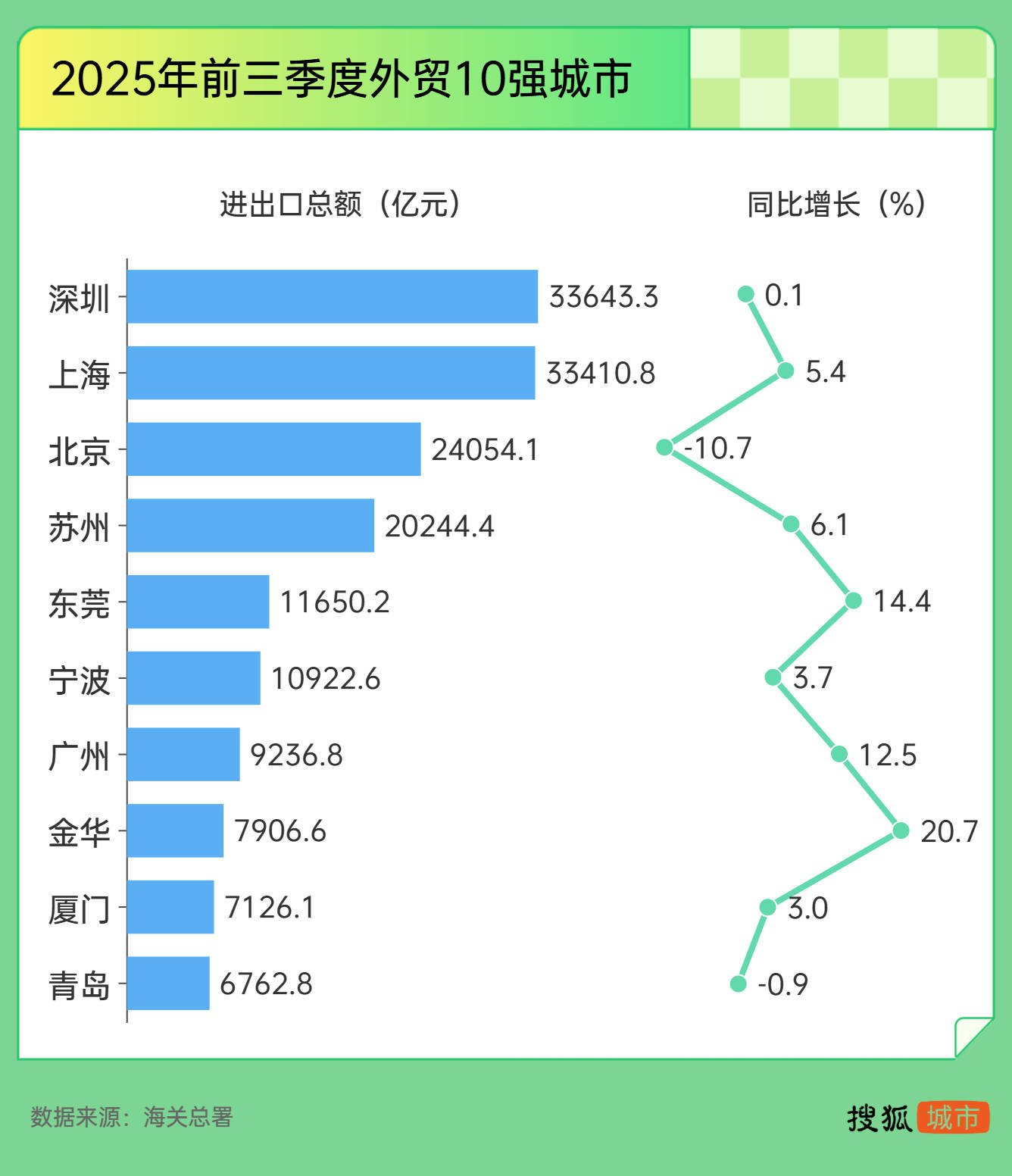
Core Insights - China's foreign trade faced challenges but managed to achieve a 4.0% year-on-year growth in the first three quarters, with total imports and exports reaching 33.61 trillion yuan [1] - Ten cities contributed to 49% of the national foreign trade, with Shenzhen and Shanghai leading the way [1] - The growth rates of the top ten cities varied significantly, with Jinhua showing remarkable growth while Beijing and Qingdao experienced declines [1] Trade Performance - Shenzhen maintained its position as the top city for foreign trade with a total of 3.36 trillion yuan, but its growth rate slowed to 0.1% year-on-year, making it the only city among the top ten to experience a decline in exports [3][6] - Shanghai's foreign trade grew by 5.4%, with exports increasing by 11.3% to 1.48 trillion yuan [3] - Jinhua emerged as a strong performer with a 20.7% increase in foreign trade, reaching 790.66 billion yuan, and its exports grew by 21.1% [8][10] City Comparisons - Guangzhou's exports reached 612.14 billion yuan, growing by 21.2%, driven largely by the booming cross-border e-commerce sector [10] - Beijing and Qingdao, the only two northern cities in the top ten, saw declines in foreign trade, with Beijing's total at 2.40541 trillion yuan (down 10.7%) and Qingdao at 676.28 billion yuan (down 0.9%) [14][13] External Factors - The high foreign trade dependence of Shenzhen, exceeding 120%, makes it more vulnerable to global economic fluctuations [5] - Shenzhen's trade with the US accounted for 10.3% of its total trade, with exports to the US at 422.32 billion yuan [6] - Jinhua's diverse export markets helped mitigate the impacts of the US-China trade tensions, with significant growth in exports to Africa and ASEAN [8]

特朗普“杀死”全球化后,内循环变得更重要了
创业邦· 2025-04-14 00:06
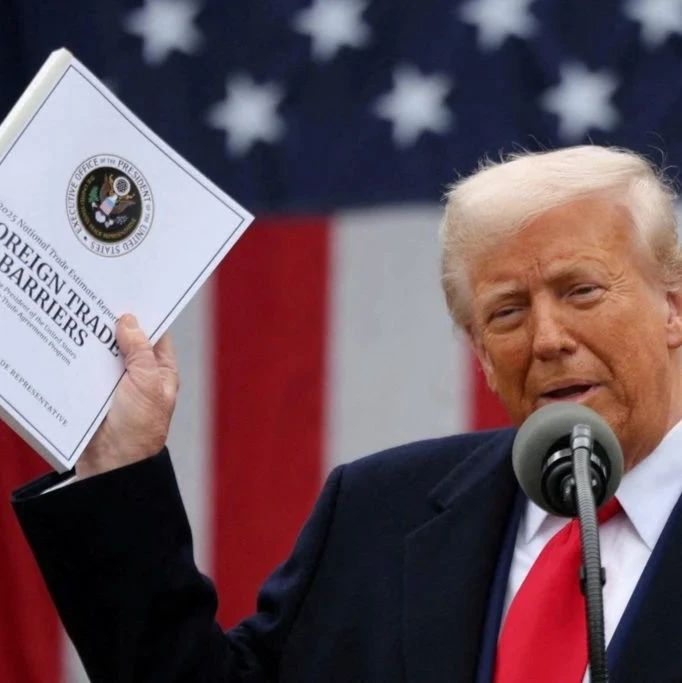
Core Viewpoint - The article discusses the impact of Trump's unprecedented tariff policies on global markets, leading to significant market volatility and a potential shift away from globalization towards more localized economic models [3][4][6]. Group 1: Tariff Policies and Market Reactions - Trump's announcement of "reciprocal tariffs" resulted in a nearly $10 trillion loss in global market value, reminiscent of the market crash during the COVID-19 pandemic [3]. - Following the implementation of tariffs, China retaliated with a 34% tariff on all U.S. imports, prompting further escalations from both sides [4][5]. - The "reciprocal tariffs" were suspended less than 13 hours after their enactment, showcasing the unpredictable nature of Trump's trade policies [6]. Group 2: Globalization and Economic Disparities - The article argues that the era of globalization, primarily led by Western countries, is coming to an end, with increasing economic disparities between rich and poor nations [7][9]. - The globalization process has disproportionately benefited multinational corporations while leaving many workers in developed countries vulnerable to international competition [11][12]. - The rise of emerging economies like China has disrupted the established global trade dynamics, leading to a reevaluation of international economic relationships [13]. Group 3: Domestic Economic Strategies - In response to external pressures, China has emphasized the importance of domestic circulation, aiming to reduce reliance on foreign markets and enhance internal demand [15][16]. - The article highlights that historically, major economies like the U.S. and the U.K. have relied on internal markets for their growth, suggesting that a shift towards domestic-focused strategies could be beneficial [19][20]. - The current global trade turmoil is prompting China to address internal economic challenges, facilitating a more balanced flow of resources and production factors within its economy [22].