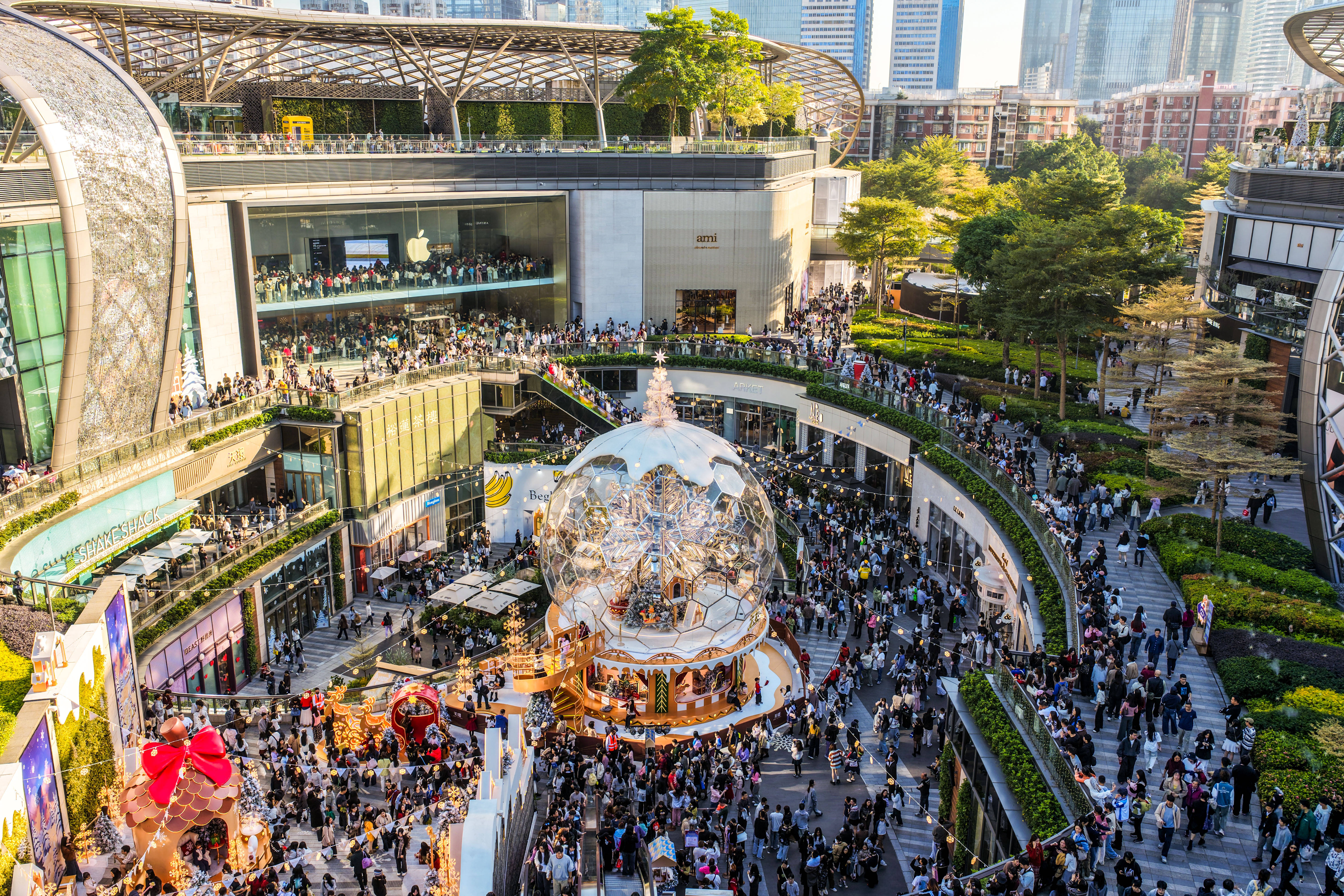
多中心格局

Search documents
未来五年供应次高峰,2026年广州商业会卷向何方?
Sou Hu Cai Jing· 2026-01-16 11:25
Group 1: Market Overview - Guangzhou's commercial real estate is entering a new round of "reshuffling," with significant new supply expected in the coming years, including nearly 900,000 square meters of office space and 650,000 square meters of shopping centers by 2026 [1] - The shopping center supply is projected to reach its second-highest peak in the next five years, indicating a critical juncture for the market [1] Group 2: Office Market Dynamics - The office market is experiencing intense competition, with a notable "relocation trend" as companies seek to reduce costs and improve efficiency, leading to a net absorption of nearly 180,000 square meters in Guangzhou's Grade A office market by 2025, primarily driven by emerging business districts like International Financial City and Pazhou [5] - The average vacancy rate in the city has risen to 23.3%, with rental prices decreasing by 7.4% year-on-year, indicating overall market pressure despite localized demand spikes [9] Group 3: Emerging Trends and Demand Shifts - By 2026, an estimated 871,000 square meters of new office supply will enter the market, with a significant portion concentrated in emerging areas, suggesting increased competition and potential pricing pressures [9] - The demand landscape is evolving, with traditional sectors like finance and retail still dominant but a notable increase in leasing activity from the media and entertainment sectors, particularly gaming and new media companies, which have seen a 9 percentage point increase in leasing area share over the past year [9] Group 4: Retail Market Developments - The retail sector is undergoing a transformation, with existing malls upgrading and new players entering the market, leading to a relatively stable vacancy rate of 12.8% and an expected addition of 337,000 square meters of retail space by 2025 [10] - A significant influx of 650,000 square meters of new shopping centers is anticipated in 2026, marking a qualitative shift and reshaping the retail landscape [10][12] Group 5: Structural Changes and Future Outlook - The emergence of a "multi-center" retail landscape is becoming a reality, with new commercial hubs complementing each other and enhancing the overall commercial structure in Guangzhou [12] - The ongoing reshuffling in the commercial real estate sector is expected to eliminate outdated models and promote refined management, innovative experiences, and deeper integration with consumers, leading to a more resilient and vibrant commercial map for Guangzhou [12]

强省会,卷土重来?
Hu Xiu· 2025-10-16 04:43
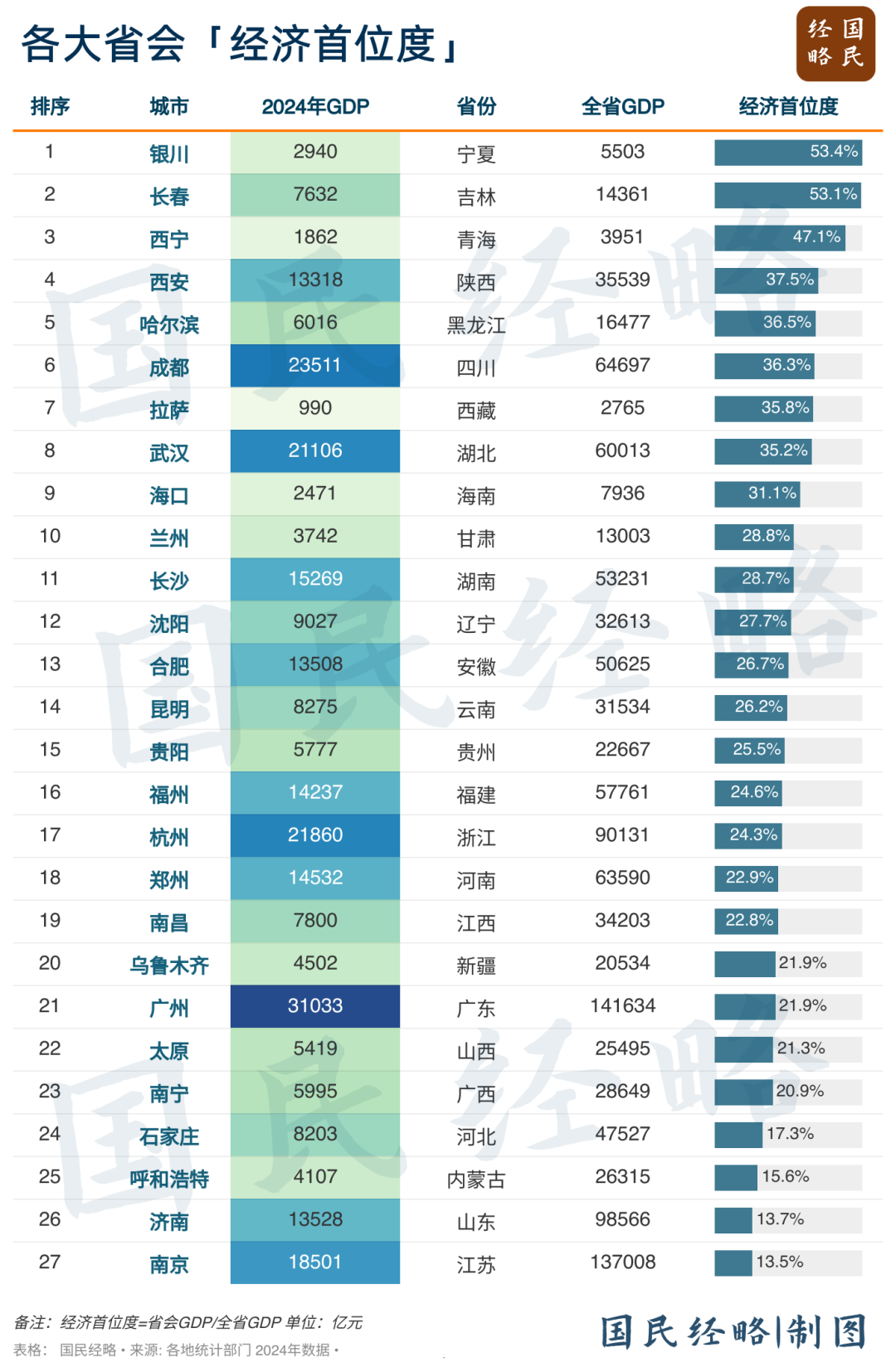
Core Viewpoint - The article discusses the resurgence of the "strong provincial capital" strategy in China, emphasizing its importance in driving regional development and economic growth, particularly in the context of cities like Lanzhou and Chengdu [2][12][24]. Group 1: Strong Provincial Capital Strategy - The recent meeting in Gansu highlighted the need for provincial capitals to lead provincial development, echoing the sentiment that a strong provincial capital equates to a strong province [2][12]. - The strategy is not merely a choice between strong provincial capitals and multiple centers; rather, it is about integrating both approaches for comprehensive regional development [4][8]. Group 2: Economic Data and Rankings - A table lists various cities along with their projected GDP for 2024, showcasing the economic primacy of cities like Chengdu and Xi'an within their respective provinces [6][7]. - Chengdu is projected to have a GDP of 23,511 million, representing 36.3% of Sichuan's total GDP, indicating its significant economic role [6]. Group 3: Multi-Center Development - The article notes that some regions are moving away from the "strong provincial capital" mindset to embrace a multi-center model, with cities like Mianyang and Yibin in Sichuan being designated as sub-centers [8][9]. - This shift reflects a broader trend where cities are encouraged to develop their unique strengths while contributing to the overall provincial economy [25][32]. Group 4: Future Directions and Strategic Positioning - The article emphasizes that the logic behind the "strong provincial capital" strategy has evolved, focusing on enhancing core functions rather than merely expanding city size [15][18]. - Cities like Chengdu are being positioned as key economic and innovation centers in the western region, with a focus on international connectivity and advanced manufacturing [21][24]. Group 5: Regional Economic Dynamics - The article argues that the suitability of a strong provincial capital versus a multi-center approach depends on the economic strength and regional layout of the province [32][33]. - Strong provinces tend to adopt multi-center models, while weaker provinces may rely on a strong provincial capital to drive development [36][37].