多云战略

Search documents
美国独角兽Anthropic获微软、英伟达150亿美元投资承诺,格局微妙改变
3 6 Ke· 2025-11-19 04:05
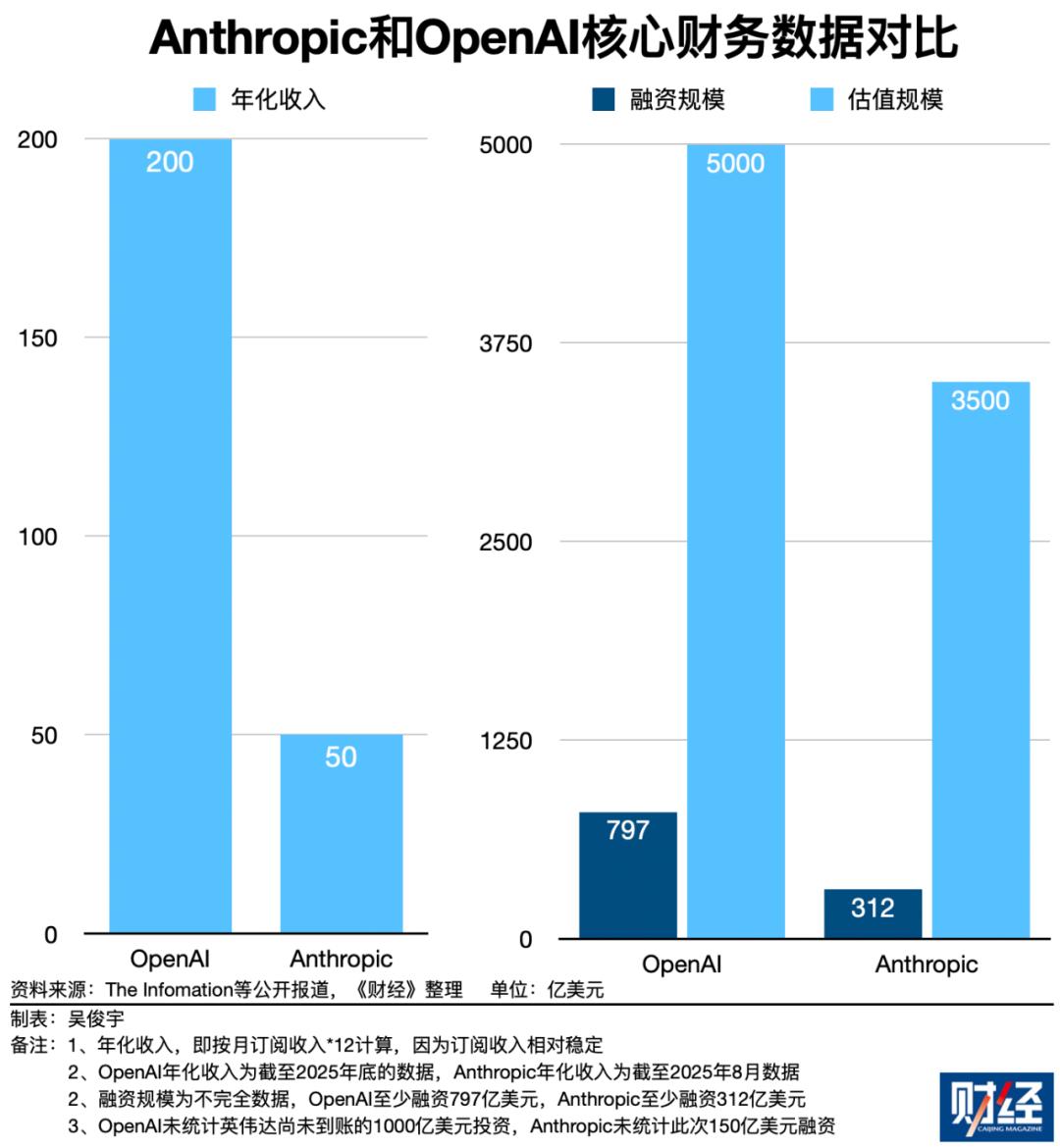
Core Insights - Nvidia and Microsoft have committed to invest $10 billion and $5 billion respectively in Anthropic, which has raised over $31.2 billion in total funding and is currently valued at $183 billion, potentially rising to $350 billion after this investment [1][4] Investment and Valuation - Anthropic's valuation is expected to increase to $350 billion, making it the second highest valued large model startup globally, following OpenAI at $500 billion [1] - The total funding raised by Anthropic exceeds $31.2 billion, with a current valuation of $183 billion [1] Strategic Partnerships - Anthropic will purchase at least 1 GW of Nvidia's computing power, which can accommodate 200,000 Nvidia GB200 chips [1] - Anthropic will optimize its models in collaboration with Nvidia, starting with the Blackwell chip and moving to the Rubin chip [4][6] - Microsoft and Anthropic will integrate Anthropic's Claude models into Microsoft's AI services, including Microsoft Foundry and Copilot [4] Cloud Service Dynamics - The partnership with Nvidia and Microsoft indicates a weakening of Anthropic's strong ties with Amazon, which has invested over $4 billion in Anthropic [7][8] - Despite the new partnerships, Amazon remains a primary cloud service provider for Anthropic [8] - Anthropic's multi-cloud strategy allows it to utilize services from Amazon AWS, Google Cloud, and Microsoft Azure, enhancing its appeal to enterprise clients [15] Competitive Landscape - Anthropic has rapidly grown to become a strong competitor to OpenAI, with a projected annual revenue of $1 billion by January 2025, and a significant increase in revenue to $5 billion by August 2024 [9] - The competition between Microsoft and Amazon for Anthropic's services is intensifying, with both companies vying for dominance in the AI space [10][13]



亚马逊云服务中断:12 小时瘫痪全球互联网,暴露集中化隐忧
Sou Hu Cai Jing· 2025-10-21 09:44
Core Insights - A major outage occurred in Amazon Web Services (AWS), affecting its US-East-1 region, leading to a global internet disruption lasting over 12 hours, impacting millions of businesses and users [2] Group 1: Impact on Business Services - The outage caused widespread service disruptions for numerous enterprises, with over 50 Amazon warehouses experiencing offline scheduling systems, leading to delivery order failures and payroll issues for hourly employees [4] - AWS's core database service, DynamoDB, faced DNS issues, which prevented service requests from being processed, resulting in significant operational challenges for various platforms [4] - By the afternoon, AWS acknowledged a backlog of tasks, with some services still not fully operational after 13 hours, affecting critical services like the UK government website and Lloyds Bank [4] Group 2: Economic Consequences - The economic impact of the outage is estimated to exceed $1.5 billion, with a potential loss of $3.4 billion for a 24-hour disruption in the US-East-1 region [5] - Various sectors experienced significant disruptions, including cryptocurrency exchanges, fast-food apps, and airline check-in systems, leading to financial losses and operational inefficiencies [4][5] Group 3: Industry Response and Trends - The incident highlighted the risks associated with centralized cloud service dependencies, as AWS, Microsoft, and Google control 70% of the global cloud market [6] - A shift towards multi-cloud strategies is emerging, with companies like Google promoting their services and clients like Lloyds Bank initiating multi-cloud migration plans in response to the outage [7] - The incident may serve as a turning point for global enterprises to reconsider and restructure their IT architectures to mitigate risks associated with single-provider dependencies [7]

Eight million users flag problems following AWS outage
Youtube· 2025-10-20 23:38
Core Insights - Amazon's AWS is experiencing a significant outage that has lasted over 10 hours, affecting its main cloud region in Northern Virginia, which is its oldest and busiest hub [2][4] - More than 8 million users have reported issues, including major clients like AI platform Perplexity and Anthropic, which has a multicloud strategy to mitigate such risks [2][3] - AWS controls 37% of the global cloud market and generated $107 billion in revenue last year, highlighting the impact of its outages on global services [4] Outage Details - The outage began around 3:00 a.m. due to network failures and DNS issues related to its core database system, which is essential for many AWS applications [3] - Amazon has stated that it is in the process of rolling out fixes and some services are recovering, but outage reports continue to surge [4] - Cyber experts indicate that this outage is not a result of hacking but underscores the fragility of internet infrastructure when a few companies dominate it [4] Market Reaction - Despite the ongoing issues, Amazon's stock has traded 1% higher, suggesting that shareholders are currently unfazed by the outage [5] - The incident raises questions about whether customers will shift to other cloud providers, as seen with companies like OpenAI diversifying their cloud strategies [6][7] - Upcoming earnings reports from Google and Amazon will be closely watched to see if they increase capital expenditure commitments to support generative AI customers [7]

从监管到韧性:金融公司如何发展其云战略
Refinitiv路孚特· 2025-08-25 06:03
Core Insights - A recent LSEG survey indicates that a majority of global financial services firms have adjusted or updated their cloud strategies in response to data privacy, security, and sovereignty regulatory requirements [1][2] - Business resilience has emerged as a common priority for both companies and regulators, reflecting a shared goal of enhancing cloud stability and reducing service disruptions [2][3] Group 1: Cloud Strategy Adjustments - 84% of respondents reported making adjustments to their cloud strategies due to regulatory requirements, with over a quarter (28%) implementing extensive changes [2] - The survey included 453 executives from the financial services industry across 12 countries, with 63% being key decision-makers in financial market data and IT solutions [2] Group 2: Business Resilience - 30% of respondents experienced business interruptions due to cloud services in the past year, highlighting the importance of resilience and security in evaluating cloud strategy value [3] - In the EMEA region, 95% of respondents consider business resilience "very important" (61%) or "critical" (34%) when selecting cloud service providers [3] Group 3: Regional Variations - The Asia-Pacific (APAC) region has the highest business interruption rate at 38%, with 51% of respondents indicating that resilience is a key metric for assessing cloud strategy ROI [3][4] - Regulatory bodies in the APAC region are beginning to emphasize business resilience, with several agencies conducting crisis management tabletop exercises [5] Group 4: Regulatory Impact - One-third (33%) of financial institutions indicated that regulatory changes are affecting their cloud strategies, particularly in areas like migration and AI [6] - 59% of respondents affected by data privacy and security regulations are adopting hybrid cloud strategies, while 56% are implementing multi-cloud strategies [6] Group 5: Investment Return and Compliance - Regulatory frameworks vary by region, with 33% of APAC respondents needing to make extensive adjustments to their cloud strategies due to regulatory requirements, compared to 24% in EMEA [8] - In the Americas, 33% of respondents cited regulatory changes as the primary barrier to achieving expected ROI from their cloud strategies [8][9] Group 6: Overall Impact - Overall, cloud regulations are influencing the expected ROI from cloud investments across regions, although some financial services firms recognize that compliance can enhance business resilience [10]