多传感器融合自动驾驶

Search documents
独家对话特斯拉FSD横跨美国第一人:4400公里“零接管”,手没碰过方向盘!作为激光雷达销售员,他为何站队马斯克的“纯视觉”?
Mei Ri Jing Ji Xin Wen· 2026-01-08 12:14
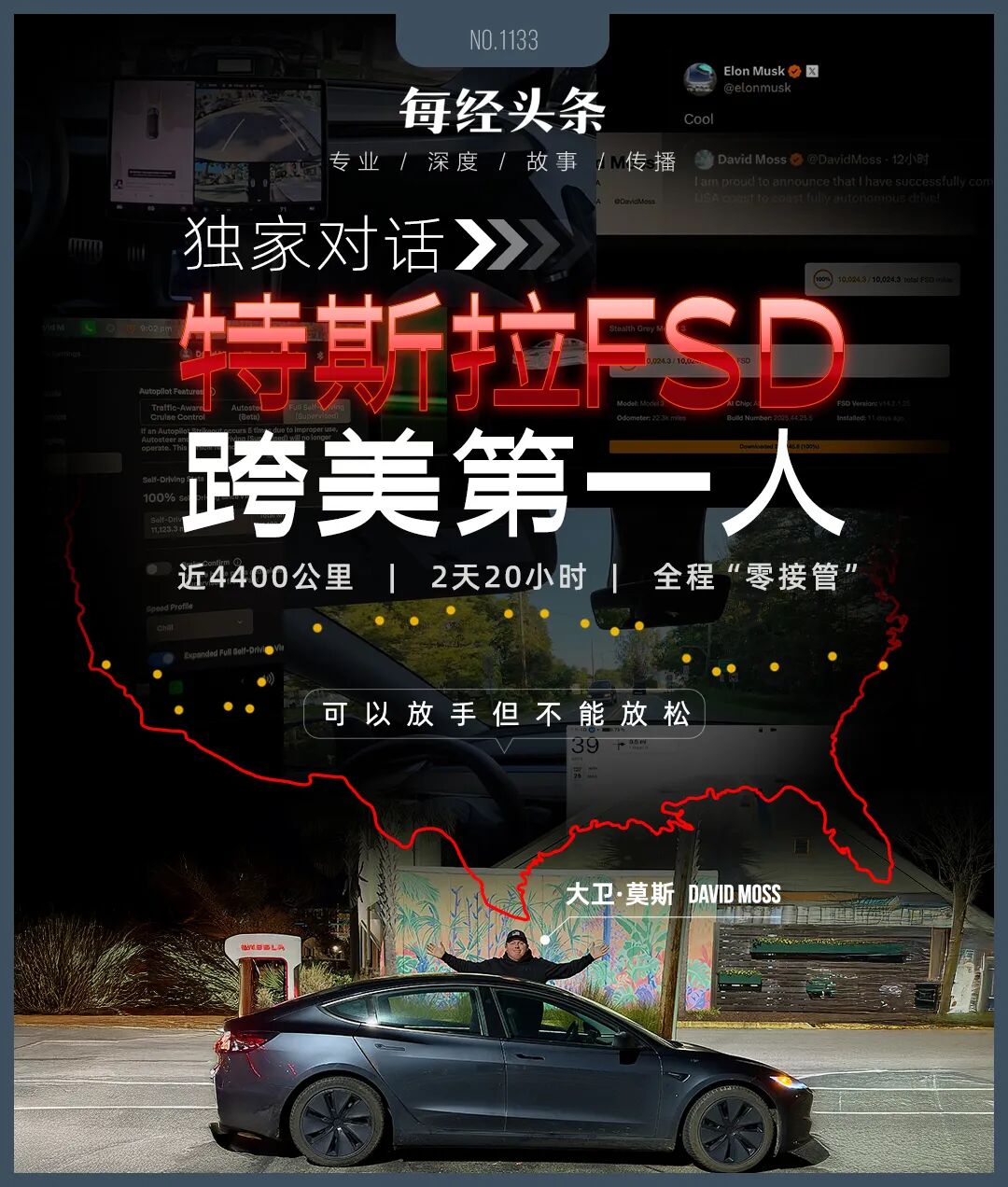
Core Insights - The journey of David Moss across the United States using Tesla's Full Self-Driving (FSD) system demonstrates the potential of achieving fully autonomous driving without the need for LiDAR technology [2][17]. Group 1: Journey Overview - David Moss completed a 2-day, 20-hour journey covering 2,732.4 miles (approximately 4,397 kilometers) from Los Angeles to Myrtle Beach, South Carolina, without manual intervention [2][3]. - The trip faced various challenges, including low visibility fog, sudden rain, and complex urban traffic, yet the FSD system did not encounter any dangerous situations [5][6]. - Moss maintained an average speed of approximately 120 km/h, with a maximum speed of 136 km/h, and took about 12 hours of rest during the journey [5][6]. Group 2: FSD System Performance - The FSD system effectively managed tasks such as lane changes, traffic signal recognition, and parking at charging stations autonomously [5][6]. - Moss emphasized the need for constant attention to the road, as the system is still classified as a Level 2 driving assistance system, requiring driver supervision [6][9]. Group 3: Technology Comparison - Moss, originally a LiDAR salesperson, now supports Tesla's "pure vision" approach over multi-sensor fusion systems like Waymo's, arguing that achieving full autonomy does not necessarily require LiDAR [17][18]. - Tesla's FSD relies on a pure vision system that simulates human vision using cameras, while Waymo employs a multi-sensor approach that includes LiDAR and radar [18]. - The debate continues regarding the effectiveness of each system, particularly in extreme weather conditions and complex scenarios [17][18]. Group 4: Challenges to Commercialization - The successful completion of the journey does not equate to the readiness for commercial deployment of fully autonomous driving, as there are significant challenges to overcome [19][24]. - Key challenges include addressing long-tail risks, aligning technology with regulatory definitions, and the absence of a comprehensive regulatory framework for autonomous driving [21][23][24]. - Moss aims to highlight the value of autonomous driving technology, emphasizing its potential to benefit individuals who are unable to drive [24].


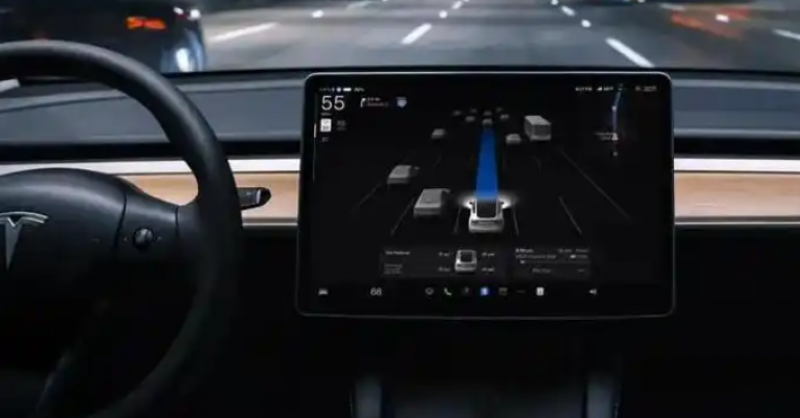
特斯拉再挺“纯视觉方案”引发争议,技术路线生态博弈升级
Hua Xia Shi Bao· 2025-05-08 07:48
Core Viewpoint - Tesla emphasizes its commitment to a vision-based processing solution for affordable and safe intelligent products, contrasting with the rising popularity of LiDAR technology in the automotive industry [2][3]. Group 1: Technology Disagreement - Tesla's upcoming Full Self-Driving (FSD) solution relies solely on camera and AI chip collaboration, while companies like Huawei and Li Auto advocate for LiDAR, citing its ability to detect obstacles without needing to identify them [3][4]. - The divergence between Tesla and domestic automakers reflects a philosophical debate between "algorithm-driven" and "hardware-driven" approaches, with Tesla focusing on data-driven algorithms and others prioritizing hardware redundancy for safety [4][5]. Group 2: Cost and Market Strategy - Tesla's insistence on a vision-based approach is partly due to cost considerations, as CEO Elon Musk has labeled LiDAR as an "expensive crutch" [5][6]. - The removal of radar from Tesla's Model 3 and Model Y has reduced hardware costs, allowing for competitive pricing in the global market, although there are concerns about the affordability of Tesla's FSD package compared to offerings from domestic brands [6][7]. Group 3: Market Trends and Adjustments - The automotive market is witnessing a shift in how companies configure their vehicles, with many adjusting their marketing strategies regarding intelligent driving features, particularly in light of stricter regulations and intense price competition [7][8]. - Companies are increasingly recognizing that adding LiDAR may only provide additional safety redundancy rather than a significant upgrade in system capabilities, leading to a potential reduction in the emphasis on high-end features in favor of more competitive pricing [7][8].