
多品类协同

Search documents
耐克入局户外,是否来得太晚?
36氪未来消费· 2026-02-27 00:26
Core Viewpoint - Nike's launch of the ACG independent brand store marks a strategic shift, elevating ACG from a sub-line to a standalone operation, reflecting a broader industry trend of seeking new growth avenues amidst collective anxiety among global sports brands [3][15]. Group 1: ACG's Historical Context and Evolution - ACG (All Conditions Gear) was officially established in 1989, aiming to redefine outdoor gear by emphasizing high performance and versatility, challenging the stereotype of outdoor products as bulky and conservative [4]. - The brand gained significant attention during the NIKE LAB period from 2014 to 2018, where it underwent a visual transformation under designer Errolson Hugh, aligning with the Techwear trend and appealing to both mainstream and streetwear audiences [5][6]. Group 2: Market Dynamics and Strategic Positioning - The COVID-19 pandemic shifted consumer behavior towards outdoor activities, prompting Nike to recognize the importance of functional outdoor gear as a growth driver, leading to ACG's strategic elevation within the company [9][10]. - ACG's independence signifies its new role as a key player in targeting niche markets, comparable to the strategic importance of Air Jordan, and reflects a broader organizational restructuring within Nike [10][11]. Group 3: Product Development and Consumer Trends - ACG's recent product innovations, such as the Nike Air Milano jacket with adjustable temperature control, highlight its focus on technical performance and adaptability to extreme conditions [10]. - The shift in consumer purchasing motivations from identity expression to functional needs is evident, with Nike's running shoe category experiencing double-digit growth, indicating a renewed emphasis on performance attributes [13]. Group 4: Competitive Landscape and Future Outlook - The outdoor market is becoming increasingly competitive, with brands like Salomon and HOKA establishing strong technical barriers, posing challenges for Nike to quickly gain credibility among professional users [13]. - Nike's ability to leverage its extensive resources and established supply chain for ACG's growth is crucial, as the brand aims to reaffirm its identity as a leader in sports technology rather than just a trend-driven company [14][15].


刚刚,东鹏饮料在港交所上市!
Sou Hu Cai Jing· 2026-02-03 03:08
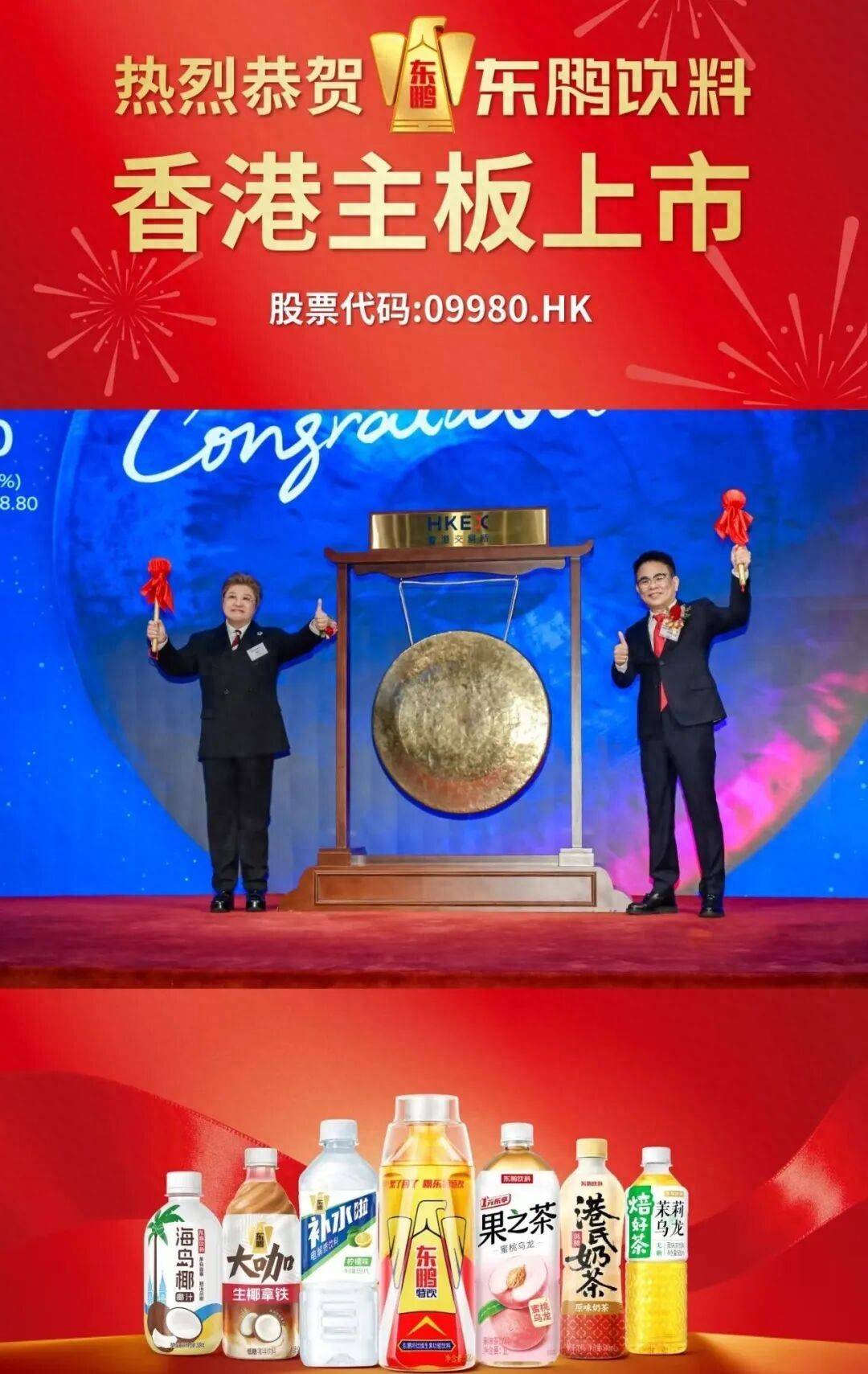
Core Viewpoint - Dongpeng Beverage has successfully completed its IPO on the Hong Kong Stock Exchange, marking it as the largest IPO in the Asian beverage sector in recent years, with a market capitalization exceeding HKD 139 billion, indicating strong market recognition of its strategic shift and penetration into lower-tier markets [3][11]. Group 1: Company Strategy and Market Position - Dongpeng Beverage transitioned from being perceived as a copycat of Red Bull to a market leader by targeting the underserved lower-tier market, particularly focusing on truck drivers and manufacturing workers who require energy drinks but are deterred by higher prices [4][5]. - The company has seen significant revenue growth, with projections indicating an increase from CNY 28 billion in 2017 to CNY 158 billion by 2024, alongside a net profit of CNY 33 billion and a gross margin exceeding 70% [5][6]. - Dongpeng's product strategy has evolved from relying on a single product to a multi-category approach, introducing six new product lines alongside its flagship Dongpeng Special Drink, which is crucial for sustaining long-term capital value [6][7]. Group 2: Financial Performance and Projections - The company anticipates entering the "200 billion club" in 2025, with projected revenues between CNY 207.6 billion and CNY 211.2 billion, reflecting a year-on-year growth of 31.07% to 33.34%, and a net profit forecast of CNY 43.4 billion to CNY 45.9 billion, marking a growth of 30.46% to 37.97% [8][10]. - Dongpeng's new product "Dongpeng Supplement" has quickly become the leading brand in China's electrolyte drink market, achieving sales of CNY 14.93 billion in the first half of 2025, which is equivalent to its total sales for 2024 [6][8]. Group 3: Market Dynamics and Competitive Landscape - The IPO comes at a pivotal moment for the Chinese functional beverage industry, which is undergoing a transformation towards health and scene-based consumption, necessitating both Dongpeng and Red Bull to adapt to these changes [11][12]. - Dongpeng's dual listing strategy aims to leverage both A-share and H-share markets to enhance capital operations, allowing for resource synergy and risk hedging, which is expected to facilitate its expansion into international markets [9][10]. - The competitive landscape is intensifying, with Dongpeng facing pressures from both international brands and local competitors, necessitating a focus on innovation and product diversification to maintain its market position [12].

蜜雪冰城的6元风,刮到了啤酒圈
36氪· 2025-10-22 00:46
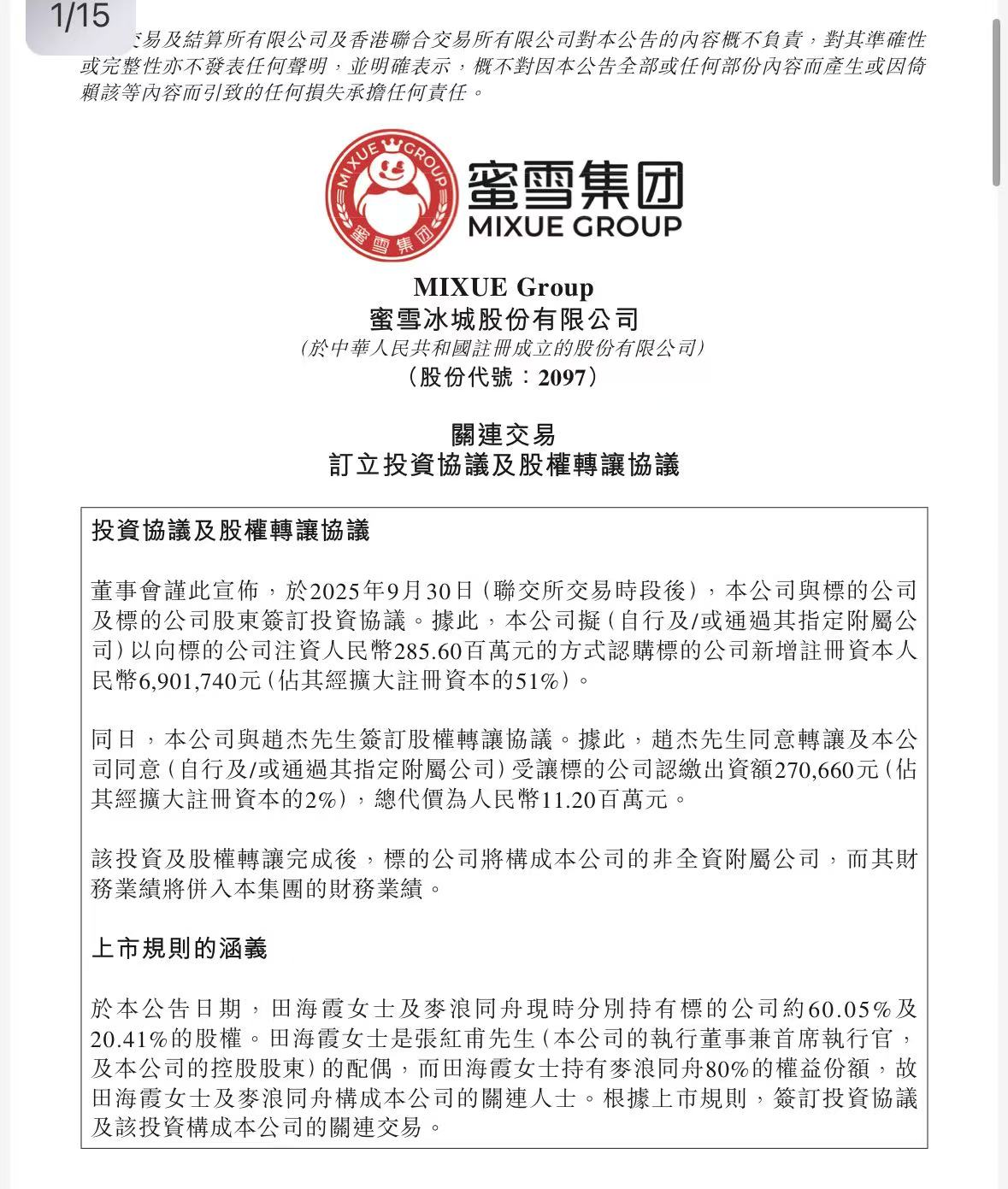
Core Viewpoint - The article discusses the recent acquisition of Fulu Family by Mixue Group for 297 million yuan, marking its entry into the beer industry, and highlights the potential for growth and market expansion in this sector [3][7][18]. Summary by Sections Acquisition Details - Mixue Group has acquired 51% of Fulu Family's expanded registered capital for 285.6 million yuan and an additional 2% stake for 11.2 million yuan, making Fulu Family a non-wholly owned subsidiary [7][20]. - Fulu Family operates 1,200 stores primarily in lower-tier markets, with a focus on affordable fresh beer [8][9]. Product Offering and Pricing - Fulu Family's main products include fresh beer, milk beer, tea beer, and fruit beer, with prices starting at 5.9 yuan per pound for fresh beer [12][18]. - The pricing strategy aligns with Mixue Group's focus on providing high-quality, affordable products, with a core price point of around 6 yuan [6][12]. Market Position and Strategy - Fulu Family's stores are located in less urbanized areas, similar to Mixue's strategy of targeting lower-tier markets [11][12]. - The acquisition aims to enhance Mixue Group's product portfolio, creating a synergy between fresh tea, coffee, and beer offerings [18][28]. Business Model and Operations - Fulu Family's operational model involves a simplified process where staff serve fresh beer directly from cold storage, allowing for quick service [17][18]. - The business primarily relies on a franchise model, similar to Mixue's approach, focusing on low initial investment and lightweight operations [29][30]. Financial Performance and Challenges - Fulu Family reported a loss of 1.5277 million yuan in 2023, with a projected net profit of only 1.0771 million yuan in 2024, indicating challenges in achieving profitability [37][38]. - The beer market's dynamics differ significantly from the tea beverage sector, raising questions about the sustainability of Fulu Family's low-price strategy [36][38].

蜜雪冰城卖啤酒了:斥资近3亿元,能否成为“第三增长曲线”
第一财经· 2025-10-21 13:08
Core Viewpoint - The article discusses how the tea and coffee markets are facing growth bottlenecks, prompting major players like Mixue Group to explore new markets, specifically the fresh beer segment [3][4]. Company Strategy - Mixue Group has invested over 286 million yuan to acquire a 51% stake in the fresh beer brand "Fulu Family," marking its entry into the fresh beer market [4][6]. - The acquisition aims to diversify Mixue Group's product offerings, creating a synergy between fresh tea, freshly ground coffee, and fresh beer, thereby enhancing its growth potential [10][12]. Market Context - The tea and coffee markets in China are experiencing saturation and intense competition, leading to a slowdown in growth rates [10][12]. - The fresh beer market is identified as a blue ocean opportunity, with significant growth potential as China's per capita beer consumption remains low compared to top countries [14]. Financial Performance - Fulu Family is projected to achieve a pre-tax net profit of 1.07 million yuan in 2024, indicating a turnaround from losses in 2023 [15]. Competitive Landscape - The fresh beer segment is characterized by a trend towards quality, diverse flavors, and enhanced consumer experiences, with fresh beer representing a quality upgrade in the beer market [14]. - Mixue Group's competitive advantages include strong brand recognition, supply chain efficiency, and a robust distribution network, which can help mitigate costs and support the new venture [15].
“雪王”卖啤酒了:斥资近3亿元控股的鲜啤福鹿家,能否成为“第三增长曲线”
Di Yi Cai Jing· 2025-10-21 12:36
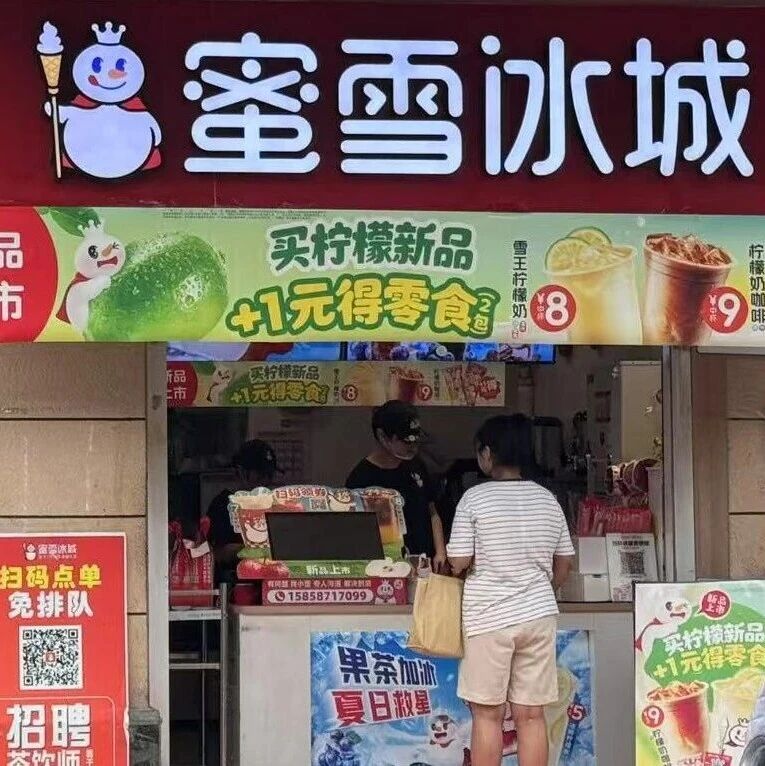
Core Viewpoint - Mijue Group is entering the fresh beer market by acquiring the brand "Fulu Family" for over 280 million yuan, aiming to diversify its product offerings and capture new consumer segments as traditional beverage markets face saturation [2][3][8]. Company Summary - Mijue Group has invested 286 million yuan to acquire a 51% stake in Fulu Family, marking its official entry into the fresh beer market [3][7]. - The acquisition is part of Mijue Group's strategy to create a multi-category synergy with its existing products, including fresh tea and coffee, to drive growth [7][9]. - The company aims to leverage its strong brand, supply chain, and cost control capabilities to succeed in the fresh beer segment, which is currently experiencing rapid growth in China [8][9]. Industry Summary - The fresh beer market in China is still considered a blue ocean, with significant growth potential as per capita beer consumption remains low compared to developed markets [8][9]. - Recent trends in the beer industry indicate a shift towards quality, diverse flavors, and enhanced consumer experiences, with fresh beer representing a quality upgrade in the product offering [9]. - The beer industry is entering a phase of rapid expansion and professionalization, with Mijue Group's entry expected to contribute to this trend [8][9]. - Fulu Family's pricing strategy, with prices around 6-10 yuan per 500 ml, aligns with Mijue Group's value proposition and aims to make craft beer more accessible [8][9].
晶苑国际(02232):营收利润双增,在头部品牌客户中的渗透率持续提升
Haitong Securities International· 2025-08-24 12:32
Investment Rating - The report assigns a rating of "Outperform" for Crystal International, indicating an expected total return over the next 12-18 months that exceeds the relevant market benchmark [20]. Core Insights - Crystal International reported solid revenue and profit growth, achieving revenue of USD 1.229 billion in 1H25, a year-on-year increase of 12.4%. The gross profit reached USD 243 million, up 19.7% YoY, with a gross margin of 19.8% [2][8]. - The company is experiencing strong order inflow and high production line utilization, primarily driven by deeper penetration into core brand customers, including a 20% YoY increase in orders from its largest customer, Uniqlo [3][9]. - Management anticipates a revenue growth of approximately 10% for the full year 2025, with profit growth expected to outpace revenue growth [5][12]. Revenue and Profit Performance - In 1H25, revenue by product category showed growth rates of +11.4% for casual wear, +12.4% for sports and outdoor wear, +10.3% for denim, +9.5% for lingerie, and +29.2% for sweaters, with sweaters showing the most significant growth [2][8]. - By region, revenue growth was +14.5% in Asia Pacific, +11.7% in North America, +9.7% in Europe, and +14.9% in other regions, contributing 39%, 38%, 21%, and 3% of total revenue, respectively [2][8]. Cash Flow and Dividends - Operating cash flow for 1H25 was USD 155 million, with a net cash position of USD 517 million at the end of the period, supporting high dividends and expansion [2][8]. - An interim dividend of HKD 0.163 per share was announced for 2025, higher than HKD 0.138 in 2024, maintaining a payout ratio of 60% [2][8]. Capacity and Production Strategy - The company is diversifying its capacity layout, with ongoing expansions in Vietnam, Cambodia, and Bangladesh, and is evaluating a new plant in Egypt to reduce transportation cycles and tariff risks [5][11]. - The implementation of a "satellite factory" model in Vietnam aims to ease labor competition and improve employee retention, with positive feedback received so far [5][11]. Long-term Growth Strategy - Crystal International's long-term strategy focuses on solid fundamentals, including product quality, delivery speed, and customer service, while enhancing competitiveness through multi-category synergy and vertical integration [5][12]. - The company aims to achieve around 60% of export fabric supply to be self-produced within five years, indicating a clear path for long-term growth [5][12].