多机异构

Search documents
前华为天才少年首发声,国产智能或实现量产,多机协同是未来关键
Sou Hu Cai Jing· 2026-01-09 06:41
Core Insights - The interview with Li Yuanqing, a former Huawei talent, focuses on the potential for China to create its first large-scale embodied intelligence product and the importance of "multi-machine heterogeneity" as a future direction [1] Group 1: Market Trends and Developments - By 2025, the embodied intelligence sector is expected to see significant growth, driven by major tech companies and startups securing funding, indicating a long-term market logic [3] - The linkage between primary and secondary markets is evident, with listed companies investing in robotics to enhance traditional manufacturing and create new growth avenues [3] - The maturity of technology in the sector is improving, which is crucial for sustaining high market interest [3] Group 2: Technological Advancements - The performance of humanoid robots has significantly improved, with capabilities to withstand physical interactions and perform complex tasks, showcasing advancements in technology [5] - The development of large models has led to a qualitative change in the intelligence of embodied systems, with success rates for simple tasks increasing from 60% to 100% [5] Group 3: Data Challenges and Solutions - A major bottleneck in the industry is the scarcity of high-quality, large-scale physical interaction data, which is costly to collect [8] - Simulation-generated data and data factories are emerging as key solutions, with a "data pyramid" framework explaining their roles in data generation and application [8][10] - The core value of world models lies in efficiently generating foundational data to support model training, addressing the need for diverse data [10] Group 4: Cost and Implementation Challenges - The high costs of essential components, such as industrial computers and robotic hands, pose significant barriers to the widespread adoption of embodied intelligence [13] - The lack of clarity in defining application scenarios for humanoid robots further complicates the assessment of their return on investment [13] Group 5: Future Directions and Opportunities - Li Yuanqing advocates for a multi-machine heterogeneity approach, where different types of robots collaborate to complete complex tasks, reflecting a natural ecosystem of specialization [15] - The competitive edge for Chinese companies in 2026 will hinge on product deployment and data integration, with the potential for the first widely adopted embodied intelligence product to emerge from China [15] - The current environment presents a favorable opportunity for entrepreneurs and researchers to engage in this sector, with expectations for rapid technological maturation and cost reduction [15]

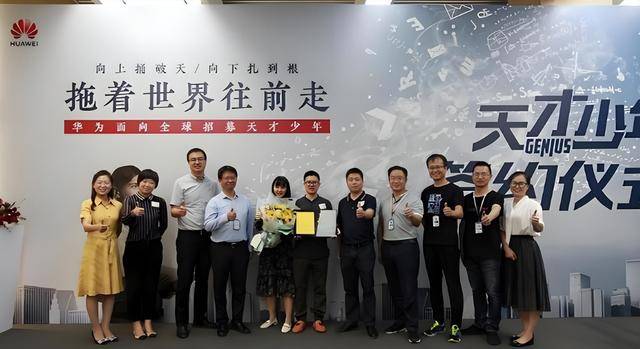
独家对话前华为天才少年李元庆:首款规模化具身智能产品中国造!多机异构是未来方向
Xin Lang Cai Jing· 2026-01-04 12:25
Core Insights - The article discusses the recent appointment of Li Yuanqing, a former Huawei executive, to LeXiang Technology, where he will focus on innovation strategy and core technology development in the field of embodied intelligence [2][36] - Li emphasizes the importance of landing and data in the embodied intelligence sector, aiming to create a functional product for home users [3][38] - The article highlights significant advancements in robotics, particularly in stability and reliability, indicating a shift from demonstration to market-ready products [5][41] Group 1: Industry Trends - The investment trend in the robotics sector is driven by the maturity of technology and market expectations, with many companies successfully securing funding [5][40] - The linkage between primary and secondary markets is evident, as listed companies signal their entry into the robotics field to manage market value and create new growth avenues [6][41] - The Chinese market's strong policy orientation facilitates rapid interaction between primary and secondary markets, enhancing investment in robotics [6][41] Group 2: Technological Advancements - Key breakthroughs in robotics include improved stability and reliability, with robots now capable of performing complex movements without falling [5][42] - The development of LocoFormer technology allows for advanced local motion control, while AnyTracker enables robots to replicate human movements accurately [8][43] - The success rate for simple tasks has increased to 100%, indicating a significant leap in the practical application of AI in robotics [10][44] Group 3: Future Directions - Li advocates for a multi-machine heterogeneous approach as the future direction of embodied intelligence, suggesting that the first widely adopted product will likely emerge from China [2][37][38] - The focus on creating a home-based functional product reflects the need for enhanced information systems within domestic environments [23][38] - The article discusses the potential for new business models, such as Robot as a Service (RaaS), which could transform how robotics are utilized in various sectors [29][30]

独家对话前华为天才少年李元庆:首款规模化具身智能产品中国造!多机异构是未来方向
AI前线· 2026-01-04 10:23
Core Insights - The article discusses the recent appointment of Li Yuanqing, a former Huawei executive, to LeXiang Technology, where he will focus on innovation strategy and core technology development in the field of embodied intelligence [2][3] - Li emphasizes the importance of practical application and data in the development of embodied intelligence, predicting that the first widely adopted product in this field may emerge from China [3][24] Group 1: Industry Trends - There is a significant increase in investment in embodied intelligence from both tech giants and startups, driven by the maturity of technology and market expectations [6][7] - The current trend in the robotics sector is characterized by a strong linkage between primary and secondary markets, with listed companies signaling their entry into humanoid robotics to enhance their market value [6][7] - The stability and reliability of robots have improved significantly from 2024 to 2025, transitioning from mere demonstrations to market-ready products [8][9] Group 2: Technological Advancements - Key breakthroughs in embodied intelligence include the LocoFormer technology for local motion control and AnyTracker applications that allow robots to replicate human movements accurately [9][10] - Robots are now capable of completing simple tasks with a 100% success rate, a significant improvement from previous years [10][11] - The evolution of the technology stack for embodied intelligence is marked by advancements in local motion control and the integration of visual language navigation strategies [11][12] Group 3: Challenges and Opportunities - Major challenges for the large-scale application of embodied intelligence include high costs of core components and unclear product definitions in various scenarios [22][23] - The industry faces difficulties in integrating hardware and software technologies, leading to a lack of clarity in technical routes and supply chain adaptations [23][24] - The article suggests that the future of embodied intelligence may lie in a multi-robot collaboration model rather than a single universal intelligent agent [27][28] Group 4: Strategic Directions - Li's team aims to develop a functional product for home users, treating each household as a factory to enhance information and automation [25][26] - The company plans to leverage advanced spatial perception technology to build an information system for homes, integrating automation and intelligent interaction [26][24] - The article highlights the potential for new business models such as Robot as a Service (RaaS) and rental models to optimize the utilization of robotic systems [29][30]