
大宗商品抛售潮

Search documents
美国、伊朗可能在数日内启动谈判!国际油价大幅跳水
Sou Hu Cai Jing· 2026-02-03 00:05
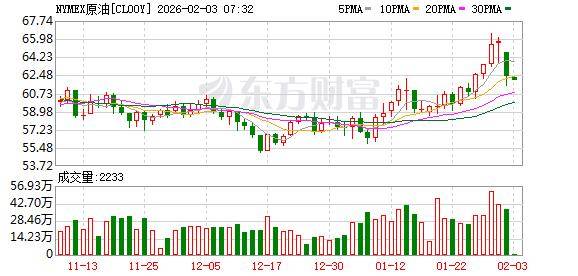
Core Viewpoint - International oil prices experienced a significant drop on February 2, with WTI and Brent crude oil futures both falling over 5% due to easing geopolitical risks and potential negotiations between Iran and the U.S. [2][3] Group 1: Oil Price Movement - Brent crude oil futures fell below $66 per barrel, while WTI crude oil dropped to around $61 per barrel, marking a decline of 4.77% and 5.12% respectively [3] - The drop in oil prices was accompanied by a collective decline in energy company stocks, with Occidental Petroleum and ConocoPhillips down nearly 3%, and ExxonMobil and Chevron falling over 1% [3] Group 2: Geopolitical Context - Reports indicated that Iran and the U.S. might engage in high-level negotiations in the coming days, with Iran's President ordering the initiation of nuclear talks [2][7] - The easing of geopolitical risk premiums was attributed to U.S. President Trump's statements about ongoing dialogue with Iran [5] Group 3: Market Dynamics - The decline in oil prices was characterized as a market position adjustment rather than a fundamental shift, with no new supply shocks reported [5] - A broader sell-off in commodities, particularly metals, contributed to the downward pressure on oil prices, with gold and copper experiencing significant declines [5] Group 4: Future Implications - Analysts noted that if Brent prices fall below $65 per barrel, it could trigger additional selling pressure from trend-following commodity trading advisors [6] - The rapid changes in capital flows this year have amplified oil price volatility, as traders reversed previously established short positions following geopolitical tensions [6]

刚刚,大跳水!美国、伊朗,重磅传来!
券商中国· 2026-02-02 14:43
Core Viewpoint - The article discusses a significant drop in international oil prices due to easing geopolitical risks, with WTI and Brent crude oil prices falling over 5% on February 2, 2023, as negotiations between Iran and the U.S. are anticipated to resume [2][3]. Group 1: Oil Price Movement - On February 2, Brent crude oil futures fell over 5%, dropping below $66 per barrel, while WTI crude oil decreased nearly 6%, reaching around $61 per barrel [3]. - As of the report, Brent and WTI crude oil prices were down 4.77% and 5.12%, respectively, at $66.01 and $61.87 per barrel [3]. - The decline in oil prices coincided with a broader sell-off in commodities, including a nearly 10% drop in spot gold and over a 5% decrease in copper prices [5]. Group 2: Geopolitical Context - Reports indicated that Iran and the U.S. might engage in high-level negotiations soon, with Iran's President ordering the initiation of nuclear talks [2][8]. - The easing of geopolitical risk premiums was attributed to U.S. President Trump's statements about dialogue with Iran, which contributed to the market's adjustment [5]. Group 3: Market Dynamics - The drop in oil prices is seen as a market position adjustment rather than a fundamental shift, with no new supply shocks occurring [5]. - Energy consulting firm Energy Aspects noted that a further decline in Brent prices below $65 per barrel could trigger additional selling pressure from trend-following commodity traders [6]. - The rapid changes in capital flows this year have amplified oil price volatility, with traders reversing previously established short positions amid geopolitical tensions [7].

锡价:联储易帅鹰声乍美元美股双压及节前真空 短期锡价暴跌后走势如何?
Xin Lang Cai Jing· 2026-02-02 05:39
Core Viewpoint - The recent sharp decline in tin prices is driven by macroeconomic pressures, particularly a strong US dollar and falling US stock prices, leading to a sell-off in commodities, with tin being significantly affected [1][6]. Macroeconomic Impact - The strengthening of the US dollar and the downturn in the US tech sector have created a dual pressure environment, triggering a broad sell-off in commodities, with tin being particularly vulnerable due to its high valuation [1]. - The hawkish expectations from the Federal Reserve and a sudden drop in interest rate cut probabilities have further strengthened the dollar, directly suppressing tin prices [1]. Geopolitical Concerns - The mining accident in the Democratic Republic of Congo has highlighted geopolitical risks in the mineral supply chain, although it has not directly impacted tin supply [2]. - Such safety concerns in a region critical for tin resources have led to a rapid decrease in market risk premiums, exacerbating selling pressures [2]. Supply and Demand Dynamics - There is a temporary mismatch in the supply and demand for tin, with increased supply expectations from major producing countries like Indonesia and Myanmar, which limits upward price potential [3]. - Demand has weakened significantly ahead of the Chinese New Year, as downstream industries such as electronics and photovoltaics enter a production halt, resulting in a complete vacuum in rigid restocking demand [3]. Industry Chain Overview - The entire tin industry chain is experiencing weakness ahead of the holiday, with rising mining costs due to declining ore grades and reduced price support from the smelting sector [3]. - Processing and downstream companies are halting purchases due to low inventory and holiday schedules, amplifying market pessimism [3]. Leading Companies' Outlook - Leading companies in the tin industry are expected to benefit from a high-price environment by the end of 2025, with anticipated performance growth through resource acquisitions and technological upgrades [4]. - However, the recent price drop has led to a devaluation of their current inventory and a decline in stock prices, resulting in short-term pressure [4]. Market Activity - The spot market is exhibiting characteristics typical of a pre-holiday slowdown, with significant price drops leading to reduced trading activity as sellers lower prices to recover funds, but buyers show little interest [5]. - The current market environment reflects a lack of liquidity and low sentiment, further accelerating price declines [5]. Future Trends - In the short term, tin prices are likely to remain under pressure due to pre-holiday funding conditions and macroeconomic uncertainties, with a focus on key support levels [6]. - In the medium term, the scarcity of global tin resources and the growth of emerging demands from AI and renewable energy sectors are expected to drive a tight supply-demand balance, potentially stabilizing prices post-holiday [6].
