大替换理论

Search documents
“美国战略重大转向”震动欧洲!对欧展示出前所未有的对抗姿态
Mei Ri Jing Ji Xin Wen· 2025-12-07 22:20
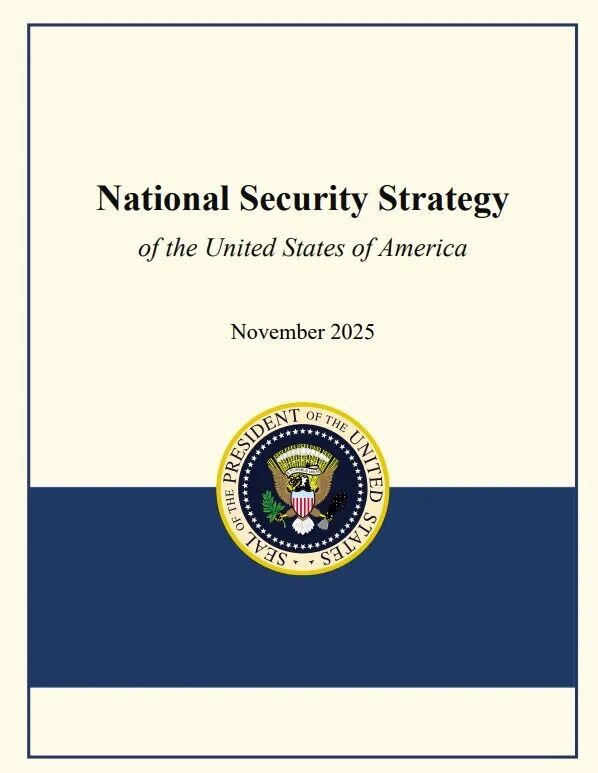
Core Viewpoint - The new U.S. National Security Strategy marks a significant shift from the long-standing "return to Asia" strategy, emphasizing a focus on limited "core national interests" rather than a broad global dominance, which is deemed unattainable and detrimental to the U.S. middle class and industrial base [1] Group 1: U.S. National Security Strategy - The report indicates that the U.S. will prioritize its homeland and the Western Hemisphere as key national security interests, moving away from idealistic interventions and focusing on practical realism [2] - The strategy suggests a return to "Monroe Doctrine" principles, aiming to expand military presence in Latin America under the guise of addressing security issues like immigration and drug trafficking [4][5] - The report highlights a critical stance towards Europe, noting a decline in its share of global GDP and suggesting potential demographic shifts that could affect NATO alliances [10] Group 2: Military and Defense Implications - The U.S. Defense Secretary emphasized the need for increased military involvement in border patrols and a restoration of military dominance in the Western Hemisphere [2] - There is a call for allies to increase defense spending, reflecting a shift in expectations for international partnerships [2] - The strategy outlines plans for significant investments in defense industrial capabilities, including ships, drones, and air defense systems [2] Group 3: Reactions and Criticism - The strategy has drawn criticism for its perceived return to interventionist policies reminiscent of the Monroe Doctrine, raising concerns about U.S. intentions in Latin America [4][5] - European officials have expressed alarm over the document's tone and content, viewing it as a direct attack on European autonomy and a shift in U.S. foreign policy focus [12] - The report has been linked to rising far-right sentiments in Europe, with implications of racial undertones in its narrative [11]

“美国战略重大转向”,震动欧洲!俄总统新闻秘书:不再将俄称为“直接威胁”是积极举措,将详细研究
Mei Ri Jing Ji Xin Wen· 2025-12-07 16:10
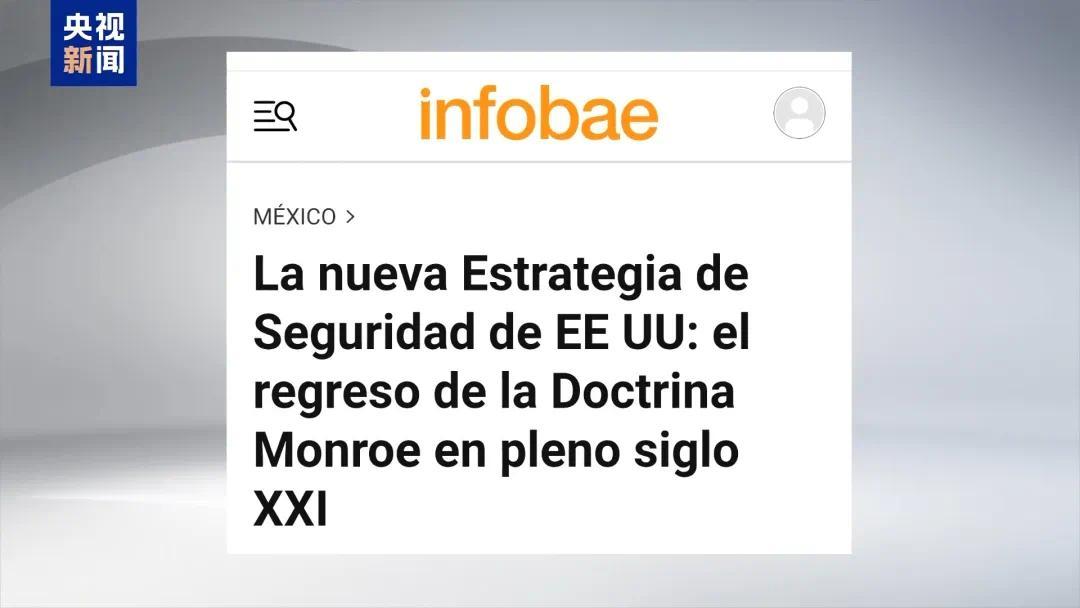
Core Points - The new U.S. National Security Strategy marks a significant shift from the long-standing "pivot to Asia" approach, emphasizing a focus on limited "core national interests" rather than global dominance [2] - The strategy indicates a prioritization of U.S. homeland and the Western Hemisphere, reflecting a return to "Monroe Doctrine" principles [5][6] - The report highlights a critical stance towards Europe, suggesting a decline in its global economic influence and calling for increased U.S. intervention in European internal affairs [11][12] Summary by Sections U.S. National Security Strategy - The report states that the pursuit of "permanent global dominance" is fundamentally unattainable and detrimental to the U.S. middle class and industrial base [2] - It aims to protect prioritized national interests rather than attempting to address all global issues [2] Focus on the Western Hemisphere - U.S. Defense Secretary emphasizes prioritizing national interests, particularly in the homeland and the Western Hemisphere, and calls for increased military presence in Latin America [3][4] - The strategy is seen as a revival of "Monroe Doctrine," which historically aimed at U.S. dominance in the Americas [5][6] Critique of European Relations - The report expresses an unprecedented confrontational stance towards Europe, noting a decline in its share of global GDP from 25% in 1990 to 14% today [11] - It raises concerns about the potential for non-European populations to become a majority in some NATO countries, questioning the future of U.S.-European alliances [11] - The strategy criticizes European governments for their handling of the Russia-Ukraine conflict, suggesting they have undermined democratic processes [11][12] Implications for Defense and Military Strategy - The U.S. plans to invest heavily in defense industrial capabilities, including ships, drones, and air defense systems [4] - The strategy indicates a shift towards a more militarized approach to issues in Latin America, framing them as national security concerns [6][9]

美国发布最新《国家安全战略》:放弃全球霸权 承认中美“近乎对等”
天天基金网· 2025-12-07 08:35
Core Viewpoint - The new National Security Strategy under the Trump administration marks a significant shift from pursuing global hegemony to prioritizing U.S. interests, particularly in Latin America, while criticizing European allies for their declining economic influence and potential demographic changes [2][6][11]. Summary by Sections U.S. Foreign Policy Shift - The document emphasizes "America First" as the guiding principle, abandoning the decades-long pursuit of global dominance, which is deemed destined to fail [6][7]. - It states that the era of the U.S. supporting the global order is over, and the focus will be on preventing other major powers from gaining dominance without extensive military engagement [6][7]. Focus on Latin America - The strategy aims to restore U.S. hegemony in the Western Hemisphere, addressing issues like immigration and drug trafficking, and reasserting the Monroe Doctrine [7][9]. - The U.S. will adjust its military presence globally, withdrawing from regions deemed less critical to national security, while increasing the Coast Guard and Navy's deployment in the Western Hemisphere [7][9]. Critique of Europe - The strategy presents an unprecedented confrontational stance towards Europe, highlighting a decline in Europe's share of global GDP from 25% in 1990 to 14% today, and warns of a potential "civilizational extinction" [11][12]. - It raises concerns about the demographic shifts in NATO countries and questions the future of U.S.-European alliances [11][12]. Response to Ukraine Conflict - The document states that the U.S. core interest is to quickly end hostilities in Ukraine and rebuild strategic stability with Russia, while criticizing European officials for obstructing U.S. efforts to resolve the conflict [12][12]. Military and Economic Strategy - The strategy calls for increased R&D investment to maintain U.S. superiority in advanced military technologies, focusing on areas like underwater, space, nuclear technology, artificial intelligence, and quantum computing [14][15]. - It indicates a shift in U.S.-China relations towards a more reciprocal economic relationship, while deemphasizing the Middle East in U.S. foreign policy priorities due to the U.S. becoming an energy net exporter [15][15]. Comparison with Previous Strategies - The new strategy represents a significant departure from the Biden administration's 2022 National Security Strategy, which focused on strategic competition with China and Russia, domestic industrial policy, and climate change as a national security challenge [17][17].
重大转向!美国发布最新《国家安全战略》:放弃全球霸权 将调整与中国经济关系 “以互惠平等为原则” 承认中美“近乎对等”!
Mei Ri Jing Ji Xin Wen· 2025-12-06 15:26
Core Viewpoint - The new National Security Strategy from the Trump administration marks a significant shift in U.S. foreign policy, prioritizing Latin America over previous focuses on Asia and criticizing European allies for their declining global influence and internal challenges [1][5][10]. Summary by Sections U.S. Foreign Policy Shift - The document emphasizes a departure from the pursuit of global hegemony, labeling it as a "failed" approach, and asserts that the era of the U.S. supporting the global order is over [5][6]. - The strategy outlines a pragmatic yet principled approach to foreign policy, focusing on U.S. interests without extensive military engagement [5][6]. Focus on Latin America - The strategy aims to restore U.S. dominance in the Western Hemisphere, addressing issues like immigration and drug trafficking, and reasserting the Monroe Doctrine [6][8]. - It includes plans to adjust military presence globally, enhancing the Coast Guard and Navy in the region to secure borders and combat crime [6][8]. Critique of Europe - The document presents a stark critique of Europe, warning of a potential "civilizational collapse" and highlighting the decline of Europe's share of global GDP from 25% in 1990 to 14% today [10][11]. - It suggests that some NATO countries may soon have non-European majorities, questioning their commitment to the U.S. alliance [10][11]. - The strategy criticizes European governments for their handling of the Ukraine conflict and calls for increased U.S. intervention in European domestic affairs to counteract perceived threats [11][12]. Relations with China and the Middle East - The strategy indicates a shift towards a more reciprocal economic relationship with China, moving away from the previous asymmetrical dynamics [14]. - It states that the Middle East is no longer a priority for U.S. foreign policy, as the U.S. has become an energy net exporter and is shifting focus to great power competition [14][15]. Comparison with Previous Administration - The new strategy represents a significant change from the Biden administration's focus on strategic competition with China and Russia, domestic industrial policy, and climate change as a national security issue [15].