太空挖矿

Search documents
“太空挖矿”过于科幻?中国动真格了
虎嗅APP· 2026-02-02 10:49
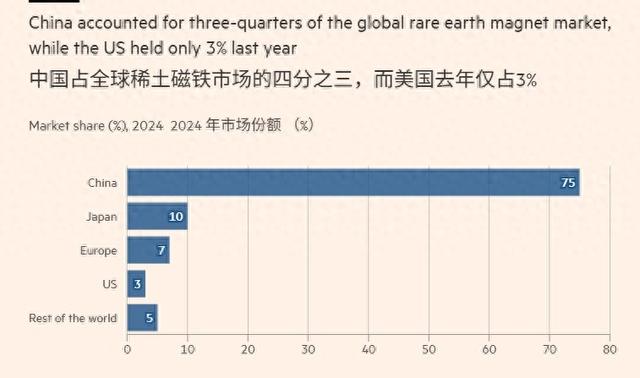
Core Viewpoint - The article discusses China's ambitious plan for space resource development, specifically the "Tian Gong Kai Wu" initiative, which aims to make space mining a reality rather than a science fiction concept. The focus is on in-situ resource utilization (ISRU) to support deep space exploration and infrastructure, rather than merely extracting valuable metals from asteroids [4][6]. Group 1: Space Mining Objectives - The primary goal of space mining is to reduce costs associated with deep space activities, particularly in terms of propellant and supplies, rather than extracting high-value minerals [11][12]. - Water ice is highlighted as a critical resource, which can be converted into hydrogen and oxygen for rocket propellant, enabling "refueling" in space [12][15]. Group 2: Cost Comparisons - Relying on Earth-based supplies for propellant can cost up to $36,000 per kilogram to the Moon's surface, while establishing a lunar resource utilization system could reduce this cost to as low as $500 per kilogram [14][15]. - The proposed system aims to create a sustainable supply chain for deep space activities, moving from high-cost, low-frequency missions to a more regular and cost-effective operational model [15][21]. Group 3: Infrastructure Requirements - The success of space mining depends on establishing a space hub that can store, process, and transport resources, which is essential for scaling operations beyond experimental phases [17][21]. - The article emphasizes the importance of Lagrange points for resource transfer, as they offer unique advantages in orbital mechanics and energy consumption [17]. Group 4: Transportation Capabilities - The transportation capacity is crucial for the operational success of the space resource development system, necessitating a shift from traditional expendable rockets to reusable and heavy-lift launch vehicles [19][20]. - China's development of the Long March 9 heavy-lift rocket, with a capacity of approximately 150 tons, aligns with the needs of space resource development and other deep space missions [20][24]. Group 5: Strategic Planning - The inclusion of space resource development in China's 14th Five-Year Plan reflects a long-term vision for sustainable deep space activities, addressing future supply chain and cost efficiency challenges [27][28]. - The article suggests that China's approach to space activities is increasingly focused on long-term sustainability and operational efficiency rather than short-term mission success [28].

“太空挖矿”过于科幻?中国动真格了
Guan Cha Zhe Wang· 2026-02-02 00:37
Core Viewpoint - The Chinese aerospace industry is advancing the "Tian Gong Kai Wu" space resource development initiative, focusing on in-situ resource utilization rather than traditional mining for precious metals, aiming to reduce costs for deep space activities [1][3][7]. Group 1: Space Mining Concept - The concept of "space mining" is evolving from a sci-fi notion to a serious engineering project, emphasizing the practical need for resources like water ice to support deep space exploration and infrastructure [1][3]. - The primary goal of space mining is to lower the costs associated with deep space activities, particularly in terms of propellant and supplies, rather than extracting valuable minerals for profit [7][11]. Group 2: Cost Analysis - Current costs for transporting propellant from Earth to key locations in space are prohibitively high, with estimates of $12,000 per kilogram to the Earth-Moon L1 point and $36,000 per kilogram to the lunar surface [10]. - Establishing a lunar resource utilization system could reduce these costs significantly, potentially to $1,000 per kilogram for L1 and as low as $500 per kilogram for the lunar surface, representing a tenfold decrease in costs [10]. Group 3: Infrastructure Requirements - The success of space mining relies on the establishment of a space hub that can store, process, and transport resources, making it essential for sustainable operations rather than one-off missions [12][13]. - The proposed space hub must serve multiple functions, including resource storage, in-orbit processing, and refueling, which is more complex than existing U.S. lunar gateway plans [13]. Group 4: Transportation Capacity - The transportation capacity is critical for the operational success of the space resource development system, necessitating a shift from traditional one-time use rockets to a more integrated transportation infrastructure [15][16]. - The development of heavy-lift rockets, such as the Long March 9, is aligned with the needs of space resource development, as these rockets will support not only mining but also crewed lunar missions and deep space exploration [15][16]. Group 5: Long-term Strategic Planning - The inclusion of space resource development in China's 14th Five-Year Plan reflects a strategic approach to ensure future deep space activities are sustainable and efficient, addressing supply costs and operational efficiency [21][22]. - The focus on in-situ resource utilization is seen as a necessary step for long-term space exploration, indicating that China is preparing for a future where space activities are not just about immediate missions but about establishing a sustainable presence in space [22].
中国出台稀土新规,德国跳出来:极度担忧
Guan Cha Zhe Wang· 2025-10-11 02:00
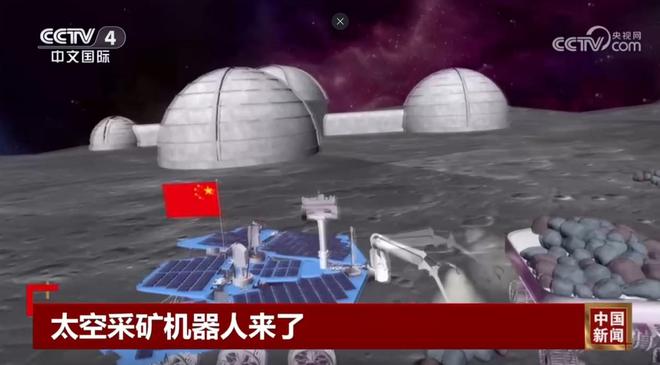
Core Points - China has implemented new export regulations on rare earth materials, causing concern in both the US and Europe [1][2] - The new regulations require foreign companies to obtain approval from China for exporting rare earth magnets and certain semiconductor materials that contain Chinese components [5][6] - The timing of these regulations coincides with upcoming negotiations between the US and China, highlighting China's strategic leverage in trade discussions [8] Group 1: Regulatory Impact - The new regulations cover rare earth magnets and semiconductor materials containing 0.1% or more of Chinese rare earth components, effective from December 1 [5][6] - China controls approximately 70% of global rare earth mining, 90% of separation and processing, and 93% of magnet manufacturing, underscoring its dominance in the sector [4][5] Group 2: International Reactions - Germany's government is in discussions with affected companies and EU partners regarding the implications of China's new regulations [2] - The EU has expressed concerns over China's export restrictions, emphasizing the need for reliable supply chains for critical raw materials [2] Group 3: Strategic Considerations - Analysts suggest that China's export controls are a strategic move to enhance its bargaining position in trade negotiations with the US [8] - The regulations are seen as a response to previous US tariffs and efforts to reduce reliance on Chinese supply chains, further complicating the geopolitical landscape [6][8]