星眼太空感知星座

Search documents
“太空挖矿”过于科幻?中国动真格了
虎嗅APP· 2026-02-02 10:49
Core Viewpoint - The article discusses China's ambitious plan for space resource development, specifically the "Tian Gong Kai Wu" initiative, which aims to make space mining a reality rather than a science fiction concept. The focus is on in-situ resource utilization (ISRU) to support deep space exploration and infrastructure, rather than merely extracting valuable metals from asteroids [4][6]. Group 1: Space Mining Objectives - The primary goal of space mining is to reduce costs associated with deep space activities, particularly in terms of propellant and supplies, rather than extracting high-value minerals [11][12]. - Water ice is highlighted as a critical resource, which can be converted into hydrogen and oxygen for rocket propellant, enabling "refueling" in space [12][15]. Group 2: Cost Comparisons - Relying on Earth-based supplies for propellant can cost up to $36,000 per kilogram to the Moon's surface, while establishing a lunar resource utilization system could reduce this cost to as low as $500 per kilogram [14][15]. - The proposed system aims to create a sustainable supply chain for deep space activities, moving from high-cost, low-frequency missions to a more regular and cost-effective operational model [15][21]. Group 3: Infrastructure Requirements - The success of space mining depends on establishing a space hub that can store, process, and transport resources, which is essential for scaling operations beyond experimental phases [17][21]. - The article emphasizes the importance of Lagrange points for resource transfer, as they offer unique advantages in orbital mechanics and energy consumption [17]. Group 4: Transportation Capabilities - The transportation capacity is crucial for the operational success of the space resource development system, necessitating a shift from traditional expendable rockets to reusable and heavy-lift launch vehicles [19][20]. - China's development of the Long March 9 heavy-lift rocket, with a capacity of approximately 150 tons, aligns with the needs of space resource development and other deep space missions [20][24]. Group 5: Strategic Planning - The inclusion of space resource development in China's 14th Five-Year Plan reflects a long-term vision for sustainable deep space activities, addressing future supply chain and cost efficiency challenges [27][28]. - The article suggests that China's approach to space activities is increasingly focused on long-term sustainability and operational efficiency rather than short-term mission success [28].

“太空挖矿”过于科幻?中国动真格了
Guan Cha Zhe Wang· 2026-02-02 00:37
Core Viewpoint - The Chinese aerospace industry is advancing the "Tian Gong Kai Wu" space resource development initiative, focusing on in-situ resource utilization rather than traditional mining for precious metals, aiming to reduce costs for deep space activities [1][3][7]. Group 1: Space Mining Concept - The concept of "space mining" is evolving from a sci-fi notion to a serious engineering project, emphasizing the practical need for resources like water ice to support deep space exploration and infrastructure [1][3]. - The primary goal of space mining is to lower the costs associated with deep space activities, particularly in terms of propellant and supplies, rather than extracting valuable minerals for profit [7][11]. Group 2: Cost Analysis - Current costs for transporting propellant from Earth to key locations in space are prohibitively high, with estimates of $12,000 per kilogram to the Earth-Moon L1 point and $36,000 per kilogram to the lunar surface [10]. - Establishing a lunar resource utilization system could reduce these costs significantly, potentially to $1,000 per kilogram for L1 and as low as $500 per kilogram for the lunar surface, representing a tenfold decrease in costs [10]. Group 3: Infrastructure Requirements - The success of space mining relies on the establishment of a space hub that can store, process, and transport resources, making it essential for sustainable operations rather than one-off missions [12][13]. - The proposed space hub must serve multiple functions, including resource storage, in-orbit processing, and refueling, which is more complex than existing U.S. lunar gateway plans [13]. Group 4: Transportation Capacity - The transportation capacity is critical for the operational success of the space resource development system, necessitating a shift from traditional one-time use rockets to a more integrated transportation infrastructure [15][16]. - The development of heavy-lift rockets, such as the Long March 9, is aligned with the needs of space resource development, as these rockets will support not only mining but also crewed lunar missions and deep space exploration [15][16]. Group 5: Long-term Strategic Planning - The inclusion of space resource development in China's 14th Five-Year Plan reflects a strategic approach to ensure future deep space activities are sustainable and efficient, addressing supply costs and operational efficiency [21][22]. - The focus on in-situ resource utilization is seen as a necessary step for long-term space exploration, indicating that China is preparing for a future where space activities are not just about immediate missions but about establishing a sustainable presence in space [22].
通信行业:商业航天有望迎来规模化发展的关键拐点
Shanxi Securities· 2025-12-04 07:13
Investment Rating - The report maintains an "Outperform" rating for the commercial aerospace industry, indicating expected growth exceeding the benchmark index by over 10% [1][37]. Core Insights - The first reusable rocket in China, the Zhuque-3, is expected to launch in early December, marking a significant milestone in commercial aerospace development. This rocket is designed for over 20 reuses and aims to support diverse commercial launch scenarios [1][11]. - The establishment of the Commercial Aerospace Administration by the National Space Administration is anticipated to unlock the potential of China's commercial aerospace industry, which currently has over 600 companies. This regulatory body will focus on ensuring safety while promoting industry growth [5][15]. - The Star Map Control has announced the "Star Eye" space perception constellation plan, which aims to enhance satellite collision avoidance through monitoring and data analysis. The first test satellites are scheduled for launch in the first half of 2026 [4][13]. Summary by Sections Industry Dynamics - The Zhuque-3 rocket, developed by Blue Arrow Aerospace, is a large liquid oxygen-methane rocket with a stainless steel structure, designed for high-frequency, low-cost launches. Its landing area is established near the Jiuquan Satellite Launch Center [1][11]. - The Long March 12 rocket has also reached the Jiuquan Satellite Launch Center for pre-launch testing, with multiple key tests completed, including a vertical takeoff and landing test scheduled for June 2024 [3][12]. Market Overview - The overall market saw an increase during the week of November 24-28, 2025, with the Shenwan Communication Index rising by 8.70%. The top-performing sectors included optical cables and the Internet of Things [6][16]. - Notable individual stock performances included Long光华芯 and 博创科技, with increases of 59.33% and 20.84%, respectively [6][29]. Investment Recommendations - The report suggests focusing on companies within the Google Chain, such as 光库科技 and 中际旭创, as well as those in the domestic super node sector like 寒武纪 and 中兴通讯. Additionally, companies in the commercial aerospace sector, including 航天动力 and 通宇通讯, are highlighted for potential investment [5][16].
【科技日报】“星眼”太空感知星座计划发布
Ke Ji Ri Bao· 2025-12-04 05:51
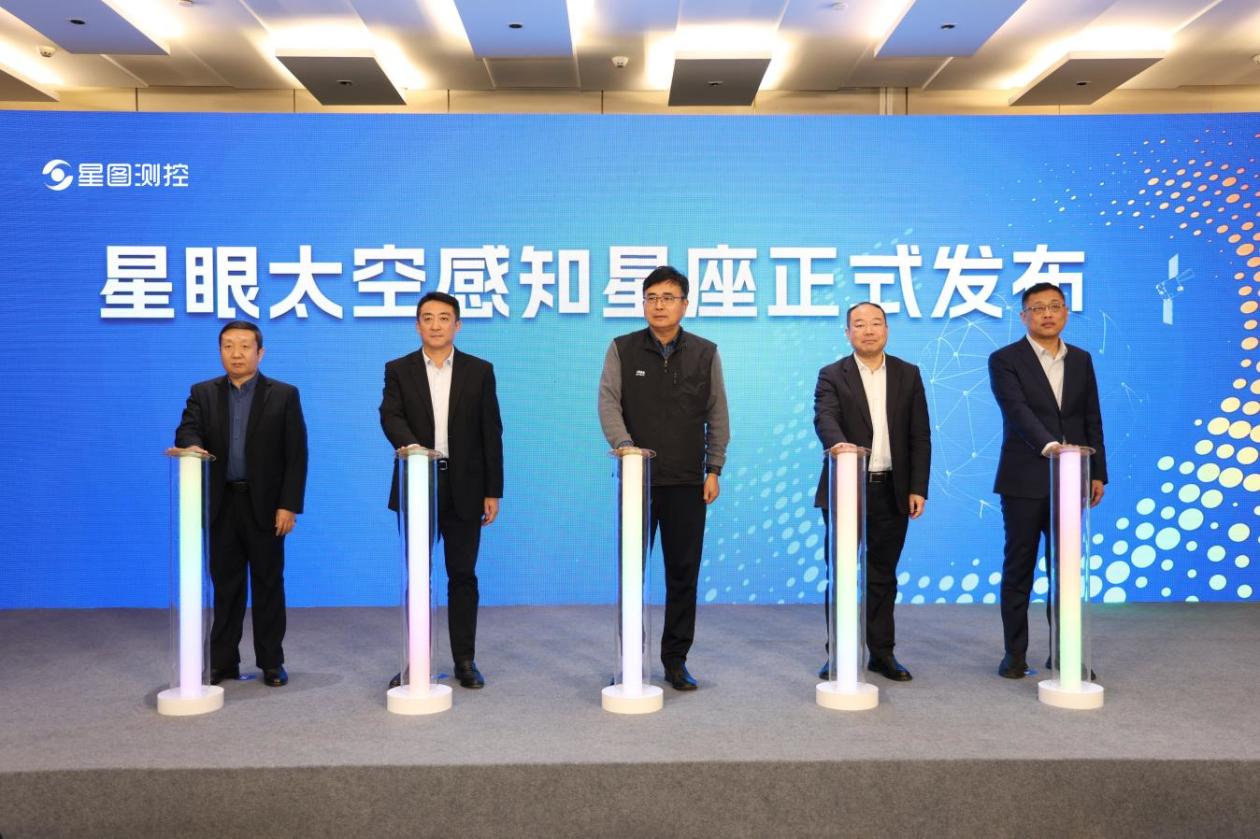
Core Viewpoint - The "Star Eye" space perception constellation plan aims to provide innovative solutions for space traffic management and establish a new model for space management services [1][2]. Group 1: Industry Context - The current era is marked by unprecedented activity in space, with a rapid increase in global satellite launches and the deployment of large-scale constellations, indicating a new phase of growth in commercial space [1]. - The increasing congestion in orbital space poses significant challenges, including a surge in space debris and heightened collision risks, threatening the sustainable development of the space environment [1]. Group 2: Company Initiative - The "Star Eye" space perception constellation consists of 156 satellites designed to create a global, responsive near-Earth orbit monitoring network [2]. - The company plans to launch 2 experimental satellites in the first half of 2026, followed by 10 engineering satellites in 2027, with additional enhancement and comprehensive satellites to be launched subsequently [2]. - Utilizing the company's independently developed "Observer" space information analysis platform and the space management service platform "Space Cloud," the "Star Eye" will track, orbit, and catalog on-orbit satellites, monitor space debris, analyze satellite orbit data, and predict collision risks, thereby providing precise and efficient space traffic management data services [2].

“星眼”太空感知星座计划发布
Ke Ji Ri Bao· 2025-12-03 23:27
Core Viewpoint - The "Star Eye" space perception constellation plan by Xingtou Measurement and Control Technology Co., Ltd. aims to provide innovative solutions for space traffic management and establish a new model for space management services [1][2]. Group 1: Industry Context - The current era is marked by unprecedented activity in space, with a rapid increase in global satellite launches and the deployment of large-scale constellations, indicating a new phase of growth in commercial space [1]. - The increasing congestion in orbital space poses significant challenges, including a surge in space debris and heightened collision risks, threatening the sustainable development of the space environment [1]. Group 2: Company Initiative - The "Star Eye" space perception constellation consists of 156 satellites designed to create a global, responsive near-Earth orbit monitoring network [2]. - The company plans to launch 2 experimental satellites in the first half of 2026, followed by 10 engineering satellites in 2027, with additional enhancement and comprehensive satellites to be launched subsequently [2]. - Utilizing the company's independently developed "Observer" space information analysis platform and the space management service platform "Space Cloud," "Star Eye" will track, determine orbits, and catalog on-orbit satellites, monitor space debris, analyze satellite orbit data, and predict collision risks, thereby providing precise and efficient space traffic management data services [2].
北交所策略专题报告:首颗算力试验卫星将发射,布局北交所太空算力核心标的
KAIYUAN SECURITIES· 2025-11-30 08:43
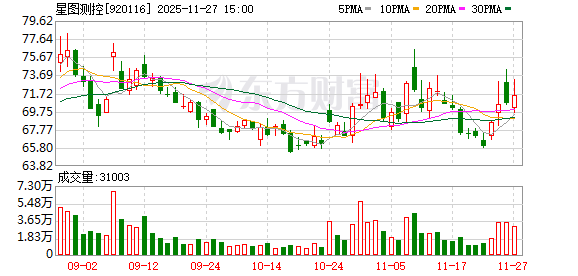
Group 1 - The first computing power experimental satellite, "Chenguang No. 1," will be launched, with plans for a space computing center to be established in about five years [1][10][14] - The National Space Administration released a plan for the high-quality and safe development of commercial space from 2025 to 2027, aiming for significant growth in the commercial space industry [1][16] - There are currently 13 commercial space-related companies listed on the Beijing Stock Exchange, with a total market value of 55.193 billion yuan as of November 28, 2025 [1][17][19] Group 2 - The information technology sector saw an average increase of 1.41% this week, with the median P/E ratio dropping to 65.5X [2][26][29] - The automotive industry’s median P/E ratio increased to 32.3X, indicating a positive trend in valuations [3][56] - The biotechnology sector's median P/E ratio decreased to 28.9X, reflecting a mixed performance across industries [2][37] Group 3 - Star Map Control (920116.BJ) reported a revenue increase of 15.57% and a net profit increase of 25.28% for the first three quarters of 2025 [21][23] - Fujida (920640.BJ) achieved a revenue growth of 16.62% and a net profit growth of 55.38% in the same period, indicating strong performance in the RF connector market [22][25] - The overall market capitalization of the technology sector rose from 448.767 billion yuan to 452.243 billion yuan, with a median market cap increase from 2.147 billion yuan to 2.155 billion yuan [3][43][49]
如何为太空交通做“导航”?“星眼”太空感知星座计划发布
Huan Qiu Wang· 2025-11-28 10:09
Core Viewpoint - The increasing frequency of human space activities has led to a rise in space debris, necessitating enhanced protection for spacecraft and the development of space situational awareness capabilities to safeguard in-orbit assets and optimize orbital resource utilization [1][5]. Group 1: Space Debris and Risks - Space debris includes all non-functional man-made objects in orbit, with over 44,000 large debris pieces tracked as of 2024, and an estimated 1 million pieces larger than 1 cm posing potential threats to spacecraft [3]. - The kinetic energy of these debris pieces, traveling close to the first cosmic speed (approximately 7.9 km/s), can cause significant damage to spacecraft, ranging from surface damage to system failures or explosions [3]. Group 2: "Star Eye" Space Awareness Constellation - The "Star Eye" space awareness constellation, developed by China Aerospace Science and Technology Corporation, consists of 156 satellites aimed at creating a global near-Earth orbit monitoring network to enhance safety for space activities and innovate space management services [1][4]. - The constellation will utilize various advanced technologies, including wide-field cameras, infrared cameras, and AI-driven collision avoidance systems, to track and analyze potential collision risks between satellites and space debris [3][6]. Group 3: Future Development and Commercialization - The initial phase of the "Star Eye" project plans to launch 12 satellites by mid-next year, with a second phase involving 144 additional satellites to enhance low-cost observational capabilities [4]. - The National Space Administration's recent action plan emphasizes the need for space debris monitoring and collision warning systems, indicating a supportive regulatory environment for the commercial space sector [5]. - The commercial applications of the "Star Eye" constellation include space traffic management, debris monitoring, and lifecycle safety support for spacecraft, which could significantly improve operational reliability and success rates for satellite operators [6].
商业航天产业迎来黄金发展期 太空感知基础设施加快布局
Di Yi Cai Jing· 2025-11-28 04:46
Core Viewpoint - China's commercial space industry is entering a golden development period with significant technological breakthroughs and industrial growth, as highlighted by the inclusion of commercial space in the national space development plan [1][2]. Group 1: Industry Development - The commercial space industry, defined as providing space products and services through market-oriented approaches, has been included in government work reports for two consecutive years [2]. - The market size of China's commercial space industry is projected to reach 2.3 trillion yuan in 2024, with estimates for 2025 ranging between 2.5 trillion to 2.8 trillion yuan [2]. - Total financing for China's commercial space sector is expected to exceed 20 billion yuan in 2024, with projections for 2025 reaching between 25 billion to 28 billion yuan [2]. - The industry is anticipated to enter a significant acceleration phase by 2025, driven by advancements in reusable rocket technology, mass production of satellites, and regular high-density launch missions [2]. Group 2: Action Plan and Strategic Goals - The "Action Plan" outlines five key areas for enhancing the commercial space industry, including innovation, resource utilization, industry growth, management services, and safety regulation, with 22 specific initiatives [3]. - The plan emphasizes the importance of optimizing the industrial structure and encourages collaboration across the supply chain to enhance efficiency and reduce costs [3]. Group 3: Space Traffic Management and Safety - The "Star Eye" space perception constellation, consisting of 156 satellites, aims to create a global monitoring network for tracking and cataloging satellites and space debris, thereby providing essential data for space traffic management [6]. - The increasing number of space debris poses significant risks to operational satellites, with over 50,000 pieces larger than 10 cm and approximately 1.4 billion pieces between 1 mm and 1 cm, necessitating the development of autonomous space perception capabilities [5][6]. - The market application prospects for the "Star Eye" constellation are broad, including providing critical data support for satellite launches and operations, as well as potential services for insurance companies and research institutions [6].
我国新一代太空感知星座发布 “星眼”将为卫星运行保驾护航
Jing Ji Guan Cha Wang· 2025-11-28 01:59
Core Viewpoint - The launch of China's new generation space perception constellation, named "Star Eye," aims to enhance satellite operation safety through a network of 156 satellites planned for deployment starting in the first half of 2026 [1] Group 1: Project Overview - The "Star Eye" space perception constellation will consist of 156 satellites [1] - The project is set to begin launching these satellites in the first half of 2026 [1] Group 2: Objectives and Functions - The constellation will create a global, responsive near-Earth orbit detection network [1] - It will provide collision risk predictions, monitor space debris, and assist in space traffic management for space stations, spacecraft, and satellites [1]
商业航天大消息!太空“星眼”来了
Shang Hai Zheng Quan Bao· 2025-11-27 13:07
Core Viewpoint - The launch of the "Star Eye" space perception constellation plan by Xingtou Measurement and Control aims to address the challenges of space traffic management and create a new model for space management services [2][3]. Group 1: Space Traffic Management - The "Star Eye" constellation will provide comprehensive data services and support for commercial satellite operators, government, and research institutions throughout the satellite lifecycle, significantly enhancing the reliability and success rate of on-orbit missions [2][3]. - The constellation consists of 156 satellites designed to create a global, responsive monitoring network for near-Earth orbits, utilizing Xingtou Measurement and Control's self-developed "Observer" space information analysis platform [3][4]. Group 2: Collision Risk Mitigation - The "Star Eye" system will monitor satellites and space debris, analyze satellite orbital data, and predict collision risks, thereby providing precise and efficient space traffic management data services [3][6]. - The European Space Agency (ESA) reports over 50,000 pieces of space debris larger than 10 centimeters and approximately 1.2 million pieces between 1 and 10 centimeters, highlighting the urgent need for collision risk reduction [6][7]. Group 3: Future Developments and Opportunities - The first phase of the "Star Eye" project plans to launch a test satellite in the first half of 2026, with an initial backbone constellation of 12 high-performance satellites [3][4]. - The second phase aims to establish a low-cost enhancement constellation of 144 satellites, focusing on rapid cataloging and tracking of maneuvering and newly launched targets [4]. - The National Space Administration's action plan emphasizes the need for space debris monitoring and collision warning systems, indicating a growing demand for space perception services [7][8].