
太空采矿机器人

Search documents
“太空挖矿”过于科幻?中国动真格了
虎嗅APP· 2026-02-02 10:49
Core Viewpoint - The article discusses China's ambitious plan for space resource development, specifically the "Tian Gong Kai Wu" initiative, which aims to make space mining a reality rather than a science fiction concept. The focus is on in-situ resource utilization (ISRU) to support deep space exploration and infrastructure, rather than merely extracting valuable metals from asteroids [4][6]. Group 1: Space Mining Objectives - The primary goal of space mining is to reduce costs associated with deep space activities, particularly in terms of propellant and supplies, rather than extracting high-value minerals [11][12]. - Water ice is highlighted as a critical resource, which can be converted into hydrogen and oxygen for rocket propellant, enabling "refueling" in space [12][15]. Group 2: Cost Comparisons - Relying on Earth-based supplies for propellant can cost up to $36,000 per kilogram to the Moon's surface, while establishing a lunar resource utilization system could reduce this cost to as low as $500 per kilogram [14][15]. - The proposed system aims to create a sustainable supply chain for deep space activities, moving from high-cost, low-frequency missions to a more regular and cost-effective operational model [15][21]. Group 3: Infrastructure Requirements - The success of space mining depends on establishing a space hub that can store, process, and transport resources, which is essential for scaling operations beyond experimental phases [17][21]. - The article emphasizes the importance of Lagrange points for resource transfer, as they offer unique advantages in orbital mechanics and energy consumption [17]. Group 4: Transportation Capabilities - The transportation capacity is crucial for the operational success of the space resource development system, necessitating a shift from traditional expendable rockets to reusable and heavy-lift launch vehicles [19][20]. - China's development of the Long March 9 heavy-lift rocket, with a capacity of approximately 150 tons, aligns with the needs of space resource development and other deep space missions [20][24]. Group 5: Strategic Planning - The inclusion of space resource development in China's 14th Five-Year Plan reflects a long-term vision for sustainable deep space activities, addressing future supply chain and cost efficiency challenges [27][28]. - The article suggests that China's approach to space activities is increasingly focused on long-term sustainability and operational efficiency rather than short-term mission success [28].

“太空挖矿”过于科幻?中国动真格了
Guan Cha Zhe Wang· 2026-02-02 00:37
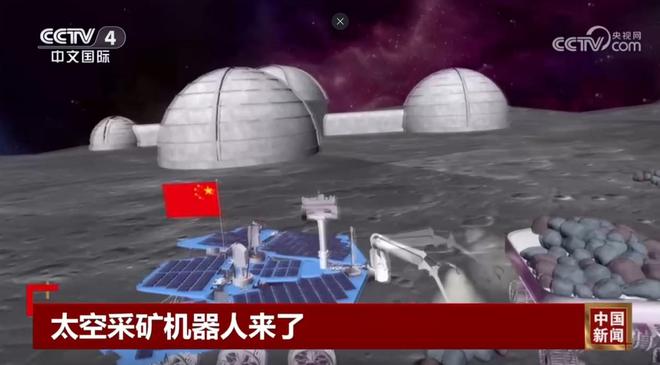
Core Viewpoint - The Chinese aerospace industry is advancing the "Tian Gong Kai Wu" space resource development initiative, focusing on in-situ resource utilization rather than traditional mining for precious metals, aiming to reduce costs for deep space activities [1][3][7]. Group 1: Space Mining Concept - The concept of "space mining" is evolving from a sci-fi notion to a serious engineering project, emphasizing the practical need for resources like water ice to support deep space exploration and infrastructure [1][3]. - The primary goal of space mining is to lower the costs associated with deep space activities, particularly in terms of propellant and supplies, rather than extracting valuable minerals for profit [7][11]. Group 2: Cost Analysis - Current costs for transporting propellant from Earth to key locations in space are prohibitively high, with estimates of $12,000 per kilogram to the Earth-Moon L1 point and $36,000 per kilogram to the lunar surface [10]. - Establishing a lunar resource utilization system could reduce these costs significantly, potentially to $1,000 per kilogram for L1 and as low as $500 per kilogram for the lunar surface, representing a tenfold decrease in costs [10]. Group 3: Infrastructure Requirements - The success of space mining relies on the establishment of a space hub that can store, process, and transport resources, making it essential for sustainable operations rather than one-off missions [12][13]. - The proposed space hub must serve multiple functions, including resource storage, in-orbit processing, and refueling, which is more complex than existing U.S. lunar gateway plans [13]. Group 4: Transportation Capacity - The transportation capacity is critical for the operational success of the space resource development system, necessitating a shift from traditional one-time use rockets to a more integrated transportation infrastructure [15][16]. - The development of heavy-lift rockets, such as the Long March 9, is aligned with the needs of space resource development, as these rockets will support not only mining but also crewed lunar missions and deep space exploration [15][16]. Group 5: Long-term Strategic Planning - The inclusion of space resource development in China's 14th Five-Year Plan reflects a strategic approach to ensure future deep space activities are sustainable and efficient, addressing supply costs and operational efficiency [21][22]. - The focus on in-situ resource utilization is seen as a necessary step for long-term space exploration, indicating that China is preparing for a future where space activities are not just about immediate missions but about establishing a sustainable presence in space [22].
行业周报:太空采矿开启新篇章,人形机器人和商业航天有望双向奔赴
KAIYUAN SECURITIES· 2026-02-01 13:35
Investment Rating - The industry investment rating is "Positive" (maintained) [1] Core Insights - The humanoid robot sector has experienced significant fluctuations, with a notable decline of 8.73% in the core company index, underperforming the CSI 300 index which saw a slight increase of 0.08% [11][12] - Tesla's CEO Elon Musk emphasized the acceleration of humanoid robot production, aiming for a capacity of 1 million units at the Fremont factory by 2026, marking a pivotal shift towards mass production [12][18] - The report highlights the potential of the humanoid robot industry to enter a "golden decade" as production ramps up from 2025 to 2026, transitioning from initial development to mass deployment [12][18] Summary by Sections Section 1: Market Overview - The humanoid robot sector has faced a significant downturn, with individual stocks showing varied performance, including notable declines for companies like Longsheng Technology and Weichuang Electric [11][12] - The overall market sentiment is affected by short-term catalysts such as factory audits and Tesla's earnings call, alongside seasonal shifts in investment preferences [12] Section 2: Space Mining and Robotics - The report discusses the strategic importance of space mining, with China planning to advance its "Tian Gong Kai Wu" project during the 14th Five-Year Plan, focusing on key technologies for resource exploration and autonomous mining [18][19] - The challenges of space mining include extreme environmental conditions, necessitating advanced robotic technologies capable of operating in microgravity and high-radiation environments [20][26] - Humanoid robots and other multifunctional robots are expected to play a crucial role in space mining operations, with ongoing developments in intelligent and autonomous systems [20][35] Section 3: Beneficiary Segments - The commercial space sector is poised for growth, driven by policy support and increasing demand for satellite launches and networks, with companies involved in reusable rocket technology expected to benefit significantly [41] - The humanoid robot segment is highlighted for its adaptability in various space exploration tasks, with several domestic companies actively integrating robotics into commercial space initiatives [37][41] - Specific companies are identified as beneficiaries across various components of the humanoid robot and commercial space sectors, including Blue Sky Technology and Junsheng Electronics [42]
行业周报:太空采矿开启新篇章,人形机器人和商业航天有望双向奔赴-20260201
KAIYUAN SECURITIES· 2026-02-01 10:46
Investment Rating - The industry investment rating is "Positive" (maintained) [1] Core Insights - The humanoid robot sector has experienced significant fluctuations, with a notable decline of 8.73% in the core company index, underperforming the CSI 300 index which saw a slight increase of 0.08% [11][12] - Tesla's CEO Elon Musk emphasized the acceleration of humanoid robot production, aiming for a capacity of 1 million units at the Fremont factory by 2026, marking a pivotal shift towards mass production [12][18] - The report highlights the potential of the humanoid robot industry to enter a "golden decade" as production ramps up from 2025 to 2026, transitioning from initial development to mass deployment [12][18] Summary by Sections Section 1: Market Overview - The humanoid robot sector has faced a significant downturn, with individual stocks showing varied performance, including notable declines for companies like Longsheng Technology and Weichuang Electric [11][12] - The overall market sentiment is affected by short-term catalysts such as factory audits and Tesla's earnings call, alongside seasonal shifts in investment preferences as the Chinese New Year approaches [12] Section 2: Space Mining and Robotics - China is advancing its space resource development strategy, focusing on key technologies for asteroid resource exploration and intelligent autonomous mining [18][19] - The report identifies the challenges of space mining, including microgravity and high radiation environments, which necessitate advanced robotic technologies [20][26] - Humanoid robots and other multifunctional robots are expected to play a crucial role in space mining operations, capable of performing various tasks in extreme conditions [20][35] Section 3: Beneficiary Segments - The commercial space sector is poised for growth, driven by policy support and increasing demand for satellite launches and networks [41] - Key beneficiaries in the humanoid robot and commercial space sectors include companies involved in core components, structural parts, and specialized robotics [42] - The report lists specific companies that are expected to benefit from advancements in humanoid robotics and space mining technologies, including Blue Sky Technology and Junsheng Electronics [42]
向技术要矿产资源(编辑手记)
Ren Min Ri Bao· 2025-10-21 21:47
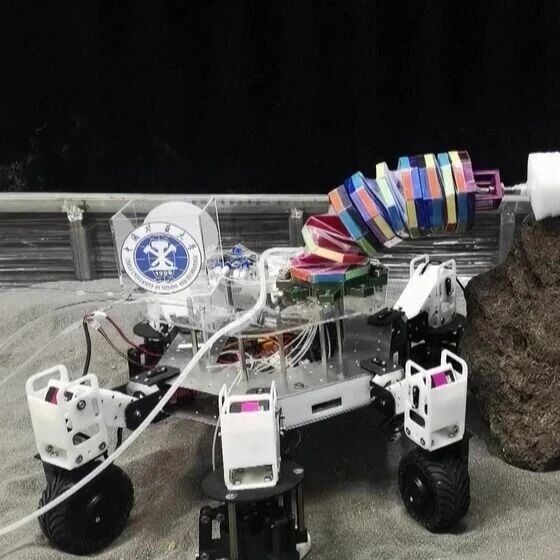
Core Insights - The article emphasizes the innovation in mineral resource exploration technology as a reflection of the need for resources through technology [1][2] - New technologies are becoming crucial for breakthroughs in mineral exploration due to the decreasing availability of shallow mineral deposits and increasing demand for sustainable resources [2] Group 1: Technological Innovations - The Shandong Provincial Geological Bureau's Sixth Geological Team utilizes 3D visualization technology to construct multi-scale models, enabling insights into geological structures up to 3000 meters deep [2] - The "Kaituo No. 2" deep-sea exploration has successfully tested at depths exceeding 4000 meters, collecting numerous samples of polymetallic nodules and crusts, laying the groundwork for future deep-sea mineral resource development [2] - The first space mining robot in China has achieved walking, anchoring, and sampling in a simulated lunar environment, expanding the possibilities for mining resources from near-Earth celestial bodies [2] Group 2: Implications for Resource Development - The new exploration technologies and equipment enhance the efficiency and accuracy of mineral exploration, further promoting the development and utilization of mineral resources [2] - The commitment of geological workers in China to leverage technology for resource acquisition is expected to yield significant results in the new round of mineral exploration strategic actions [2]
科技“绝活”剧透未来 上交会助力建设创新高地
Zhong Guo Zheng Quan Bao· 2025-06-12 20:48
Group 1: Event Overview - The 11th China (Shanghai) International Technology Import and Export Fair was held from June 11 to June 13, focusing on "hard technology" and future industries, showcasing nearly a hundred breakthrough achievements in fields like brain-machine interfaces, embodied intelligence, quantum technology, and synthetic biology [1][2] - The event highlighted significant innovations such as the world's first sound tweezers single-cell sorting technology and the debut of self-developed lunar soil fiber technology and equipment, indicating a promising future for the technology industry [1][2] Group 2: Innovations in Lunar Technology - East China University of Science and Technology showcased the "in-situ preparation of lunar soil fiber modular equipment," which is included in China's lunar base construction plan, utilizing lunar soil from the Chang'e 5 mission to create fibers for lunar base construction [2] - The technology aims to convert lunar soil into high-performance fibers, enabling local resource utilization and meeting the material performance needs for lunar base construction [2] Group 3: Advancements in Biotechnology - The Soundpen CB system developed by Oubino Biotechnology employs non-contact, label-free acoustic tweezers to manipulate cells with precision, significantly enhancing experimental efficiency by minimizing cell damage [3] - The event also featured brain-machine interface technologies that allow patients with central nervous system injuries to control exoskeletons for rehabilitation, demonstrating practical applications in hospitals and rehabilitation centers [5][6] Group 4: Robotics and Automation - The fair showcased various robots, including a six-legged robot designed for Antarctic research, which can assist in transporting materials and ensuring safety by detecting cracks in the ice [3][4] - Nanjing University presented a multimodal interactive robot capable of intelligent dialogue and music synchronization, which is already in mass production and available in North America [4] Group 5: 3D Printing in Pharmaceuticals - The company San Diego demonstrated its 3D printing technology for pharmaceuticals, achieving continuous and large-scale production of printed drugs, with an annual capacity of 75 million to 300 million tablets [6] - Lepu Medical introduced the MemoSorb biodegradable occluder series, the first of its kind globally, providing innovative treatment solutions for congenital heart disease and stroke prevention [6]
一根纤维展开“地外工厂”蓝图 展品瞄准星辰大海 258项创新成果亮相上交会高校展区
Jie Fang Ri Bao· 2025-06-12 01:59
Group 1 - The 11th China (Shanghai) International Technology Import and Export Fair has commenced, showcasing 258 innovative achievements from 39 universities in the Yangtze River Delta region, including 23 "Double First-Class" universities [2][4] - East China University of Science and Technology presented a mixed reality brain-computer interface system that allows users to control quadruped robots in real-time using lightweight MR headsets and EEG devices [2] - A significant exhibit is the lunar regolith in-situ basalt fiber modular equipment developed by East China University, which successfully produced ultra-fine fibers with diameters of 10 to 20 micrometers, simulating lunar conditions [2] Group 2 - China University of Mining and Technology showcased a space mining robot inspired by the movement mechanisms of insects and origami, designed for asteroid exploration [3] - Southeast University introduced the "Kuanpeng No. 1," a distributed electric flying car capable of seamless transitions between ground and aerial travel, with a maximum takeoff weight of 500 kg and a flight endurance of over 20 minutes [3] - Shanghai Ocean University presented intelligent soft-bodied bionic fish, which are fully domestically produced and designed for underwater fish monitoring and interaction, meeting various operational demands [3]
太空采矿,离现实还有多远(瞰前沿)
Ren Min Ri Bao· 2025-05-16 22:02
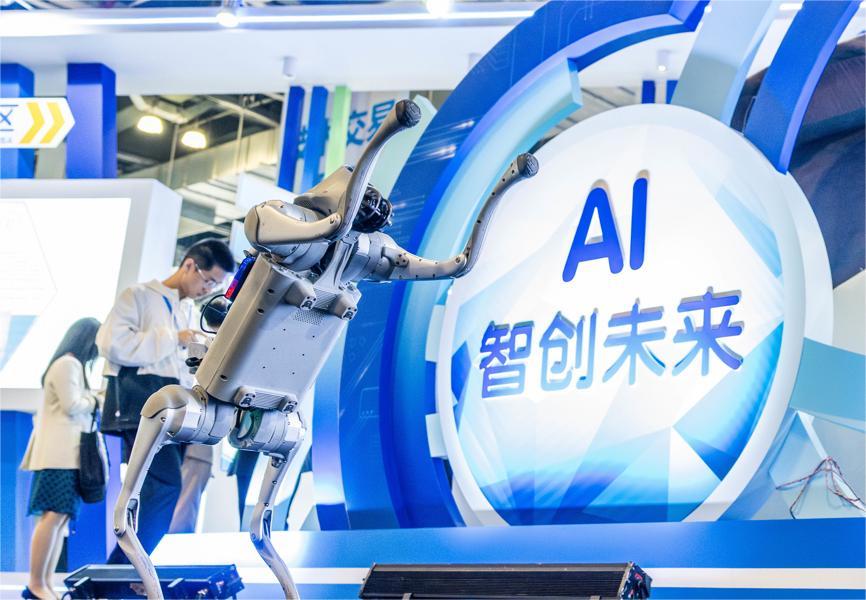
Core Viewpoint - The development of space mining technology, exemplified by China's first space mining robot, highlights the growing interest in extraterrestrial resource extraction to address potential resource depletion on Earth [1][2]. Group 1: Reasons for Space Mining - Space mining aims to acquire extraterrestrial resources to mitigate the potential depletion of Earth's mineral resources [2]. - The Moon and asteroids in the solar system are rich in resources, including Helium-3, thorium, rare earth elements, and various metals, which are scarce on Earth [2][3]. - Near-Earth asteroids are particularly attractive due to their concentrated resources and lower technical barriers for extraction [2]. Group 2: Challenges in Space Mining - Space mining presents significant challenges, including operating in microgravity environments, which complicates the stability and efficiency of traditional mining equipment [4][5]. - Other challenges include resource utilization technology, extreme radiation, deep space communication, energy supply, and transportation logistics [4][5]. - The high fuel costs associated with transporting mined resources back to Earth and the need for sustainable energy sources for long-term missions are critical hurdles [5]. Group 3: Current Research and Future Prospects - Research in space mining is still in its early stages, focusing on resource exploration, drilling technology, and in-situ resource utilization [6]. - International efforts are advancing in areas such as autonomous robotics, efficient energy systems, and materials technology, with successful tests conducted by countries like Japan and the USA [6]. - The long-term vision for space mining includes supporting the establishment of lunar and Martian bases and fostering a space economy [6][8]. Group 4: Future of Space Mining Robots - Future space mining robots are envisioned to be fully autonomous "space factories" with self-repair capabilities and adaptability across celestial bodies, relying on advancements in AI, materials science, and energy technology [6][7].