央行抛售

Search documents
从黄金的四大属性来理解涨跌逻辑 | 轻分享
高毅资产管理· 2025-12-26 07:30
Core Viewpoint - The article discusses the complexities of gold price fluctuations and emphasizes understanding its four core attributes: commodity, monetary, financial, and hedging properties, to clarify the underlying logic of its price movements [3][4]. Group 1: Gold's Four Core Attributes - **Commodity Property**: Gold prices are primarily determined by supply and demand dynamics, with demand influenced by economic cycles and market expectations. The main contributors to gold demand are jewelry, investment, and central bank purchases, while industrial demand is relatively low [5]. - **Monetary Property**: Gold is considered "hard currency" due to its scarcity, durability, and universal acceptance, serving as an effective store of value. Its price is closely linked to the US dollar index, typically decreasing when the dollar strengthens and increasing when the dollar weakens [6][9]. - **Financial Property**: Gold's investment value is shaped by real interest rates, expected inflation rates, and market liquidity. Lower real interest rates increase gold's attractiveness as a non-yielding asset, especially during periods of low interest rates or rate cuts by central banks [14][15]. - **Hedging Property**: Gold performs well in risk scenarios where market pessimism rises, making it a preferred asset over riskier investments. Historical events show that gold prices tend to rise during crises, highlighting its unique characteristics as a safe-haven asset [17][18]. Group 2: Historical Review of Gold Price Movements - Historical analysis indicates that significant price movements in gold are closely related to Federal Reserve policies, inflation changes, and central bank behaviors. Major price increases are driven by structural trends like de-dollarization and central bank diversification, alongside cyclical factors such as inflation and risk aversion [21][22]. - Price declines are often triggered by tightening monetary policies, rapid inflation declines, or central bank sell-offs. For instance, the period from 1983 to 1985 saw a drop of over 40% due to US economic recovery and interest rate hikes [23][24]. - The article highlights that current global challenges, including debt expansion and economic slowdown, have accentuated gold's monetary and hedging properties, leading to recent price surges. Notably, Ray Dalio views gold as a hedge against unsustainable debt levels, suggesting a reasonable allocation of 10% to 15% in investment portfolios [25].

金价规律全面深度分析,史上8次金价大跌,藏着多少人血亏的真相
Sou Hu Cai Jing· 2025-10-26 14:34
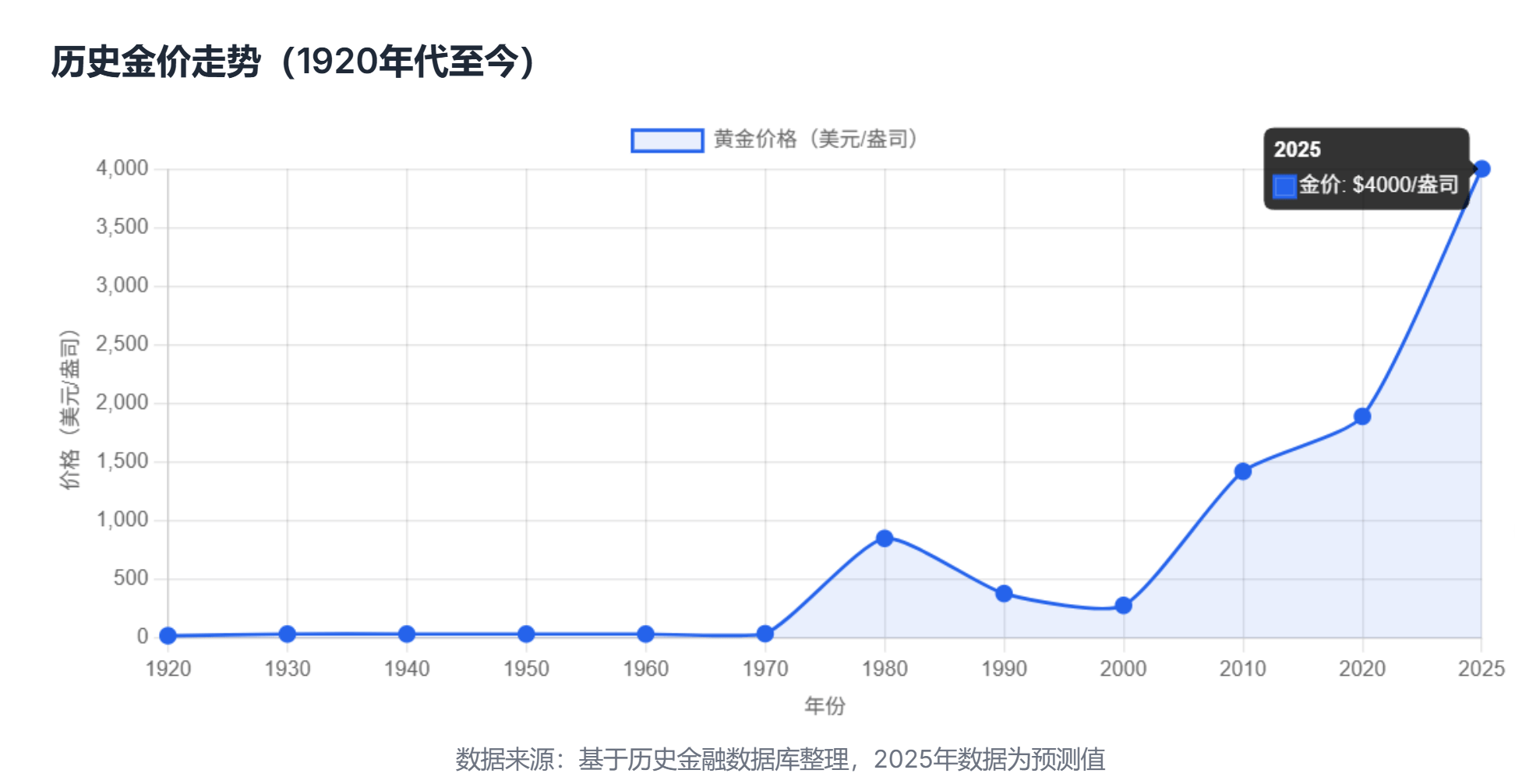
Core Insights - The article discusses the historical volatility of gold prices, highlighting significant drops and the underlying factors that contribute to these declines, emphasizing that gold, often seen as a safe haven, can experience sharp downturns during crises [1][4][28]. Historical Context and Analysis - Gold has experienced dramatic price fluctuations throughout its history, with notable declines during economic crises, reflecting changes in the global financial system and providing valuable lessons for investors [4][5]. - The analysis will utilize historical event analysis to construct a comprehensive timeline of significant gold price drops, examining the market environment, triggering factors, and impacts on various economic sectors [5]. Early 20th Century Price Drops - During the gold standard period (1920-1932), gold prices remained stable, but the 1929 stock market crash led to a severe economic downturn, challenging the gold standard [9][10]. - The Great Depression (1929-1933) saw a re-evaluation of gold prices, with significant increases due to bank failures and gold hoarding, culminating in the U.S. abandoning the gold standard [10]. Post-Bretton Woods Price Fluctuations - The collapse of the Bretton Woods system in 1971 marked the beginning of gold's free-floating era, leading to significant price volatility [12]. - The first major drop post-Bretton Woods occurred between 1975-1976, where gold prices fell by 47% due to government intervention and profit-taking [13][14]. 1980s Price Collapse - The peak of gold prices in January 1980 at $850 per ounce was followed by a dramatic decline of 65% by mid-1982, driven by aggressive monetary policy changes and a strong dollar [16][17][18]. - The long-term bear market from 1980 to 2000 saw gold prices fluctuate between $250 and $500 per ounce, influenced by high interest rates and a strong dollar [20][23]. 21st Century Price Drops - The 2008 financial crisis led to an unexpected drop in gold prices, despite its traditional role as a safe haven, with prices falling over 30% during the crisis [28][32]. - The COVID-19 pandemic in March 2020 triggered a brief but severe drop in gold prices, similar to 2008, due to liquidity crises and forced selling [40][43]. Recent Adjustments - In October 2025, gold prices reached a record high of $4059 per ounce before experiencing a significant drop, highlighting the volatility and rapid changes in market sentiment [50][51]. - The recent adjustment was characterized by rapid declines, high trading volumes, and significant losses for leveraged investors, indicating a shift in market dynamics [52][53]. Common Characteristics of Price Drops - Key triggers for gold price declines include shifts in monetary policy, strong dollar performance, liquidity crises, and speculative bubbles [61][62]. - Historical data shows that significant price drops can occur rapidly, with single-day declines exceeding 12%, and longer-term bear markets lasting several years [64][65].