美元走强

Search documents
铝锭:高位承压运行,关注下游释放成材,重心下移偏弱运行
Hua Bao Qi Huo· 2026-03-25 03:20
Group 1: Report Industry Investment Ratings - No specific investment ratings are provided in the report. Group 2: Core Views - The price of finished products is expected to move downward with a weak trend and oscillate and consolidate. The price of aluminum ingots is expected to be under pressure at a high level in the short term and adjust under pressure, and attention should be paid to macro - sentiment [1][3][4] Group 3: Summary According to Related Contents Finished Products - Yunnan - Guizhou short - process construction steel enterprises are expected to affect 741,000 tons of building steel production during the Spring Festival shutdown. In Anhui, 6 short - process steel mills have different shutdown arrangements, with a daily production impact of about 16,200 tons during the shutdown [2][3] - From December 30, 2024, to January 5, 2025, the transaction area of newly built commercial housing in 10 key cities decreased by 40.3% month - on - month and increased by 43.2% year - on - year [3] - Finished products continued to oscillate downward, reaching a new low. In the pattern of weak supply and demand, market sentiment was pessimistic, and the price center continued to shift downward. Winter storage was sluggish this year, providing weak price support [3] Aluminum - Overseas electrolytic aluminum production reduction expectations still exist, and the global supply contraction logic remains. Domestic electrolytic aluminum production remains stable with limited supply increments [3] - The weekly operating rate of domestic aluminum downstream processing leading enterprises increased by 1 percentage point to 62.9% last week, showing signs of a peak season, and demand was released. The photovoltaic materials in the profile sector entered the final stage of "rush - export", and new orders in the automotive and power fields increased significantly [3] - After the Spring Festival, the domestic electrolytic aluminum market continued to accumulate inventory. As of March 19, the inventory in the mainstream consumption areas was 1.339 million tons, an increase of 45,000 tons from last Thursday. The inventory is still at a high level in the past five years, but the inventory accumulation situation has shown signs of easing [3] - LME inventory depletion supports the bottom of LME aluminum, but the upward momentum is insufficient. Domestic high - inventory and weak reality suppress the upward momentum, and the internal and external driving forces continue to diverge [4]
金价,断崖式下跌
第一财经· 2026-03-22 09:09
Core Viewpoint - The article discusses the recent sharp decline in international gold prices, which fell below the critical threshold of $4500 per ounce, marking a weekly drop of 10.49%, the largest since March 1983. The decline is attributed to macroeconomic factors overshadowing gold's traditional safe-haven appeal, including rising global inflation, high interest rates, and a strengthening dollar [3][5][6]. Group 1: Market Dynamics - As of March 21, the London spot gold price dropped significantly from a high of approximately $5040 per ounce on March 14, with COMEX gold futures closing at $4592.1 per ounce, reflecting a weekly decline of 9.62% [5]. - Silver prices experienced an even more pronounced drop of over 15%, while palladium and platinum followed gold's downward trend. Additionally, global assets faced widespread sell-offs, with U.S. stock indices declining for four consecutive weeks, and European bond markets also experiencing significant losses [6][7]. - The U.S. Federal Reserve maintained its federal funds rate target range at 3.50%-3.75%, signaling a hawkish stance and contributing to the upward pressure on interest rates and the dollar, which in turn suppressed gold prices [7]. Group 2: Investor Behavior - Many retail investors, misjudging the market's direction, faced significant losses as they attempted to "buy the dip." For instance, one investor bought gold at a price of 1089 yuan per gram, only to see prices plummet shortly after, resulting in a floating loss of approximately 500 yuan [9][10]. - As of March 21, the total scale of seven gold ETFs linked to the SGE gold index shrank by over 24 billion yuan, indicating a significant impact on investor sentiment and market dynamics [10]. Group 3: Future Outlook - Analysts suggest that while gold prices are currently under pressure, the long-term outlook remains positive due to ongoing geopolitical uncertainties, central bank buying, and persistent demand for safe-haven assets. The recent price adjustments are viewed as a deep correction rather than the end of a bull market [11][12]. - Institutions recommend caution for investors looking to "catch the falling knife," advising them to wait for gold prices to stabilize within the $4400-$4600 per ounce range before making long-term investments [13].


沪铜日报:宏观压制盘面-20260320
Guan Tong Qi Huo· 2026-03-20 11:03
Report Summary 1. Report Industry Investment Rating - Not provided in the given content 2. Core View of the Report - The copper price is under pressure. Although the shortage of copper resources supports the price, the high inventory restricts the upward movement of the market. Before the short - term macro - sentiment is repaired and the peak season does not show obvious improvement, the copper price will be mainly under pressure [1] 3. Summary by Relevant Catalogs 3.1 Market Analysis - **Supply**: In February 2026, China imported 2.31 million tons of copper concentrates and their ores, a year - on - year increase of 6.0% and a month - on - month decrease of 12.0%. The domestic copper concentrate inventory is at a relatively low level compared with previous years. Due to the tight overseas copper resources and shipping difficulties caused by the war, the shortage of copper resources still supports the copper price. The electrolytic copper production in March increased by 52,800 tons month - on - month and 6.51% year - on - year. The spread between refined and scrap copper in mainstream areas has narrowed [1] - **Demand**: After entering the peak season (March and April), the copper product sector has seen an increase in production. In February, the operating rate of the copper cable industry was 55.81%, a month - on - month decrease of 14.29 percentage points and a year - on - year increase of 9.06 percentage points. However, the terminal data is not optimistic, and the feedback of copper price from the terminal is weak. The production and sales of new energy vehicles decreased by 21.8% and 14.2% year - on - year respectively [1] - **Macro - factors**: The Fed's delay in interest rate cuts and the possibility of a hedging interest rate hike have strengthened the US dollar, putting pressure on the copper price. The fundamentals are not strong enough to counter this pressure [1] 3.2 Futures and Spot Market Conditions - **Futures**: The Shanghai copper futures opened lower and moved higher, showing a weak trend during the day [1][4] - **Spot**: The spot premium in East China is - 65 yuan/ton, and in South China is 55 yuan/ton. On March 19, 2026, the LME official price was $11,925/ton, and the spot premium was - $99/ton [4] 3.3 Supply - side Information - As of March 16, the spot smelting fee (TC) was - 60.12 dollars/dry ton, and the spot refining fee (RC) was - 6.10 cents/pound [8] 3.4 Inventory Information - SHFE copper inventory is 287,900 tons, a decrease of 18,528 tons from the previous period. As of March 16, the copper inventory in Shanghai Free Trade Zone is 83,900 tons, a decrease of 630 tons from the previous period. LME copper inventory is 588,800 tons, an increase of 313 tons from the previous period. COMEX copper inventory is 588,800 short tons, an increase of 313 short tons from the previous period [11]
金银价格再急跌,原油成安全资产?
日经中文网· 2026-03-20 08:01
Core Viewpoint - The article discusses the significant drop in gold and silver prices, attributed to rising interest rates and geopolitical tensions, particularly related to the Iran situation, which has shifted investor focus towards oil as a new safe asset [2][4][6]. Group 1: Price Movements - On March 19, gold futures fell to $4505 per ounce, a decrease of approximately $391 (8%) from the previous day's settlement [2] - Silver prices also dropped by 16%, reaching their lowest point since early February [2] - Over two days, the decline in gold prices marked the largest drop in about a month and a half, with a 14% decrease compared to the closing price on February 27, prior to the U.S.-Israel attacks on Iran [4] Group 2: Interest Rates and Economic Factors - The U.S. 10-year Treasury yield rose to 4.3%, increasing by 0.07% from the previous day, which negatively impacts the attractiveness of gold as it does not yield interest [4][6] - High interest rates and a strengthening dollar are contributing to the downward pressure on gold and silver prices [6] Group 3: Oil as a Safe Asset - Concerns over the Iran situation have led to a significant increase in oil prices, with WTI crude oil futures reaching around $101 per barrel, up from $96 [6][8] - The rising oil prices are seen as a hedge against geopolitical risks, reducing the demand for precious metals as safe assets [8] Group 4: Market Reactions - The Nikkei average index fell by 9.3%, and the KOSPI dropped by 7.7%, prompting investors to sell gold to cover losses in the stock markets [10] - There was a notable increase in individual investors selling gold, with $2.8 million worth of gold sold in the first two hours of trading on March 19 [10]
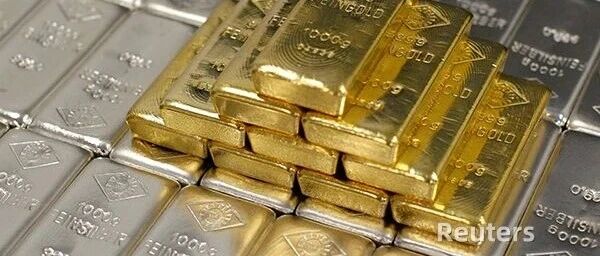
Gold price today, Friday, March 20: Gold remains below $4,700 as rate-cut hopes fade
Yahoo Finance· 2026-03-16 11:00
Core Viewpoint - Gold prices have experienced fluctuations due to various economic factors, including the Federal Reserve's hawkish stance and geopolitical tensions, particularly related to the Iran war, which has created uncertainty in the market [2][3]. Price Movement - April gold futures opened at $4,653.90 per troy ounce, reflecting a 1% increase from the previous day's closing price of $4,605.70. However, gold prices have decreased by 7.7% over the past five days [1][4]. - Over the past year, gold has seen a significant gain of 95.6% as of January 29 [4]. Economic Influences - The Federal Reserve's likely decision to maintain elevated interest rates due to rising oil prices has made gold less attractive compared to interest-bearing assets, contributing to its price decline [2]. - The U.S. dollar has strengthened, making gold more expensive in other currencies, despite a slight decrease of 0.2% in the U.S. Dollar Index over the past five days [2]. Geopolitical Factors - The ongoing Iran war has led to an oil shock, increasing safe-haven demand for gold. However, the uncertainty surrounding the conflict may lead investors to prefer cash for its liquidity and income potential [3]. Investment Strategies - Various experts recommend different gold allocation percentages for investment portfolios, ranging from 0% to 20%, depending on individual financial goals and risk tolerance [6][10][12][14]. - Recommendations include a 2% to 5% allocation for income-focused investors, while growth-oriented investors may consider 10% to 15% [10][12]. Some experts advocate for a higher allocation of 20% as a wealth protection strategy [14].
每日商品期市纵览-20260309
Dong Ya Qi Huo· 2026-03-09 10:48
Report Industry Investment Rating No information provided in the given content. Core View of the Report The report analyzes the market trends of various commodities, including financial futures, shipping, non - ferrous metals, black commodities, energy chemicals, and agricultural products. Geopolitical factors, especially the Middle - East conflict, are the core influencing variables, causing significant price fluctuations in multiple markets. Short - term market volatility is high, and the market is mainly driven by geopolitical news. Summary by Category Financial Futures - **Stock Index**: Overseas risk aversion may be transmitted to the A - share market, but the impact is diminishing. Domestic policy signals during the Two Sessions provide support, and the market is in short - term shock repair. Unexpected policies may drive the stock index to strengthen [2]. - **Treasury Bonds**: The policies of the Two Sessions have a neutral impact on the bond market. If the stock market adjustment intensifies, the bond market may rise due to risk - aversion. Short - term focus should be on the A - share trend and geopolitical situation [2]. Shipping - **Container Shipping on the European Line**: The US - Iran conflict is the core influencing variable, with factors such as blocked shipping in the Strait of Hormuz and postponed Red Sea resumption expectations being positive. However, issues like conflict sustainability, weak demand, and shipping capacity spill - over risks still exist, and short - term market volatility is extremely high [3]. Non - Ferrous Metals - **Platinum & Palladium**: The Middle - East conflict and non - farm data affect interest - rate cut expectations. Supply - side cost increases provide a long - term upward basis, but short - term adjustment risks due to postponed interest - rate cut expectations should be watched [4]. - **Gold & Silver**: The recent weakness of precious metals is due to the Middle - East situation weakening interest - rate cut expectations, leading to higher US dollar and bond yields. Short - term technical corrections after geopolitical risk mitigation should be watched [5]. - **Copper**: Last week, the copper price fell from a high, and this week it will be in a game between high inventory and peak - season expectations. The key window to verify the inventory inflection point is in mid - to late March [5]. - **Aluminum**: Geopolitical conflicts dominate the price trend. The US - Israel - Iran conflict affects aluminum supply in the Middle - East, and the price will show different performances under different conflict scenarios [6]. - **Alumina**: The US - Iran conflict has limited impact on the domestic fundamentals, but it follows the rise of aluminum prices. The medium - to long - term oversupply situation remains unchanged [6]. - **Cast Aluminum Alloy**: It has a strong follow - up relationship with Shanghai aluminum, and has strong support below [7]. - **Zinc**: Supply may be affected by the Iran situation, and demand - side inventory pressure is large. Short - term metal prices may be suppressed [8]. - **Nickel & Stainless Steel**: The annual nickel ore production estimate has limited impact on the industry chain. The first half of the year has a tight quota. The market is in the post - holiday recovery stage, and the peak - season expectation supports downstream demand [9]. - **Tin**: The Iran situation and non - farm data support the metal. Supply is tight, and demand is starting to resume. High inventory suppresses the price, and attention should be paid to the inventory - reduction speed and the development of the Iran situation [10]. - **Lithium Carbonate**: In the short - term, the market's concern about demand has increased, but the long - term downstream demand growth logic remains unchanged [11][12]. - **Industrial Silicon & Polysilicon**: The industry is at the bottom of the current production - capacity cycle, and attention should be paid to the "anti - involution" process and supply - demand optimization signals [12]. - **Lead**: The current supply - demand situation is weak, and the lead price is expected to fluctuate. Attention should be paid to the possible negative feedback on the market during the delivery week [12]. Black Commodities - **Rebar & Hot - Rolled Coil**: The Iran geopolitical conflict drives up the prices of raw materials, forming cost support. After the Two Sessions, the real - estate policy is stable, and the short - term rebound height is limited [13]. - **Iron Ore**: The near - term price has support due to tight tradable resources, but the upside is limited by high supply, weak demand, and long - term geopolitical structural issues [14]. - **Coking Coal & Coke**: Domestic coal mine复产 and increased Mongolian coal customs clearance bring supply pressure. Coke production may increase, but the terminal steel demand restricts price elasticity [15]. - **Ferrosilicon & Silicomanganese**: The short - term cost support is strengthening, but the weak downstream demand and high inventory of steel products limit the upward space [16]. Energy Chemicals - **Crude Oil**: The Middle - East situation is the core trading logic. The US - Iran conflict has led to supply shortages, and the market is highly volatile. Short - term attention should be paid to the Strait of Hormuz navigation and oil - producing countries' inventory changes [17]. - **Fuel Oil**: Chinese exports and the Middle - East conflict affect the Asian gasoline market. The short - term Asian gasoline price difference remains high, and the core drivers are geopolitical situation and Chinese export policies [17]. - **Asphalt**: Supply is expected to increase, and inventory has seasonally accumulated. The asphalt price will follow the cost - end crude oil, and short - term geopolitical factors are the most important [18][19]. - **LPG**: The blockade of the Strait of Hormuz is the core trading point. The supply disruption and US cold wave have pushed up the price. The length of the blockade determines the price trend [20]. - **Methanol**: The geopolitical conflict has changed the import expectation, and the MTO profit expansion may drive the methanol price to catch up with the olefin increase [21]. - **Plastic**: The Middle - East situation has led to supply concerns, and the supply - reduction and demand - increase pattern makes the short - term market run strongly [21]. - **Rubber**: Geopolitical conflicts support the synthetic rubber price, which in turn boosts natural rubber. The supply - demand利多 and macro利空 coexist, and short - term geopolitical factors dominate the trend [22]. - **Urea**: The US - Iran war has created a global urea supply gap, and the international price has risen. The domestic market is in a tight balance, and geopolitical risks are the key variables [22]. - **Pure Benzene & Styrene**: The US - Israel - Iran conflict has affected refinery operations. Downstream demand for restocking and export expectations are positive, and the short - term price is driven by geopolitical conflicts [23]. - **Soda Ash**: Supply - side maintenance may increase, and demand is stable but weak. The inventory situation is better than expected. The medium - to long - term supply is expected to be high [24]. - **Glass**: The current production and sales are weak, and the market is in the recovery stage. High inventory and supply return expectations limit the price increase, and demand needs to be verified [25]. - **Caustic Soda**: Supply is sufficient, demand is weak, and the inventory reduction is slow. The market is in a supply - strong and demand - weak pattern, and the price is in a weak and volatile state [26]. Agricultural Products - **Hog**: The current hog market is mainly trading the post - Spring Festival weak - demand reality. The price decline is supported by secondary fattening sentiment, but the upward driving force is weak [27]. - **Oilseeds**: The April China - US negotiation expectation, rising international fertilizer prices, and improved export expectations support the soybean price. The domestic market will follow the US soybean performance in the short - term [28][29]. - **Oils**: The recent strength of the oil market comes from the crude oil and diesel markets. Short - term attention should be paid to the US - Iran conflict and the Strait of Hormuz navigation [29]. - **Cotton**: The current domestic supply - demand tightening expectation supports the cotton price, but the high price difference between domestic and foreign cotton and geopolitical risks put pressure on the upside. The short - term price may be in a narrow - range shock adjustment [30]. - **Sugar**: The market lacks a clear trend - reversal basis, and the core contradiction is low valuation but lack of continuous upward driving force [31]. - **Apple**: The apple futures market is running strongly, driven by both fundamentals and delivery logic. The short - term support is strong [31]. - **Jujube**: The market focus is on the demand side. The post - Spring Festival downstream sales are average, and the price is under pressure and may maintain a low - level shock [32][33].
【招银研究|海外宏观】滞胀疑云——美国非农就业数据点评(2026年2月)
招商银行研究· 2026-03-09 10:33
Core Viewpoint - The February non-farm employment data significantly underperformed market expectations, with a decrease of 92,000 jobs compared to an expected increase of 55,000. The unemployment rate rose to 4.4%, above the expected 4.3%, while the labor force participation rate fell to 62.0%, below the expected 62.5%. Average hourly earnings increased by 0.4% month-on-month and 3.8% year-on-year, indicating some resilience in wage growth despite the overall employment decline [1]. Group 1: Employment Data Analysis - The unemployment rate unexpectedly increased by 0.1 percentage points to 4.4%, with the number of unemployed rising by 203,000 to 7.571 million, ending a two-month decline. The employment count from household surveys decreased by 185,000, with part-time employment due to economic reasons dropping by 477,000, while full-time employment rose by 292,000 [2]. - The employment market's liquidity is deteriorating, with voluntary resignations decreasing by 171,000 to 867,000, and re-entrants to the job market increasing by 152,000 to 2.32 million. Permanent unemployment rose by 29,000 to 203,700, indicating a weakening "low-volatility equilibrium" in the job market [6]. - The labor force participation rate fell by 0.1 percentage points to 62.0%, with the participation rate for the prime working age group (25-54 years) also declining by 0.1 percentage points to 83.9% [9]. Group 2: Non-Farm Employment Changes - February's non-farm employment data showed a significant negative shift, with a loss of 92,000 jobs, which was much lower than expected. The previous month's data was also revised downwards, with December's figures adjusted down by 65,000 to -17,000 and January's by 4,000 to 126,000 [12]. - Weather-related factors contributed to the employment decline, with an estimated 228,000 workers unable to work due to weather conditions, which was 61,000 more than in February 2025. Additionally, a strike at Kaiser Permanente reduced healthcare employment by 31,000 [15]. - Average weekly hours remained high at 34.3 hours, suggesting that the employment reduction reflects temporary disruptions rather than a fundamental weakening of the job market [16]. Group 3: Market Strategy and Outlook - The employment weakness is primarily attributed to temporary factors like weather, with the underlying trend remaining robust. In light of rising oil prices, the Federal Reserve is likely to focus more on inflation risks, delaying the next interest rate cut to September [18]. - Following the release of the weak non-farm report, the U.S. Treasury yield curve initially steepened but quickly reversed, with yields flattening. The 2-year yield fell by 1.6 basis points to 3.56%, while the 10-year and 30-year yields remained stable at 4.14% and 4.76%, respectively [18]. - Concerns about inflation may lead the Federal Reserve to maintain interest rates longer than previously expected, which could continue to flatten the yield curve. The current market dynamics are still heavily influenced by geopolitical tensions, particularly regarding Iran [19].

黄金、白银期货品种周报-20260309
Chang Cheng Qi Huo· 2026-03-09 06:35
Report Summary 1. Report Industry Investment Rating No information provided. 2. Core Viewpoints - The Shanghai Gold futures are in an upward trend, which may be near the end. Short - term is expected to be weak and volatile, while geopolitical risks and central bank gold - buying demand provide long - term support [7]. - The Shanghai Silver futures are also in an upward trend close to the end. Short - term may continue to be weak and volatile, and global supply - demand gap and industrial demand support a mid - term structural bull market [31][33]. 3. Summary by Directory Gold Futures - **Mid - term Market Analysis**: The Shanghai Gold futures are in an uptrend nearing the end. Last week, it rose due to geopolitical conflicts but then was suppressed by a strong dollar and inflation concerns. The Fed's interest - rate cut expectations cooled, and the dollar index remained high. Market structure is divided, with reduced willingness to chase long positions and a 28.2% drop in settled funds. Short - term is expected to be weak and volatile, with support at 1120 yuan/gram. Geopolitical risks and central bank gold - buying demand provide long - term support. The mid - term strategy is to wait and see [7][8]. - **Variety Trading Strategy**: - **Last Week's Strategy Review**: The Shanghai Gold contract 2604 was expected to run strongly at a high level, with pressure at 1200 - 1220 yuan/gram and support at 1080 - 1100 yuan/gram. It was recommended to buy on dips [10]. - **This Week's Strategy Suggestion**: The Shanghai Gold contract 2606 is expected to oscillate at a high level, with pressure at 1200 - 1220 yuan/gram and support at 1080 - 1100 yuan/gram. It is recommended to wait and see in the short term [11]. - **Related Data Situation**: The report presents data on the Shanghai Gold and COMEX gold price trends, SPDR gold ETF holdings, COMEX gold inventory, US 10 - year Treasury yield, dollar index, dollar - off - shore RMB exchange rate, gold - silver ratio, Shanghai Gold basis, and gold internal - external price difference [18][21][23] Silver Futures - **Mid - term Market Analysis**: The Shanghai Silver futures are in an uptrend nearing the end. Last week, the Shanghai Silver 2606 contract fluctuated sharply with a 10.8% weekly decline. It rose due to geopolitical conflicts and a 15.3% drop in domestic inventory, but then was suppressed by macro factors. In the short - term, it may continue to be weak and volatile, with support at 20,800 yuan/kg. In the mid - term, the global supply - demand gap and industrial demand support a structural bull market. The mid - term strategy is to wait and see [31][33][34]. - **Variety Trading Strategy**: - **Last Week's Strategy Review**: The Silver contract 2604 was expected to run strongly at a high level, with pressure at 24,000 - 27,000 yuan/kg and support at 18,000 - 21,000 yuan/kg. It was recommended to buy on dips [37]. - **This Week's Strategy Suggestion**: The Silver contract 2604 is expected to oscillate at a high level, with pressure at 22,000 - 24,000 yuan/kg and support at 18,000 - 21,000 yuan/kg. It is recommended to wait and see in the short term [38]. - **Related Data Situation**: The report presents data on the Shanghai Silver and COMEX silver price trends, SLV silver ETF holdings, COMEX silver inventory, Shanghai Silver basis, and silver internal - external price difference [45][48][50]
中东地缘剧变,铜测试关键支撑:沪铜周报-20260309
Zhong Hui Qi Huo· 2026-03-09 03:48
1. Report Industry Investment Rating - Not provided in the content 2. Core View of the Report - The geopolitical upheaval in the Middle East, the sharp rise in crude oil prices, and the better - than - expected US economic data have weakened the Fed's interest - rate cut expectations. The strengthening of the US dollar has suppressed copper prices. It is recommended to pay attention to the lower support and try to go long on dips. In the long - term, the outlook for copper remains positive [8][9][86] 3. Summary According to the Directory 3.1 Macro Economy - The geopolitical upheaval in Iran has led to a sharp rise in crude oil prices. The US dollar index has strongly suppressed copper prices. The US ADP small non - farm payrolls data in February exceeded expectations, and the Fed's interest - rate cut expectations for the year have been weakened. The US non - farm payrolls report for February is to be released, and different results may have different impacts on the US dollar and commodities [12][16] - In February 2026, China's manufacturing PMI was 49%, down 0.3 percentage points from January and below the boom - bust line. The GDP growth target for 2026 has been adjusted to a range of 4.5% - 5%. The monetary policy will be moderately loose, and emerging industries are key development directions, which is beneficial to the demand for copper [17] 3.2 Supply - Demand Analysis 3.2.1 Supply - **Copper concentrate supply**: Although Iran's copper production accounts for a small proportion of the global total, the shipping blockage in the Strait of Hormuz and the spread of conflicts have increased the risk premium. Some mines in the Congo (DRC) and Peru have been affected by conflicts and natural disasters, affecting copper concentrate transportation. China's copper concentrate imports were high in 2025, but the growth rate slowed down at the beginning of 2026 [52] - **Copper concentrate processing fees**: The copper concentrate TC has been running at a low level, and the market expects the supply of copper concentrate in 2026 to be tight. The copper smelting industry is "anti - involution", and the industry association has proposed measures such as capacity control and resource reserve [53] - **Electrolytic copper production**: Affected by the shortage of copper ore raw materials and smelting maintenance, the electrolytic copper production in China in February decreased month - on - month. It is expected to increase in March [54] - **Import**: The import of unwrought copper and copper products in 2025 decreased year - on - year. The import of refined copper in December 2025 decreased both month - on - month and year - on - year [54] - **Scrap copper supply**: The growth of scrap copper supply has eased the pressure of raw material shortage, and the refined - scrap price difference has converged [54] 3.2.2 Demand - **Green copper demand**: Renewable energy systems have a much higher copper consumption than traditional power systems. Electric vehicles also have a large demand for copper [57] - **Automobile demand**: In January 2026, automobile sales decreased month - on - month and year - on - year. New energy vehicle sales increased slightly year - on - year, and exports increased significantly [57] - **Power demand**: In 2025, power grid investment increased year - on - year, and the photovoltaic industry maintained a high - speed growth trend. In January 2026, China's new photovoltaic grid - connected capacity increased [57] - **Home appliance demand**: In January 2026, the production schedule of air - conditioners for domestic sales and exports increased year - on - year. In February, affected by policies and holidays, the production schedule decreased year - on - year [57] 3.2.3 Inventory - As of March 6, domestic and overseas copper inventories continued to accumulate. The LME copper inventory was at a nearly 11 - year high, and the COMEX copper inventory was still accumulating. The US may hoard copper for strategic reasons, and the effective circulation of copper inventory is expected to be tight [58] 3.3 Summary and Outlook - In the short term, copper prices will fluctuate widely and fall under pressure to the 100,000 - yuan mark. As the traditional peak consumption season of "Golden March and Silver April" begins and the policies of the Two Sessions gradually take effect, and the geopolitical risks in the Middle East gradually ease, the market sentiment may gradually improve, and the macro and micro factors may resonate [9][86] - It is recommended to try to go long on dips. Industrial buyers should purchase according to demand and increase inventory replenishment on dips. Sellers should wait for a rebound and hedge against the upper pressure level. In the long - term, due to the shortage of copper mines, the explosion of green copper demand, the national strategic resource security premium, and the intensification of Sino - US competition, the long - term trend of copper is still optimistic. The focus range for Shanghai copper is [98,000, 105,000] yuan/ton, and for LME copper is [12,500, 13,500] US dollars/ton [9][86]
一夜狂泻230美元,黄金开盘反弹重回5100美元
21世纪经济报道· 2026-03-03 23:48
Group 1 - The core viewpoint of the article highlights the recent fluctuations in gold and silver prices, with gold reaching $5123.26 per ounce and silver at $82.45 per ounce, reflecting increases of 0.68% and 0.54% respectively [1][2] - Gold prices experienced a significant drop after four consecutive days of increase, primarily influenced by a stronger US dollar, high inflation, and escalating conflicts in the Middle East [2] - On March 3, gold fell over 5%, dropping $233 in one night and briefly falling below $5020 per ounce, while silver saw a decline of over 12%, dropping below $78 per ounce [2] Group 2 - The article notes that the semiconductor sector in the US stock market faced a widespread decline, with Intel's stock dropping by 5% [2] - In response to market conditions, A-share semiconductor companies collectively issued price increase notices, with some prices rising by as much as 80% [2]