
奢侈品品牌转型

Search documents
Gucci领跑闭店潮,奢侈品集体退守一线市场
3 6 Ke· 2025-09-18 01:10
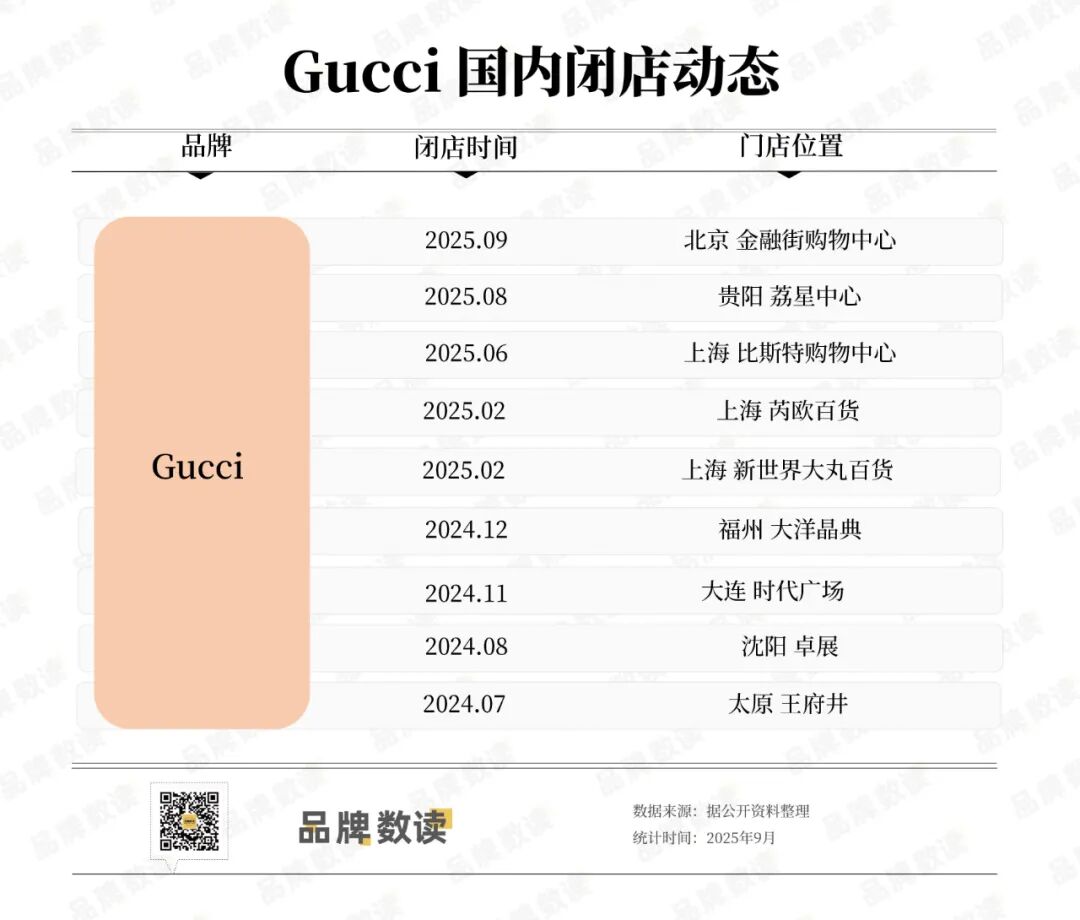
Core Insights - The new CEO of Kering, Luca de Meo, is prioritizing the resolution of issues surrounding Gucci, particularly following the imminent departure of Gucci's CEO, Stefano Cantino, after less than a year in office [1][2] - Gucci has faced significant challenges, with a 25% drop in revenue to €1.46 billion in Q2, marking a new low for the brand [1][2] - The luxury market is experiencing a downturn, with Kering's overall sales suffering due to Gucci's poor performance, leading to strategic and personnel changes within the company [9][10] Store Closures - Gucci has closed five stores in China this year, including locations in Beijing, Shanghai, and Guiyang, reflecting a broader trend of luxury brands retreating from lower-tier cities [1][4][13] - Kering's overall store count decreased by 41 stores in the first half of the year, with Gucci leading the closures, having shut down 18 stores [2][5] - The company plans to increase its store closure target for 2025 from 50 to 80, with Gucci expected to account for nearly half of these closures [5][10] Strategic Adjustments - Gucci's management is undergoing a strategic repositioning, focusing on reducing reliance on wholesale and outlet channels to restore its high-end brand image [5][15] - The brand's creative direction has been inconsistent since the departure of Alessandro Michele, with the new creative director, Demna, needing more time to redefine the brand's essence [8][9] - Kering is shifting its focus towards flagship stores in major cities, aiming to enhance brand exclusivity and consumer experience while reducing the number of smaller stores [17][18] Market Trends - The luxury market in China is contracting, with a 38% year-on-year decline in new store openings for luxury brands in the first half of 2025, particularly in non-first-tier cities [13] - Brands are increasingly concentrating their resources on flagship stores in major urban centers, as consumer behavior shifts towards experiential shopping [17][18] - The overall retail landscape is evolving, with luxury brands needing to adapt to changing consumer preferences and market conditions to maintain their appeal [17]

中国资本角逐“羽绒服界爱马仕”
Guan Cha Zhe Wang· 2025-08-28 06:28
Core Viewpoint - Bain Capital, the controlling shareholder of Canada Goose, is considering selling part or all of its 60.5% stake in the high-end functional apparel brand, with multiple acquisition offers received, valuing the company at approximately $1.35 billion, which is 8 times its average EBITDA over the past 12 months [1][3]. Group 1: Acquisition Interest - Advent International and Boyu Capital have made verbal offers for Canada Goose, with Advent focusing on consumer upgrades and healthcare, while Boyu is backed by top-tier limited partners [3]. - Other Chinese institutions, including Bosideng and a consortium formed by FountainVest Capital and Anta Group, have also expressed interest in acquiring Canada Goose [3][4]. Group 2: Company Background and Growth - Canada Goose was founded in 1957 and has transformed from a niche brand for extreme weather to a global luxury brand, significantly expanding its product line from 20 to 200 items under Bain Capital's ownership [4]. - The company went public in 2017, reaching a peak market value of over $7.8 billion, with the Greater China region becoming its largest market, accounting for nearly half of its global stores [4][6]. Group 3: Financial Performance - Canada Goose's sales growth has slowed significantly, with projected growth rates dropping from 21.54% to 1.1% from fiscal years 2022 to 2025 [6]. - In the first quarter of fiscal year 2025, Canada Goose reported a 22.4% year-over-year revenue increase to CAD 108 million, marking the largest growth in nearly nine quarters, with the Greater China region showing an 18.7% increase [6]. Group 4: Market Challenges - The luxury goods sector is experiencing a slowdown, and Canada Goose faces intense competition in China from brands like Lululemon and Arc'teryx, as well as local brands like Bosideng [6]. - The recent growth of Canada Goose is largely attributed to the expansion of its footwear and accessories categories, with plans to increase investment in sweaters, sunglasses, and shoes to transition into a year-round luxury brand [6][7].


从Burberry到Gucci,“即看即买”重回聚光灯,奢侈品的速度革命开始了吗?
Jing Ji Guan Cha Bao· 2025-06-13 07:28
Core Insights - The article discusses the resurgence of the "see now, buy now" model in luxury fashion, particularly through Gucci's upcoming collection under new creative director Demna, which aims to shorten product launch cycles and convert media buzz into sales [1][4] - The luxury industry is undergoing a transformation, with brands like Gucci and Burberry exploring new strategies to balance speed and exclusivity in response to changing consumer preferences [5][8] Group 1: Gucci's Strategy - Gucci plans to launch its new collection in September using the "see now, buy now" model, bypassing the traditional six-month product launch cycle [1] - The initiative is supported by Gucci's new CEO Stefano Cantino and Kering Group's Francesca Bellettini, reflecting a strong commitment to the brand's transformation amid Kering's €10.5 billion debt pressure [1] - Demna's appointment marks a shift from the previous creative direction, aiming to inject a more commercially viable approach into Gucci's offerings [4] Group 2: Burberry's Experience - Burberry was the first luxury brand to implement the "see now, buy now" model in 2016, allowing immediate consumer access to runway collections [2] - While initially successful, Burberry faced challenges such as increased pressure on design teams and a dilution of the brand's exclusivity, leading to a gradual retreat from the model [2][6] - The brand's experience serves as a cautionary tale for Gucci, highlighting the need for a balanced approach to speed and brand value [8] Group 3: Industry Trends - The luxury sector is collectively rethinking its strategies, with brands like Canada Goose and Coach adapting to market changes by enhancing product offerings and brand positioning [6] - The current market environment necessitates a focus on operational efficiency and consumer engagement, with brands needing to find a balance between rapid product launches and maintaining brand prestige [7][9] - The competition in luxury fashion is shifting from design aesthetics to operational speed and market responsiveness, emphasizing the importance of a cohesive brand strategy [8]
