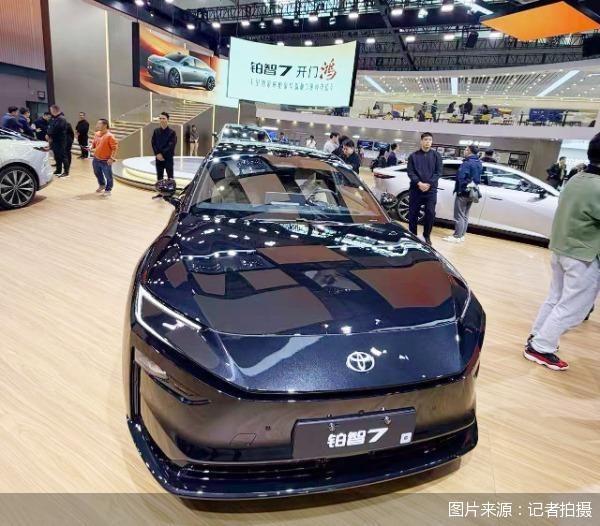
姊妹车战略

Search documents
广汽丰田想要重回百万产销量
Bei Jing Ri Bao Ke Hu Duan· 2025-11-24 09:19
Core Insights - GAC Toyota officially launched its "oil-electric dual strong" strategy during the 2025 Guangzhou International Auto Show, introducing the new models Vellfire and Platinum 7, which dispels rumors about the discontinuation of fuel vehicles and marks a shift from the long-standing "sister car" strategy to a differentiated product approach aimed at achieving a production and sales target of one million units by 2028 [1][3] Group 1: Historical Context and Market Dynamics - The "sister car" strategy was crucial for Toyota's market penetration in China, where core models were slightly adjusted for different joint ventures, such as the Vellfire and RAV4 [3] - In 2022, GAC Toyota achieved sales of 1.005 million units, marking a 21.4% year-on-year increase despite a significant downturn in the overall joint venture market [3] - The Chinese automotive market is transitioning from an incremental growth phase to a saturated market, with rapid growth in domestic brands and electric vehicles highlighting the limitations of the "sister car" model [3][4] Group 2: Strategic Shifts and Future Goals - GAC Toyota is adjusting its product strategy to address the homogenization issues of the "sister car" competition, introducing the Platinum 7, which is developed by a local engineering team and will not have a corresponding version from FAW Toyota [4] - The company has set new production and sales targets, aiming for over 800,000 units by 2026 and more than 10% sales growth by 2027, with a significant increase in the proportion of electric vehicle sales [4] - GAC Toyota anticipates that by 2026, the share of electric vehicle sales will exceed 20%, and by 2027, it will surpass 40% [4] Group 3: Industry Expert Opinions - Analysts suggest that the "sister car + channel expansion" strategy, while effective in the growth phase, is less viable in the current saturated market, advocating for a focus on differentiation and rapid iteration of products [5] - Experts emphasize the need for joint ventures to accelerate electrification and enhance local collaborations, while also optimizing fuel vehicle product lines to focus on high-value models and improve user experience [5]

告别“姊妹车”内耗,广汽丰田想要重回百万产销量
Bei Jing Shang Bao· 2025-11-23 10:07
Core Insights - GAC Toyota officially launched its "Oil-Electric Dual Strong" strategy during the 2025 Guangzhou International Auto Show, introducing the new models Vellfire and Platinum 7, which aims to dispel rumors about ceasing fuel vehicle production and marks a shift from the long-standing "sister car" strategy [2][4] - The company aims to achieve a production and sales target of one million units by 2028, with a focus on differentiated product offerings to enhance competitiveness [2][4] Market Context - The Chinese automotive market is transitioning from an incremental growth phase to a saturated market, with domestic brands and new energy vehicles (NEVs) rapidly gaining market share, leading to a 16% year-on-year decline in retail sales of joint venture fuel vehicles in 2024 [3] - In contrast, the NEV market in China saw a 40.7% year-on-year growth in retail sales, with domestic brands achieving a penetration rate of 77.9% by October 2025 [3] Strategic Adjustments - GAC Toyota is moving away from the "sister car" model due to its homogenization issues and is focusing on product differentiation, as evidenced by the introduction of the Platinum 7, which is developed by Toyota's Chinese engineering team and will not have a corresponding version from FAW Toyota [4] - The new Vellfire is the first model to utilize Toyota's new electronic architecture, allowing for continuous over-the-air (OTA) updates, addressing previous limitations of traditional fuel vehicles [4] Future Goals - GAC Toyota has set ambitious production and sales targets, aiming for over 800,000 units in 2026 and over 10% sales growth in 2027, with a significant increase in the proportion of NEV sales, targeting over 20% in 2026 and over 40% in 2027 [4] Industry Expert Opinions - Analysts suggest that the "sister car + channel expansion" strategy, while effective in the growth phase, is less viable in the current market, advocating for a focus on refining fuel vehicles and innovating NEVs [5] - Experts emphasize the need for joint venture automakers to accelerate electrification and enhance local collaborations to navigate challenges posed by slow transitions and competition from domestic brands [5]
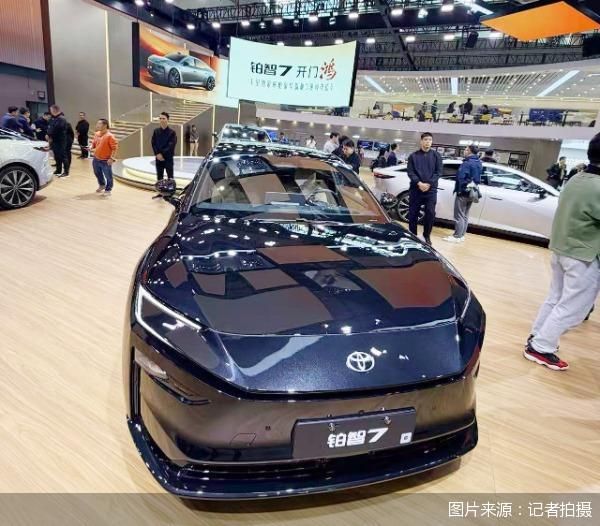
2025广州国际车展|告别“姊妹车”内耗,广汽丰田想要重回百万产销量
Bei Jing Shang Bao· 2025-11-23 10:03
Core Insights - GAC Toyota officially launched its "Oil-Electric Dual Strong" strategy during the 2025 Guangzhou International Auto Show, introducing the new models Vellfire and Platinum 7, which aims to dispel rumors about ceasing fuel vehicle production and marks a shift from the long-standing "sister car" strategy to a differentiated product approach [2][4] - The company aims to achieve a production and sales target of one million units by 2028, with a focus on both fuel and electric vehicles [2][4] Company Strategy - GAC Toyota's sales vice president, Peng Baolin, refuted claims about discontinuing fuel vehicles, emphasizing the commitment to both electric transformation and upgrading fuel models to provide diverse and high-value product options [2] - The new model Platinum 7, developed by Toyota's Chinese engineering team, represents a shift in product strategy, featuring advanced technologies without a corresponding version from FAW Toyota [4] Market Context - The Chinese automotive market is transitioning from an incremental growth phase to a saturated market, with a significant decline in retail sales of joint venture fuel vehicles, which dropped by 16% year-on-year in 2024 [3] - In contrast, the Chinese new energy vehicle market saw a retail growth of 40.7% in 2024, with domestic brands achieving a penetration rate of 77.9% by October 2025 [3] Product Development - The new Vellfire is the first model to utilize Toyota's new electronic architecture, allowing for continuous over-the-air (OTA) updates, addressing limitations of traditional fuel vehicles [4] - GAC Toyota has set ambitious production goals, targeting over 800,000 units in 2026 and aiming for a significant increase in the share of new energy vehicle sales, expecting to exceed 20% in 2026 and 40% in 2027 [4] Industry Challenges - Analysts suggest that the "sister car" strategy, while effective in the past, has led to issues of product homogeneity in the current market, necessitating a focus on unique positioning and rapid iteration of both fuel and electric models [5] - Experts emphasize the need for joint venture automakers to accelerate electrification and enhance local collaborations to remain competitive against rapidly growing domestic brands [5]