存款利率期限倒挂

Search documents
从下调利率到直接“退场” 有银行取消五年期定存产品
2 1 Shi Ji Jing Ji Bao Dao· 2025-11-12 09:09
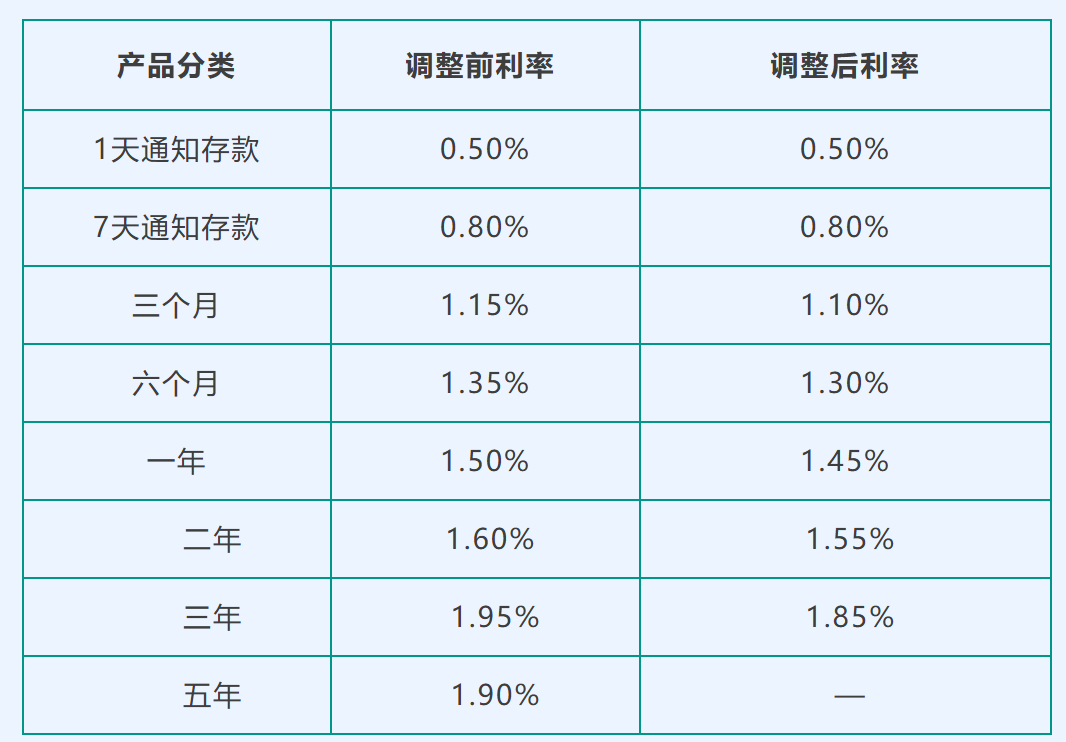
Core Viewpoint - Recent adjustments in fixed deposit products by banks, particularly the cancellation of five-year fixed deposits by certain banks, highlight a broader trend of declining deposit rates among small and medium-sized banks in response to net interest margin pressures [1][5]. Summary by Category Deposit Rate Adjustments - The announcement from Tuyaqi Mengyin Village Bank and Kundu Lun Mengyin Village Bank indicates the cancellation of five-year fixed deposit options, marking them as the first commercial banks to do so [1]. - The adjusted deposit rates for various terms at Kundu Lun Mengyin Village Bank show a decrease in rates for three-month, six-month, one-year, two-year, and three-year deposits, with the five-year option being removed entirely [2][3]. Industry Trends - The trend of lowering deposit rates is not isolated, as numerous small and medium-sized banks, including Dalian Bank and Hubei Jingmen Rural Commercial Bank, have also reduced their deposit rates, with some products seeing declines exceeding 60 basis points [2]. - The phenomenon of "term inversion" in deposit rates is evident, where long-term deposit rates are lower than short-term rates, as seen with Xinjiang Manas Rural Commercial Bank's recent adjustments [5][6]. Strategic Responses - Banks are actively working to reduce liability costs to address the ongoing pressure on net interest margins, which have reached historical lows [5][7]. - The shift away from high-cost long-term liabilities has been observed, with major banks like China Construction Bank and others no longer offering five-year large denomination certificates of deposit [8][10]. Future Outlook - Analysts suggest that while commercial banks will continue to face pressure on interest income, the downward trend may ease due to factors such as improved capital market performance and the digital transformation of banks [11]. - The changing landscape of deposit rates necessitates a shift in investment strategies for ordinary depositors, encouraging diversification into lower-risk investment products [11].

从下调利率到直接“退场”,有银行取消五年期定存产品
2 1 Shi Ji Jing Ji Bao Dao· 2025-11-12 08:45
Core Viewpoint - Recent adjustments in fixed deposit products by banks, particularly the cancellation of five-year fixed deposits by some banks, highlight a broader trend of declining deposit rates among small and medium-sized banks in response to net interest margin pressures [2][3][4]. Group 1: Bank Adjustments - The announcement from Tuoyang County Mengyin Village Bank and Kundu Lun Mengyin Village Bank to cancel five-year fixed deposits marks them as the first commercial banks in the industry to take this step [2]. - Several small and medium-sized banks have followed suit, with some deposit products seeing rate reductions exceeding 60 basis points [3]. - For instance, Hainan Baoting Rongxing Village Bank adjusted its one, two, three, and five-year fixed deposit rates to 1.2%, 1.25%, 1.6%, and 1.65%, reflecting decreases of 65BP, 55BP, 20BP, and 15BP respectively from August levels [3]. Group 2: Interest Rate Trends - The trend of declining deposit rates is a response to significant net interest margin pressures, with the net interest margin for commercial banks reported at 1.42% in Q2 2025, down 0.01 percentage points from Q1 [4]. - A notable "term inversion" phenomenon is occurring, where long-term deposit rates are lower than short-term rates, as seen with Xinjiang Manas Rural Commercial Bank's three-year rate at 1.35% and five-year rate at 1.30% [4]. - Major banks, including China Construction Bank, are also experiencing similar trends, with their three-year fixed deposit rates exceeding five-year rates by 25 basis points [5]. Group 3: Strategic Responses - Banks are actively seeking to lower their funding costs by reducing long-term liabilities and adjusting their product offerings, as indicated by the absence of five-year large denomination deposit products in many major banks [6][7]. - The banking sector is focusing on enhancing non-interest income through wealth management and custodial services while stabilizing net interest margins [7]. - Analysts suggest that the downward trend in interest income for commercial banks may ease due to factors such as improved loan pricing and risk matching, better performance in the capital market, and accelerated digital transformation [8]. Group 4: Implications for Investors - Traditional reliance on long-term fixed deposits for wealth preservation is being challenged, prompting financial advisors to recommend diversifying into government bonds, savings-type insurance, and low-risk bank wealth management products [8]. - Investors are encouraged to adapt their financial strategies in response to the declining interest rate environment to meet their wealth management needs effectively [8].
首现银行停售5年期定存产品,国有大行APP已下架5年期大额存单
2 1 Shi Ji Jing Ji Bao Dao· 2025-11-12 08:22
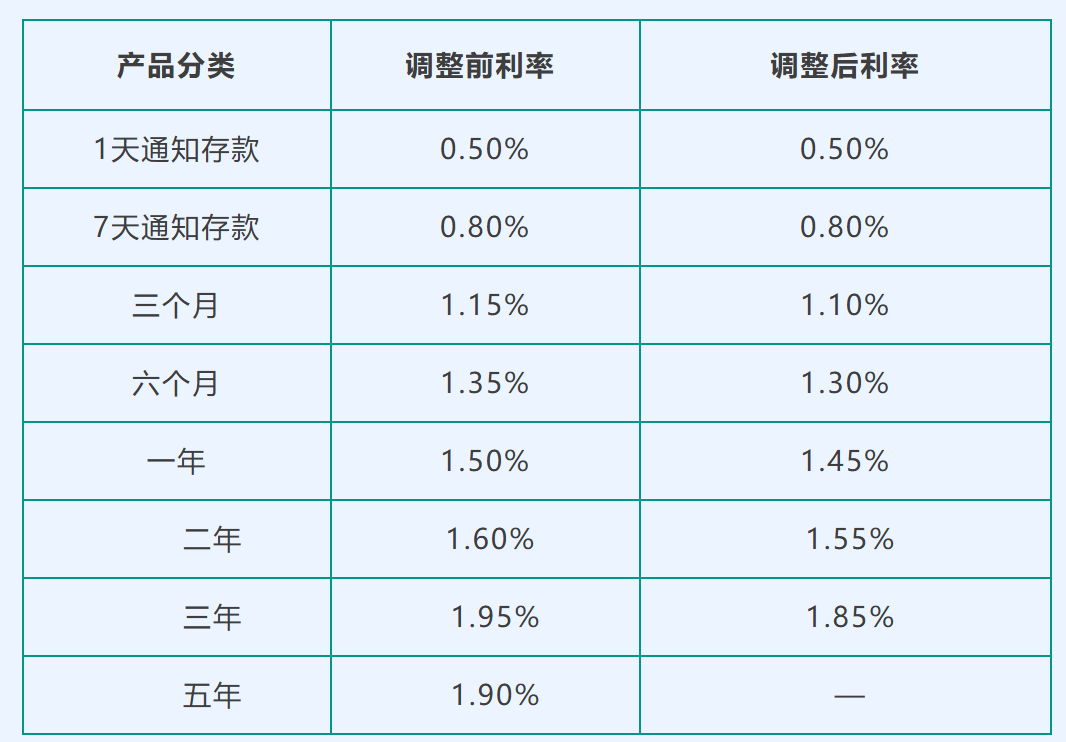
Core Viewpoint - Recent adjustments in fixed deposit products by banks, particularly the cancellation of five-year fixed deposits by certain banks, highlight a broader trend of declining deposit rates among small and medium-sized banks in response to net interest margin pressures [1][3][5]. Group 1: Deposit Rate Adjustments - Tuo Yuqi Mengyin Village Bank and Kundu Lun Mengyin Village Bank have announced the cancellation of five-year fixed deposit options, marking them as the first commercial banks to do so [1]. - The adjusted interest rates for various deposit products show a downward trend, with three-month, six-month, one-year, two-year, and three-year rates decreasing by 5 to 10 basis points [2][3]. - Other banks, such as Hainan Baoting Rongxing Village Bank, have also reduced their one-year, two-year, three-year, and five-year fixed deposit rates by up to 65 basis points [3]. Group 2: Market Trends and Implications - The trend of lowering deposit rates is not isolated, as numerous small and medium-sized banks have followed suit, with some products seeing reductions exceeding 60 basis points [3]. - A notable "term inversion" phenomenon is occurring, where long-term deposit rates are lower than short-term rates, indicating banks' reluctance to accept higher-cost long-term liabilities [5][7]. - Major banks, including state-owned and national joint-stock banks, are also experiencing similar trends, with three-year fixed deposit rates often exceeding five-year rates [7]. Group 3: Strategic Responses - Banks are adjusting their strategies to manage net interest margin pressures by reducing long-term deposit offerings and focusing on optimizing their liability structures [5][7]. - The banking sector is also exploring non-interest income sources, such as wealth management and custody services, to stabilize revenue and profits [7][8]. - The shift in deposit rates and the need for banks to adapt to a low-interest environment may prompt investors to consider alternative investment products, such as government bonds and low-risk bank wealth management products [8].
首现银行停售5年期定存产品,国有大行APP已下架5年期大额存单
21世纪经济报道· 2025-11-12 08:17
Core Viewpoint - Recent adjustments in fixed deposit rates by banks, particularly the cancellation of five-year fixed deposits by certain banks, reflect a broader trend among small and medium-sized banks to lower deposit rates in response to pressure on net interest margins [1][5]. Summary by Sections Deposit Rate Adjustments - The announcement from Tuyaqi Mengyin Village Bank and Kundu Lun Mengyin Village Bank indicates the cancellation of five-year fixed deposit options, marking them as the first commercial banks to do so [1]. - A table shows the adjusted rates for various deposit products, with significant reductions in rates for terms of three years and above [2]. Broader Market Trends - Over the past month, numerous small and medium-sized banks have followed suit in lowering deposit rates, with some products seeing declines exceeding 60 basis points [2]. - For instance, Hainan Baoting Rongxing Village Bank has reduced its one-year, two-year, three-year, and five-year fixed deposit rates by 65, 55, 20, and 15 basis points respectively [3]. Interest Rate Pressure - The banking sector is experiencing significant pressure on net interest margins, with the average net interest margin for commercial banks reported at 1.42%, a decrease of 1 basis point from the previous quarter [5]. - There is a notable "term inversion" phenomenon where long-term deposit rates are lower than short-term rates, indicating a reluctance among banks to accept higher-cost long-term liabilities [5]. Strategic Responses - Banks are actively adjusting their liability structures by lowering rates or reducing the supply of long-term products to manage costs [7]. - The trend of eliminating long-term high-cost liabilities has extended to large banks, with many no longer offering five-year large deposits [7]. Future Outlook - Analysts suggest that while interest income for commercial banks will continue to face pressure, the downward trend may ease due to several factors, including improved loan pricing and a better-performing capital market [8]. - The shift in deposit rates may prompt investors to diversify their portfolios towards lower-risk investment products, adapting to the changing financial landscape [8].