净息差压力

Search documents
跌入“0”字头!多家银行下调短期产品利率
Sou Hu Cai Jing· 2026-01-22 00:55
Group 1 - Major banks have reduced the interest rates on large certificates of deposit (CDs) since the beginning of the year, with some short-term products falling below 1%, entering the "0" range [1][3] - State-owned banks such as Industrial and Commercial Bank of China, Agricultural Bank of China, and Bank of China are offering 1-month and 3-month large CDs at 0.9%, significantly lower than previous years [1] - Several small and medium-sized banks have also lowered their rates for 3-month and 6-month large CDs, with some banks like Yunnan Tengchong Rural Commercial Bank and Yunnan Longyang Rural Commercial Bank offering rates below 1% [3] Group 2 - According to analysts, large CDs are considered active liabilities for banks, with relatively high pricing levels and better liquidity compared to regular deposits, leading to strong market demand [5] - Due to the recent structural interest rate cuts and the need for banks to stabilize their net interest margins, the issuance scale of fixed-term deposits may continue to shrink, and rates are expected to decline further [7] - Investment strategies should be adjusted to diversify asset allocation rather than heavily relying on medium to long-term fixed deposit products, based on actual risk tolerance [10]

发愁的大额存款客户,难以复刻的高息记忆
3 6 Ke· 2025-12-09 02:21
Core Viewpoint - The current low interest rate environment has led to a significant reduction in the availability and attractiveness of large time deposits, with many banks discontinuing long-term products and offering lower rates compared to previous years [1][3][4]. Group 1: Interest Rate Trends - The interest rate for large time deposits has dropped significantly, with major banks now offering rates around 1.55% for 3-year deposits, compared to previous rates of 3.35% [2][3]. - In 2022, the average interest rate for large time deposits was above 3%, but this has since decreased, leading to a scarcity of high-yield products [7][8]. Group 2: Bank Strategies - Major state-owned banks are tightening their offerings of long-term large time deposits as part of a strategy to manage liabilities in a low-interest environment [5][6]. - Many banks, including both state-owned and joint-stock banks, have removed 5-year large time deposit products from their offerings, reflecting a broader trend in the banking sector [4][5]. Group 3: Customer Behavior - Customers are increasingly seeking alternative investment options, such as gold and low-risk financial products, due to the declining attractiveness of traditional large time deposits [1][9]. - There is a noticeable shift among depositors, with some opting for a mix of traditional deposits and riskier investments, indicating a diversification of investment strategies [9][10]. Group 4: Marketing and Competition - Smaller banks are actively marketing their products to attract customers who are looking for better returns, often through social media and targeted promotions [6][8]. - Some banks are offering promotional rates and incentives to new customers, highlighting a competitive landscape as larger banks reduce their offerings [8][10].
高息不再 “存款特种兵”沉默
Jing Ji Guan Cha Wang· 2025-12-08 08:08
Core Viewpoint - The current low interest rate environment has led to a significant reduction in the availability and attractiveness of large time deposits, with many banks discontinuing long-term products, prompting depositors to seek alternative investment options [1][3][4]. Group 1: Interest Rate Trends - The interest rate for large time deposits has decreased significantly, with major banks offering rates as low as 1.55% for 3-year deposits, compared to previous rates above 3% [2][3]. - Many banks, including state-owned and joint-stock banks, have stopped issuing long-term large time deposits, with 5-year products no longer available [3][4]. - The interest rates for traditional fixed deposits are now comparable to those of large time deposits, diminishing their competitive edge [3][4]. Group 2: Depositor Behavior - Depositors are increasingly turning to alternative investments such as gold and bank wealth management products due to the low returns on traditional deposits [1][9]. - There is a noticeable shift among depositors, with some opting for riskier investments while others remain conservative, preferring to keep their funds in banks despite lower interest rates [9][10]. - Social media and deposit communities have become platforms for sharing information about available products, with many depositors actively seeking higher yields [7][8]. Group 3: Bank Strategies - Banks are adopting proactive liability management strategies in response to the low interest rate environment, leading to a reduction in the issuance of long-term large time deposits [5][6]. - Some smaller banks are leveraging marketing strategies to attract depositors by offering competitive rates and promotional incentives [8]. - The trend of discontinuing long-term large time deposits reflects broader market conditions and the need for banks to manage their interest rate risk effectively [5][6].






存款产品下架风波:属地化管理+优化负债结构
Zhong Guo Jing Ying Bao· 2025-11-29 04:05
Core Insights - The recent reports of Blue Ocean Bank suspending various term deposit products have raised concerns about the bank's liquidity and operational status, but these actions are primarily due to regulatory requirements for localized operations rather than actual product shortages [1][2] - Multiple banks are withdrawing 5-year deposit products and large-denomination certificates of deposit, indicating a broader trend in the industry to adjust to narrowing net interest margins [1][4] Regulatory Context - The phenomenon of banks suspending deposit products is linked to regulatory guidelines that promote localized management of deposit services, aimed at stabilizing regional financial systems and preventing liquidity risks from excessive reliance on deposits from outside their operational areas [2][4] - The implementation of the "Loan Assistance New Regulations" on October 1 has increased pressure on private banks, particularly smaller ones, to adjust their deposit product structures to lower funding costs [2][4] Market Dynamics - The trend of banks withdrawing 5-year deposit products is a response to the pressure of net interest margins, with many banks facing challenges in matching high-interest deposits with adequate loan or investment opportunities [4][5] - The overall decline in interest rates and regulatory guidance is pushing the industry towards reducing long-term funding costs, with expectations that more banks will follow suit in tightening their medium- to long-term deposit products [5] Future Outlook - While high-term deposit products like 5-year deposits are unlikely to disappear entirely, their market supply may decrease, leading to more refined pricing strategies reflecting the banking sector's shift from expansion to quality and efficiency [5] - Investors are advised to adjust their expectations regarding investment returns in light of declining deposit rates and yields from various financial products, suggesting a balanced approach to asset allocation [5]
不揽储了?有民营银行阶段性停售所有期限存款
Di Yi Cai Jing· 2025-11-27 09:24
Core Viewpoint - The banking sector, particularly small and medium-sized banks, is experiencing a significant reduction in deposit offerings, with some banks like Blue Ocean Bank suspending various term deposits due to pressure on net interest margins and high funding costs [1][6]. Group 1: Deposit Trends - Blue Ocean Bank has completely sold out of all its deposit products, including 3-month, 6-month, 1-year, 2-year, 3-year, and 5-year term deposits, indicating a severe limitation on deposit acceptance [2][4]. - The bank's customer service stated that the 2-year, 3-year, and 5-year term deposits are currently full, with no indication of when new quotas will be available [4]. Group 2: Interest Rate Dynamics - The bank's deposit rates for various terms are as follows: 3-month (1.35%), 6-month (1.55%), 1-year (1.65%), 2-year (1.85%), and both 3-year and 5-year at 2% [4]. - The net interest margin for Blue Ocean Bank has decreased from 4.34% to 2.35% over the year, reflecting a significant drop of 1.99 percentage points [5]. Group 3: Market Context - The trend of suspending long-term deposits is not isolated to Blue Ocean Bank; other small and medium-sized banks are also withdrawing similar products, indicating a broader industry shift [6][8]. - The overall environment of declining deposit rates and weak credit demand has led banks to limit high-cost deposit acceptance to manage their balance sheets effectively [7][8].

六大行停售五年期大额存单
新华网财经· 2025-11-27 04:46
Core Viewpoint - The recent collective removal of five-year large-denomination time deposits by six major state-owned banks reflects the ongoing pressure on net interest margins within the banking industry, prompting a shift in deposit product offerings [2][3][4]. Group 1: Changes in Deposit Products - Six major state-owned banks have collectively removed five-year large-denomination time deposits, with only three-year products remaining, which have seen interest rates drop to between 1.5% and 1.75% [2]. - Several small and medium-sized banks have also begun to adjust or cancel three-year and five-year ordinary time deposit products, indicating a broader trend of declining long-term deposit offerings in the banking sector [2]. - The first bank to announce the cancellation of five-year time deposits was the Tongyu County Mengyin Village Bank, effective November 5, 2025 [2]. Group 2: Reasons Behind the Changes - The adjustments in long-term deposit products are a response to the pressure on net interest margins faced by banks, particularly private banks, which have seen a quarter-on-quarter decline of 0.08 percentage points in net interest margins [2][3]. - The competitive landscape for deposits has intensified, with high funding costs and declining loan rates squeezing banks' asset-side returns [2][3]. Group 3: Impact on Savers - As long-term deposit options decrease and interest rates decline, savers are forced to reconsider their financial strategies. A survey indicated that 62.3% of urban savers preferred "more savings," a decrease of 1.5 percentage points from the previous quarter [3]. - The trend suggests that while long-term deposits may not disappear entirely, they will likely exhibit differentiated supply characteristics, with state-owned banks possibly retaining five-year deposits as service tools but at lower rates [3][4]. Group 4: Future Outlook - The ongoing pressure on net interest margins is expected to persist, leading more banks to shorten deposit terms and lower interest rates to balance asset and liability returns [4]. - It is anticipated that more banks will follow suit in adjusting long-term deposit products in the future [4].

下架五年期 短期也“告急” 银行弃旧爱:“大额存单”去哪了
Shen Zhen Shang Bao· 2025-11-26 23:04
Core Viewpoint - The trend of large-denomination certificates of deposit (CDs) disappearing from the market is evident, with major banks removing long-term products to manage net interest margin pressures and adapt to changing monetary policies [1][2][3] Group 1: Market Changes - Major state-owned banks and national joint-stock banks have removed five-year large-denomination CDs from their offerings, with only short-term products available [1] - The availability of three-year large-denomination CDs is also tightening, with some banks halting new issuances [1][2] - The current offerings are primarily focused on one-year or shorter terms, with some banks only providing three-month or six-month products [2] Group 2: Reasons for Changes - The primary reason for banks discontinuing long-term large-denomination CDs is to alleviate the increasing pressure on net interest margins due to declining loan rates [2] - By reducing high-cost liabilities associated with long-term CDs, banks aim to optimize their liability structure and control overall funding costs [2][3] - This adjustment is seen as a proactive measure by banks in response to macroeconomic conditions and regulatory guidance [2] Group 3: Future Outlook - The role and form of large-denomination CDs are expected to undergo significant changes, with a shift towards shorter-term products becoming more common [3] - The interest rate advantage of large-denomination CDs is likely to diminish, aligning more closely with regular fixed-term deposits [3] - A long-term downward trend in deposit rates is anticipated, driven by monetary policy aimed at reducing financing costs for the real economy [3]


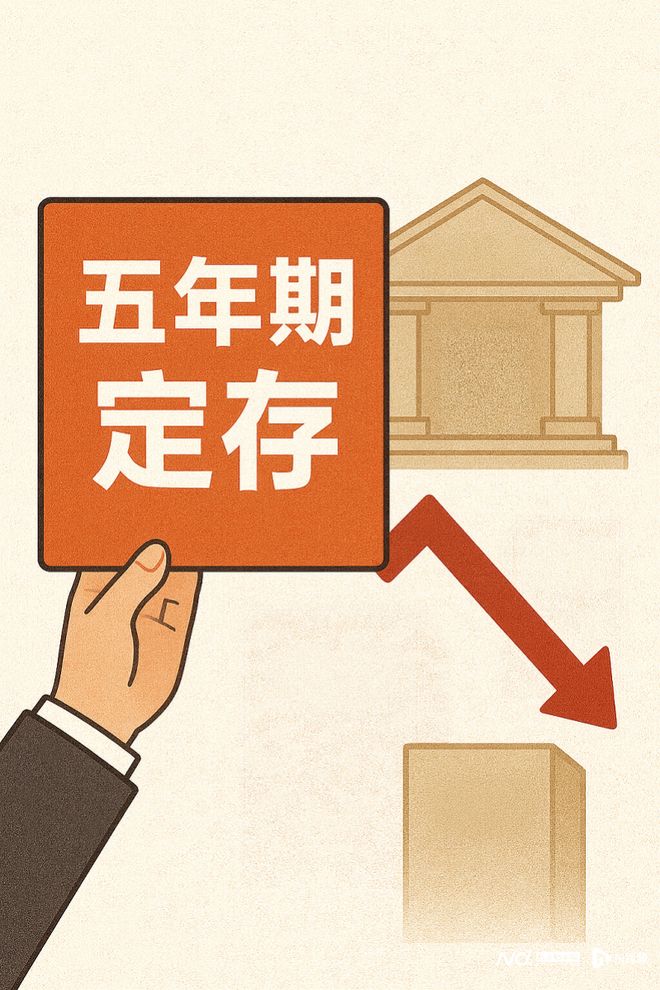
息差压力之下,五年定存渐成“稀缺品”
Huan Qiu Wang· 2025-11-19 03:03
Core Viewpoint - The banking industry is undergoing a significant transformation in its liability structure optimization due to sustained pressure on net interest margins, leading to the reduction or cancellation of long-term deposit products, particularly five-year fixed deposits, which are becoming scarce in the market [1][4]. Group 1: Changes in Deposit Products - Some small and medium-sized banks have begun to adjust or eliminate three-year and five-year fixed deposit products, reflecting a trend towards reducing funding costs and managing liabilities more precisely [1][2]. - The Inner Mongolia Tuyuqi Mengyin Village Bank has become the first commercial bank to officially cancel its five-year fixed deposit product, highlighting the cost pressure associated with long-term deposits [1]. - Other banks, such as the Hubei Jingmen Rural Commercial Bank, have also reduced rates and eliminated five-year options from their special deposit products [1]. Group 2: Market Trends and Responses - Several private banks, including Zhejiang Webank and CITIC Baixin Bank, have already stopped offering five-year fixed deposit products, indicating a broader trend among banks to compress high-cost long-term deposits [2]. - National banks still offer five-year fixed deposits, but their yield advantages have significantly narrowed, with some banks like China Merchants Bank suspending higher interest rate offerings [4]. - The phenomenon of interest rate inversion, where longer-term deposits yield less than shorter-term ones, is becoming more common, indicating a shift from a focus on scale to precise control in deposit management [5]. Group 3: Economic Context and Future Outlook - The continuous pressure on net interest margins is evident, with 14 out of 26 listed banks reporting a downward trend in net interest margins [4]. - The People's Bank of China has noted that the decline in loan rates is outpacing deposit rates, further compressing banks' net interest margins and limiting their ability to support the real economy [4]. - Experts predict that the trend of eliminating high-cost long-term deposit products will likely be adopted by more banks, as they seek to stabilize net interest margins and diversify funding sources [5].

长期限大额存单,去哪了?
Jin Rong Shi Bao· 2025-11-18 05:17
Core Viewpoint - The recent announcement by Tongyu Mengyin Village Bank regarding the adjustment of deposit interest rates indicates a potential shift in the banking industry towards reducing long-term deposit products, reflecting a broader trend in response to narrowing net interest margins [1][7]. Group 1: Deposit Rate Adjustments - Tongyu Mengyin Village Bank will cancel the 5-year fixed deposit product starting from November 5, 2025 [1]. - Many banks, including the six major state-owned banks, still offer 5-year fixed deposit products, suggesting that the trend may not be widespread yet [2]. - The availability of 5-year large certificates of deposit (CDs) has significantly decreased, indicating a shift in investor preferences and bank offerings [3][5]. Group 2: Market Demand and Supply - The demand for long-term deposit products, such as 5-year large CDs, has diminished compared to previous years when they were highly sought after [4]. - Currently, major banks do not offer 5-year large CDs, with the longest available term being 2 years at a low annualized interest rate of 1.40% [5]. Group 3: Banking Profitability and Strategy - The reduction in long-term deposit products and lower interest rates is primarily driven by banks' need to address the pressure from narrowing net interest margins [7]. - The traditional banking profit model of earning from interest rate spreads is evolving, with banks focusing on lower-cost funding and diversifying income sources through wealth management and intermediary services [7]. Group 4: Investment Strategies - Investors are encouraged to consider alternative investment products, such as savings-type insurance, and to adopt a tiered asset allocation strategy based on their risk tolerance and liquidity needs [8][9]. - Recommendations for investors include prioritizing short to medium-term deposits or government bonds, while also considering low-volatility financial products and equities for those with higher risk tolerance [9].
五年期定存正悄然退场?多家银行早已下架,利率倒挂显现
Nan Fang Du Shi Bao· 2025-11-15 10:20
Core Viewpoint - The cancellation of the five-year fixed deposit product by the Inner Mongolia Tuyuqi Mengyin Village Bank has sparked market attention, indicating a potential trend in the banking industry as many private and internet banks are also phasing out long-term fixed deposits due to declining interest rates and the phenomenon of interest rate inversion [1][4][5]. Group 1: Industry Trends - The Tuyuqi Mengyin Village Bank is the first commercial bank to announce the cancellation of the five-year fixed deposit product, which is not an isolated case as other banks like the Kundu Lun Mengyin Village Bank have also stopped offering this product [4]. - Several private and internet banks, including Citic Baixin Bank and Zhongguancun Bank, have also removed five-year fixed deposits from their offerings, with Zhongguancun Bank additionally discontinuing three-year fixed deposits [4][5]. - The trend of phasing out five-year fixed deposits is attributed to banks' need to respond to narrowing net interest margins, as loan rates are decreasing faster than deposit rates, leading to higher costs for long-term deposits [4][6]. Group 2: Interest Rate Adjustments - The Tuyuqi Mengyin Village Bank has not only canceled the five-year fixed deposit but has also lowered interest rates for various term deposits, with the one-year deposit rate reduced to 1.45%, the two-year to 1.55%, and the three-year to 1.85% [4]. - Major banks, including the "Big Four" state-owned banks, have seen significant declines in deposit rates this year, with the one-year fixed deposit rate dropping to 0.95% and the three-year rate to 1.25% [5]. - The phenomenon of interest rate inversion is evident, with banks like China Construction Bank offering a three-year fixed deposit rate of 1.55%, while the five-year rate is only 1.3% [5]. Group 3: Implications for Banking Sector - The reduction in deposit rates is expected to alleviate banks' funding costs and may open up space for future reductions in the Loan Prime Rate (LPR), which could enhance borrowing willingness among residents and businesses [6]. - The adjustment in deposit rates may lead to a "migration" of deposits, potentially directing more capital into the capital markets [6].