存量财富

Search documents
为什么中国人活得累?吴晓求:存量财富难以保障改善现有生活
Nan Fang Du Shi Bao· 2025-11-27 09:07
Core Viewpoint - The Chinese economy is undergoing fundamental changes, transitioning from a state of scarcity to one of surplus, which requires new strategies for managing economic expansion and consumption [1][3]. Group 1: Economic Transition - The core change in the Chinese economy is the shift from a scarcity economy to a surplus economy [1]. - There is a need to explore how to expand consumption under the current economic conditions, focusing on the underlying constraints [3]. Group 2: Consumption Expansion - To effectively expand consumption, it is essential to increase income levels, which are primarily driven by employment opportunities, particularly in the private sector [3]. - The relationship between consumption expansion and existing wealth is critical, with real estate prices currently in a downward trend, affecting 60% of household wealth and severely limiting consumption growth [3]. Group 3: Wealth Preservation - The appreciation and protection of existing wealth depend on legal safeguards and cultural recognition of its importance [3]. - The lack of emphasis on preserving existing wealth contributes to a cycle where current income alone cannot sustain living standards, highlighting the need for wealth preservation to facilitate a virtuous economic cycle [3]. Group 4: Societal Concerns - There is a prevailing sense of uncertainty among the Chinese population regarding the future, which influences savings behavior, particularly among younger generations whose income levels have not increased significantly [4]. - The elderly population tends to save their increased retirement income rather than spend it, leading to lower consumption levels [4]. Group 5: Social Security and Consumption Scenarios - Improving the social security system and adjusting fiscal spending towards public welfare is necessary for sustainable economic growth [5]. - As per capita GDP in China is projected to reach $1,400 by 2025, there will be an increasing number of high-net-worth individuals, necessitating the optimization of consumption scenarios across different social strata [5]. - Consumption upgrades should not be viewed as wasteful; rather, they are essential for driving economic growth in modern conditions [5].

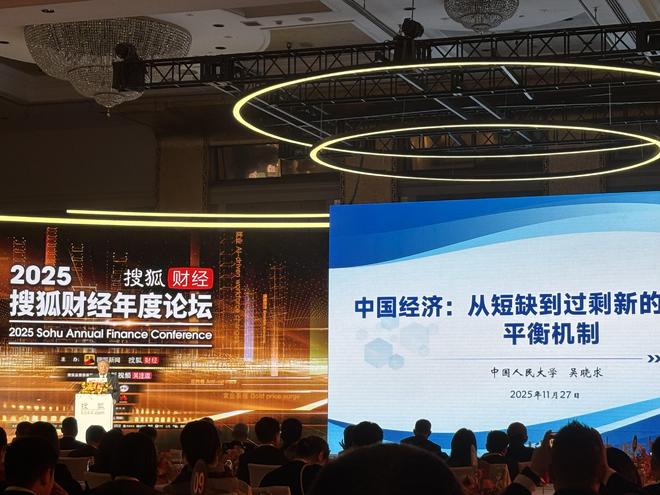
吴晓求:为什么中国人活得很累?房地产价格下降制约消费扩张
Sou Hu Cai Jing· 2025-11-27 07:35
Core Viewpoint - The Chinese economy is undergoing a fundamental transformation from a state of scarcity to one of surplus, which has occurred in just over 40 years. This shift necessitates a reevaluation of consumption expansion strategies in the current economic context [2][4][5]. Group 1: Economic Transformation - The transition from a scarcity economy to a surplus economy is marked by rapid economic growth, with per capita GDP increasing from $150 to $13,500 over the past 40 years [4]. - All 220 sub-industries in China are currently experiencing surplus conditions, indicating a need for new management strategies to address this economic state [4]. Group 2: Consumption Expansion - To expand consumption, income levels must increase, which is heavily reliant on employment. Without sufficient employment, income growth becomes challenging [5]. - The current decline in real estate prices, which constitute 60% of household wealth, severely restricts consumption expansion. Legal protection of reasonable stock wealth is essential [6]. Group 3: Wealth and Social Security - The importance of preserving and enhancing stock wealth is emphasized, as it plays a crucial role in sustaining consumption expansion. The current societal focus on income rather than wealth preservation is problematic [6]. - There is a need for improvements in the social security system to alleviate future uncertainties and enhance consumer confidence. Adjustments in fiscal spending towards social welfare are recommended [7]. Group 4: Investment and Market Dynamics - Investment strategies should focus on iterative adjustments and industry upgrades, with a growing role for social capital in identifying future directions and managing surplus conditions [8].