消费扩张

Search documents
吴晓求:严刑峻法拆解资本市场“雷点”,构建消费扩张三重路径
2 1 Shi Ji Jing Ji Bao Dao· 2025-11-28 05:36
Group 1 - The core concern of the current market is the presence of hidden risks ("雷") in listed companies, which are exacerbated by intermediary institutions [1] - The primary goal for the "十五五" period is to eliminate these hidden risks and create a healthy market environment [1][2] - A strict legal deterrent system is necessary to prevent fraud and ensure compliance within the market [2][3] Group 2 - Three core paths to address the challenge of consumption expansion include increasing income levels, protecting existing wealth, and improving the social security system [2] - Income growth is fundamentally linked to job creation, which requires the development of both private and state-owned economies [2] - The decline in real estate prices, which constitute 60% of household wealth, significantly hampers consumption expansion [2] Group 3 - A dual protection mechanism for existing wealth is proposed, emphasizing both legal safeguards and cultural recognition of wealth's importance [2][3] - Addressing residents' concerns about future uncertainties is crucial for stimulating current consumption [2] - The adjustment of fiscal spending towards social welfare is recommended to alleviate residents' worries [2] Group 4 - The need for severe legal consequences for those who conceal risks in the market is emphasized, including potential life sentences and a civil compensation mechanism [3] - Optimizing consumption scenarios is essential as the number of high-net-worth individuals increases, requiring tailored consumption experiences [3] - Investment should focus on industrial upgrades and be increasingly directed towards social capital to identify future directions [3] Group 5 - The transition from scarcity to surplus represents a new phase in China's economic development, necessitating systemic reforms to establish a new dynamic balance [3] - The combination of stringent legal measures and innovative macro-management is vital for fostering sustainable and healthy economic growth [3]
吴晓求:严刑峻法拆解资本市场“雷点” 构建消费扩张三重路径
2 1 Shi Ji Jing Ji Bao Dao· 2025-11-28 05:21
Core Viewpoint - The primary concern in the capital market is the presence of hidden risks ("雷"), and the goal for the "十五五" period is to eliminate these risks through stringent legal measures [1][3]. Group 1: Consumption Expansion - The first path to address consumption expansion is to increase income levels, which fundamentally relies on job creation through the development of both private and state-owned economies [2]. - The second path involves effectively protecting and appreciating existing wealth, particularly as real estate prices decline, which significantly impacts consumer spending since it constitutes 60% of household wealth [2]. - The third path is to improve the social security system, as residents' concerns about future uncertainties suppress current consumption; reallocating fiscal resources towards social welfare is recommended [2][3]. Group 2: Capital Market Reform - The goal for the capital market during the "十五五" period is to ensure there are no hidden risks, which requires the implementation of the strictest legal deterrents against fraud [1][3]. - Proposed legal reforms include amending criminal laws to impose severe penalties on fraudsters and establishing a civil compensation mechanism based on group litigation to ensure significant financial repercussions for offenders [3]. - Emphasizing the importance of optimizing consumption scenarios, the increasing number of high-net-worth individuals necessitates tailored consumption environments, as consumption upgrades are seen as vital for economic growth [3]. Group 3: Investment Strategy - Investment should focus more on industrial upgrades and iterations, with a recommendation to allocate more investments to social capital, which is better positioned to identify excesses and future directions [3]. - The transition from scarcity to surplus in the Chinese economy requires systemic reforms to establish a new dynamic balance, ensuring long-term and healthy economic growth [3].
2025搜狐财经年度论坛圆满落幕,吴晓求、刘纪鹏、阎学通、吴向东等20余位嘉宾共探中国经济韧性
Sou Hu Cai Jing· 2025-11-28 01:59
Group 1 - The 2025 Sohu Finance Annual Forum was successfully held in Beijing, featuring over twenty authoritative guests from academia, business, and investment sectors discussing key topics such as macro policies, industrial upgrades, corporate globalization, capital market reforms, and international dynamics [1] - Wu Xiaoqiu, a professor and former vice president of Renmin University, highlighted that China's economy has transitioned from a "shortage era" to an "excess stage" within just over forty years, emphasizing the need to expand consumption under current conditions [3] - Liu Jipeng, a professor at China University of Political Science and Law, identified three key factors for the sustainable development of A-shares after surpassing 4000 points: major shareholder reductions, low-interest buybacks, and utilizing capital markets for the benefit of investors [5] Group 2 - Teng Tai, an economist, proposed three unconventional measures to achieve the "14th Five-Year Plan" goal of a 6% annual growth rate in retail sales of consumer goods, including issuing a trillion yuan in universal consumption vouchers, reallocating state-owned equity to enhance social security, and creating a wealth effect through capital markets [7] - Yan Xuetong, honorary dean of Tsinghua University's International Relations Institute, stated that the changes in the international situation in 2025 cannot be explained by structural factors but are determined by the actions of major power decision-makers [9] - Sun Liping, a sociologist, noted that China's economy is at a turning point characterized by "overdraft, contraction, and internal competition," requiring comprehensive restoration to return to normal circulation [11] Group 3 - Huang Shaoqing, a professor at Shanghai Jiao Tong University, emphasized the importance of regulating local government economic interventions to combat "involution and efficiency traps" [13] - Zhang Bo, director of the 58 Anjuke Research Institute, indicated that the real estate sector is transitioning from high-leverage expansion to high-quality development, moving away from the "real estate-only" wealth logic [16] - Shi Yongqing, founder and chairman of the Zhongyuan Group, suggested that areas with stagnant population growth should halt land sales to allow existing properties to be absorbed [20] Group 4 - Zhang Ruipeng, vice president of Yili Group, discussed the shift in China's dairy industry from "quantity-driven" to "quality-driven," highlighting the importance of deep processing in industry upgrades [24] - Wu Xiangdong, chairman of Jin Dong Investment Group, stressed that white liquor companies must innovate to achieve breakthroughs during the industry's downturn [27] - Zhen Shaoqiang, president of Penghui Energy Group, noted that the energy storage industry is experiencing a "sweet trouble," with increasing demand but also entering a period of adjustment and intensified competition [41] Group 5 - Liang Yonghui, deputy general manager of Shandong Zhaojin Refining, pointed out that while the long-term bullish trend for gold remains, a price adjustment is expected in the short term due to rapid increases in 2025 [45] - Li Tian, a fund manager at Daqing Investment, highlighted that the rise of new consumer brands is driven by the "she economy," which presents both opportunities and challenges for sustained growth [49] - Mao Dingding, a fund manager at Chuangjin Hexin Fund, indicated that the U.S. biotech sector is approaching a significant investment turning point, with opportunities for both beta and alpha returns [51]


为什么中国人活得累?吴晓求:存量财富难以保障改善现有生活
Nan Fang Du Shi Bao· 2025-11-27 09:07
Core Viewpoint - The Chinese economy is undergoing fundamental changes, transitioning from a state of scarcity to one of surplus, which requires new strategies for managing economic expansion and consumption [1][3]. Group 1: Economic Transition - The core change in the Chinese economy is the shift from a scarcity economy to a surplus economy [1]. - There is a need to explore how to expand consumption under the current economic conditions, focusing on the underlying constraints [3]. Group 2: Consumption Expansion - To effectively expand consumption, it is essential to increase income levels, which are primarily driven by employment opportunities, particularly in the private sector [3]. - The relationship between consumption expansion and existing wealth is critical, with real estate prices currently in a downward trend, affecting 60% of household wealth and severely limiting consumption growth [3]. Group 3: Wealth Preservation - The appreciation and protection of existing wealth depend on legal safeguards and cultural recognition of its importance [3]. - The lack of emphasis on preserving existing wealth contributes to a cycle where current income alone cannot sustain living standards, highlighting the need for wealth preservation to facilitate a virtuous economic cycle [3]. Group 4: Societal Concerns - There is a prevailing sense of uncertainty among the Chinese population regarding the future, which influences savings behavior, particularly among younger generations whose income levels have not increased significantly [4]. - The elderly population tends to save their increased retirement income rather than spend it, leading to lower consumption levels [4]. Group 5: Social Security and Consumption Scenarios - Improving the social security system and adjusting fiscal spending towards public welfare is necessary for sustainable economic growth [5]. - As per capita GDP in China is projected to reach $1,400 by 2025, there will be an increasing number of high-net-worth individuals, necessitating the optimization of consumption scenarios across different social strata [5]. - Consumption upgrades should not be viewed as wasteful; rather, they are essential for driving economic growth in modern conditions [5].
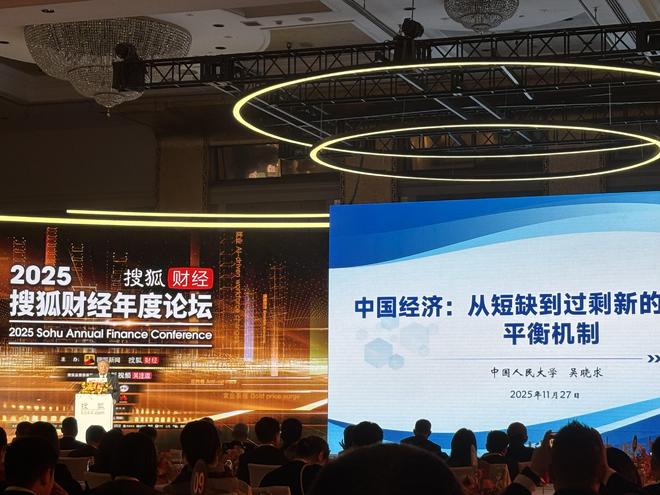
吴晓求:为什么中国人活得很累?房地产价格下降制约消费扩张
Sou Hu Cai Jing· 2025-11-27 07:35
Core Viewpoint - The Chinese economy is undergoing a fundamental transformation from a state of scarcity to one of surplus, which has occurred in just over 40 years. This shift necessitates a reevaluation of consumption expansion strategies in the current economic context [2][4][5]. Group 1: Economic Transformation - The transition from a scarcity economy to a surplus economy is marked by rapid economic growth, with per capita GDP increasing from $150 to $13,500 over the past 40 years [4]. - All 220 sub-industries in China are currently experiencing surplus conditions, indicating a need for new management strategies to address this economic state [4]. Group 2: Consumption Expansion - To expand consumption, income levels must increase, which is heavily reliant on employment. Without sufficient employment, income growth becomes challenging [5]. - The current decline in real estate prices, which constitute 60% of household wealth, severely restricts consumption expansion. Legal protection of reasonable stock wealth is essential [6]. Group 3: Wealth and Social Security - The importance of preserving and enhancing stock wealth is emphasized, as it plays a crucial role in sustaining consumption expansion. The current societal focus on income rather than wealth preservation is problematic [6]. - There is a need for improvements in the social security system to alleviate future uncertainties and enhance consumer confidence. Adjustments in fiscal spending towards social welfare are recommended [7]. Group 4: Investment and Market Dynamics - Investment strategies should focus on iterative adjustments and industry upgrades, with a growing role for social capital in identifying future directions and managing surplus conditions [8].