
家乡味道

Search documents
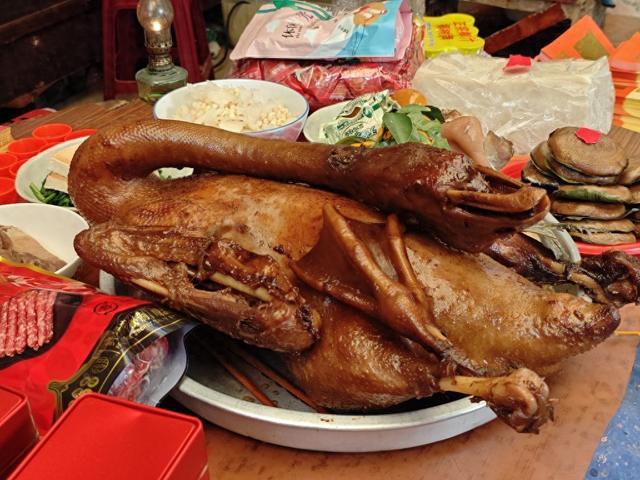
在爷爷奶奶的卤鹅里品潮汕年味
Xin Lang Cai Jing· 2026-02-21 03:52
Group 1 - The article highlights the cultural significance of traditional customs and food during the Lunar New Year celebrations in the author's hometown, particularly focusing on the preparation of a special dish, marinated goose, which is essential for family gatherings and ancestral worship [2][3][5]. - The preparation of marinated goose involves meticulous attention to detail, including selecting the right goose and mastering the marination process, which reflects the deep-rooted culinary traditions passed down through generations [4][5]. - The article emphasizes the importance of family and tradition, showcasing how older generations play a crucial role in maintaining these customs, while younger generations may be more disconnected from them [5][6]. Group 2 - The narrative illustrates the variety of traditional foods associated with the Lunar New Year, such as sweet soups and various dumplings, which evoke a sense of nostalgia and connection to one's roots [5][6]. - The author notes that despite the modern lifestyle and geographical dispersion of families, the flavors and traditions of the hometown remain a significant part of their identity, especially during festive occasions [5][6]. - The article concludes with a reflection on the emotional comfort and fulfillment that comes from sharing these traditional meals with family during the New Year, symbolizing a sense of completeness for the year [6].
新春走基层·山乡新貌|在爷爷奶奶的卤鹅里品潮汕年味
Xin Lang Cai Jing· 2026-02-21 02:49
Group 1 - The article highlights the cultural significance of traditional customs and food during the Lunar New Year celebrations in the Chaoshan region of Guangdong, emphasizing the importance of family and heritage [1][3][9] - The preparation of the marinated goose is described as a meticulous process, showcasing the skills and traditions passed down through generations, particularly the expertise of the grandmother in selecting and preparing the goose [3][8][9] - The article illustrates how food serves as a connection to home and family, with various traditional dishes evoking memories and emotions associated with the New Year celebrations [9][11] Group 2 - The significance of the marinated goose as a centerpiece in festive meals is underscored, indicating that it is a crucial element in the local customs and celebrations [3][5][9] - The narrative reflects on the evolving nature of traditional practices, where modern living conditions have led to a wider variety of offerings during ancestral worship, yet the core customs remain deeply rooted [8][9] - The article conveys a sense of nostalgia and the emotional ties to traditional foods, suggesting that these culinary experiences are integral to the identity of the community and its members, especially those who have moved away [9][11]

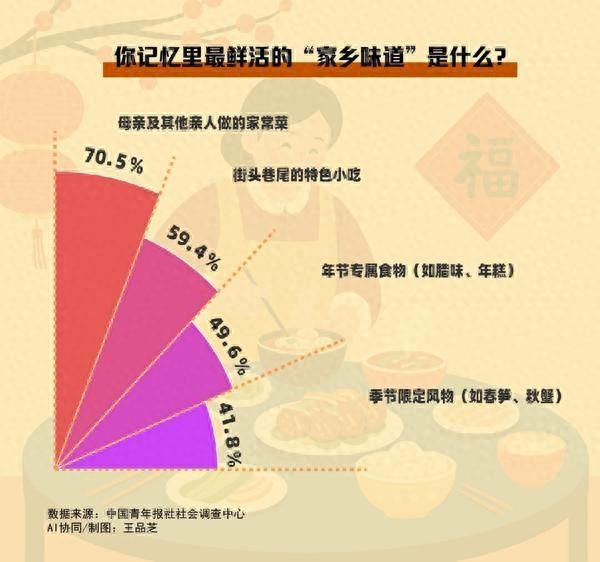
你记忆里最鲜活的“家乡味道”是什么
Xin Lang Cai Jing· 2026-02-12 22:40
Core Insights - The survey conducted by China Youth Daily and Wenjuan.com reveals that 70.5% of young respondents associate the most vivid "hometown flavors" with home-cooked meals made by their mothers and relatives, followed by local street snacks at 59.4% [2][3] - A significant 89.7% of respondents feel that returning home for the Spring Festival rejuvenates them and boosts their confidence for the new year ahead [6] Group 1: Hometown Flavors - The most cherished "hometown flavors" include home-cooked meals (70.5%), local street snacks (59.4%), festive foods like cured meats and rice cakes (49.6%), seasonal specialties (41.8%), and natural scents from the countryside (38.1%) [3][4] - Specific examples of beloved hometown foods include breakfast items like dumplings and noodles, as well as traditional dishes such as lamb soup and spicy hot pot [3][4] Group 2: Emotional Connection to Home - Key moments that evoke a sense of "returning home" for respondents include reuniting with family (66.0%), hearing familiar dialects (63.6%), and seeing recognizable streets or buildings (52.2%) [4] - The emotional impact of returning home is highlighted by the notion that family interactions and familiar environments serve as a source of strength and motivation for young individuals [6] Group 3: Demographics of Respondents - The survey included a diverse demographic, with 21.0% of respondents being post-2000s, 50.1% post-1990s, and 28.9% post-1980s; the gender distribution was 44.3% male and 55.7% female [7]
“世界尽头”的中餐厅:家乡味道,温暖南极旅途
Xin Lang Cai Jing· 2026-01-01 07:30
Core Insights - The article highlights the growing popularity of a Chinese restaurant named "Xiao Yan" in Punta Arenas, Chile, which serves as a stop for tourists heading to Antarctica, particularly Chinese visitors during the Antarctic tourism season from November to March [1][2]. Group 1: Restaurant Operations - The restaurant operates a "dual menu" system to cater to both local Chileans and Chinese tourists, offering a fusion menu that aligns with local tastes and a classic Chinese menu featuring traditional dishes [3][5]. - The restaurant extends its operating hours during the tourist season to accommodate the influx of customers, sometimes staying open until midnight [2]. Group 2: Ingredient Sourcing and Challenges - Due to its remote location, sourcing ingredients for the restaurant poses challenges, with many Chinese condiments and ingredients needing to be procured from Santiago and flown back to Punta Arenas [5]. - The restaurant also hand-makes tofu, reflecting the effort to maintain authentic flavors despite ingredient limitations [5]. Group 3: Customer Experience - The restaurant has received positive reviews from tourists, with customers expressing satisfaction with the authentic taste of home-cooked Chinese meals, which they find particularly valuable while abroad [6]. - The owner emphasizes the emotional connection to familiar flavors, noting that the distance from home makes these tastes even more precious [6].
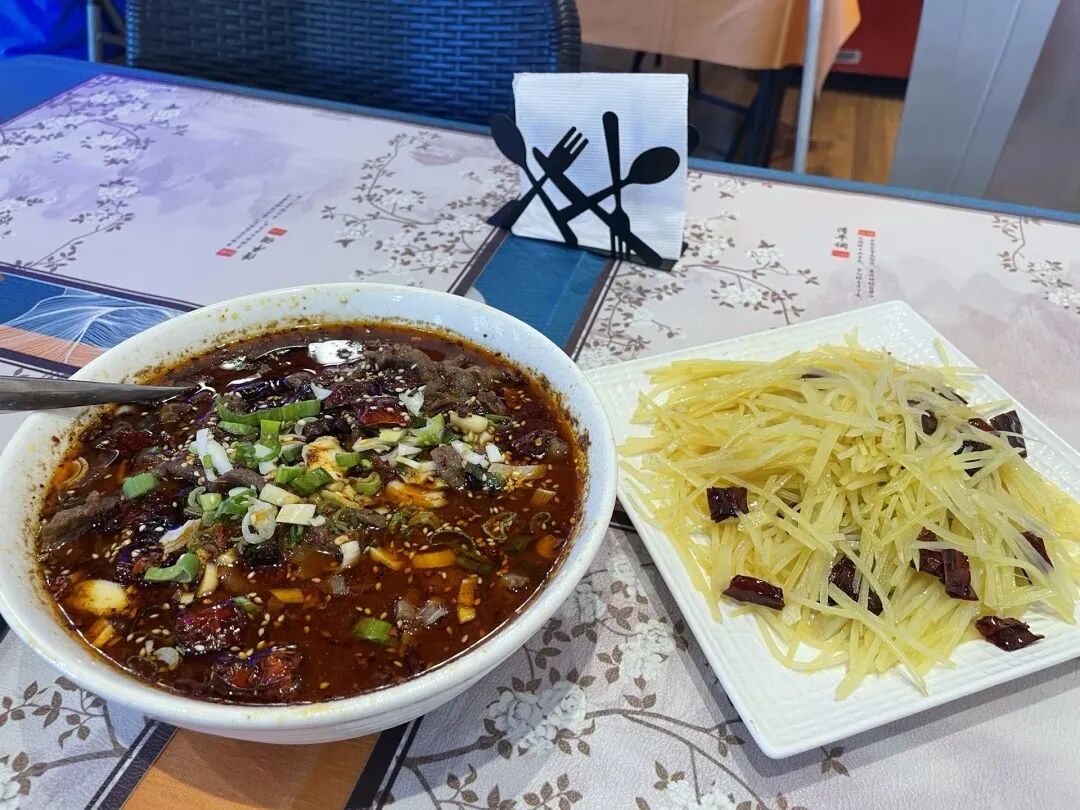
坛子肉:藏在时光里的烟火味
Xin Lang Cai Jing· 2025-12-24 17:47
Core Idea - The article reflects on the nostalgic memories associated with the traditional preparation of "坛子肉" (Tanzi meat), highlighting its significance in the author's culture and family traditions. Group 1: Cultural Significance - "坛子肉" is a traditional dish that represents the essence of family and cultural heritage, particularly during the winter season in the author's hometown [2][5] - The preparation of "坛子肉" is a communal activity that brings families and communities together, showcasing the importance of shared experiences in cultural practices [2][4] Group 2: Preparation Process - The process of making "坛子肉" involves carefully rendering pig fat and cooking pork until it reaches a golden color, which is then preserved in a clay jar with the rendered fat [3][4] - The method of preservation using pig fat not only keeps the meat fresh but also enhances its flavor, demonstrating traditional techniques passed down through generations [3][5] Group 3: Emotional Connection - The memories associated with "坛子肉" evoke feelings of warmth and comfort, symbolizing resilience and the ability to find joy in simple pleasures despite hardships [5][6] - The dish serves as a reminder of childhood and familial bonds, encapsulating the essence of home and the passage of time [5][6]
马鼻海蛎饼(多味斋)
Ren Min Ri Bao· 2025-11-30 22:20
Core Viewpoint - The oyster pancake from Mabi Town in Lianjiang County is not only a beloved local delicacy but also a cultural symbol and emotional connection for the community, representing hospitality and nostalgia for those who have left their hometown [1][2]. Group 1: Product Description - Mabi Town is known as the "hometown of oysters" with unique marine resources that contribute to the popularity of oyster pancakes [1]. - The preparation of oyster pancakes involves a traditional recipe using a mixture of rice and yellow soybeans, along with fresh oysters and local vegetables, resulting in a crispy exterior and flavorful filling [1]. - The cooking process is meticulous, ensuring the pancakes are perfectly fried to achieve a golden color and delightful aroma [1]. Group 2: Cultural Significance - Oyster pancakes serve as a cultural symbol in Mabi Town, often being the first dish served during celebrations and gatherings, highlighting their role in local hospitality [2]. - During festive seasons, returning residents eagerly line up for freshly made oyster pancakes, showcasing their popularity and the emotional connection to home [2]. - The dish has transcended local boundaries, with some even shipping it internationally to satisfy the cravings of expatriates, illustrating its significance as a comfort food [2].