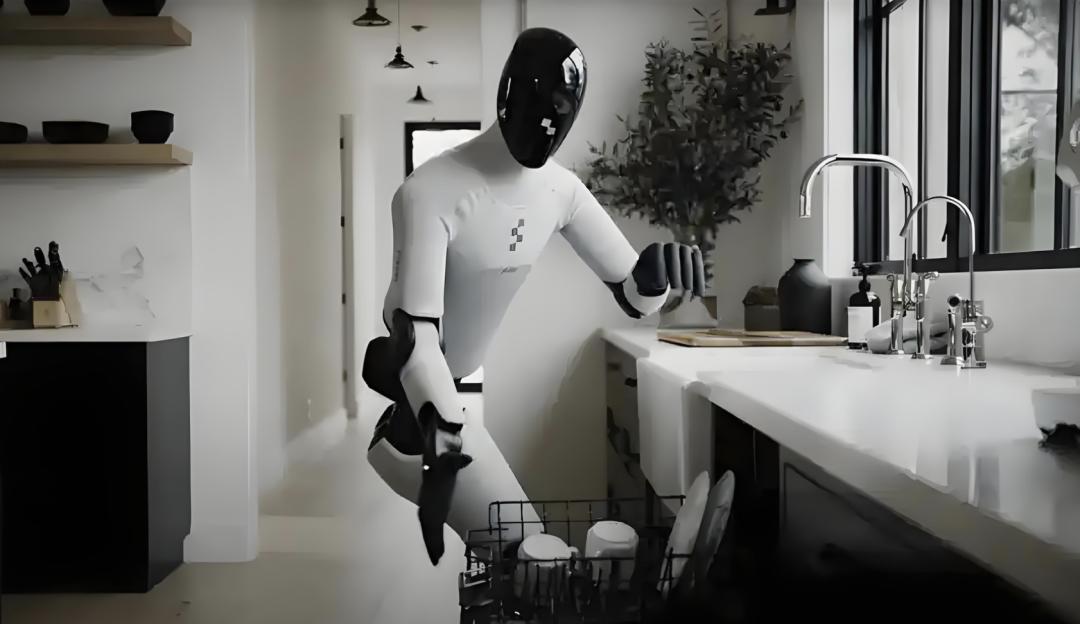
家庭场景机器人

Search documents
专访松延动力姜哲源:春晚是一张牌桌,要打赢这场排位赛
Xin Lang Cai Jing· 2026-02-16 12:59
Core Insights - The performance of Songyan Power's robots at the Spring Festival Gala signifies a shift in the embodied intelligence industry from merely showcasing technology to competing for market position [9][10] - The company aims to transition from passive sales to proactive solutions, targeting the K12 education market domestically and the Prosumer market internationally [12][13] - The ultimate goal is to penetrate the household market, which is seen as a trillion-dollar opportunity, with the belief that the future of robots will extend beyond simple tasks to becoming integral household assistants [18] Company Performance and Strategy - Songyan Power showcased a diverse lineup of robots during the Spring Festival Gala, including the Bumi robot and a lifelike humanoid robot, which required extensive technical adjustments to ensure performance stability [2][5] - The company underwent a rigorous testing process leading up to the event, with over 300 iterations of algorithms to refine the robots' movements [4] - The introduction of the humanoid robot represents a significant technological advancement for the company, which plans to focus on this area in 2026 [5][10] Market Dynamics - The humanoid robot market is projected to see substantial growth, with global shipments expected to reach approximately 18,000 units in 2025, a 508% increase year-over-year, and over 50,000 units in 2026, with a growth rate exceeding 700% [9][10] - The Spring Festival Gala serves as a major exposure platform, helping new brands build trust and credibility in a competitive landscape [9][10] - The company recognizes the need to adapt to changing investor expectations, moving beyond flashy demonstrations to focus on concrete financial metrics [10][12] Technological and Competitive Landscape - The company emphasizes that the core barrier in the industry is not technology itself but the iterative understanding of founders [15][16] - The industry is awaiting a significant breakthrough, referred to as the "ChatGPT moment," which hinges on the ability to collect diverse, high-quality data efficiently [17] - The company is preparing for potential supply chain disruptions by establishing inventories of components and finished products to ensure consistent delivery [17] Future Outlook - The company aims to leverage its cost advantages to penetrate the K12 education market while expanding its international presence [12][13] - The long-term vision includes robots becoming household managers, facilitating everyday tasks and serving as a significant entry point for e-commerce [18] - The company remains vigilant about the fast-paced changes in the industry, maintaining a sense of urgency to adapt and thrive [17][18]


前掌门教育CEO创办,未来不远完成2亿元天使轮融资、聚焦家庭场景机器人
Sou Hu Cai Jing· 2026-01-12 10:44
Core Insights - Futuring Robot, a company focused on C-end household scenarios, has completed a 200 million yuan angel round financing, led by Zhenge Fund with participation from Lianxin Capital, Yuanlai Capital, and existing shareholders [1] Company Overview - Founded in 2022, Futuring Robot aims to address real user needs in product design and technology iteration for household robots [1] - The company has entered over 200 real households since launching practical tests in the second half of 2025, providing more than 21,000 hours of household services [1] Funding and Utilization - The 200 million yuan funding will primarily be used for product iteration, enhancement of core algorithms and system capabilities, and larger-scale deployment in real household scenarios [1] Leadership - The founder and CEO, Zhang Yi, is a graduate of Shanghai Jiao Tong University and is known for founding and previously leading the listed education company, Zhangmen Education [1]

人形机器人的家庭场景拐点就这样到了?
3 6 Ke· 2025-10-17 12:11
Core Insights - The industry is witnessing a significant shift towards the practical integration of household robots, moving from mere demonstrations to actual technological feasibility and market readiness [1][2][4] - The anticipated timeline for household robots to become mainstream has been revised, with some experts suggesting that while initial breakthroughs may occur by 2028, full integration into everyday life remains a complex challenge [4][11] Industry Trends - The focus of technological development is shifting towards practical applications in various life scenarios, including household, service, and industrial sectors [2][4] - Major players in the industry are actively demonstrating the feasibility of household robots, indicating a move away from the previously held belief that such technology was far from realization [1][4] Technological Challenges - The successful deployment of household robots hinges on overcoming significant barriers related to safety, cost control, and the maturity of technology [4][12] - Current robots face challenges in achieving high success rates in task execution, which is essential for user acceptance and safety [9][11] Market Potential - The household robotics market is projected to be worth trillions, driving continued investment and innovation in the sector [4] - Companies are increasingly recognizing the need for robots to adapt to non-structured environments and meet personalized demands, which are critical for their evolution towards general intelligence [4][10] User Acceptance Issues - There are significant barriers to user acceptance, including the complexity of robot operation and the psychological impact of the "uncanny valley" effect, which affects how users perceive humanoid robots [13][14] - The industry must address the need for user training and the development of more intuitive interfaces to facilitate broader adoption of household robots [11][13]