
仿生人形机器人

Search documents
2026资本“火力全开”,又捧出两家机器人独角兽
3 6 Ke· 2026-02-25 01:23
Core Insights - The article highlights the significant growth and investment activity in the embodied intelligence sector, particularly focusing on the recent financing achievements of leading companies like Qianxun Intelligent and Zhi Ping Fang [1][3]. Group 1: Financing and Investment - Qianxun Intelligent completed two rounds of financing totaling nearly 2 billion yuan, marking a new high in the embodied intelligence sector since 2026 [1]. - Zhi Ping Fang announced a B-round financing exceeding 1 billion yuan, with its valuation surpassing 10 billion yuan, positioning it as a leader in the domestic embodied intelligence market [4]. - In January alone, over 20 financing events in the global embodied intelligence and humanoid robot sectors were reported, with a total disclosed financing amount exceeding 16 billion yuan [5]. Group 2: Market Trends and Developments - The embodied intelligence industry is experiencing a surge in capital investment, leading to advancements in technology and product development, which in turn boosts market confidence [8]. - The industry is still in its early stages, with projections indicating that the global humanoid robot market will reach 6.339 billion yuan by 2025 and potentially exceed 100 billion yuan by 2030 [9]. - Despite technological breakthroughs, the industry faces challenges related to production costs, regulatory issues, and the need for practical applications beyond mere demonstrations [11][13]. Group 3: Technical Challenges - Key technical challenges for humanoid robots include the integration of hardware for limbs, stability of walking algorithms, and the complexity of fine motor control [9]. - Current humanoid robots, while visually impressive, still struggle with natural interaction, indicating a gap between appearance and functionality [11]. - The high costs associated with humanoid robots stem from the need for custom-designed components and high-precision motors, complicating mass production efforts [13].


技术突破与生态构建并进 北京机器人产业加速“进化”
Zhong Guo Xin Wen Wang· 2026-02-24 14:59
Core Viewpoint - The Beijing robotics industry is experiencing rapid growth and innovation, highlighted by significant advancements in humanoid robots and their applications in various sectors, including entertainment and public events [1][2][3]. Group 1: Industry Developments - In early 2026, Beijing's robotics sector reported positive developments, including over 1,000 global orders for humanoid robots worth over 100 million [2]. - The first embodied intelligent super factory in the Beijing-Tianjin-Hebei region has begun construction, indicating a commitment to scaling production capabilities [2]. - The launch of the new generation of general-purpose robot platform, "Embodied Tiangong 3.0," with millimeter-level operational precision, showcases technological advancements [2]. Group 2: Government Support and Strategic Importance - The Beijing government has prioritized the robotics industry in its 2026 work report, emphasizing the importance of green advanced energy, new energy vehicles, and robotics as key projects [2][3]. - The development of humanoid robots is seen as a strategic move to leverage Beijing's high-tech resources and enhance regional industrial collaboration [3]. Group 3: Competitive Advantages - Beijing's robotics industry benefits from a strong foundation in research and talent, with top universities and research institutions contributing to innovation [3]. - The city has established a unique ecosystem for testing and validating robotics technology in real-world scenarios, enhancing the development of smart city applications [3]. Group 4: Future Directions - Continuous technological breakthroughs and the commercialization of research outcomes are essential for maintaining competitiveness in the global robotics market [4]. - The establishment of a collaborative ecosystem involving government, industry, academia, and finance is crucial for advancing the robotics sector in Beijing [4].
机器人扎堆上“春晚” 从业者:“才艺表演”倒逼商业化进程加速
Mei Ri Jing Ji Xin Wen· 2026-02-23 11:56
Core Viewpoint - The 2026 CCTV Spring Festival Gala showcased a significant presence of robots, highlighting the industry's push for exposure and potential orders amidst unclear application scenarios [1][6][9] Group 1: Industry Trends - The robot industry is entering a commercialization phase, with humanoid robots being recognized as part of this new era, although it is still in its infancy [1][2] - There is a growing expectation from audiences for robots to perform beyond simple talent shows, reflecting a higher acceptance and understanding of robots in China compared to abroad [2][4] - The interaction between robots and human performers has evolved, with many performances now featuring deeper engagement rather than just solo acts [3][4] Group 2: Sponsorship and Exposure - Many robot companies invested heavily in sponsorship fees to appear on the Spring Festival Gala, indicating a strategic move to gain visibility and attract orders [6][7] - The presence of multiple robot brands at the gala is seen as a way to boost overall industry confidence and create a buzz around the sector [7][9] - Companies like EX Robotics emphasize the importance of establishing a unique identity in a crowded market to attract investment [9][10] Group 3: Challenges and Future Outlook - Despite the excitement, the industry faces challenges in finding viable application scenarios, with many companies still struggling to achieve profitability [10][11] - The industry is expected to undergo a "survival of the fittest" phase, where only those with unique technologies and operational capabilities will thrive [10][11] - The debate continues between the sustainability of performance-based robots versus those designed for practical applications in factories and homes [12][13] Group 4: Commercialization and Application - The commercialization of humanoid robots is seen as a pressing need, with companies exploring various business models, including performance and practical applications [12][13] - The integration of advanced AI and hardware is anticipated to enhance robots' capabilities, focusing on specific sectors that can yield quick commercial value [13][14] - The complexity of household service scenarios remains a significant barrier to widespread adoption, with industry consensus indicating that this will take longer to develop [15]
新春走基层|解密春晚上的机器人“蔡明”
Xin Lang Cai Jing· 2026-02-20 13:28
Core Insights - The article highlights the debut of humanoid robots on the CCTV Spring Festival Gala, showcasing advancements in robotics technology and its application in entertainment [2][4][12]. Group 1: Technological Advancements - The humanoid robot developed by Songyan Power features a high degree of human likeness, with facial control frequency upgraded from 10Hz to 60Hz, and added degrees of freedom for enhanced movement [3][4]. - The development process involved overcoming significant technical challenges, including rapid iteration of algorithms and structural adjustments to meet the dynamic requirements of live performances [5][6]. - The team successfully completed a 1:1 replica of the humanoid robot in just thirty days, demonstrating industry-leading speed in technical iteration [5][6]. Group 2: Application and Market Potential - The performance on the Spring Festival Gala represents a significant step in applying humanoid robot technology in everyday life, aiming to enhance emotional connection and interaction [3][12]. - The market for humanoid robots in China is projected to grow by 133% this year, reaching 28,000 units, driven by decreasing production costs and increased accessibility [12][13]. - Songyan Power is positioned as a pioneer in the consumer-grade humanoid robot market, with the introduction of "Xiao Bumi," designed for educational and family settings [13][14]. Group 3: Team Dynamics and Challenges - The project required extensive collaboration among various teams, emphasizing the importance of teamwork and adaptability in achieving technical goals [5][9]. - The team faced challenges in ensuring precise movement and interaction during performances, necessitating rigorous training and rehearsal in a replicated stage environment [9][10]. - The experience gained from this project has deepened the team's understanding of creating technology that resonates emotionally with users, aligning with the vision of harmonious human-robot coexistence [14].
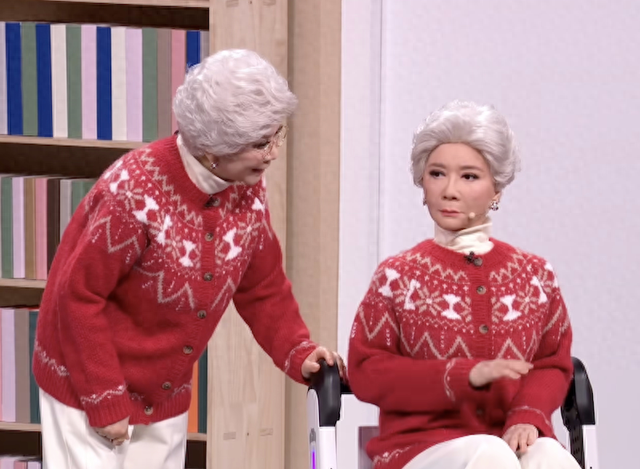
加速进化机器人参与春晚节目传统非遗醒狮
Xin Lang Cai Jing· 2026-02-18 10:15
Core Viewpoint - Multiple robotics companies showcased their technological advancements during the 2026 CCTV Spring Festival Gala, highlighting the growing integration of robotics in entertainment and cultural presentations [2][8]. Group 1: Company Highlights - Yushutech, Songyan Power, Magic Atom, and Galaxy General presented humanoid robots through various performances, including martial arts and comedy skits, demonstrating significant technological breakthroughs [4][10]. - The program "Wu BOT" featured Yushutech's G1 and H2 humanoid robots performing complex martial arts routines, showcasing their dynamic coordination and precision [4][10]. - Songyan Power's humanoid robots N2, E1, and Bumi made their debut in a skit, marking the first appearance of humanoid robots in a language program during the Spring Festival Gala [4][10]. Group 2: Technological Innovations - The humanoid robot created by Songyan Power, which closely mimicked the expressions of actress Cai Ming, was completed in just 30 days, overcoming challenges such as resizing the head for optimal on-screen appearance [5][11]. - Magic Atom's MagicBot Z1 executed a 360° stunt, a first for humanoid robots of its size, achieved through optimized joint response speed for stability and fluidity during motion [5][11]. - Galaxy General's robot demonstrated practical skills like folding clothes and grasping objects, marking its first public appearance following a new funding round exceeding $300 million [5][11]. Group 3: Cultural Integration - The Booster K1 humanoid robot from Accelerated Evolution participated in the Beijing Spring Festival Gala, performing traditional lion dance, thus promoting cultural heritage through technology [6][12]. - The Booster K1 has also embarked on a global tour, showcasing Chinese traditional culture in cities worldwide, including Milan and Los Angeles, embodying the concept of "using technology to inherit culture" [12].

会交流能干活的机器人 多久能从舞台走入百姓家
Xin Lang Cai Jing· 2026-02-17 21:44
Core Insights - The Spring Festival Gala has showcased various types of robots, highlighting advancements in robotics technology and their potential future applications [2][3] - The evolution of humanoid robots from mere performance to practical applications is evident, with significant technological advancements enabling real-world functionalities [3][5] Group 1: Technological Advancements - Humanoid robots featured in the Spring Festival Gala have undergone millions of iterations for training and optimization, achieving high levels of realism in expressions and interactions [2] - The robots utilize self-developed facial drive algorithms and multimodal interaction models, allowing for dozens of human-like micro-expressions and actions [2] - The robots' ability to understand human emotions and respond appropriately is a result of extensive training on human interaction video data [2] Group 2: Practical Applications - The Galbot G1 robot, showcased at the gala, has transitioned from stage performance to real-life applications, capable of tasks such as greeting, interaction, ordering, and delivery [3][5] - Despite advancements, there remains a gap between performance robots and practical applications, particularly in industrial settings where precision is critical [4] Group 3: Industry Development - The Chinese robotics industry is experiencing rapid growth, with the embodied intelligence market expected to exceed one trillion yuan by 2035, impacting various sectors [5] - Different regions in China are developing differentiated strategies for the robotics industry, focusing on their unique strengths to foster collaborative development [5] Group 4: Talent and Future Trends - There is a significant talent gap in the robotics industry, particularly for professionals with systems engineering capabilities, necessitating collaboration between enterprises, universities, and research institutions for talent development [6] - The industry is expected to evolve towards a model that combines general core capabilities with deep specialization in vertical applications, addressing specific needs in areas like home care and industrial assembly [6]

人民日报谈春晚机器人浓度超高:具身智能未来已来
Xin Lang Cai Jing· 2026-02-17 15:25
Core Viewpoint - The article emphasizes the significant presence of humanoid robots at the Spring Festival Gala, highlighting the arrival of embodied intelligence and its potential applications in various sectors [1] Group 1: Technological Advancements - Humanoid robots showcased at the Spring Festival Gala included performances by 松延动力's bionic robots, 宇树科技's martial arts demonstrations, and 银河通用's interactive robots, marking a blend of technology and traditional culture [1] - The performance of humanoid robots required advanced capabilities in natural human-robot interaction, precise motion control, and instant algorithmic responses [1] - Innovations such as 松延动力's 32 motor-driven facial expressions, 宇树科技's first global side flip by a humanoid robot, and 银河通用's creation of the world's largest billion-level embodied intelligence dataset were highlighted [1] Group 2: Industry Implications - The integration of embodied intelligence into daily life is expected to enhance emotional value for consumers and improve productivity in industrial settings [1] - China's unique advantages, including a large market, diverse application scenarios, and a complete industrial chain, are driving the development of embodied intelligence [1] - The establishment of the first provincial humanoid robot innovation center in Beijing aims to foster a differentiated technological ecosystem for humanoid robots [1] Group 3: Future Outlook - The article suggests that the development of embodied intelligence is crucial for addressing labor shortages and enhancing overall productivity in the context of demographic changes [1] - The ongoing trend of technological innovation is anticipated to have a lasting impact on future industries, with 2026 projected as a pivotal year for the industrial application of embodied intelligence [1]
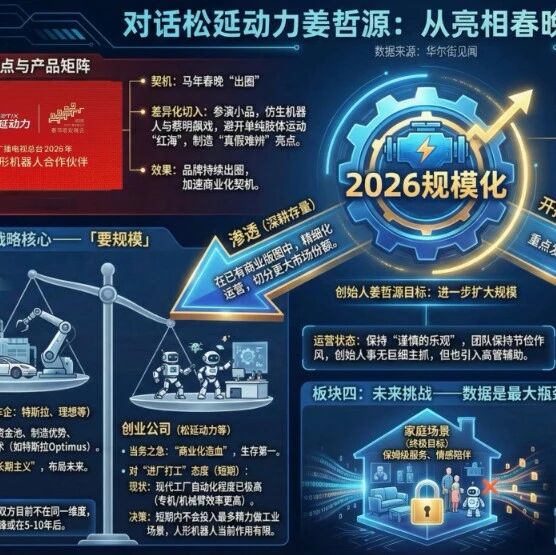
对话松延动力创始人姜哲源:从亮相春晚到「要规模」
华尔街见闻· 2026-02-17 11:30
Core Viewpoint - The article discusses the growth and challenges faced by Beijing Songyan Power Technology Group Co., Ltd. (Songyan Power) in the humanoid robot industry, highlighting its recent appearance on the Spring Festival Gala as a significant opportunity for brand exposure and commercialization [2][6][12]. Group 1: Company Overview and Strategy - Songyan Power's founder, Jiang Zheyuan, plans to expand the company's scale by 2026, focusing on two key strategies: "penetration" into existing markets and "exploration" of untapped markets, particularly in K12 education and consumer-grade robots [3][16][45]. - The humanoid robot "Xiao Bumi" is priced at around 10,000 yuan, aimed at making technology accessible to a broader range of educational institutions, especially those that cannot afford more expensive options [17][49]. Group 2: Market Competition and Challenges - The entry of automotive companies like Tesla and Li Auto into the humanoid robot market poses a challenge for startups, but Jiang remains cautiously optimistic, believing that the competition will not intensify for another five to ten years [5][24][60]. - The global demand for humanoid robots in industrial applications is projected to reach 30,000 units by 2026, indicating a growing market, although there are concerns about the actual suitability of humanoid robots for factory work due to existing automation technologies [25][28][31]. Group 3: Data and Technological Challenges - The article emphasizes that the biggest challenge for humanoid robots, especially in domestic settings, is the need for extensive and diverse data to enhance their capabilities, which is difficult to obtain due to privacy concerns [34][36][37]. - Jiang points out that while the technology for humanoid robots is advancing, the lack of high-quality data and effective data collection methods remains a significant barrier to achieving widespread adoption [56].
盘点春晚机器人名场面
Xin Lang Cai Jing· 2026-02-17 09:07
Group 1 - The 2026 CCTV Spring Festival Gala showcased a variety of robots, transforming them from cold mechanical devices into stage stars and symbols of technology [1] - The first performance featured four bipedal humanoid robots and one bionic robot collaborating with actors in a skit, highlighting the integration of robotics in entertainment [1] - Yushutech presented a martial arts program with multiple G1 robots and an H2 robot, demonstrating advanced martial arts movements and the fusion of traditional martial arts with modern technology [1] Group 2 - The performance of six humanoid robots MagicBot Z1 and two MagicBot Gen1 alongside popular artists showcased the synchronization and real-time collaboration capabilities of humanoid robots [1] - Galbot G1 participated in a microfilm, interacting with actors and demonstrating practical skills such as cleaning and object retrieval, bringing the application of intelligent robots into public view [1]
和蔡明演小品、跟沈腾演戏、给李宇春伴舞……机器人公司为何“砸钱”上春晚?业内:方便拉融资,但商业化落地才是行业关键
Mei Ri Jing Ji Xin Wen· 2026-02-17 09:05
Core Viewpoint - The increasing presence of robots in various performances, including the Spring Festival Gala, reflects a growing trend in the commercialization of humanoid robots, although the industry still faces challenges in finding practical applications and maintaining consumer interest [1][4][12]. Group 1: Robot Performances and Audience Expectations - The 2023 Spring Festival Gala featured a variety of robots performing talents, such as martial arts and acrobatics, which have become commonplace for audiences [2][4]. - Audience expectations have evolved beyond simple performances, with a desire for more interactive experiences between robots and human performers [4][8]. - Robots like "鹿小明" showcased interactive capabilities, enhancing audience engagement during performances [6][8]. Group 2: Industry Insights and Sponsorship - Many robot companies invested significantly in sponsorship fees to appear on the Spring Festival Gala, aiming for increased exposure and potential orders [9][10]. - The industry is characterized by a competitive landscape where companies seek to establish themselves as leaders to attract investment, often prioritizing visibility over immediate market logic [12][13]. - The presence of multiple robot brands at the gala is expected to boost overall industry confidence, although individual companies must demonstrate their ability to convert exposure into sales [9][12]. Group 3: Commercialization Challenges - The commercialization of humanoid robots is still in its early stages, with many companies struggling to find viable application scenarios [12][14]. - The debate continues between the value of performance-based marketing versus practical industrial applications, with a consensus that both approaches can coexist to stimulate demand [14][15]. - The complexity of household service scenarios remains a significant barrier to widespread adoption, with industry experts suggesting that the transition from performance to practical use will take time [15][16]. Group 4: Future Directions and Industry Evolution - The industry is expected to undergo a "二八分化" (80/20 rule) where resources will concentrate on leading companies as the market matures [13]. - The integration of advanced AI and robotics is anticipated to enhance the capabilities of humanoid robots, focusing on specific high-value applications in manufacturing and logistics [15][16]. - The need for data and technological maturity is critical for the successful deployment of robots in practical scenarios, particularly in complex environments like homes [15][16].
