
家族控股

Search documents
钓鱼第一股上市首日翻倍,95后女将掌舵,家族四年分红超4亿
Xin Lang Cai Jing· 2026-02-10 13:07
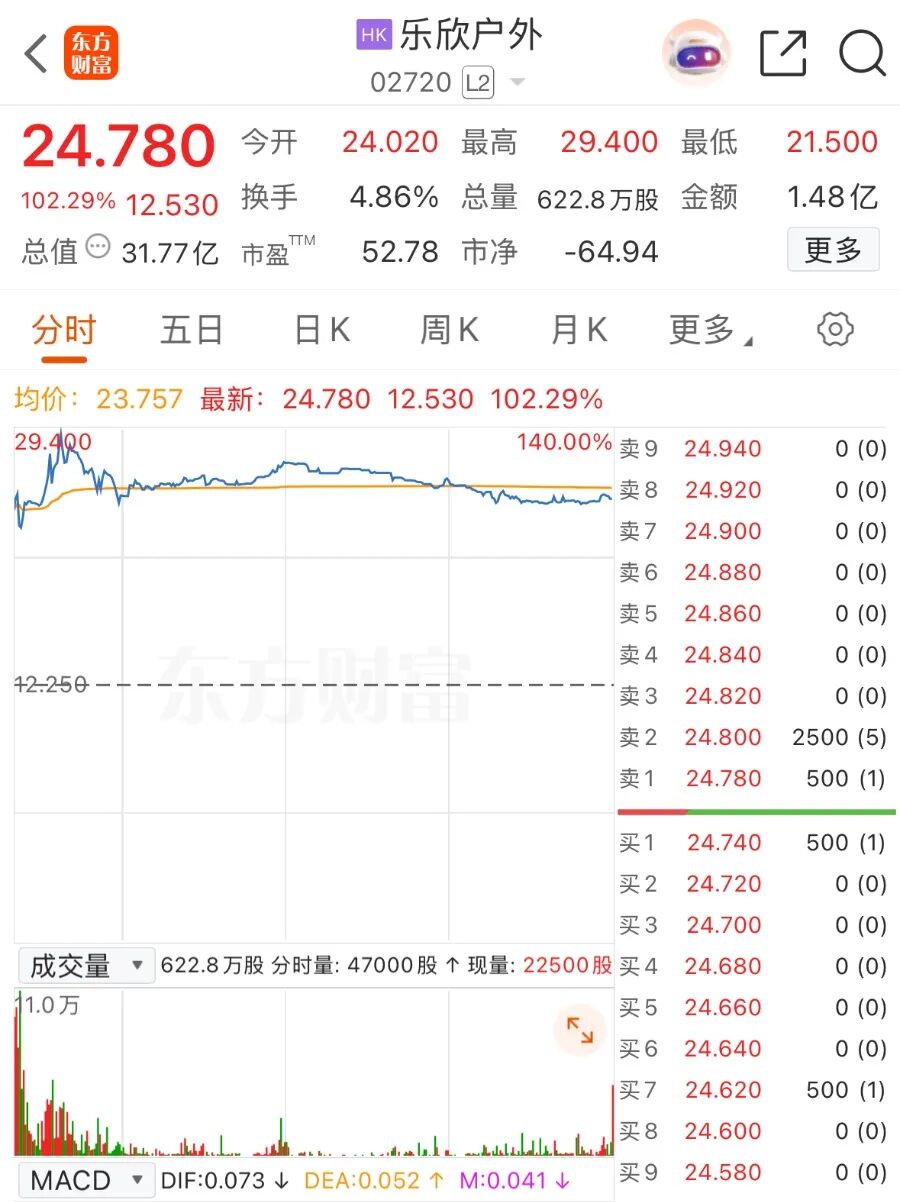
Core Viewpoint - Lexin Outdoor International Limited has officially listed on the Hong Kong Stock Exchange, becoming the first fishing equipment stock in the Hong Kong market, with a significant opening day surge of 102.29% in share price, reaching a market capitalization of approximately HKD 31.11 billion [1][12]. Company Overview - Lexin Outdoor, headquartered in Deqing County, Huzhou City, Zhejiang Province, focuses on the design, research, and manufacturing of fishing equipment, having evolved from a fishing equipment division established in 1993 [4][16]. - The company operates three modern factories in Deqing, covering a total area of 63,637.7 square meters, with an annual production capacity of 6.2 million units across a product line of over 9,000 SKUs [4][16]. Market Position - Lexin Outdoor holds a 23.1% share of the global fishing equipment market and ranks first in the industry according to revenue projections for 2024, with an even higher market share of 28.4% in China [3][15]. - The company has maintained its position as the market leader in China for three consecutive years [3][15]. Financial Performance - The company's revenue from 2022 to 2024 was reported as follows: 2022 revenue of CNY 818 million, 2023 revenue of CNY 463 million, and 2024 revenue of CNY 573 million, with corresponding gross profits of CNY 190 million, CNY 120 million, and CNY 153 million [4][16]. - For the first eight months of 2025, Lexin Outdoor reported revenue of CNY 460 million, nearing the total profit level of 2024 [5][17]. Sales and Growth - Sales have been on an upward trajectory, with 5,463.3 thousand units sold in the eleven months ending November 30, 2025, compared to 4,355.9 thousand units in the same period of 2024 [5][17]. - The total revenue from 2022 to the first eight months of 2025 is estimated to be approximately CNY 2.314 billion [6][18]. Business Model - Lexin Outdoor employs a dual business model of OEM/ODM and OBM, with OEM/ODM revenues consistently accounting for 90% to 94% of total revenue from 2022 to the first eight months of 2025 [7][19]. - The top five customers contribute about 55% of the company's revenue, with the largest customer, Ardisam from the U.S., accounting for 17.7% [7][19]. Brand Development - The company is expanding its own brand business, having acquired the UK-based carp fishing brand Solar in 2017, which has seen sales triple since 2018 [8][20]. - However, revenue from the OBM model remains relatively low compared to OEM/ODM, with figures not exceeding 10% of total revenue during the reported periods [8][20]. Ownership Structure - Lexin Outdoor is a family-controlled enterprise, with the founder's family holding 94.77% of the shares, and the management team primarily composed of individuals from the previous parent company, Taipusen [9][21]. - Prior to the IPO, the company had no external investors, and significant dividends were paid out, totaling CNY 379 million over the past three years [10][22]. IPO Details - The IPO involved the issuance of 28.205 million shares, with a final offering price of HKD 12.25 per share, raising approximately HKD 285 million [10][22]. - The offering was highly oversubscribed, with a subscription rate of 3,654.23 times for the public offering and 2.94 times for the international offering [10][22]. Use of Proceeds - The funds raised from the IPO will be allocated towards brand development, product design, establishing a global fishing gear innovation center, upgrading production facilities, enhancing digital capabilities, and working capital [12][24].

中鑫家居冲刺港股IPO:业绩触底回升,家族控股企业格局凸显
Sou Hu Cai Jing· 2026-02-06 12:09
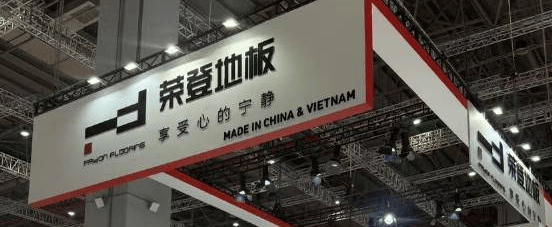
Core Viewpoint - Jiangsu Zhongxin Home Furnishing New Materials Co., Ltd. (referred to as "Zhongxin Home") has officially submitted its prospectus to the Hong Kong Stock Exchange, initiating its IPO process to expand financing channels and support global layout, capacity upgrades, and competitiveness in the PVC flooring sector [3]. Group 1: Company Performance - Zhongxin Home has focused on the research, production, and export of PVC flooring for nearly 20 years, with a core product of high-quality PVC flooring, particularly excelling in the SPC stone-plastic composite flooring segment [3]. - The company's recent performance has shown a rebound after a decline, with revenues of 1.422 billion yuan and a net profit of 125 million yuan in 2023. However, in 2024, revenues dropped to 972 million yuan due to U.S. tariffs, with net profit shrinking to 52.72 million yuan [3]. - In the first three quarters of 2025, the company experienced significant recovery, with revenues reaching 960 million yuan and net profit of 74.05 million yuan, a substantial increase compared to the same period in 2024 [3]. Group 2: Market Position - According to Frost & Sullivan data, Zhongxin Home ranks eighth among Chinese PVC flooring exporters by global sales area in 2024, holding a market share of 0.61%. In the SPC flooring segment, it leads with a market share of 1.02% [4]. - The company's revenue structure is heavily concentrated in overseas markets, with North America accounting for 89.8% of revenue in the first nine months of 2025, highlighting a significant dependency on this market [4]. Group 3: Governance and Ownership - The governance structure of Zhongxin Home exhibits clear family control, with the Yao Zhongxing family holding absolute control through direct and indirect shareholding [4]. - The pre-IPO ownership structure shows Changzhou Zhongxin holding 89.3%, with family members occupying key management positions, which may raise concerns regarding related party transactions and governance independence [4]. Group 4: Future Outlook - The IPO is a crucial step for Zhongxin Home to overcome development bottlenecks and advance its globalization strategy, with expectations to leverage capital to further release production capacity in Vietnam and enhance corporate governance [5].
实控人控制他人账户交易自家股票后,002495,再曝“隐秘”事项!
Mei Ri Jing Ji Xin Wen· 2026-01-14 07:09
Core Viewpoint - Jialong Co., Ltd. (SZ002495) is facing scrutiny due to undisclosed matters involving its controlling shareholders, particularly Lin Changchun and Lin Changhao, with implications for corporate governance and transparency [1][2]. Group 1: Shareholder Issues - The Guangdong Securities Regulatory Commission has mandated corrective measures for the company's controlling shareholder, Lin Changchun, who has been found to control multiple accounts to trade Jialong shares without proper disclosure [1][2]. - Lin Changhao's approximately 1.42 million shares, representing 0.15% of the company's total equity, were frozen by the Guangzhou Tianhe District People's Court due to a renovation contract dispute, with the company unaware of this situation until recently [2][3]. - The company has issued a written notice to its controlling shareholders urging them to verify and submit relevant materials regarding the undisclosed matters [2]. Group 2: Corporate Governance - Jialong's current chairman is Lin Pingtao, with Lin Changchun serving as the director and general manager, while Lin Changhao previously held the position of president [3]. - A board meeting held on July 2, 2024, led to the proposal to remove Lin Changhao from the board, which was subsequently approved at a shareholders' meeting on July 19, 2024, resulting in the election of a new non-independent director [3]. Group 3: Financial Performance - Jialong Co., Ltd. has maintained relatively stable revenue over the past decade, with total revenue fluctuating between 200 million to 300 million yuan, peaking at approximately 320 million yuan in 2018 and dipping to around 208 million yuan in 2022 [4]. - The main revenue sources are chicken powder and chicken essence, which accounted for 57.13% and 21.19% of the company's revenue in 2024, respectively [4]. - The company has expanded its operations by establishing Jialong (Kaiping) Food Co., Ltd. to enhance its market presence, with soy sauce being a key product in its new business strategy [4].


好医生云医疗毛利率大降:家族式控股,关联采购持续激增
Xin Lang Cai Jing· 2025-12-10 00:27
Core Viewpoint - Sichuan Good Doctor Cloud Medical Technology Group Co., Ltd. has submitted an IPO application to the Hong Kong Stock Exchange, marking a significant step despite its history of losses until 2022, when it finally turned profitable. However, the company faces concerns regarding family control and increasing related-party transactions [1][13]. Financial Performance - The company reported revenues of 18.82 billion, 30.65 billion, 32.64 billion, and 18.91 billion from 2022 to the first half of 2025, with year-on-year growth rates of 62.8%, 6.5%, and 23.9% respectively [3][15]. - Despite revenue growth, the company recorded a cumulative loss of 5610 million as of June 30, 2025, primarily due to historical losses since its establishment [3][16]. - The gross profit margin has shown a declining trend, with overall margins of 20.5%, 29.9%, 26.4%, and 22.8% during the reporting period, reflecting a decrease of 6.2 percentage points in the first half of 2024 [4][16]. Revenue Sources - The main revenue source is the pharmaceutical supply chain solutions, contributing 90.4%, 79.9%, 77.5%, and 78.1% of total revenue from 2022 to the first half of 2025. This segment includes proprietary and generic drug businesses [2][15]. - The specialized disease diagnosis solutions also contributed significantly, with revenues of 5.07 billion, 6.67 billion, and 3.79 billion, accounting for 16.5%, 20.4%, and 20.1% of total revenue during the same period [2][15]. Operational Costs - Sales and marketing expenses have been substantial, amounting to 2.62 billion, 7.47 billion, 6.98 billion, and 3.07 billion, representing 13.91%, 24.37%, 21.38%, and 16.22% of total revenue [6][17]. - Administrative expenses were significantly lower, at 923.85 million, 924.66 million, 969.06 million, and 631.60 million, accounting for 4.91%, 3.02%, 2.97%, and 3.34% of total revenue [6][18]. Inventory and Cash Flow - The company's inventory levels increased significantly, with values of 2.56 billion, 4.64 billion, 6.03 billion, and 5.11 billion, leading to longer inventory turnover days [7][19]. - The net cash flow from operating activities was negative in 2022, with subsequent positive cash flows in later periods, indicating fluctuating liquidity [8][20]. Family Control and Related Transactions - The company is under significant family control, with major shareholders holding approximately 65.99% of voting rights, raising concerns about governance and potential conflicts of interest [9][21]. - Related-party transactions have increased, with purchases from a major supplier, Sichuan Jiananda, rising to 16.7% of total procurement in recent periods [12][24]. Future Plans - The IPO proceeds are intended for national expansion of core business, development of a robust R&D environment, potential strategic investments, and general corporate purposes [12][24].
传统文化与现代制度如何择善而从
Jing Ji Guan Cha Wang· 2025-10-31 15:46
Core Viewpoint - Shangri-La Asia is undergoing a leadership change with Guo Huiguang, daughter of Malaysian tycoon Kuok Khoon Ean, appointed as CEO starting August 1, 2025, marking a significant moment in the succession practices of Southeast Asian Chinese business families [1] Group 1: Leadership Transition - Guo Huiguang's appointment as CEO signifies a shift in leadership within Shangri-La Group, which operates over 100 hotels and resorts globally [1] - The transition highlights the focus on family succession in Southeast Asian Chinese business families, where leadership often passes to the next generation [1] Group 2: Family Business Succession Practices - Southeast Asian Chinese families typically employ modern trust designs and systematic governance for business succession, contrasting with traditional practices that favor male heirs [2] - The historical context of these families, often established over a century ago, provides valuable lessons for contemporary Chinese family businesses [2] Group 3: Governance and Trust Structures - The use of family trusts and holding companies is common among Southeast Asian Chinese families to maintain control over their businesses [3] - For instance, the Kuok family established a holding company, Kuok Group, which primarily serves as a family investment vehicle, holding stakes in various companies [3][4] Group 4: Advantages of Trust Structures - Family trusts help centralize asset management, prevent dilution of ownership, and establish long-term holding rules [4] - The Kuok family has implemented a points-based system in their family constitution to evaluate potential successors based on various criteria [4] Group 5: Systematic Successor Training - Southeast Asian Chinese families have developed structured training mechanisms for successors, ensuring they possess global perspectives and professional skills [8] - The Kuok family emphasizes high-quality education and practical experience for their children, with Guo Huiguang having a background in finance and management [8] Group 6: Cultural Values and Family Cohesion - The influence of traditional Chinese culture is evident in the family values and business practices of Southeast Asian Chinese families, emphasizing collective well-being and social responsibility [11][12] - Family gatherings and ancestral worship are common practices that reinforce family unity and cultural heritage [13] Group 7: Lessons for Mainland Chinese Families - The integration of Western governance practices with traditional values offers a unique model for succession planning in Chinese family businesses [15][16] - The ongoing challenge for both Southeast Asian and mainland Chinese families is to balance modern practices with the preservation of cultural values [17]